
Quick Take
- Maintaining hundreds of offspring on a single back is a requirement for successful wolf spider reproduction.
- The use of spinnerets as an anchor creates a severe weight limitation for the mother.
- An interaction with the mother’s mouth is required to initiate the hatching process.
- The 2-week abdominal residency is necessary to maximize the survival rate of the brood.
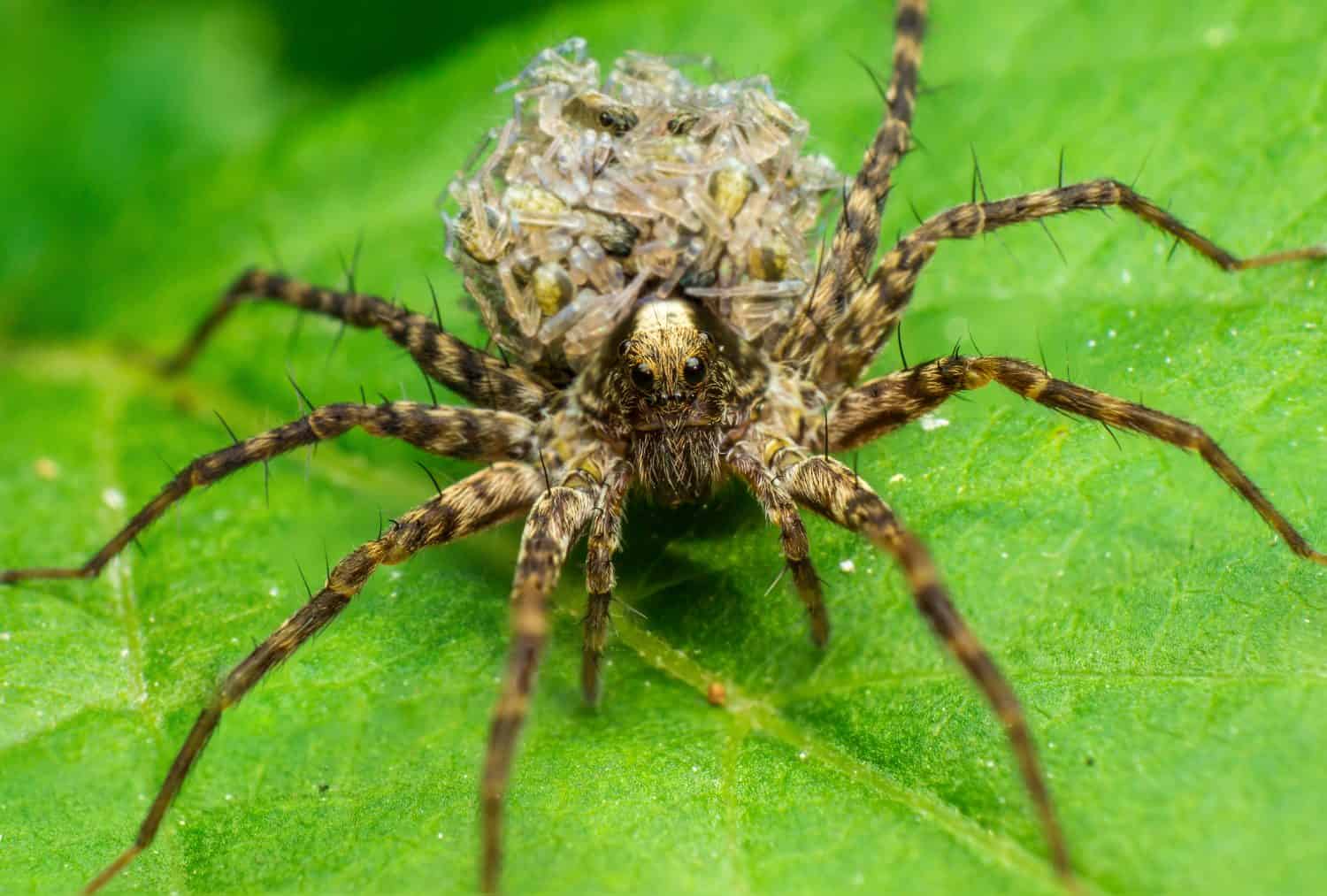
There are many ways that animals take care of their babies, each unique to the needs of the species. One example is the female wolf spider, which carries her egg sac attached to her spinnerets, located at the end of her abdomen. She does this for many different reasons and acts as a sort of mobile nursery to guard the eggs. This Instagram post by @explainingthewild shows a wolf spider carrying her babies. Read on to learn more about why wolf spiders carry their egg sacs on their backs.
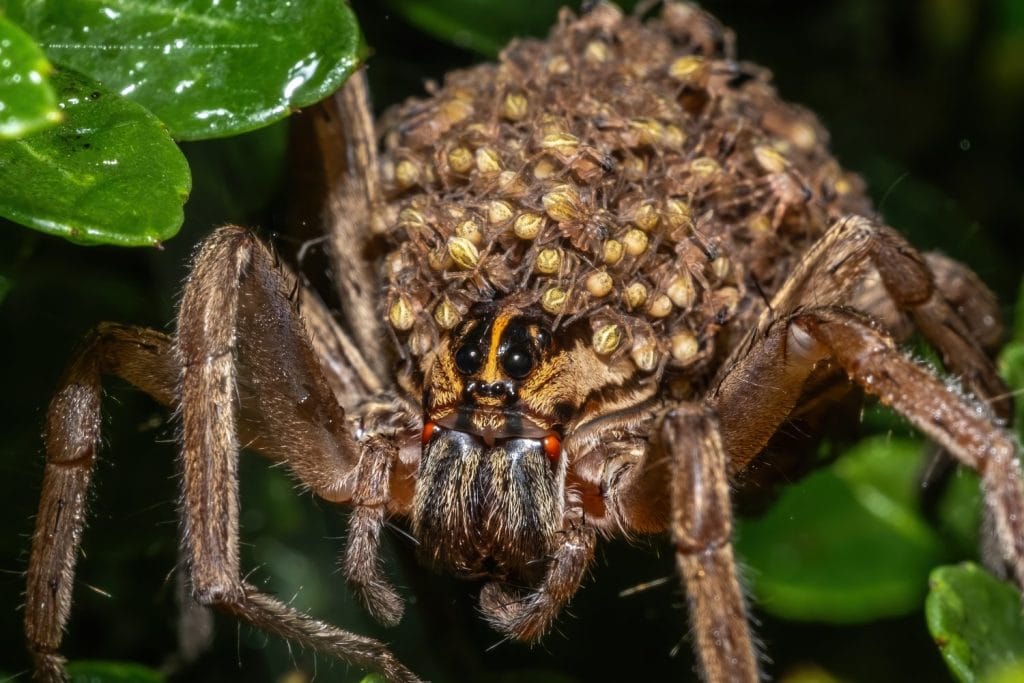
Wolf spiders carry their babies on their backs, and it can get quite heavy for them.
©samray/Shutterstock.com
Preventing Predation
The female wolf spider has an amazing behavior where she carries her egg sac attached to her spinnerets, and after the eggs hatch, the spiderlings ride on her back. After spinning the silk egg sac containing the fertilized eggs, the female then attaches it to her spinnerets. The spinnerets are the silk-producing organs on the end of the spider’s abdomen. After attaching, the female will carry the sac attached to her spinnerets everywhere she goes, including hunting.
She keeps the egg sac off the ground for multiple reasons. One reason is to prevent predation. If an egg sac is away from the mother, then it can easily be predated on by other spiders and insects. Another reason is dehydration. The mother can continuously care for the egg sac, including keeping it hydrated. Similarly, she can protect the egg sac from various weather conditions and temperature changes.
After hatching, the babies will continue to ride on the mother’s back. The mother spider tears open the egg sac with her mouth, and the spiderlings will emerge. They instinctively climb onto her abdomen and back. They may stay there for a week or two before dispersing and living on their own.
The reason the mother continues to carry her babies is that it ensures a greater chance of survival for the young. Wolf spiders are not the only spiders that do this, but it is not often seen in nature either. Some other species, such as cellar spiders and nursery web spiders, also carry their egg sacs, but they use their jaws (chelicerae) and pedipalps instead. This is an amazing form of maternal care that highlights the dedication wolf spiders have for their young.