
Quick Take
- Cheetahs have extremely low genetic diversity due to historic population bottlenecks, making them vulnerable to disease and environmental change.
- Low genetic diversity is linked to poor sperm quality and higher disease mortality, as shown by FeCV outbreaks at cheetah facilities.
- Conservation efforts include a sperm bank at the Cheetah Conservation Fund storing about 400 samples.
The slim, athletic, and super-fast big cat that races across grasslands at speeds of over 60 mph is carrying a genetic legacy that could lead to its downfall. Cheetahs are globally listed as Vulnerable, but some subspecies are classified as Critically Endangered. Cheetah populations face additional challenges due to a serious lack of genetic diversity, making them extremely vulnerable to environmental disruption and disease. Here, we explore what may have caused this decline in genetic diversity and what it means for the survival of the species.
The Origin of Cheetahs
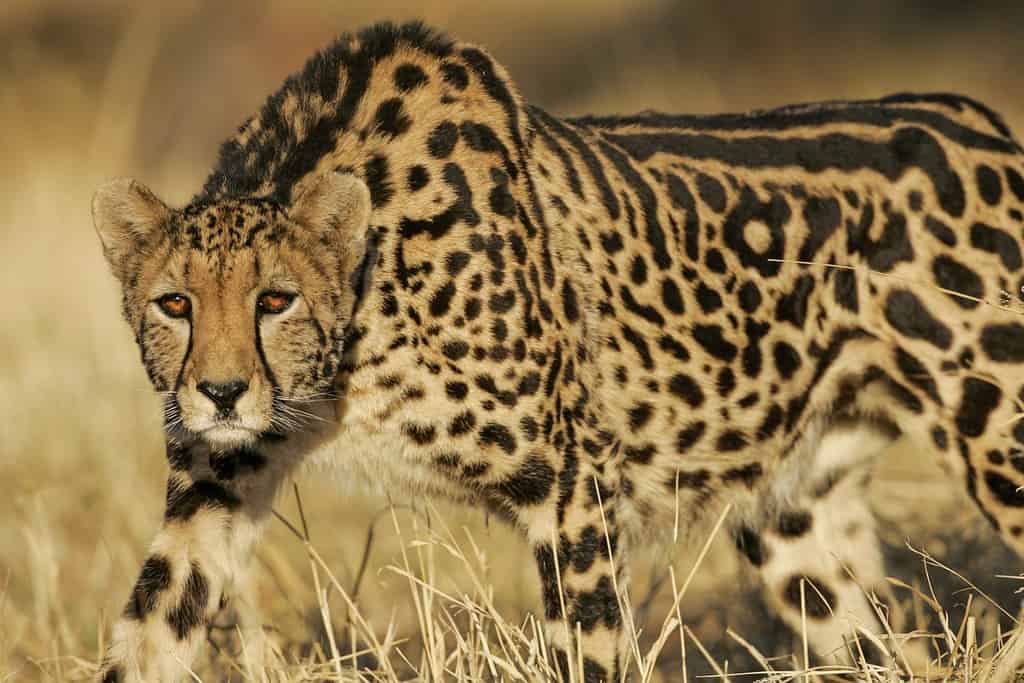
Cheetahs endured two previous population bottlenecks.
©Stu Porter/Shutterstock.com
The big cats that we recognize as cheetahs evolved in North America, where fossil records show that they share a common ancestor with the American puma. Since then, they have suffered two major ‘population bottlenecks’ where their numbers were drastically reduced. One was over 100,000 years ago when cheetahs migrated out of the Americas and into Eurasia and Africa across the Bering Strait. Such a rapid expansion over a wide area led to limited mating choices.
Another bottleneck occurred 11,084–12,589 years ago, coinciding with a widespread loss of large mammals during the late Pleistocene period after the last Ice Age. North American cheetahs were completely wiped out. During these events, the population became so limited that cheetahs were breeding with close relatives.
Even though their numbers rose to around 100,000 during the 19th century, the lack of genetic diversity could not be reversed.
Evidence of Low Genetic Variation
Genetic studies of the African cheetah population have revealed worrying details about their genetic makeup, but this is not a new revelation.
As far back as the 1980s, scientists reported that cheetahs’ immune systems did not reject skin grafts in surgical transplants from unrelated individuals. These unrelated cheetahs were behaving biologically like identical twins. Later genetic studies demonstrated that the genes that trigger graft rejection (called the Major Histocompatibility Complex) are near uniform across cheetahs, so their bodies do not recognize the graft as nonself.
Overall, cheetahs now have extremely low levels of genetic variation compared to healthy populations. This is even lower than that seen in other species where there is low genetic variability, such as the Tasmanian devils or Virunga gorillas. It is even lower than that seen in highly inbred dog and cat breeds.
Why Is a Lack of Genetic Diversity in Cheetahs a Problem?
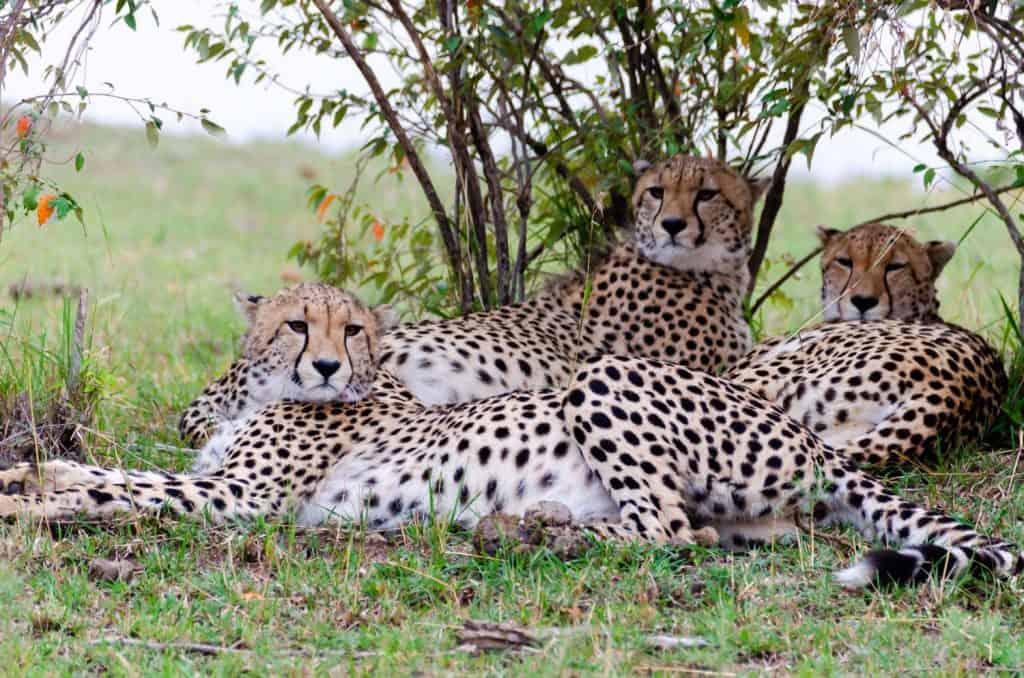
Very low genetic diversity puts cheetahs at risk.
©Chaithanya Krishnan/Shutterstock.com
Genetic diversity is the building block of evolution and adaptation. If a species is too genetically similar, there will be no individuals who can thrive in changed environments and new challenges. This leaves populations perilously vulnerable to disease, climate change, and natural disasters. Human activities have led to further loss of habitat, and continued hunting of some populations reduces numbers further. Therefore, the breeding stock is getting smaller, and the limited number of genes is getting even more concentrated in the remaining animals.
Low genetic diversity has also been linked to poor sperm quality; 70–80 percent of cheetah spermatozoa are malformed, compared to 30 percent in domestic cats.
It is also associated with focal palatine erosion (a condition of the lining of the hard palate), kinked tails, and a greater susceptibility to disease. A devastating example of this occurred in 1983. An outbreak of feline coronavirus (FeCV) tore through a cheetah breeding facility. Morbidity for this disease in domestic cats is less than 10 percent, and only one in a hundred infected cats dies. In contrast, every one of the 45 cheetahs in the facility caught the virus and was symptomatic. Within three years, 60 percent of the cheetahs had died. These adverse effects are seen in both wild and captive cheetahs.
Preserving Precious DNA
Within such a diminishing gene pool, every set of DNA is uniquely precious. This is why American zoologist, Laurie Marker, is collecting sperm from cheetahs in Namibia and established a sperm bank at the Cheetah Conservation Fund. This has been described as a ‘frozen zoo’ containing sperm samples collected since 1990. This tactic has also been used for elephants and rhinos. Samples are taken from cheetahs opportunistically when they have been injured or captured. Sperm samples can also be taken from dead cheetahs. As of December 2025, approximately 400 samples are stored.
The Cheetah Conservation Fund (CCF) has also established the Life Technologies Conservation Genetics Laboratory in Africa. The laboratory focuses on research into cheetah gene flow, genetic variation patterns, and behavioral ecology. The CCF also preserves other biological samples, including tissue and blood samples, which are cryopreserved. In 2007, the first in vitro cheetah embryos developed to the blastocyst stage. In 2020, the first two cheetah cubs were born after the transfer of embryos produced in vitro.