
Quick Take
- The discovery of the sea sponge order Vilesida and its unique sterols supports the hypothesis that animals may have originated 100 million years earlier than previously expected.
- Ancient chemicals known as steranes are present in rocks, and the same sterol precursors are found in the Vilesida sponge order, helping to connect these lifeforms to ancient biomarkers millions of years old.
- Multicellular animal life may have existed long before our current understanding, but biomarkers were necessary to uncover this.
- Scouting sedimentary records in Oman and Siberia, alongside many other records around the world, was necessary to resolve the biomarker debate.
Ancient animal history is extremely difficult to reconstruct, for a number of reasons. Some of the earliest creatures in existence were soft-bodied and microscopic, leaving behind very little evidence. This low-quality evidence makes life from this time difficult to track. Modern researchers have pieced together ancient animal evolution using vague clues found in rock chemistry and genetics, but what have they actually discovered throughout this lengthy process?
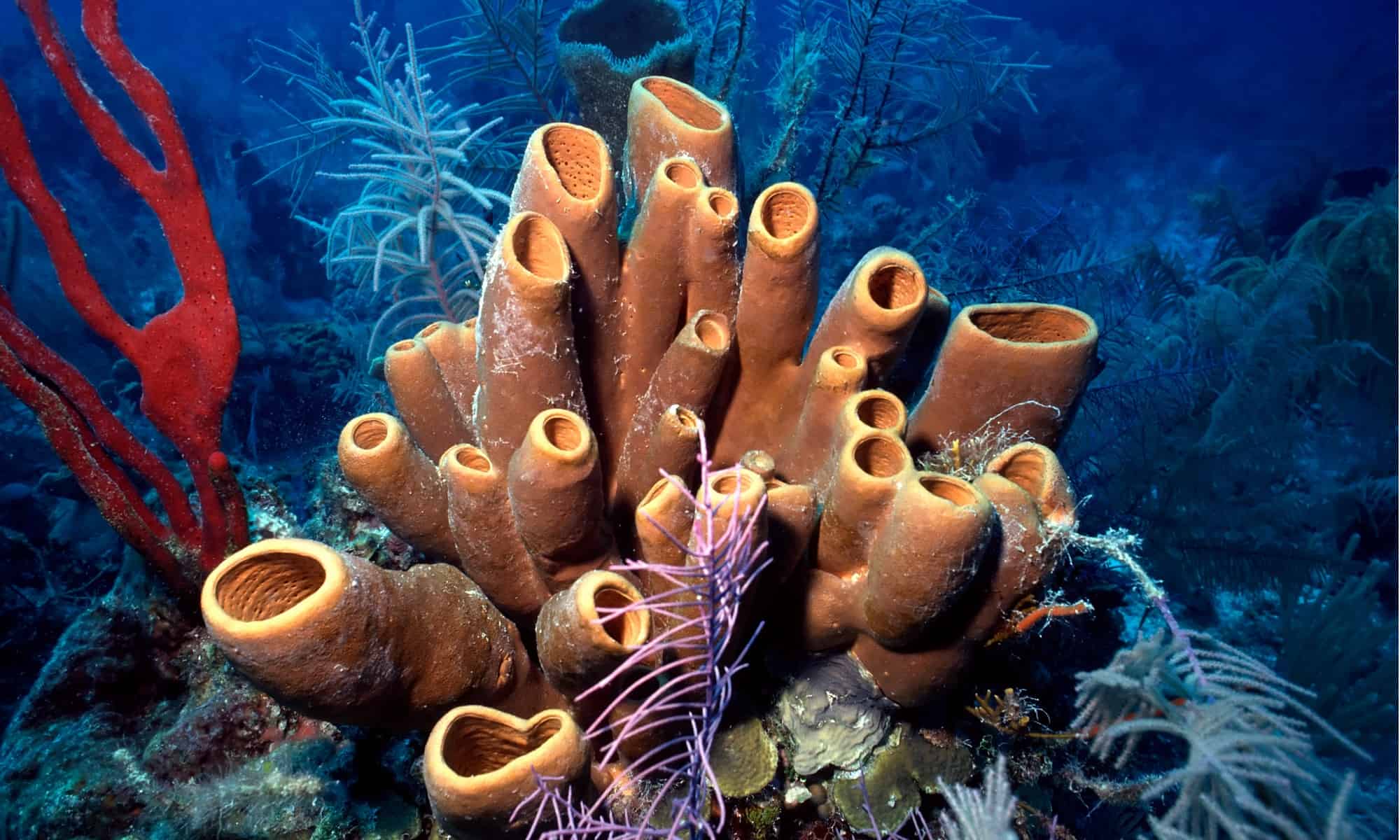
A newly described sponge order, uncovered by Uppsala University researchers in late 2025, has drawn a great deal of attention. Labelled as Vilesida, this group of unassuming sponges apparently produced unusual data that aligned with some of the oldest proposed animal biomarkers ever uncovered. How and where were these animals found, and what have scientists surmised through studying them?
These animals may have appeared long before the Cambrian explosion, which was the event that made multicellular life obvious in our fossil records. Scientists now have a stronger living comparison for the molecules they have been tracking across time. Here’s how a living sponge lineage changes what we thought we knew about Earth’s first animals, all discovered through chemistry preserved in ancient rocks.
How Sponges Existed So Early on in Animal History
Surprisingly, sponges come up again and again in our ancient animal history because they occupy a very early branch of the animal family tree. The University of California Museum of Paleontology’s overview of Porifera explained that sponges split off early from other metazoans, retaining a body plan that is simple by typical animal standards. They have no brain or stomachs, pumping water through a porous body and capturing any food they can from this flow.
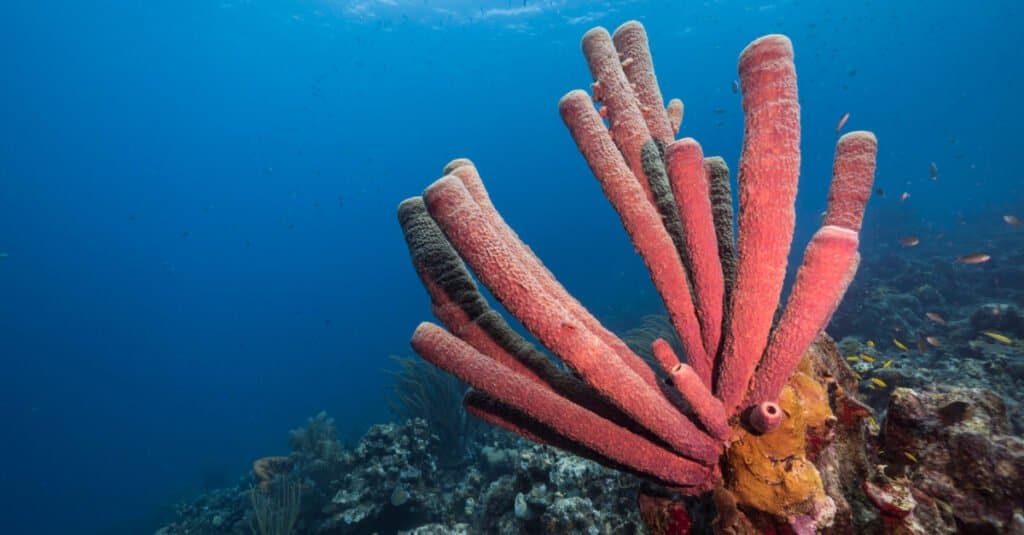
Evidence in ancient rocks may alter our understanding of the earliest forms of life on this planet.
©NaturePicsFilms/Shutterstock.com
Because of this simplicity, sponges were likely able to survive the early days of life on Earth, facing few predators or threats. They were (and still are) stationary filter feeders attached to the seafloor, processing seawater and living unassumingly beneath the water’s surface. However, due to their structure and deep-sea habitats, sponges left little behind for paleontologists to study, until roughly half a billion years later.
While sponges are widely studied and claimed to rank among the earliest animals in existence, their fossil record is patchy or relatively nonexistent. Because of this, chemistry has become one of the best ways to trace their lineages backwards in time. Scientists trace the history of sea sponges using something known as biomarkers.
What Are Biomarkers, and Why Do Scientists Monitor Them?
In general, a biomarker is any type of chemical trace left behind by past life; sponge biomarkers offered scientists a more specific route to discovery. In this case, researchers became interested in sterols, which are molecules used in cell membranes.
Over immense spans of time, sterols can transform into steranes, which are more geologically stable and can survive in rocks long after an organism’s tissues are gone. This was science’s ticket to a more accurate estimate of just how old sea sponges are. An MIT explanation of its 2025 study described these preserved compounds as chemical fossils, which means they are molecular remnants of once-living organisms that were retained in seafloor sediment and ancient rocks.
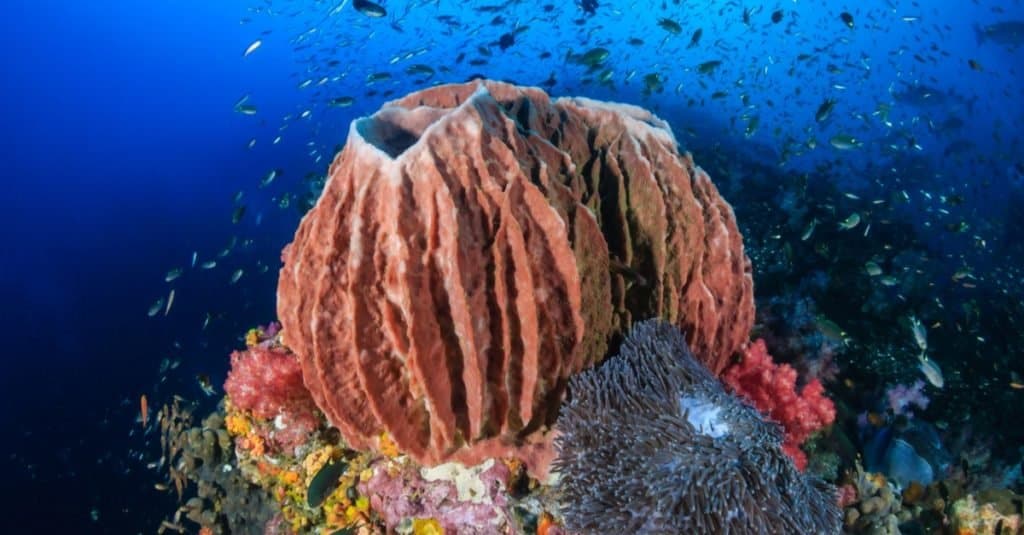
Some deep-water sponges can live to be over 200 years old, and they might’ve lived this long in ancient times.
©Richard Whitcombe/Shutterstock.com
Early animal studies are often very different from later paleontology studies, especially when it comes to sea sponges. Researchers had to find molecular fingerprints instead of a hardened fossil or skeleton, given that sponges don’t have bones. However, this turned out to be beneficial. Biomarkers reveal biochemistry, and biochemistry knowledge has the potential to push the record of life further back than traditional fossils can.
However, these sponges and their evidence of early life raised additional questions to researchers. Because this evidence exists on a molecular level, scientists have to prove that these markers actually came from life rather than from some sort of contamination. Researchers also must rule out the possibility that the molecule originated from some other kind of similar organism. Here’s how they accomplished this feat, greatly altering the timeline of sea sponges in the process.
How Scientists Detect Biomarkers in Ancient Rocks
It isn’t exactly simple to detect biomarkers, especially ancient ones. The process begins with carefully dated rock samples from formations that have already been studied from a geological perspective. Researchers then extract multiple samples of preserved organic compounds from those rocks, then analyze them with instruments that separate molecules by structure and mass.
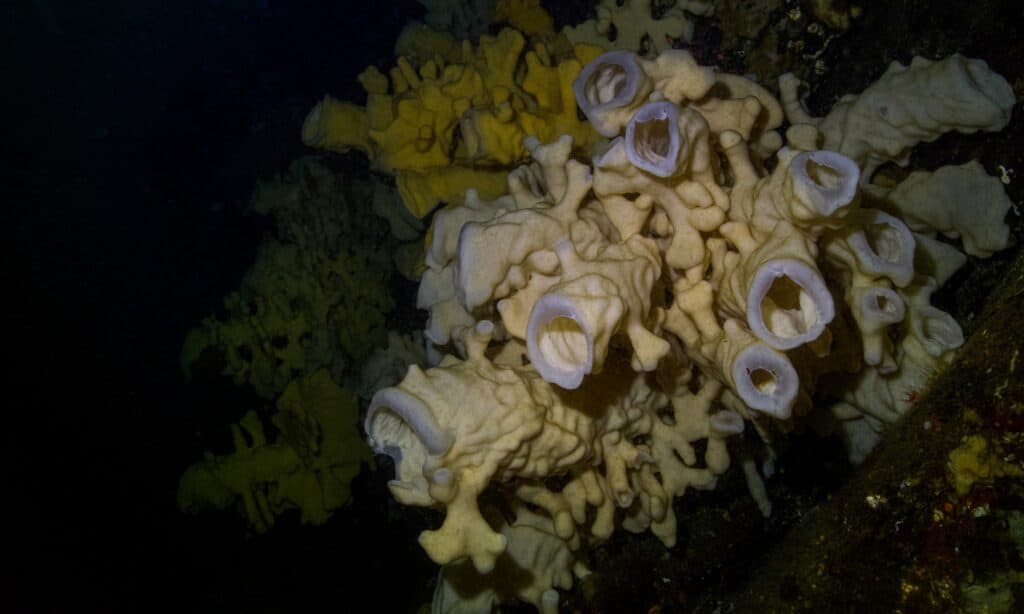
Biomarkers are necessary for studying lifeforms that don’t have bones.
©iStock.com/Aiden Conners
They then must compare their results with compounds found in both living organisms and synthetic versions made in a lab. A case involving biomarkers becomes strongest when multiple factors line up, including what is uncovered in the rock, what exists in the sponge, and, finally, what can actually be reproduced through chemistry.
Research on Vilesida showed that its unique sterols provide molecular evidence supporting the hypothesis that sponges, and therefore animals, emerged about 100 million years earlier than previously thought. The aforementioned journal paper also showed that other demosponges, ones producing abundant molecular precursors, cluster within this newly defined order, producing ample biological sources for biomarkers that scientists have argued over for years.
Other Ancient Species and Records Being Studied Now
Besides Vilesida, here are some of the organisms and rock records that challenge our timeline of when animal life began on our planet:
- Viles ophiraphidites: this is one of the sponges containing ample amounts of biomarkers; the order itself is described from specimens collected in the Atlantic and Mediterranean
- Murus profunda: another member of the new order tied to the same unique sterol chemistry that connects living sponges to ancient biomarker debates
- Axinyssa coralliophila: a demosponge with extremely high biomarkers and evidence of ancient precursors, making it one of the clearest modern examples of the chemistry researchers are trying to track
- A Halichondria species from Madagascar is known to have these same sterols as well, which is part of why researchers suspect more vilesid relatives still remain in the wild
- Topsentia halichondrioides: located in the Arabian Sea as well as seas surrounding Japan; produces the same unusual sterol family, broadening the geographic spread of this ancient animal
- Ciocalypta: a species from Senegal with the same biomarkers, further broadening scientists’ scope of research
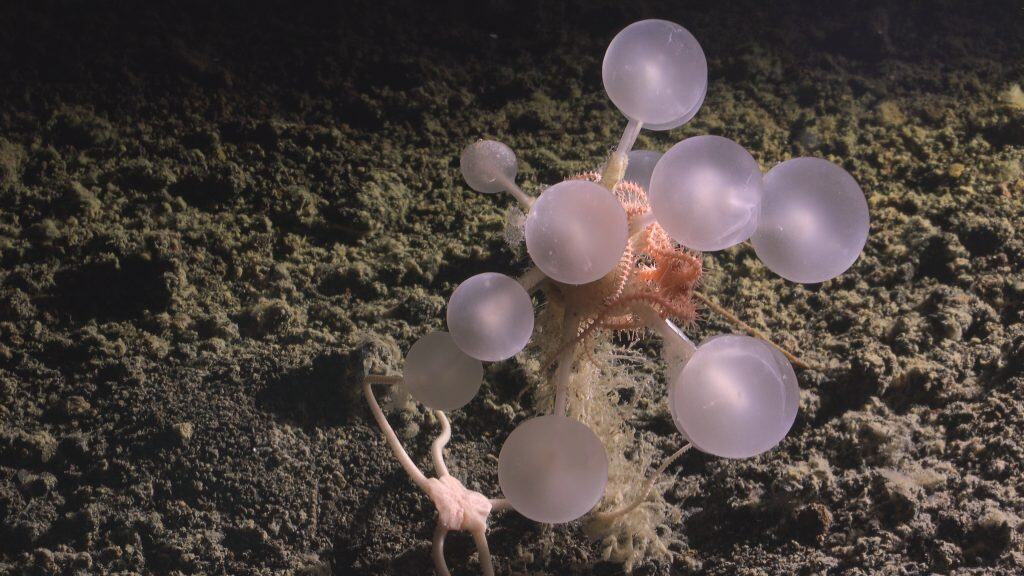
There are multiple species of sponges claimed to be ancient.
©The Nippon Foundation-Nekton Ocean Census/Schmidt Ocean Institute © 2025 – Original
The ancient rock samples used in the MIT biomarker study were collected from drill cores and outcrops in Oman, western India, and Siberia, all dating to the Ediacaran Period. These key sedimentary records carry all of the chemical traces that researchers interpret as signs of early sponge ancestors. But just how early did these ancestors appear? Let’s take a look back in time at these staggeringly old creatures.
Where Sponges Exist in Our Timeline of Early Life
Records of our earliest lifeforms exist around 3.5 billion years ago, but these don’t include animals in the traditional sense. Eukaryotes arrived much later, and multicellular life came even later still, with animals finally forming after that. By the Ediacaran Period, roughly 635 million to 541 million years ago, Earth began preserving much clearer evidence of complex organisms, though still not in the abundance we know and recognize today.
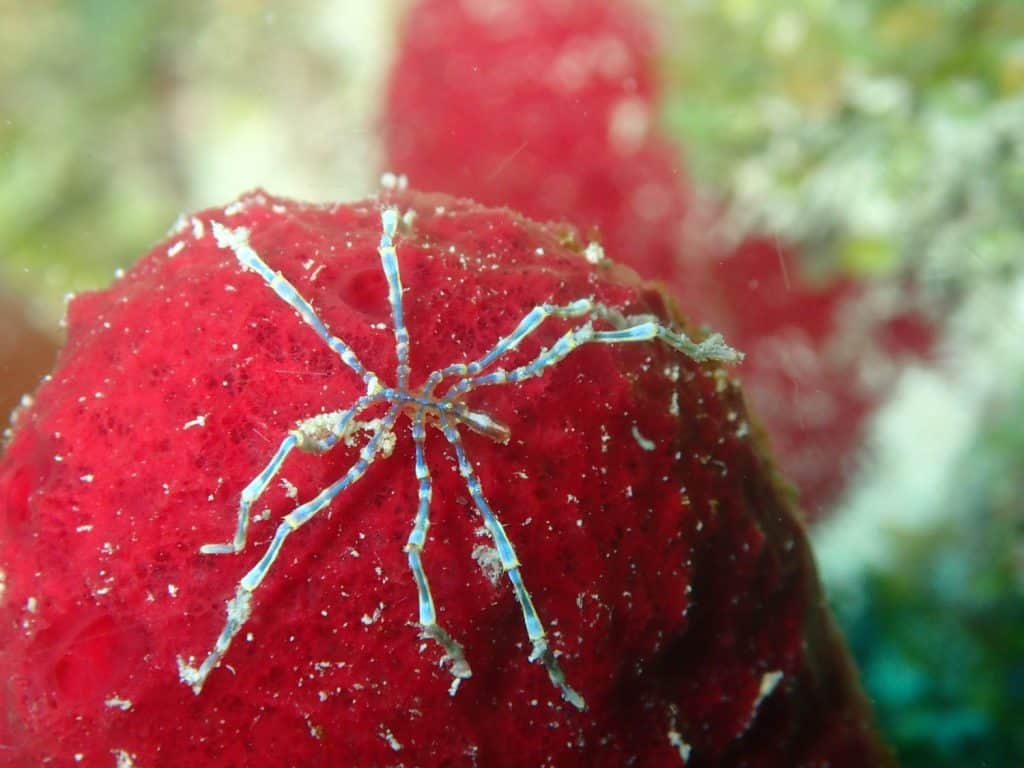
Some sea sponges may have existed over 500 million years ago.
©Kyle Lippenberger/Shutterstock.com
The Cambrian explosion exists as the point where animal life became visually obvious in our fossil records, but that never determined that animals truly began then and there; it just means their remains from this time become much easier to find and identify. All of these sponge-related chemical fossils were uncovered in Ediacaran rocks, rocks older than 541 million years. All of this new Vilesida research provides strong evidence that these ancient biomarkers are linked to demosponges, rather than to a vague or uncertain source.
In regard to the history of our planet, what does this mean? It indicates that the first chapters of our planet may have unfolded in oceans, with small, soft-bodied filter feeders at the heart of the process.
What This Discovery Changes About Evolution
Biomarker debates have gone back and forth for years, and for good reason. Scientists want stronger proof of these species before assigning any discovered and ancient chemical signal to a specific branch of life. No matter what, however, this discovery provides scientists with stronger evidence, especially since entirely new animal orders are rare, and this one is unusual, both taxonomically and chemically.
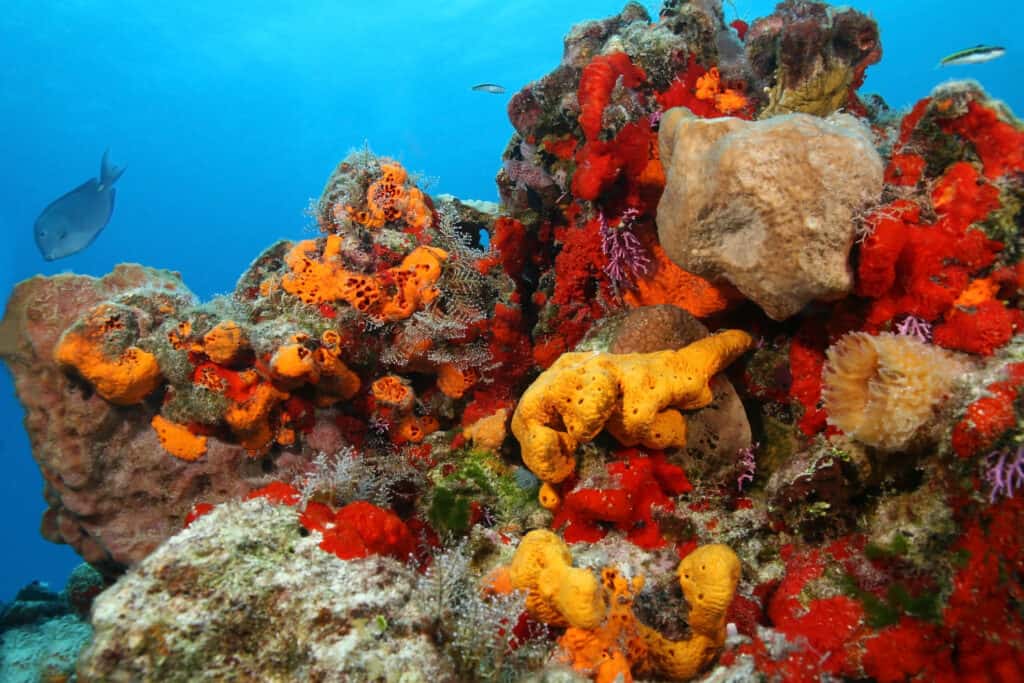
Our sea rocks may hold even more evolutionary secrets.
©Brian Lasenby/Shutterstock.com
Animals might have existed on our planet much earlier than previously thought. They just occupied much simpler bodies, filtering seawater in our dark and ancient oceans, leaving no trace of their existences behind. Using chemistry and the Vilesida species, scientists have changed our interpretation of early animals, perhaps forever.