When it’s fall in Massachusetts, the red maples ignite with color, there’s a sharpness in the air, and a rite of passage eons old begins in the woods. It’s rut season—the annual white-tailed deer mating ritual. From the Berkshire hills to the edge of Boston’s suburbs, bucks leave their hiding places to scrape, chase, posture, and clash in pursuit of the most desirable females. For a few fierce weeks, quiet, dignified New England reveals just how wild it still is. It’s a feral spectacle you can witness yourself. Read on to find out how.
What Is the Deer Rut?
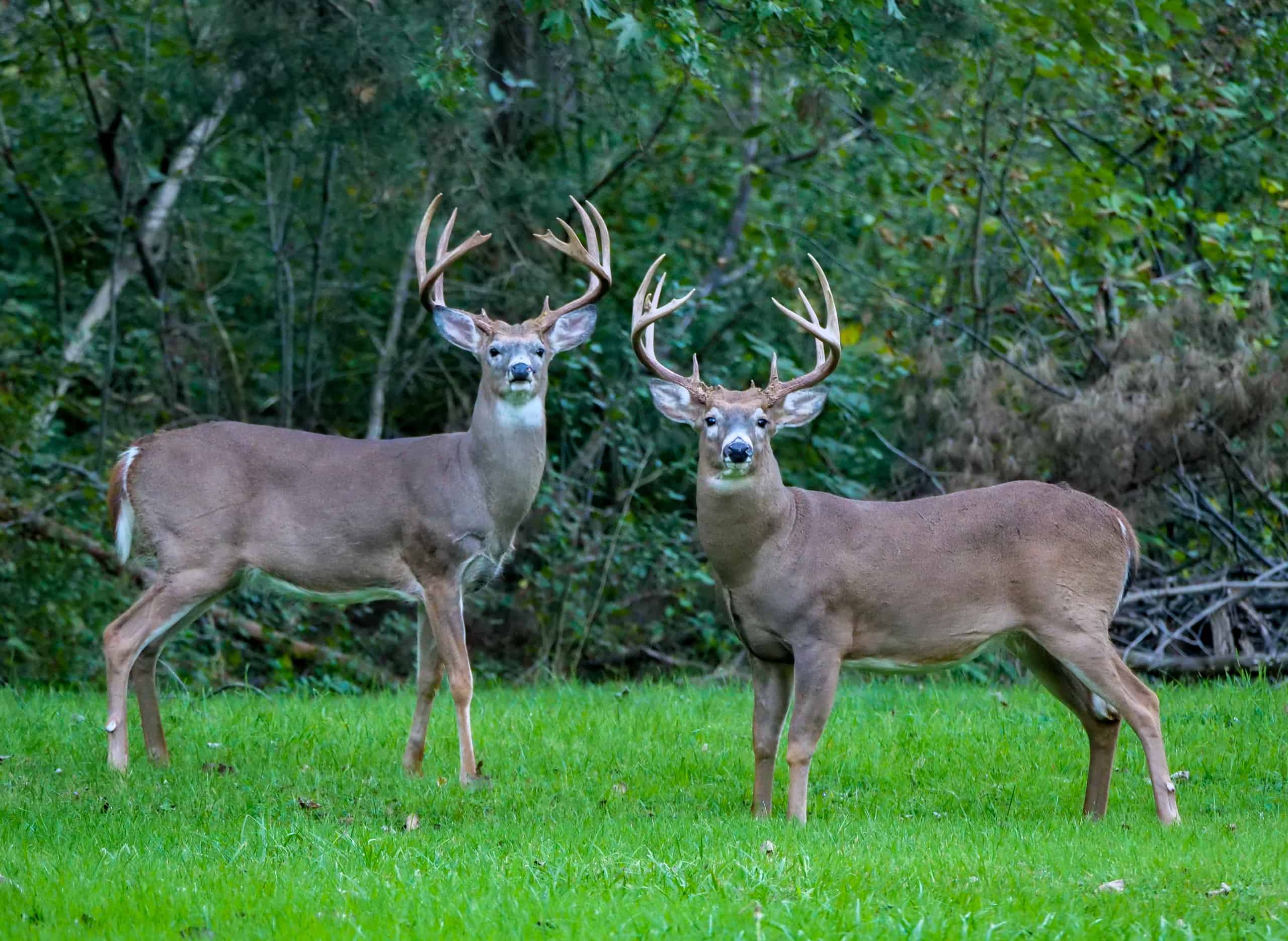
During the deer rut, bucks are highly competitive and can be aggressive toward people who get too close as well.
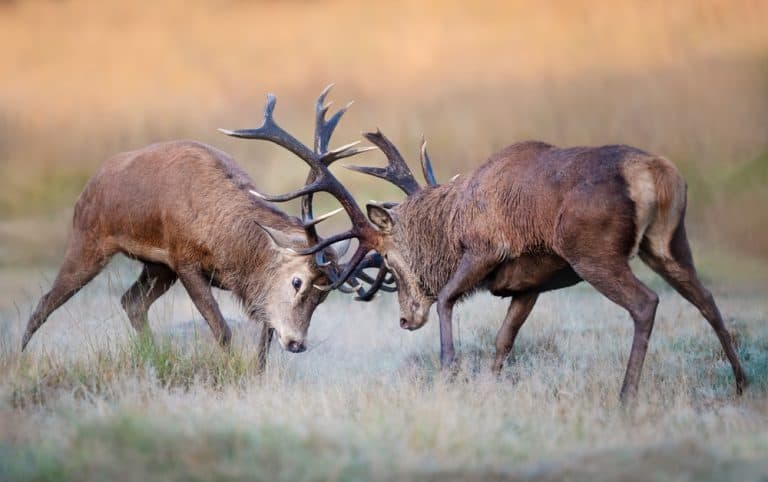
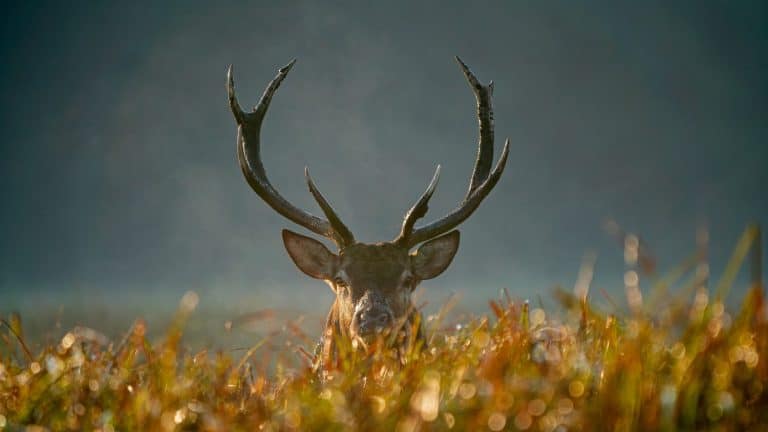
The word “rut” comes from the French word for the mating season of deer, which in turn is derived from Latin. While some deer species, like red deer, are known for loud vocalizations during the rut, white-tailed deer are less vocal, and the term more broadly refers to the period of heightened mating activity. Bucks lock horns to try to subdue one another, sometimes inflicting serious injuries in the process. The winners have their pick of females. It’s all part of ‘survival of the fittest,’ nature’s way of ensuring that the gene pool becomes stronger over time, enhancing the species’ ability to adapt and survive.
When Can You Expect the Deer Rut in Massachusetts?
Martin Feehan in the field, caring for orphaned white-tailed deer fawns.
We reached out to the Massachusetts Division of Fisheries and Wildlife (MassWildlife) to learn more about the deer breeding season in the state. Martin Feehan, MassWildlife’s Deer and Moose Project Leader, says, “It varies across the state, but the rut pretty much takes place from November 6th-20th. Peak activity starts around Veterans Day on November 11th. There’s people who say the timing of the rut is influenced by moon phases or weather patterns, but that’s not accurate. People have thought that because they saw less activity during some weather patterns (such as hot weather pushing rut behaviors to after nightfall when it is cooler or reduced deer movement during severe weather events). The rut is still in full swing, though, it’s just more active at different times of day.”
Feehan continues, “The timing of the rut does not fluctuate year-to-year because the rut is triggered by the photoperiod, or length of daylight. Long-term trends including climate change can lead to incremental changes in the timing, intensity, and length of the rut over many years due to how such changes impact early fawn survival.”
Where the Wild Meets the Suburbs
Urban and suburban sprawl have brought wildlife and people increasingly into contact. You might be able to see the deer rut from your kitchen window!
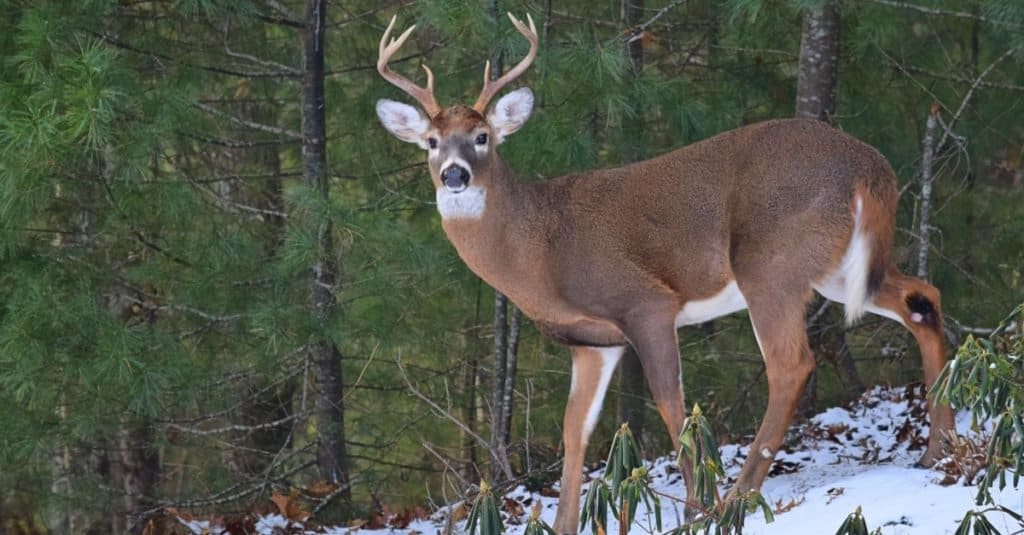
White-tailed deer are found in every county of the state, but are not limited to rural areas. One of the most striking things about deer in Massachusetts is how many of them now live in and around suburbs. Deer are adapting to backyards and along cul-de-sacs and thriving due to factors such as:
Abundant edge habitat—deer love the mix of woods, lawns, and ornamental shrubs.
Low predation—with no threats from predators in residential areas aside from the occasional large dog, deer face minimal risk.
Restricted hunting in many towns and neighborhoods allows herds to grow unchecked.
Mild winters in the eastern part of the state mean higher fawn survival rates.
During the rut, this can lead to some surprising scenes: bucks chasing does across driveways, scraping telephone poles, and clashing antlers in the middle of a golf course. It’s wild behavior in familiar places—and it reminds us that nature doesn’t end at the town line.
Best Deer-Watching Sites in Massachusetts
White-tailed deer are not difficult to find in the state’s parks and rural areas.
We asked Feehan where and when to watch deer in the state.
“White-tailed deer are common throughout Massachusetts, but the highest densities are in the eastern part of the state,” Feehan says. “In general, deer sightings are most common at dawn and dusk, but honestly, at the peak of the season, rut behavior can be seen around the clock.”
Here are some specific sites you might want to check out. Look particularly for rubs and scrapes along trail edges, field corners, or in transition zones between dense cover and open feeding grounds.
Quabbin Reservoir area – dense populations and protected lands.
October Mountain State Forest – large swaths of Berkshire woodland with good deer sign.
Massachusetts has a mix of archery, shotgun, and primitive firearms seasons, with archery season overlapping the rut in November, while shotgun and primitive firearms seasons occur primarily after the peak rut. If you’re heading into the woods to observe deer, here’s how you lower your chances of getting accidentally shot:
Wear blaze orange, even if not required by law.
Stick to wildlife management areas, state parks, or conservation lands where hunting is restricted or clearly posted.
Stay on marked trails where hunters will expect to see other people occasionally.
Go during non-hunting hours. In Massachusetts, hunting is only allowed from 30 minutes before sunrise to 30 minutes after sunset, which means hunting is not permitted at night when deer are often most active.
Go on Sundays. As of 2025, Massachusetts does not permit Sunday hunting, though this is not the case in all states.
You don’t want to be continuously noisy because you’ll scare off the deer, but do make occasional, clearly human noises, such as a cough, whistle, or announcing your presence verbally. This helps any hunters around to make a mental note that there’s someone else nearby as things get quiet again.
Respect the Rut: Deer Safety Tips
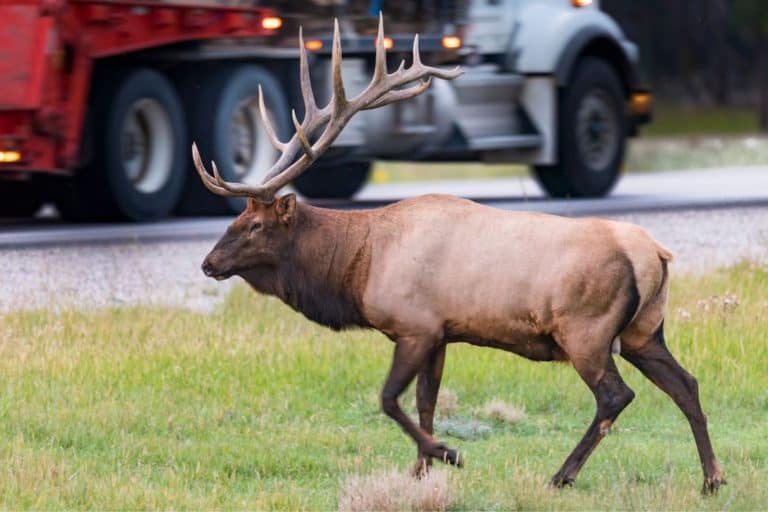
Bucks have sharp antlers and hooves that they use to defend themselves.
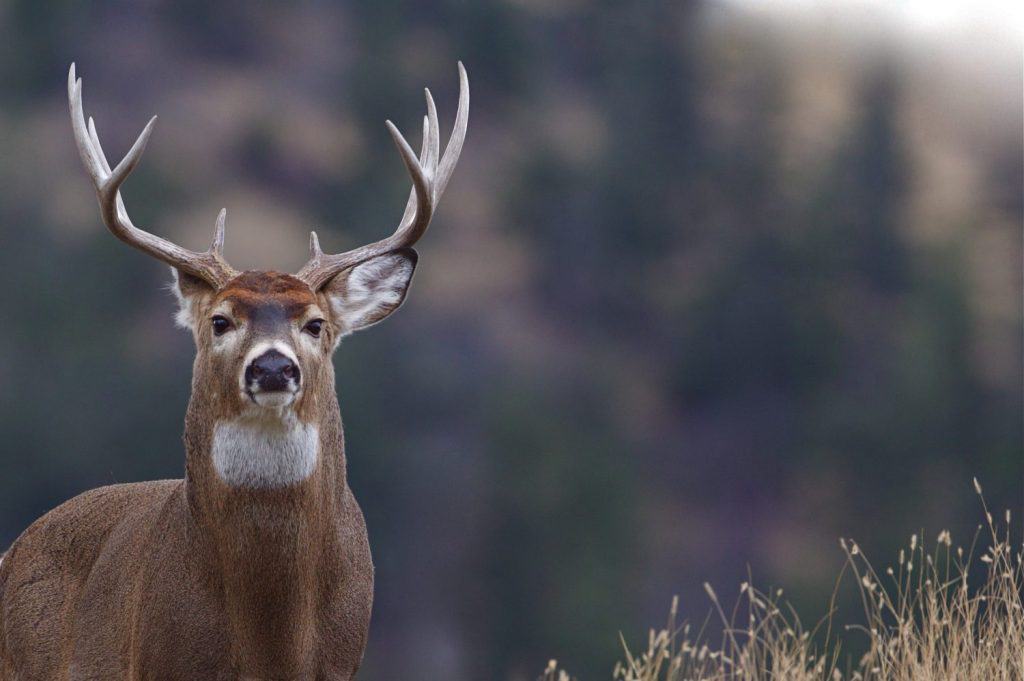
White-tailed deer can weigh up to 200 pounds, and during the rut, they’re in a mood to throw their weight around. They’re astonishingly athletic, sprinting at 30-40 mph, leaping vertically up to 8 feet from a standing start, and covering 30 feet of horizontal distance in a single bound when running at full speed.
Long-term trends including climate change can lead to incremental changes in the timing, intensity, and length of the rut over many years due to how such changes impact early fawn survival.
Martin Feehan, MassWildlife’s Deer and Moose Project Leader
Just like teenage boys showing off in fast cars, rutting bucks can be reckless and unpredictable. Stay at least 100 feet away from bucks and 50 feet from does, who are less aggressive overall. Keep pets leashed or indoors. Watch for signs of agitation, such as the deer stomping, snorting, grunting, pinning its ears back, or beginning to move toward you. Those are all warnings that you need to back away calmly and try to keep a solid obstacle, such as a tree, car, or other immovable object, between you and the deer.
Road Risk: Deer Collisions in Massachusetts
Deer are less cautious during the rut, and the roads can also be slick with snow or ice. A double reason to drive more cautiously in late fall and early winter.
Massachusetts sees a spike in deer-vehicle collisions from October through December, particularly at dawn and dusk, when rut-driven movement overlaps with commuting hours. At this time of year, be especially cautious with your driving in rural areas. Deer may be standing by the road, in it, or running unexpectedly across it. And if you see one, there are likely more in the underbrush as they are interacting with one another a lot at this time.
A Controlled Collision
If a collision is inevitable, brake in the most controlled manner you can to lessen the impact, but do not swerve sharply to miss the deer. Steering your car into oncoming traffic or rolling it over in a ditch by the road is far more dangerous than hitting the animal. Make sure no one in your car is injured and take photos of the scene for insurance purposes.
Taking Care of Deer
If you do hit a deer and it is dead, drag it from the road if you are able to do so safely. If the deer is alive, do not approach it, as it could react aggressively with its hooves, antlers, or teeth. Don’t try to euthanize severely injured animals yourself; instead, call the police to handle it. They can contact the appropriate wildlife or road cleanup departments to manage the situation safely.
From Chaos to Calm
In ideal conditions, it gives birth to twins fairly often.
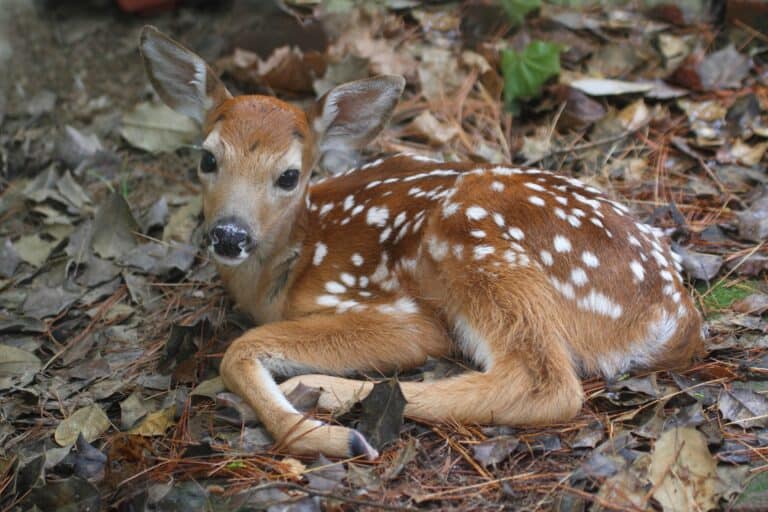
By late December, the rut winds down. Bucks grow quiet and thin, licking their wounds and retreating to winter cover. And by late spring, if the breeding was successful, spotted fawns will appear, tucked into suburban shrubs or deep in wooded undergrowth. The rut is short, wild, and chaotic—but it’s a reminder that even in one of the most densely settled states of the nation, the old rhythms of the land are still beating strong under the maples.
Drew is a college professor and freelance writer who graduated from the University of Virginia. His travels have taken him to 25 countries and 44 states, where he has enjoyed learning about wildlife in a wide range of environments. In addition to his love of animals, he enjoys scary movies, landscaping, strategy games, and philosophical discussions over a cup of coffee. He is also an emotional support human to a neurotic Spanish Water Dog and a hyperactive Chihuahua mix.
Thank you for reading! Have some feedback for us?
Contact the AZ Animals editorial team
Thank you for your feedback!
We appreciate your help in improving our content.
Our editorial team will review your suggestions and make any necessary updates.
There was an error submitting your feedback. Please try again.