
Quick Take
- Ringtail is Arizona’s state mammal, designated in 1986 to highlight regionally tied symbols.
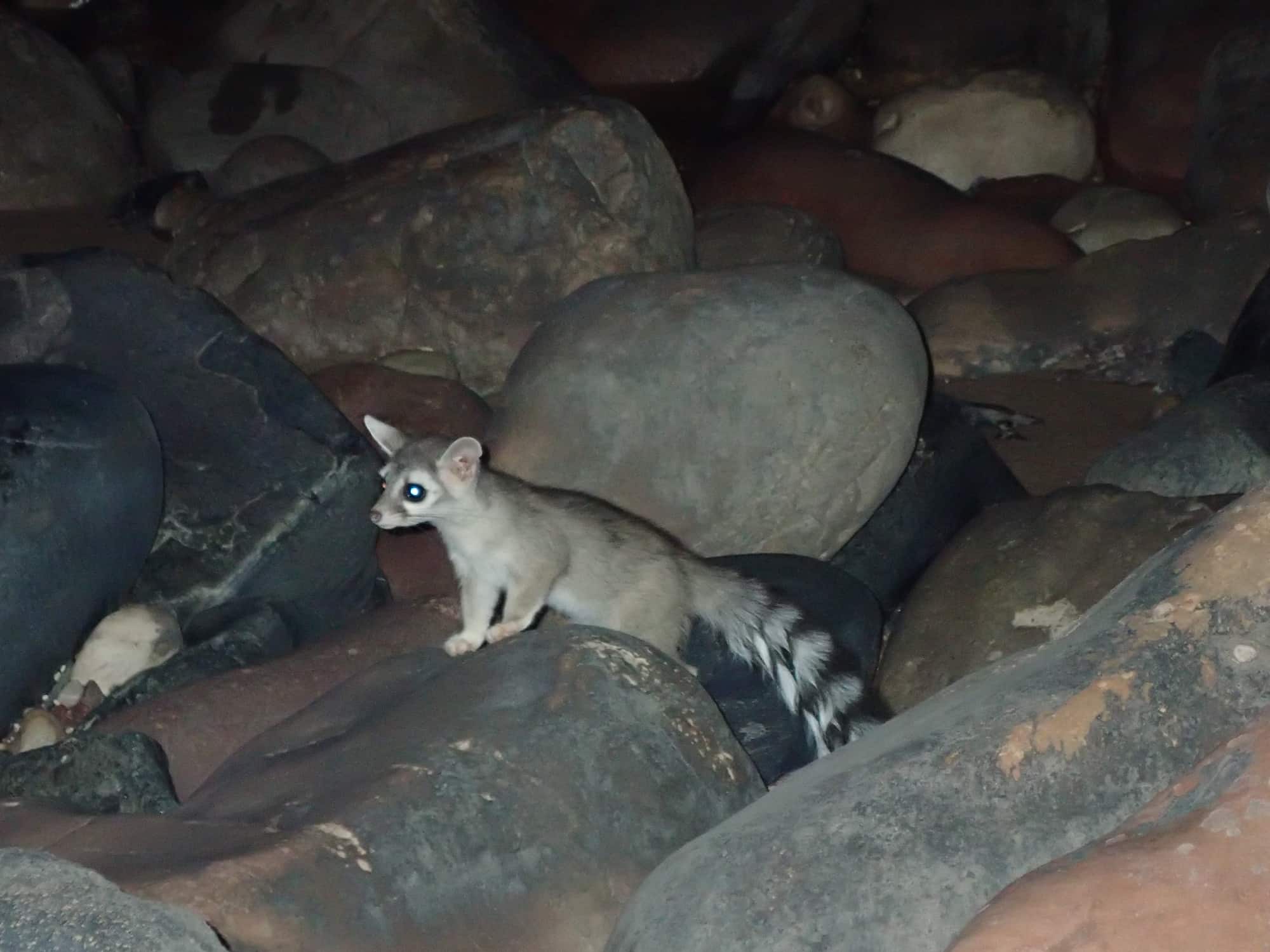
- Ringtails are nocturnal, desert-adapted raccoon-like carnivores about the size of a house cat with a ringed tail.
- They favor rocky canyons and rely on cliffs, crevices, and hollow trees for daytime shelter.
Ask people to name Arizona’s state animal, and most will guess something obvious, such as a coyote, bobcat, or desert bighorn sheep. Few expect the official state mammal of Arizona to be the ringtail, a shy, raccoon-like creature that most residents never see in the wild. This agile night hunter slips through canyon shadows, hunts rodents around old mining camps, and shows up as a security image on Arizona driver’s licenses. Its low profile makes the choice surprising, yet the ringtail fits Arizona’s history and environment in subtle ways.
Understanding how such a little-known species earned official status reveals a broader story about the state’s landscapes, frontier past, and approach to wildlife identity. The ringtail represents a form of desert life that survives quietly, avoids attention, and adapts to harsh conditions without fanfare.
How the Ringtail Became Arizona’s State Mammal
The ringtail’s designation resulted from a broader effort in the mid-1980s to formalize state identity through official symbols. In 1986, lawmakers revised the Arizona Revised Statutes to add several state animals, naming the ringtail as the state mammal alongside the Arizona ridgenose rattlesnake as state reptile, the Apache trout as state fish, and the Arizona tree frog as state amphibian. The goal was to codify symbols that were already widely used in schools, museums, and wildlife education.
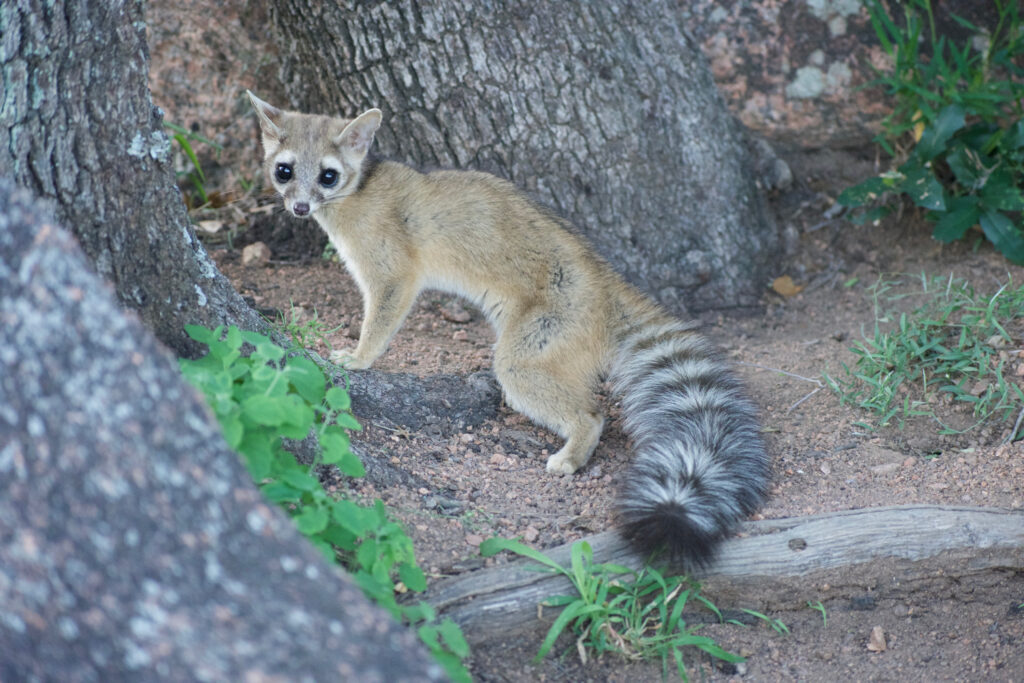
Bassariscus astutus, the ringtail, is closely associated with Arizona’s environment and culture.
©Carlos R Cedillo/Shutterstock.com
The ringtail was chosen because it reflected Arizona’s landscape and history rather than national familiarity. By the time of the vote, it was already used to represent Southwestern ecosystems and was closely associated with desert canyons, rocky terrain, and historic mining communities.
The Ringtail’s Role in Arizona’s Mining History
The ringtail’s association with Arizona history dates back to the mining boom of the nineteenth and early twentieth centuries. Miners discovered that ringtails were effective at controlling rats and mice in camps, cabins, and mine shafts. When raised around people, they could become relatively tame, leading to nicknames such as “miner’s cat” or “ringtail cat.”
Although not domesticated, these animals often tolerated human presence and returned nightly to familiar shelters. Stories from mining districts describe ringtails sleeping in rafters during the day and hunting vermin at night. Before modern pest control methods, this natural rodent control proved valuable. Over time, such stories became part of regional folklore, linking the ringtail to images of self-reliance and adaptation in harsh conditions.
Physical Characteristics of the Ringtail
Ringtails belong to the raccoon family, Procyonidae. They are roughly the size of a slim house cat, with a pointed muzzle and large eyes suited for low-light conditions. Their coats are usually yellowish or grayish brown on the back, with lighter fur on the belly. The most recognizable trait is the long, bushy tail marked with alternating black and white rings and ending in a dark tip.
Adults typically measure about 24 to 32 inches from nose to tail tip and weigh between 2 and 3 pounds each. Their ears are large in proportion to their heads, which helps with hearing in rocky terrain. Ringtails can rotate their hind feet almost 180 degrees, which allows them to climb down cliffs and trees headfirst with ease.
The ringtail’s body structure reflects a life spent navigating steep, uneven surfaces. Its semi-retractile claws provide grip on rock faces, tree bark, and wooden beams. Flexible ankles and rotating hind feet allow quick changes in direction, which proves useful when chasing prey or escaping predators. The tail acts as a counterbalance, helping the animal move across narrow ledges and jump between boulders.
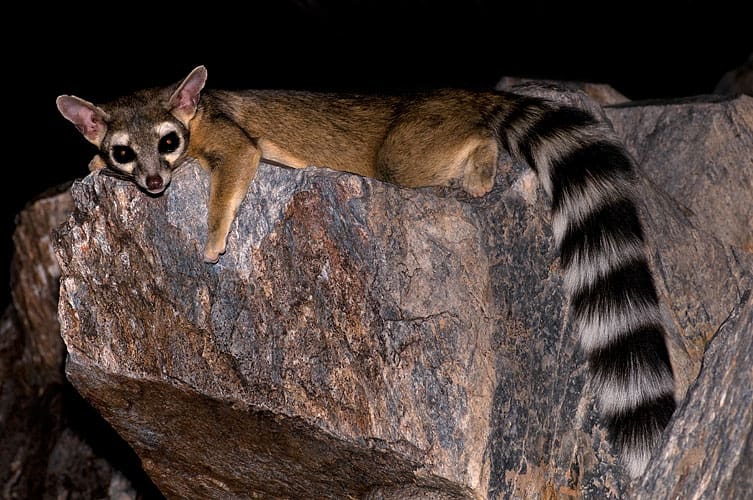
The long tail of the ringtail helps it balance jumping from boulder to boulder.
These adaptations make the ringtail one of the most agile small carnivores in the desert Southwest. Unlike many ground-dwelling mammals, it spends a great deal of time above ground level, moving through canyon walls, cliffs, and trees. These climbing skills also explain why ringtails often choose den sites in locations that are difficult for larger predators to reach.
Although it serves as Arizona’s state mammal, the ringtail’s range extends far beyond state borders. It occupies much of the arid and semi-arid western United States, including parts of California, Oregon, Nevada, Utah, Colorado, New Mexico, Texas, and Kansas, as well as much of Mexico.
Within Arizona, ringtails favor rocky habitats such as desert canyons, chaparral slopes, and pinyon-juniper or oak woodlands. They rely on cliffs, crevices, caves, and hollow trees for daytime shelter. National parks like Saguaro National Park and Grand Canyon National Park report ringtails as relatively common but rarely observed due to their nocturnal habits. A single animal may use several dens within its home range, shifting locations to avoid disturbance or to track food sources.

Saguaro National Park is one of the protected habitats of the ringtail.
©high fliers/Shutterstock.com
Ringtails show a surprising tolerance for human presence, as long as they remain undisturbed. In rural areas, they sometimes den in abandoned buildings, barns, or old mine shafts. In towns and suburbs, individuals occasionally take up residence in attics, sheds, or unused outbuildings.
Despite this proximity, most people never notice them. Ringtails usually emerge only after dark and move quietly through washes, ravines, and tree lines. When conflicts do occur, they usually involve noise from attic activity or minor damage caused by denning. Wildlife officials generally recommend exclusion rather than removal, as ringtails play a helpful role in reducing rodent populations around homes and agricultural areas.
Ringtails are strictly nocturnal. They leave their dens shortly after sunset and return before sunrise, which helps them avoid daytime heat and many predators. Their diet is varied and opportunistic. Small mammals such as mice, woodrats, and ground squirrels make up a large portion of their food intake. They also hunt birds, reptiles, amphibians, and large insects when available.
Plant matter, such as fruit and berries, supplements their diet during certain seasons. This flexibility allows ringtails to survive in environments where food availability changes throughout the year. In the wild, ringtails typically live around six to seven years, though many do not reach that age due to predation and environmental stress. In captivity, individuals have lived more than a decade.
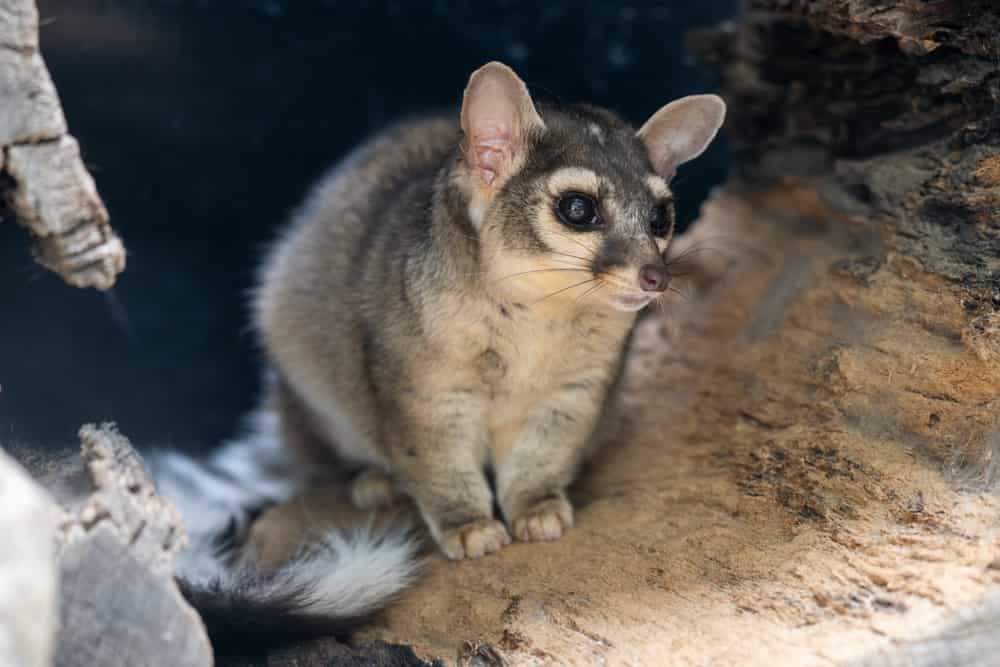
Ringtails are a strictly nocturnal species.
©Jason Mintzer/Shutterstock.com
Ecological Importance and Modern Symbolism
Today, the ringtail represents more than Arizona’s frontier past. Biologists emphasize its role as a mid-level predator that helps regulate rodent populations, which supports healthier plant communities and can limit the spread of some rodent-borne diseases. Wildlife managers also view the ringtail as a quiet indicator of habitat quality. Because it depends on intact rocky areas and riparian corridors, its presence often signals relatively undisturbed conditions.
The species has also adapted to modern landscapes. Occasional sightings along washes, greenbelts, and near older structures remind residents that native wildlife still occupies developed areas. Unlike larger mammals that generate conflict, the ringtail is elusive and largely unnoticed. That low profile has helped shape its meaning as a symbol of coexistence, reflecting Arizona’s ongoing balance between growth and conservation.
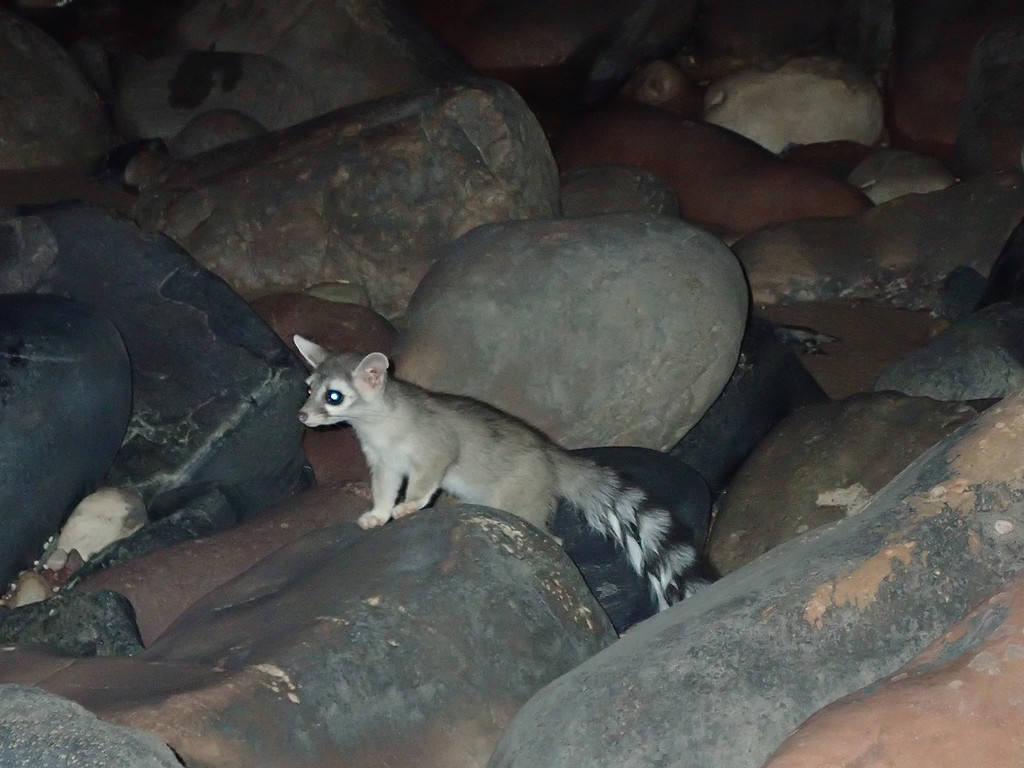
Ringtail cat in Grand Canyon National Park in Arizona.
©lorentrager/iStock via Getty Images
Conservation Status and Future Outlook
Ringtails are not listed as threatened or endangered at the state or federal level. Their broad range and flexible behavior have supported stable populations across Arizona. However, habitat fragmentation, loss of riparian corridors, and vehicle traffic remain long-term concerns. Conservation efforts focus on protecting natural movement corridors, preserving den sites, and promoting public awareness of nocturnal wildlife.
Because ringtails rarely pose risks to people or pets, management typically relies on tolerance rather than intervention. Education has proven effective in reducing unnecessary removal and encouraging coexistence. Protecting habitat for ringtails also benefits a wide range of other desert species, making them part of broader ecosystem-focused conservation strategies.
For many Arizonans, the ringtail remains an unseen presence, known more through images, museum displays, or the driver’s license than through direct encounters. Learning about the species often changes how people view rocky washes, canyon walls, and abandoned structures, transforming overlooked spaces into potential habitat.