
For many animals, this is an eat-or-be-eaten world. Peaceful plant-eaters are at the mercy of some of the fiercest meat-eaters in the world. When most of us think of carnivores, we probably think of animals like lions, tigers, wolves, and bears. What is the largest of these animals? The answer may surprise you. Keep reading to learn about the largest carnivore in the world.
What Is a Carnivore?

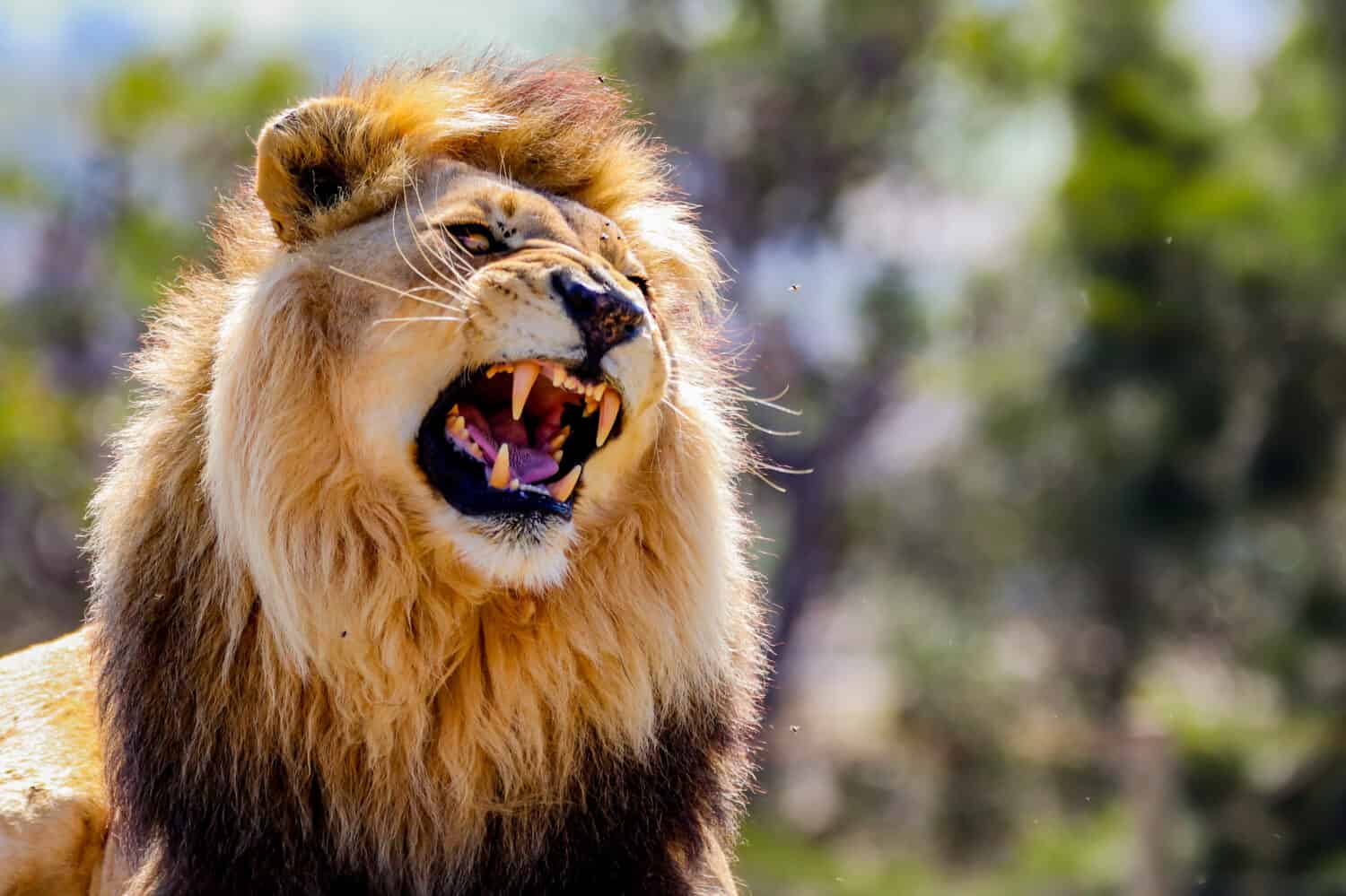
Lions are carnivores that hunt other animals for food.
©Vladimir Turkenich/Shutterstock.com
A carnivore is an animal that gets its nutrition from the flesh of other animals, either as hunters or scavengers. Carnivory occurs on a spectrum. Some carnivores get most or all of their nutrients from other animals and are called hypercarnivores. Mesocarnivores get 30-70% of their nutrients from animals, while hypocarnivores get less than 30%. Mesocarnivores and hypocarnivores are more commonly known as omnivores, since not all of their nutritional requirements are met by eating meat.
As we mentioned, the first animals that likely come to mind as carnivores are big cats, wolves, or bears. These animals come from the order Carnivora, which is made up of placental mammals that eat flesh. However, not all of these animals are carnivores, although that would seem to be indicated by the name. The order includes bears, most of which are omnivores, and even the panda, which is an herbivore. While the carnivores of this order can grow to exceptional sizes, there is a reason why this order does not include the largest carnivores.
Are Ocean Carnivores or Terrestrial Carnivores Larger?
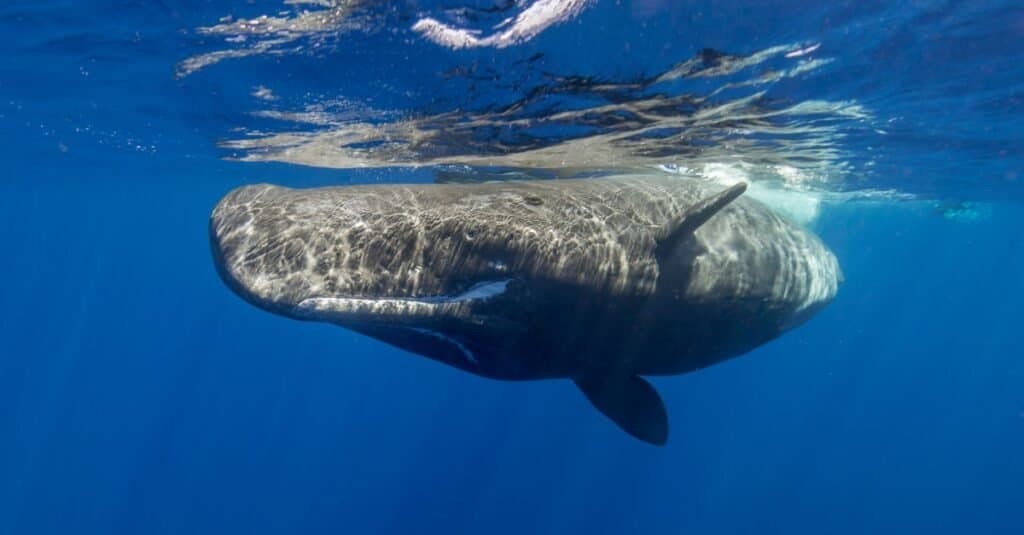
The sperm whale is among the largest whales in the ocean.
©wildestanimal/Shutterstock.com
We’ll have to look to the ocean to find the largest carnivores on the planet. Aquatic animals tend to be larger than terrestrial animals. Scientists believe this is a response to the frigid temperatures of ocean waters. Larger animals have more cells, which allows them to generate more heat.
Although some members of the order Carnivora are aquatic mammals such as seals and walruses, the largest carnivores come from the order Cetacea — whales, porpoises, and dolphins. Of these three types of mammals, we are of course referring to whales.
Toothed Whales vs. Baleen Whales
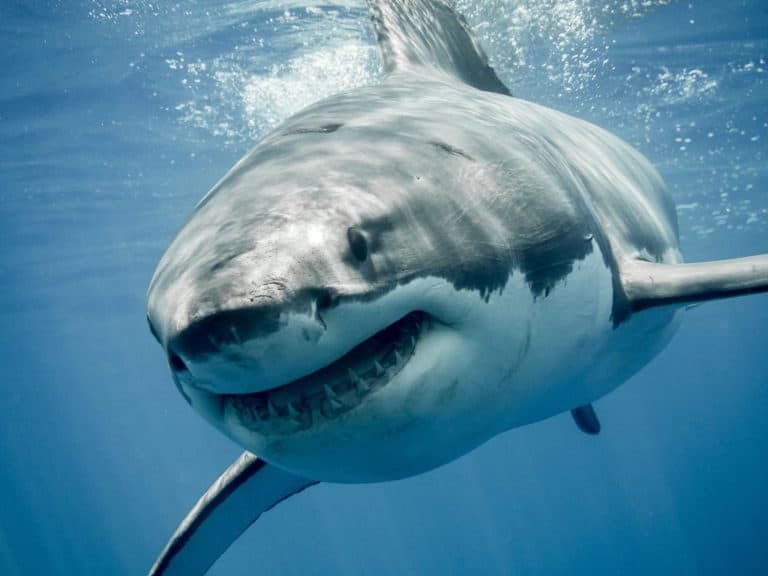
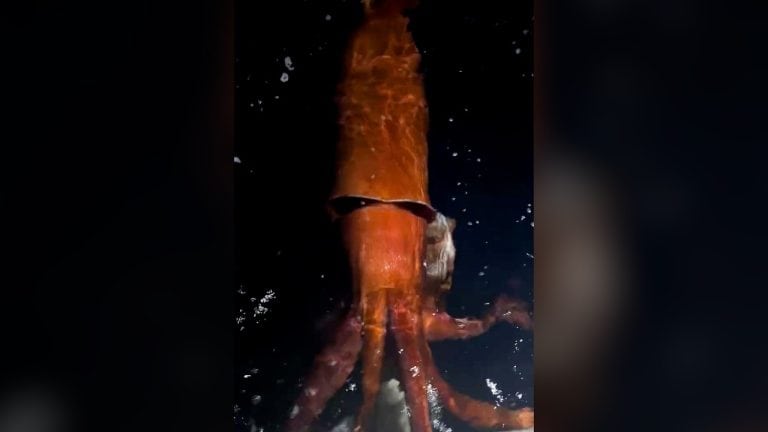
Whales are the largest animals on Earth and can be divided into two types: toothed and baleen. When many people think of carnivores, they think of toothed animals. The most enormous toothed whale in the ocean is the sperm whale. Sperm whales dive to great depths to hunt their prey, which includes squid, sharks, and large fish.
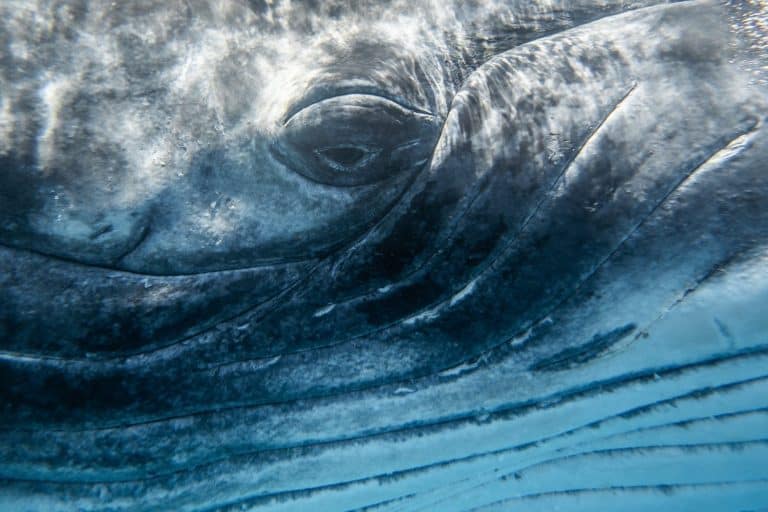
Although toothed whales may fit our image of fearsome carnivores, they cannot compare to their baleen whale counterparts in terms of size or appetite. Baleen whales consume more animal mass than any other animals on the planet, and no whale consumes more than the blue whale.
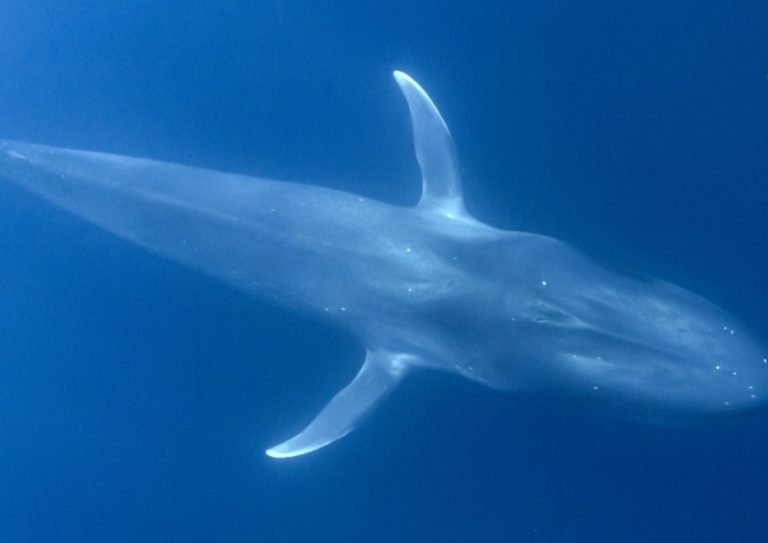
Largest Carnivore in the World: The Massive Blue Whale
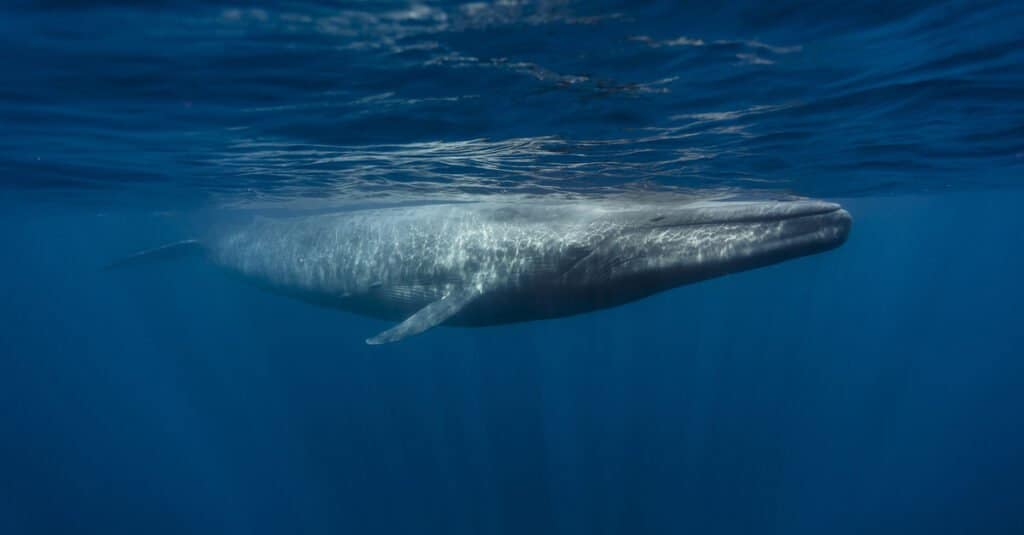
Blue whales can eat over 17 tons of food per day.
©Andrew Sutton/Shutterstock.com
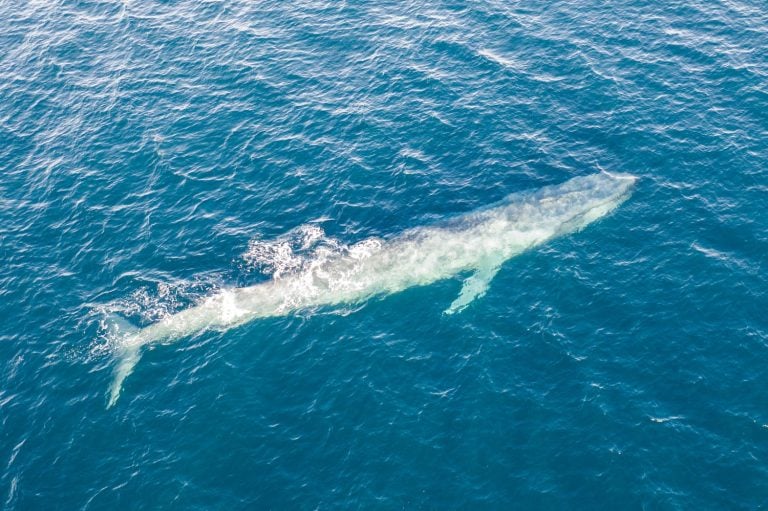
The world’s largest carnivore is the blue whale. At a maximum size of 110 feet and weighing over 330,000 pounds, it is also the world’s largest animal. The largest verified individual weighed nearly 419,000 pounds. Blue whales filter feed on krill, which are tiny crustaceans. They do this by lunging through giant clouds of krill with their mouths open. They close their mouths around the krill and push the water out with their tongues, using their baleen plates as a strainer so they can consume only the krill. Blue whales compensate for this by eating up to 35,000 pounds of krill per day. That’s the equivalent of 8,800 quarter pounders each day. No other creature in the world compares in size — or appetite.