
Ravens and crows are among the most fascinating birds in the world, captivating people with their intelligence, adaptability, and striking black plumage. While they may look similar at first glance, these members of the corvid family differ in size, behavior, and social habits. Long celebrated in myths and folklore, ravens and crows continue to spark curiosity today, reminding us that these clever creatures are far more than ordinary backyard birds. But how are ravens and crows as pets? Let’s find out!
This post was updated on August 26, 2025, to clarify the law protecting crows and ravens in the U.S., as well as when it is legal for those in the agriculture industry to kill them.
What Are Ravens and Crows?
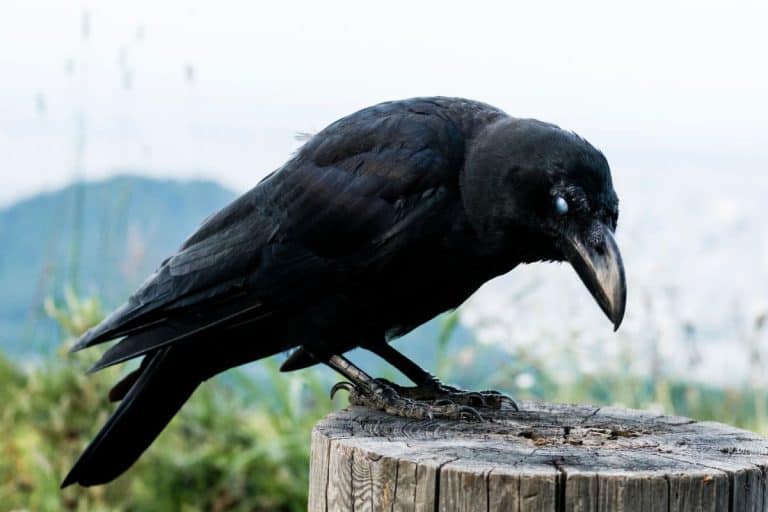
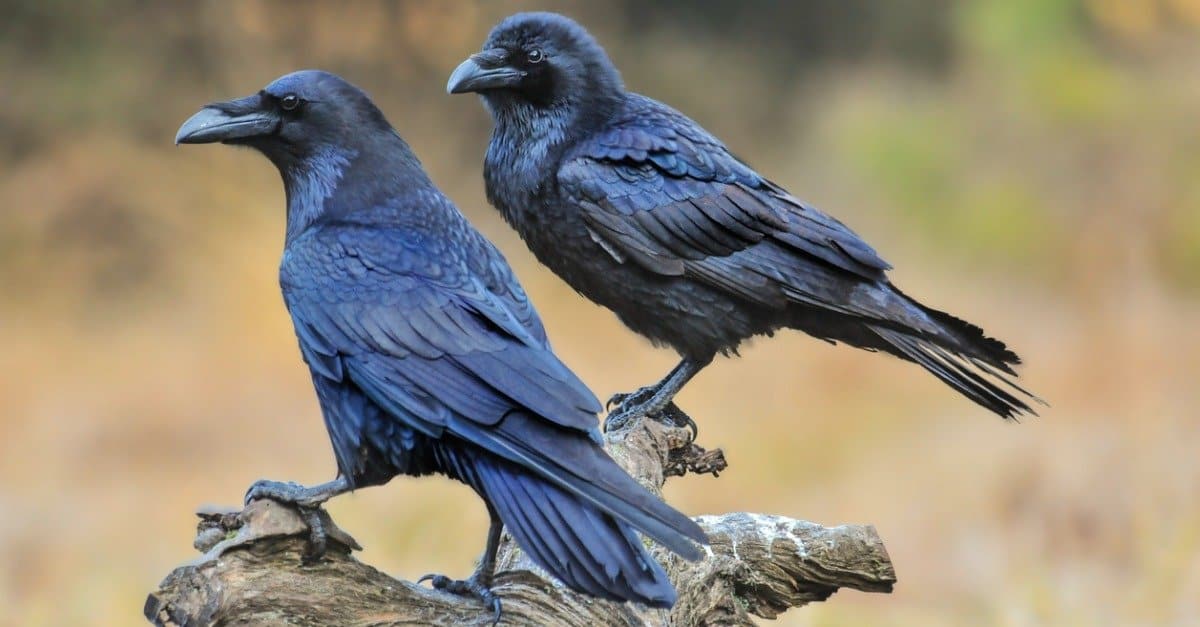
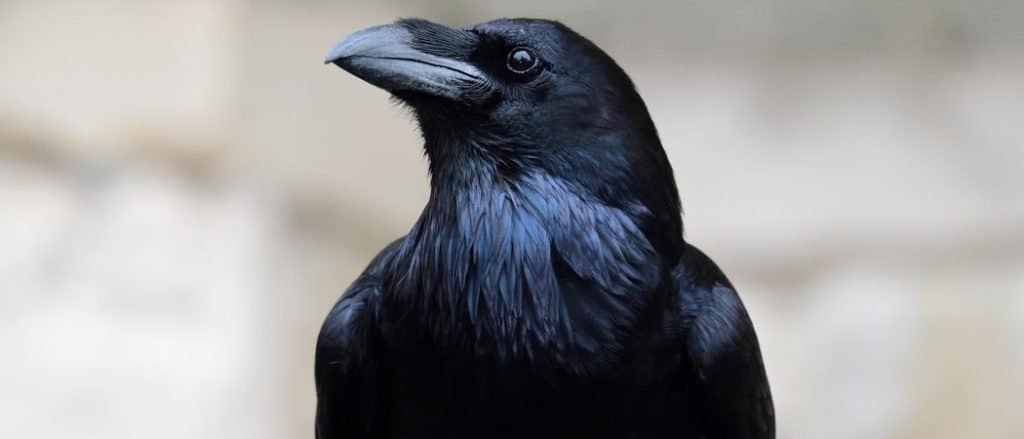
It is not so easy to tell ravens and crows apart at first glance, but common ravens are bigger than American crows. They are usually seen flying with a partner whereas crows like to gather in larger groups. They are very sociable and are quite scandalous in the way they express themselves.
Ravens have bigger and curvier beaks. They also have bigger bristles (mustache-like hairs). Crows are extremely intelligent; they can recognize people’s faces for years, as unbelievable as that sounds! Crows also mourn the death of a member of their flock and participate in funeral rituals. They seem to have found a way to say their final goodbyes.
Why Ravens and Crows Don’t Make Good Pets
According to the Migratory Bird Treaty Act of 1918 (MBTA), it is Illegal to keep crows as pets unless you have a special permit. Ravens are similarly prohibited from being kept as pets, but some states allow it with additional permitting. It’s important to check your state’s rules and regulations concerning these birds.
Common ravens (Corvus corax) are protected in the U.S. west of the Mississippi under the MBTA, but not everywhere historically. Alternatively, crows are universally protected. The act that was passed is for their protection from (guess who?) humans!
There are some exceptions to their federally protected status for regulated hunting or in cases when and where these birds become a nuisance. Now, just because a crow is bothering you is not a legal reason to kill it. The federal government classifies crows as migratory non-game birds, but states can establish hunting seasons for crows under regulations set by the U.S. Fish and Wildlife Service.
Pennsylvania, for example, has a dedicated season for hunting crows. The 2025-2026 season began on August 21 and ended March 22, and there was no bag limit. As with nearly all hunting, a license or permit is required. Check with your state’s agency responsible for hunting for more information.

Crows enjoy their freedom with the world as their playground.
©Tiffany Sims/Shutterstock.com
They Need Tons of Space
Crows and ravens always claim their space. They should never be domesticated anywhere in the world as they can become angry if they feel threatened. To confine these birds would be cruel. And remember, crows hold grudges and recognize faces.
They Require Socialization for Their Health
Both ravens and crows need emotional and physical interaction—and not with humans. If they can’t meet these basic social needs, they become hostile. They need each other in their natural environments.
Their Beaks Aren’t Harmless!
Don’t get too close to these birds. They bite! It is very intriguing to watch such amazing birds (and we encourage bird watching!) but you must do so from a safe distance.
They’re Loud
Many would say that they are a bit too loud, and they might be right. But it makes you wonder with their intelligence, what is it they are trying to say? They use different sounds to communicate different messages, making their language more complex than you might have initially thought. Trying to be secretive while illegally keeping these birds is nearly impossible.
They’re Meant to Live in the Wild
Crows and ravens are very creative when it comes to finding their favorite foods such as bits of meat and nuts. They are even capable of using tools like wooden sticks to retrieve food. The way you’re accustomed to a certain lifestyle, so are crows and ravens. To be trapped and kept for the enjoyment of others would destroy their overall well-being, including their mental health.
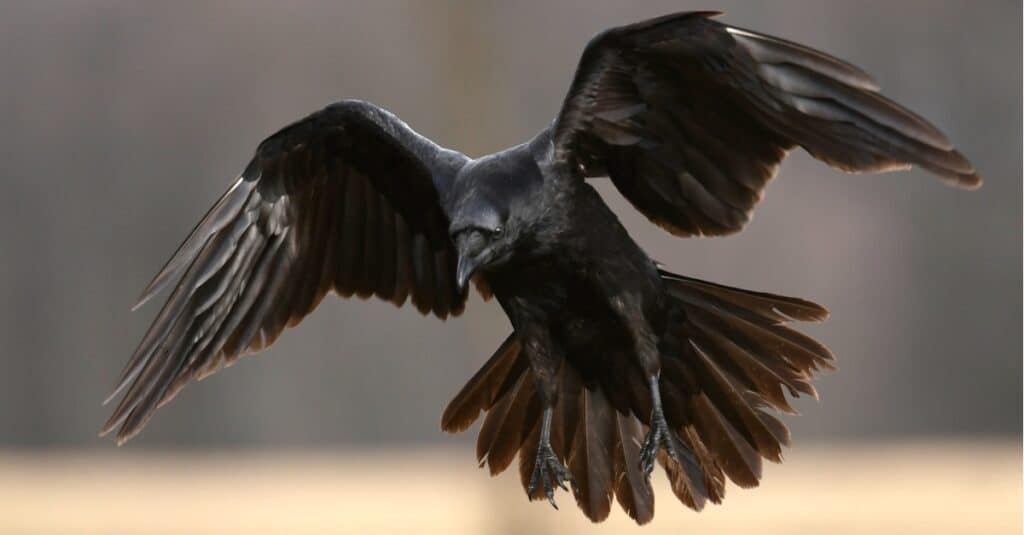
Ravens, like crows, are one of the few animals that regularly use tools to obtain food.
©iStock.com/Piotr Krzeslak
Ravens and Crows Kept with a Wildlife Captivity License
Under Depredation Orders, farmers in certain cases may kill American crows without a federal permit (if they are harming crops or livestock), but they must comply with state law. For ravens, killing usually requires a federal depredation permit unless under very specific conditions (livestock depredation in certain western states).
Do Ravens Bond with Humans?
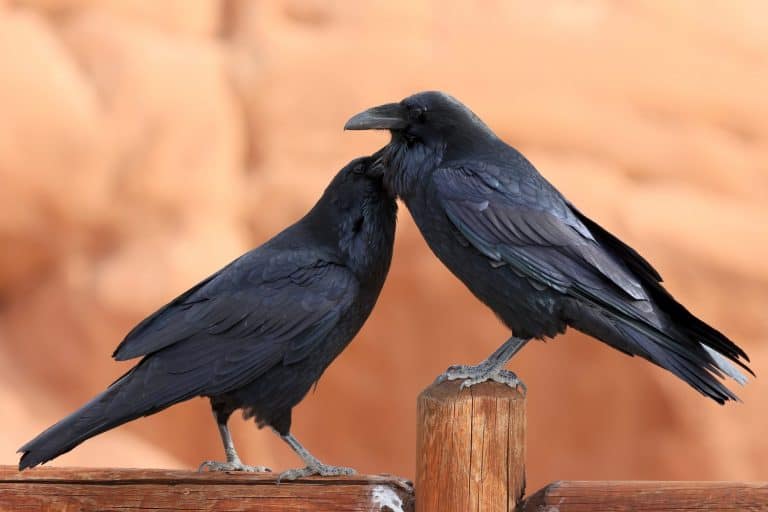
A group of ravens is known as an “unkindness.”
©Tom Meaker/Shutterstock.com
Ravens are known for their intelligence, and they also prove to be inquisitive and devoted companions. Despite being termed an “unkindness” when in a group, they are lovable and sociable creatures.
A study published in 2015 in the journal Behavioral Ecology and Sociobiology revealed that crows tend to be more cautious around unfamiliar individuals compared to ravens.
However, they display greater comfort around humans they’ve previously interacted with.
Furthermore, ravens who had prior positive interactions with experimenters were more inclined to engage with them based on their firsthand experiences, and this memory persisted for a minimum of about one month.
Alternatives to Ravens and Crows as Pets
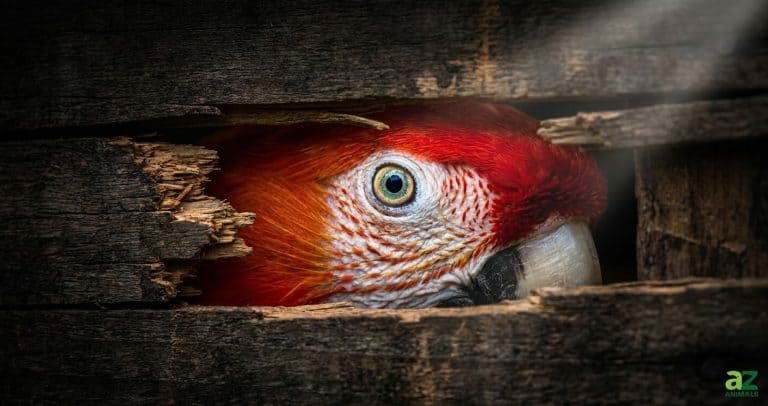
In a nutshell, if you are thinking about a crow or a raven as a pet you must look elsewhere. For instance, you might consider a different type of bird like a parrot or a cockatoo. These birds are fun to have around, and you can own them legally (but check your state’s restrictions). These birds also display intelligence and mimic human voices, which makes for an even more intriguing time.
Keep your love for ravens and crows by further engaging in birdwatching activities. You might even want to make your yard a bit more attractive to them. Fruits, steak, or chicken carcass leftovers, nuts, insects, and worms are yummy treats for these birds. It’s not that you can’t enjoy their presence, you just have to honor their wild nature. Appreciate them from a distance and gain a better understanding of how they behave when allowed the freedom to enjoy their lives to the fullest.