
Quick Take
- Hoatzin chicks pull off a daring escape from predators that no other modern bird attempts, and the whole feat hinges on a body part that vanishes before adulthood. See the escape sequence →
- The wing claws on a baby hoatzin echo fossils from 150 million years ago, though scientists say the connection isn't what it appears to be. Explore the Archaeopteryx link →
- Baby hoatzins can do something most birds can't, and they lose this ability entirely by the time they're 100 days old. How the claws disappear →
- Wing claws aren't even the strangest thing about this bird. Its digestive system earned it a nickname most animals would find insulting. Discover the digestive oddity →
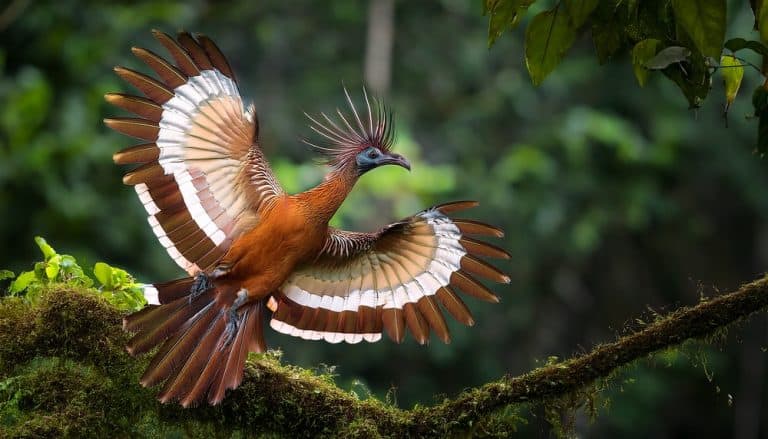
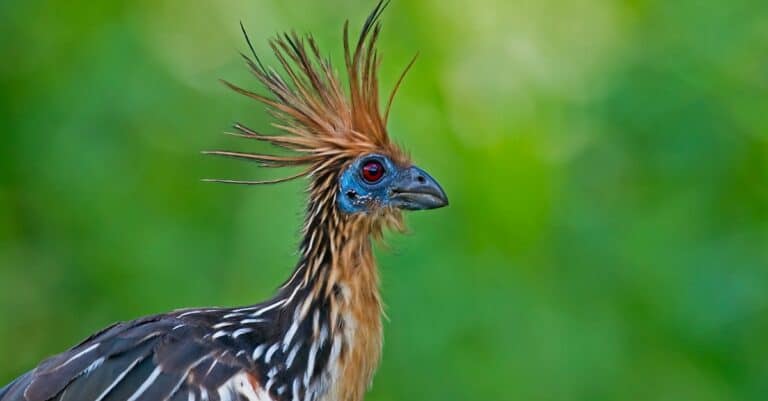
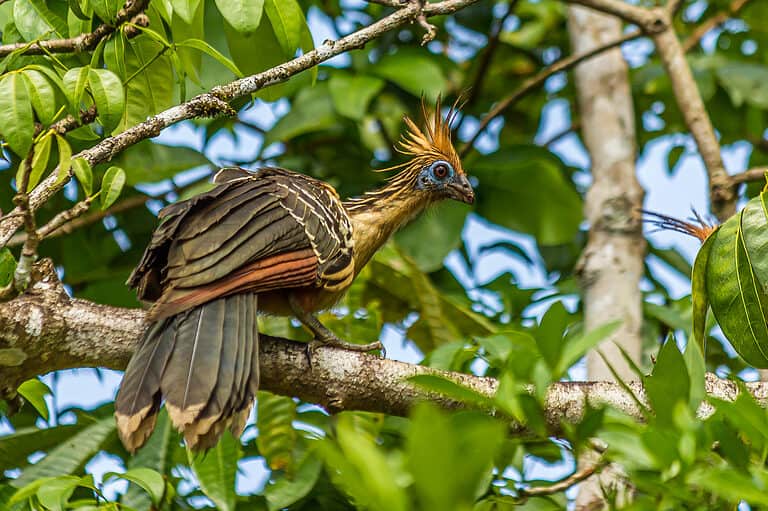
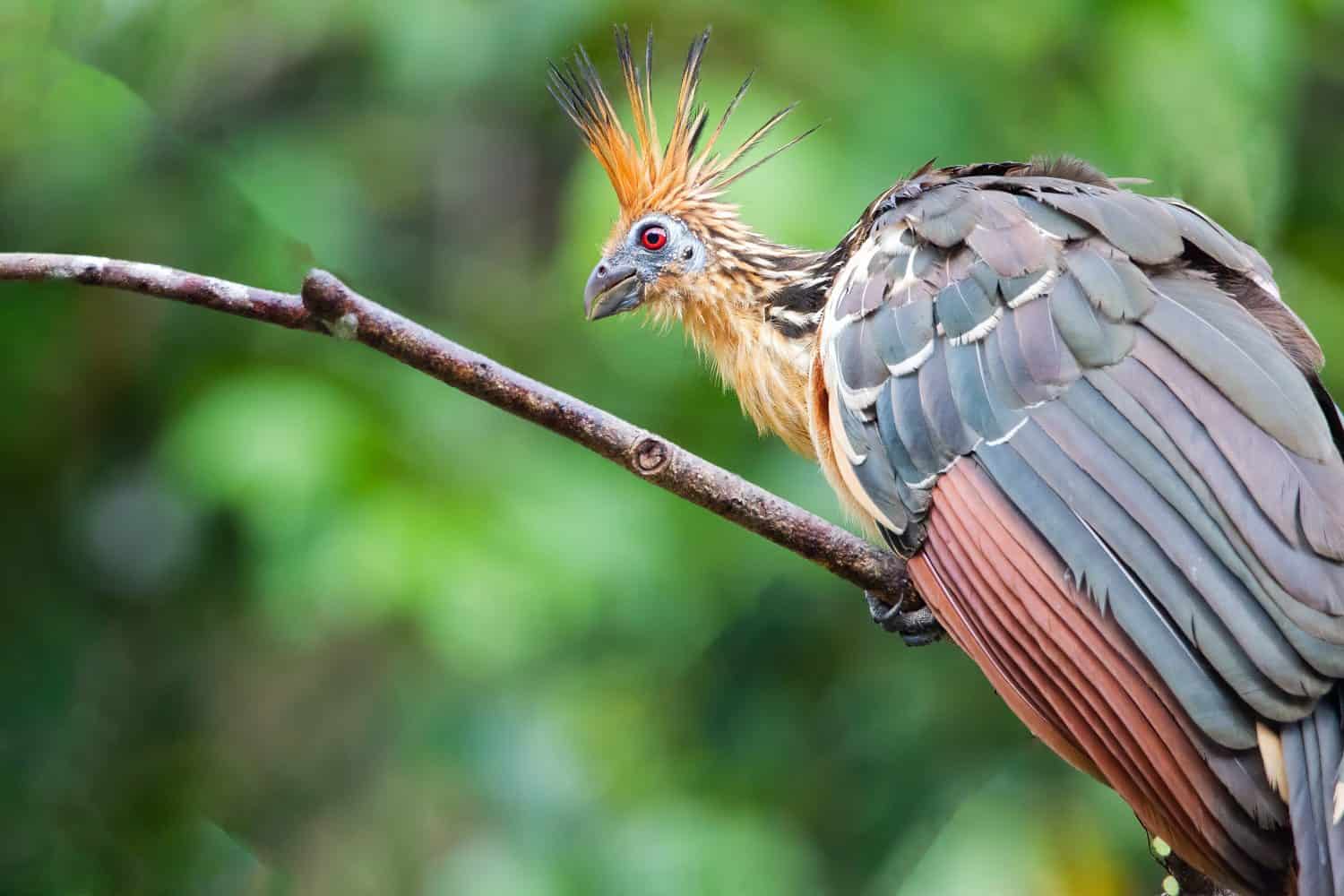
Deep in the Amazon rainforest lives a most unusual bird. The hoatzin is a poor flyer with a distinct physical appearance, including its chicken-sized body, bright blue face, spiky orange crest, and beady red eyes. Even stranger than its appearance is the evolutionary anomaly that appears only in the chicks.
Young hoatzins have functional claws on their wing joints. They use these unusual claws to climb tree branches and clamber back into their nests after plopping into the water below to evade predators.
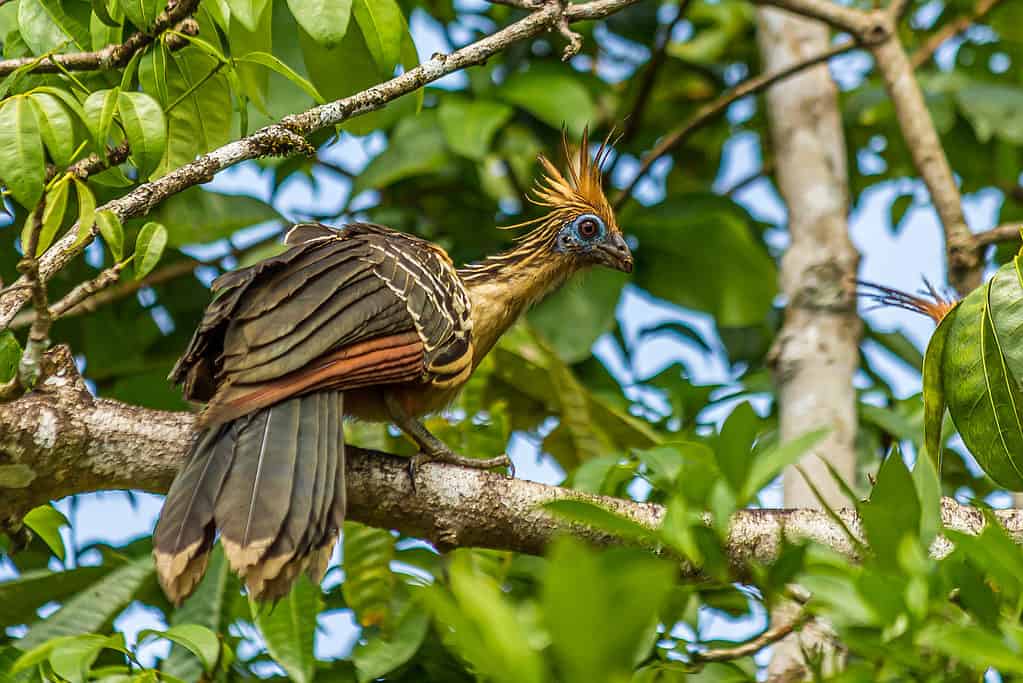
Hoatzins live in swampy areas and near slow-moving rivers of the Amazon and Orinoco river basins.
©Dmitrii Kash/Shutterstock.com
Baby Hoatzins Use Wing Claws to Escape Predators
The hoatzin (Opisthocomus hoazin) is the sole survivor of an ancient lineage. Around 65 million years ago, the hoatzin branched off from the rest of the avian tree. Today, the species is the only living member of its genus (Opisthocomus), family (Opisthocomidae), and order (Opisthocomiformes).
Nicknamed the “dinosaur bird,” hoatzin chicks possess functional wing claws. This is a trait seen in some ancient birds. What makes the hoatzin chick extraordinary is not just the presence of wing claws, but the fact that they use them for survival.
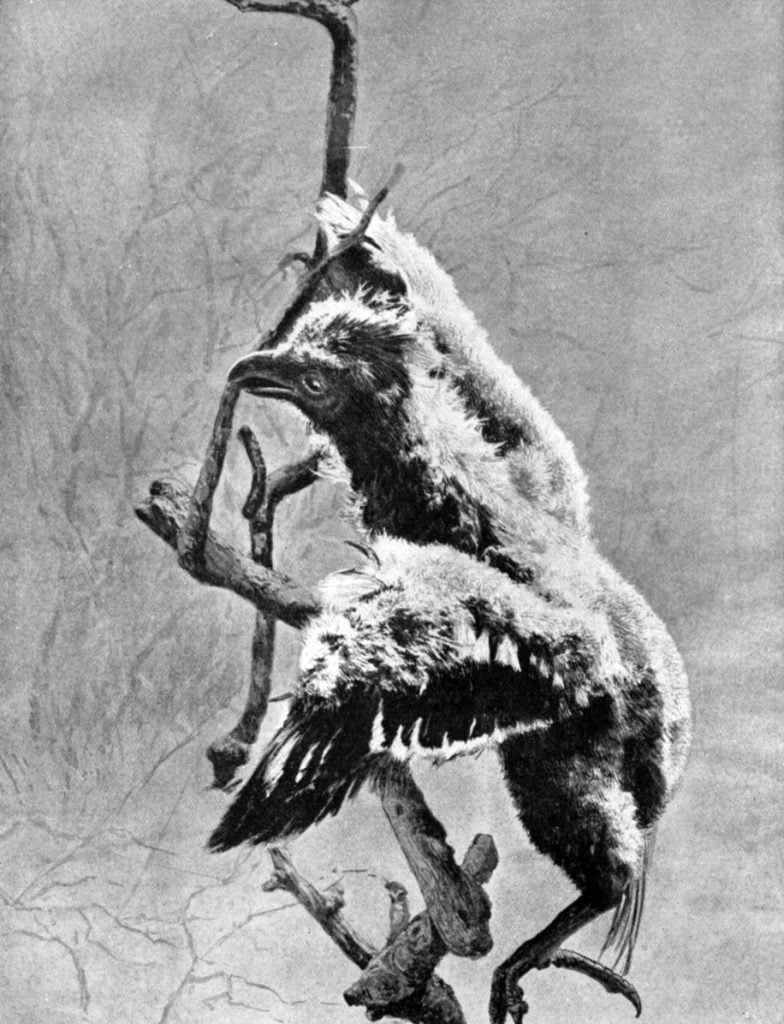
Hoatzin chicks use their wing claws to climb back into their nests after dropping out to avoid predators.
©Public Domain – Original
Adult hoatzins nest in overhanging branches above rivers and flooded forests in the Amazon and Orinoco basins. Many predators lurk in the jungles, so the only way for the chicks to escape is to jump into the water.
When the nestlings sense danger from common predators, such as tree-climbing snakes, tayras (members of the weasel family), or capuchin monkeys, the little birds leap into the water. Thankfully, baby hoatzins know how to swim.
Once the threat is gone, they climb through vegetation and low-hanging branches to clamber back into the safety of their nests. As the chicks grow into fledglings and adults, the wing claws become smaller and are typically shed at around 70 to 100 days old.
What Hoatzin Wing Claws Reveal About Bird Evolution
The presence of hoatzins’ wing claws has long fascinated scientists. The claws resemble those seen in fossils of Archaeopteryx, an extinct bird-like dinosaur. Archaeopteryx is one of the earliest known birds and is considered a transitional species between dinosaurs and birds.
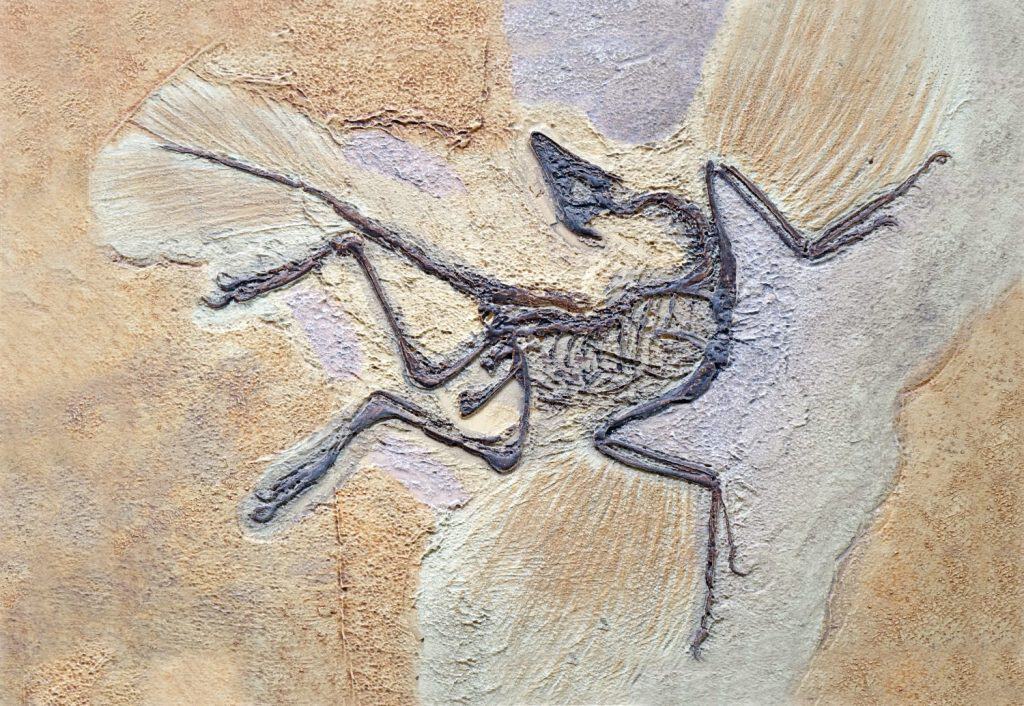
Hoatzin chicks’ wing claws resemble those seen in fossils of Archaeopteryx, an extinct bird-like dinosaur.
©Mark Brandon/Shutterstock.com
However, hoatzins are no more closely related to Archaeopteryx than any other living bird. A few living birds, including ostriches and turacos, retain small wing claws. Unlike hoatzin chicks, they don’t use them for climbing. Hoatzin chicks provide scientists with a fascinating example of avian evolutionary history.
More Than Wing Claws Make the Hoatzin Unique
Wing claws aren’t the only feature that makes the hoatzin unique. Unlike other birds, they eat a leaf-based diet, which requires an enlarged crop that works as a fermentation chamber, just like a cow’s, to digest the vegetation. Digestion can take up to 45 hours and is reportedly foul-smelling, which is where the bird gets its nickname, “stinkbird.”
These distinctive birds, with their temporary claws and other unique features, offer a rare glimpse into how modern birds may have looked and behaved millions of years ago.