
Quick Take
- Climate change reshapes migration and habitats worldwide, forcing earlier migrations and new habitats for many species.
- Asian elephants have lost about 95% of their original habitat, with under 23,000 remaining in India.
- Wildlife SOS combats these challenges with habitat restoration, planting over 900,000 trees, and GPS tracking and drones for monitoring.
As of 2025, we have more research than ever before regarding climate change and its consequences. As planet Earth heats up, many species feel the effects of an ever-changing climate. This leads to altered migration patterns, a shift in hibernation, and, for some, even a new habitat. As marine and terrestrial animals try to align their internal clocks and instincts with a more unpredictable season, many have already deviated from their typical routines.
We had the chance to speak with Nikki Sharp, the Executive Director of Wildlife SOS, to learn how they’re seeing this happen in real time.
How Is Climate Change Affecting Animals Worldwide?
One of the most significant changes scientists observe is a shift in migration routes. Many species are shifting their timelines to begin their journey much earlier. This is done for several reasons, including to avoid extreme, unpredictable weather. For insects, such as pollinators, if they don’t leave their hives earlier than in years past, they miss the first blooming flowers of the season. According to Hudson University, even mammals are feeling this shift, including Caspian red deer. The deer migration pattern now occurs up to 20 days earlier, as these deer ascend to higher ground before hotter days arrive.
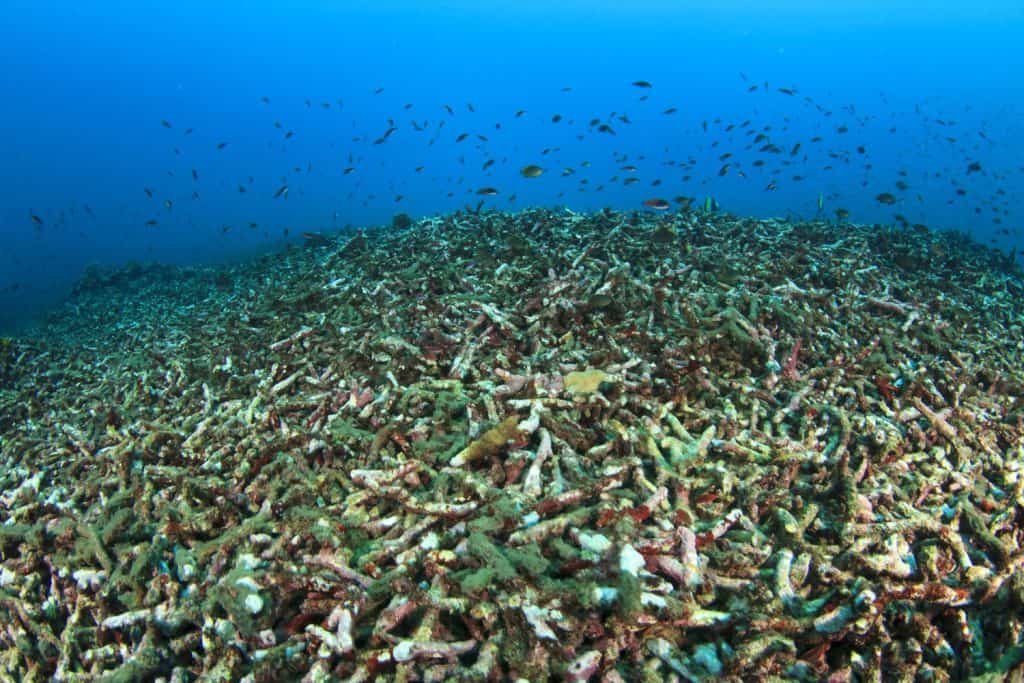
Coral reef bleaching is a result of climate change.
©Rich Carey/Shutterstock.com
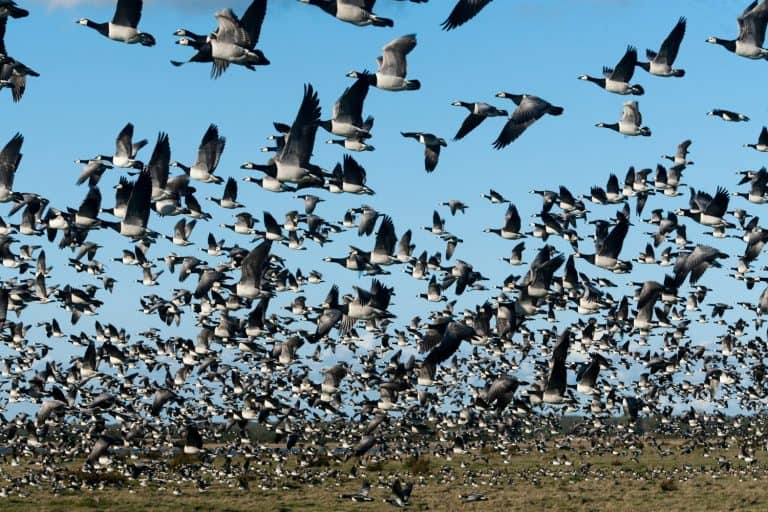
Birds are another group of animals experiencing the effects of climate change. As weather patterns become unpredictable, many songbirds are trading a late season for a head start on migration. Some have even changed direction in search of more abundant feeding grounds. Extreme heat is partially to blame for the lack of food sources, as land has dried up quickly in recent years.
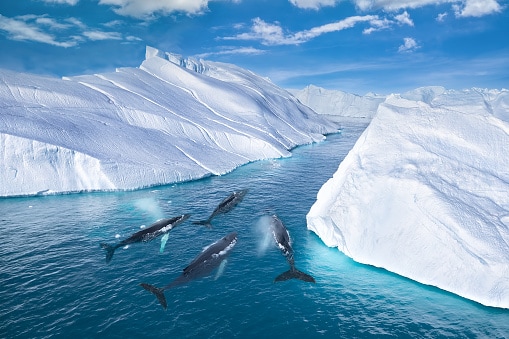
Arctic animals are also feeling this struggle. While polar bear habitats continue to make the news with reports of melting icecaps and fewer food sources, these massive mammals are not the only Arctic residents suffering. Studies now show that caribou struggle to cross riverways, limiting their migration patterns, food searches, and mating abilities. Other Arctic species, such as walruses, reindeer, Saimaa ringed seals, narwhals, and Arctic foxes, are also suffering due to climate change. Because of these ramifications, animals that mate face a higher risk of offspring mortality due to the unnatural cycles of their biological clocks.
What Does Conservation Look Like in the Face of Climate Change?
Conservation nonprofit Wildlife SOS was founded in 1995 in India. Over the years, they’ve witnessed countless species declines amid the struggles climate change poses to our wildlife. Nikki Sharp shares how conservation looks now, in the face of climate change, compared to ten years ago.
“Conservation today has many of the same priorities it had a decade ago, but there have been important changes in the tools and technologies available to support these efforts. Individuals now have more ways to reduce their impact on the environment, such as adopting solar energy or choosing electric vehicles,” she says. “For conservation organizations, advancements in GPS tracking, drones, and field-based data collection allow us to understand wildlife behavior better and make more strategic decisions that benefit the species we are trying to protect.”
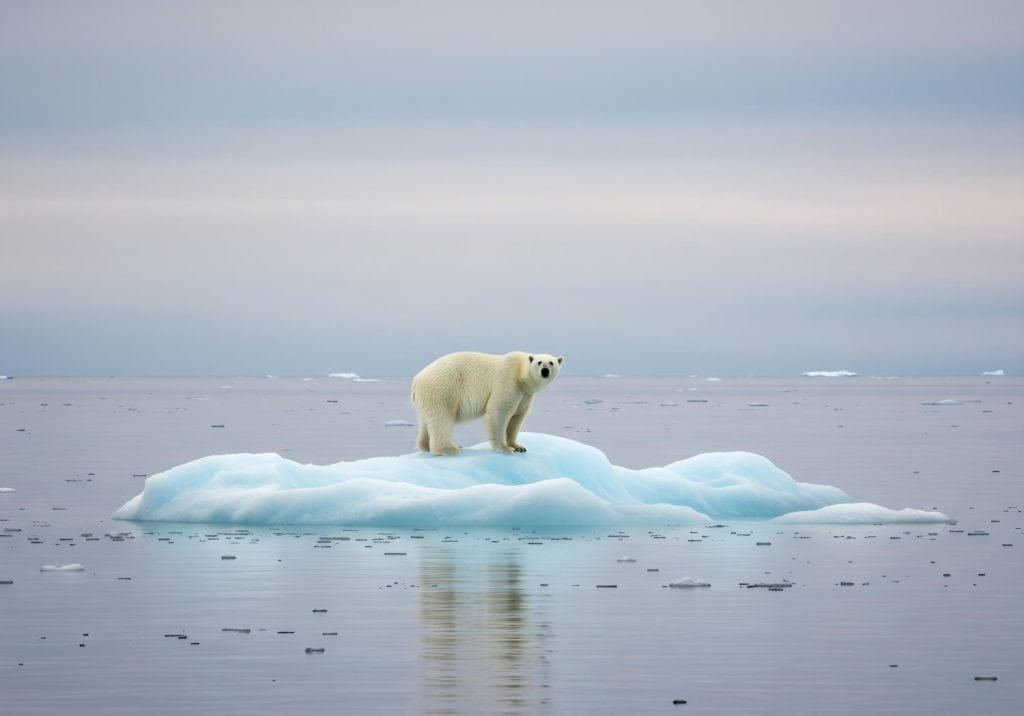
Climate change causes ice caps to melt, limiting polar bears’ habitat.
©Andrewfel/Shutterstock.com
All of these tools help monitor and track species over time. This allows conservation groups to observe how species are adapting—sometimes for the better, but more often for the worse, due to climate change. “Despite this progress, more wildlife is suffering today than ever before. Habitat loss, human expansion, and the effects of climate change are placing tremendous pressure on species that were already vulnerable,” Sharp explains.
The Plight of Asian Elephants and the Effects of Climate Change
One species that has been significantly affected by climate change and human activity is the Asian elephant. With fewer than 23,000 left in India’s wilds, habitat loss is the single greatest threat to their survival. “Historically, elephants roamed across vast stretches of the Indian subcontinent, but today an estimated 95% of their original habitat has been lost,” Sharp says. “Much of what remains is fragmented.”
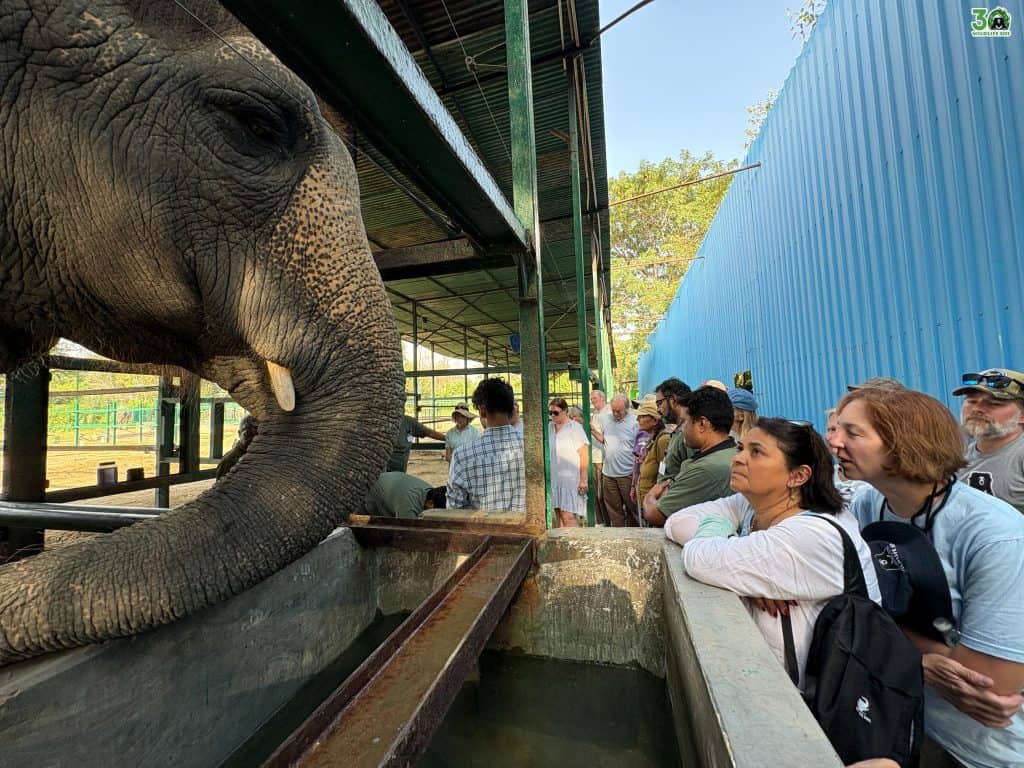
Wildlife SOS recently conducted a 10-day Elephant Care Masterclass at its elephant sanctuaries.
©Wildlife SOS
According to Sharp, these patches of protected forest differ from elephants’ natural migration routes. As a result, elephants are increasingly moving through unprotected areas in search of food and water, leading to dangerous interactions with people.
Dangers of Human-Elephant Interactions
Their loss of habitat also leads to increased human-elephant interactions, many of which end poorly for the elephants. According to Sharp, these include:
- Crop raiding and retaliation killings: When elephants enter farmlands in search of food, it can devastate a family’s income for an entire year. In moments of desperation or fear, retaliation sometimes leads to elephant deaths.
- Train collisions: Railway tracks cut across elephant habitats for thousands of miles. Herds attempting to cross can be struck by fast-moving trains, leading to frequent fatalities.
- Accidental injuries: Elephants fall into open wells or roadside ditches, become entangled in snares, or are electrocuted by power lines.
- Capture of wild elephants: Despite increased protections, wild elephants are still captured for use in captivity, further diminishing wild populations.
As all of these factors combine with the effects of climate change, the outlook for Asian elephants is grim. “While habitat protection remains the most urgent conservation priority, climate change is increasingly compounding existing threats. India has faced rising temperatures, prolonged droughts, and more severe and unpredictable monsoon floods, all of which affect elephant survival,” says Sharp.
“Climate change acts as a threat multiplier because it intensifies habitat loss and conflict while adding new challenges to an already vulnerable species. Together, these threats create a dangerous landscape where elephants must navigate shrinking habitats, unpredictable weather patterns, and frequent interactions with people.”
Nikki Sharp, Executive Director of Wildlife SOS
How Climate Change Forces Asian Elephants to Adapt
We asked Sharp whether extreme weather patterns are forcing Asian elephants to adapt new habits, and her answer was definitive. “Yes. Asian elephants are changing their migration routes in response to increasing human activity and the impacts of climate change. Human pressures are the most significant drivers of these changes,” she tells us. To this, she adds, “Human development has [also] significantly altered the landscapes that elephants depend on. Traditional migration corridors are often damaged, blocked, or lost entirely. When these routes are replaced with roads, railway lines, mining zones, or agricultural fields, elephants are forced to move outside their historical ranges.”
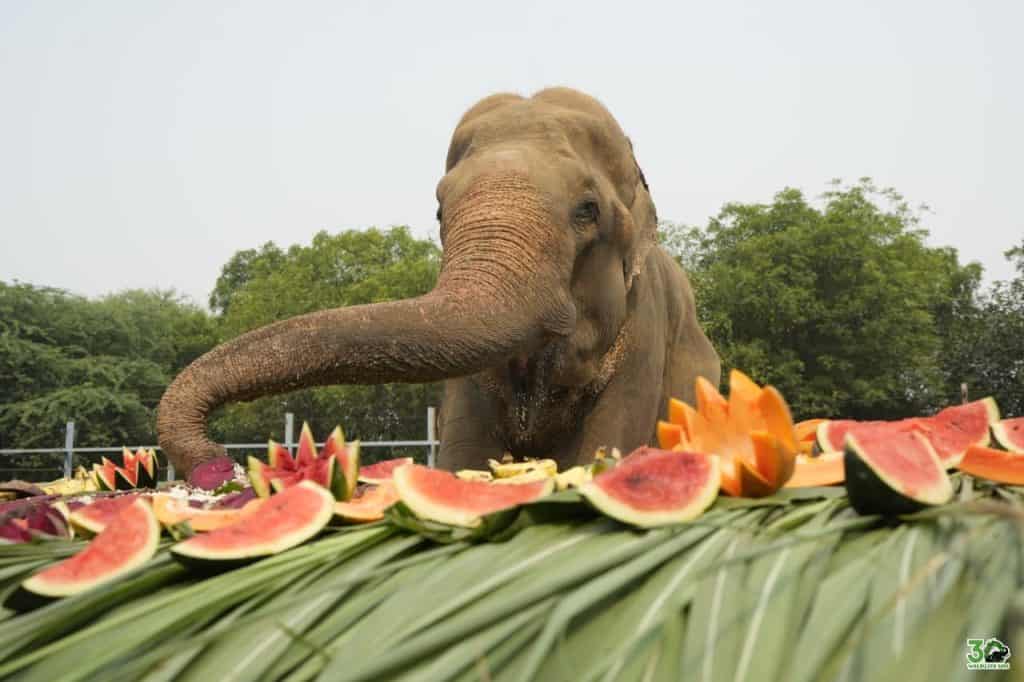
Bhola is enjoying the fresh banana, watermelon, pumpkin, and sugarcane.
©Wildlife SOS
The more we learn, the clearer it becomes that climate change and human activity are closely linked. Sharp goes on to explain that this coexistence creates additional issues, such as increased human-elephant conflict and crop raiding. “When natural habitat is converted to farmland, elephants enter fields in search of food. Farmers often try to chase the elephants away, which can lead to tense and unsafe encounters,” she says. As climate change continues to affect crop growth rates, the situation only intensifies.
As Seen First-Hand by Wildlife SOS: A Shift in Migration
“Wildlife SOS recently observed a striking shift in elephant presence. Several herds began appearing in regions of India where elephants had not been seen for many decades. Although the exact cause is not fully known, our team believes that newly expanded mining activity in a once undisturbed area likely disrupted their traditional routes,” Sharp shares with us. “The herds then moved into new locations where they were likely searching for places with fewer conflicts and enough food sources. Some of the herds have stayed for several years, while others have been more transient.”
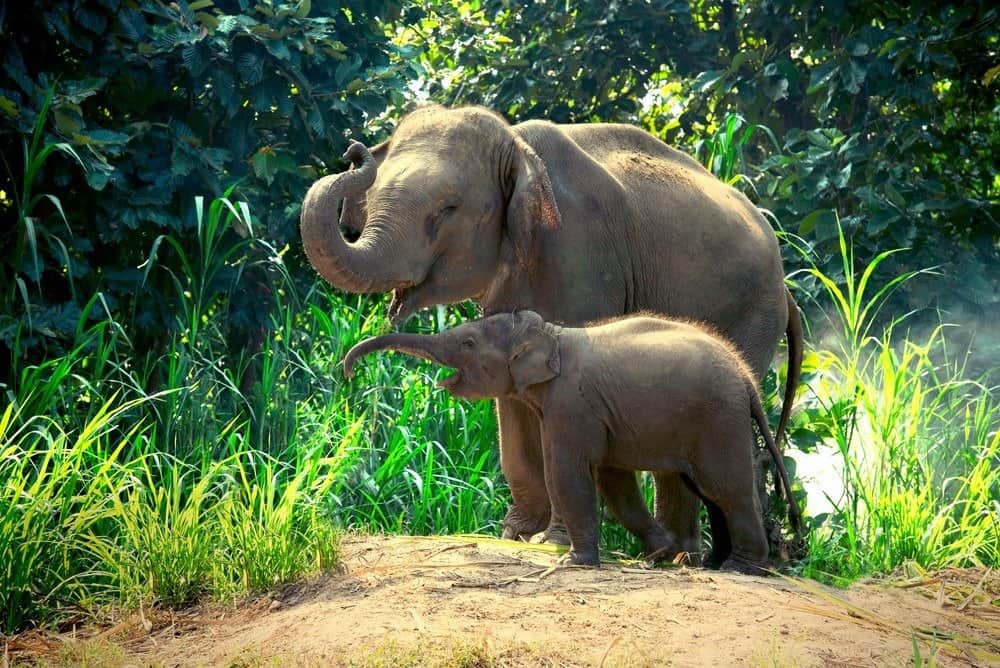
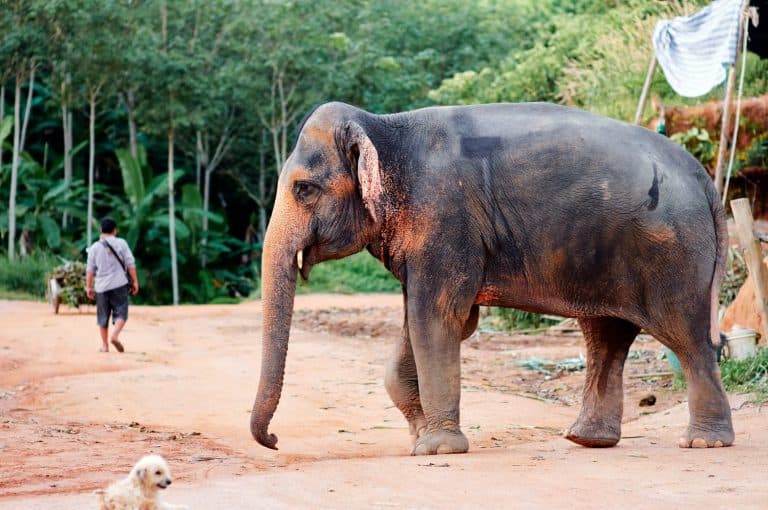
Asian elephants face significant challenges from both climate change and human activity.
©Nuttaya Maneekhot/Shutterstock.com
She continues, explaining how dire and unpredictable this shift in migration is. “This situation demonstrates how quickly elephants can alter their movement patterns when their environment changes, especially when human activity increases. Climate change can also intensify these shifts because drought, heat, and changing rainfall patterns force elephants to search for new water and food sources,” Sharp says.
How Wildlife SOS and Other Conservation Groups Are Helping
“Climate change is creating serious challenges for wildlife, and our teams are seeing the impact every day,” Sharp says. “Extreme heat, record-breaking temperatures, drought, and flooding all increase the number of animals in distress. During periods of intense heat, we see more wild birds collapsing from dehydration and requiring emergency care. When rivers overflow during heavy rainfall, crocodiles and other wildlife are often carried into villages, which increases the likelihood of conflict. Climate change is adding pressure to ecosystems already stressed, complicating our efforts to protect and conserve wildlife.”
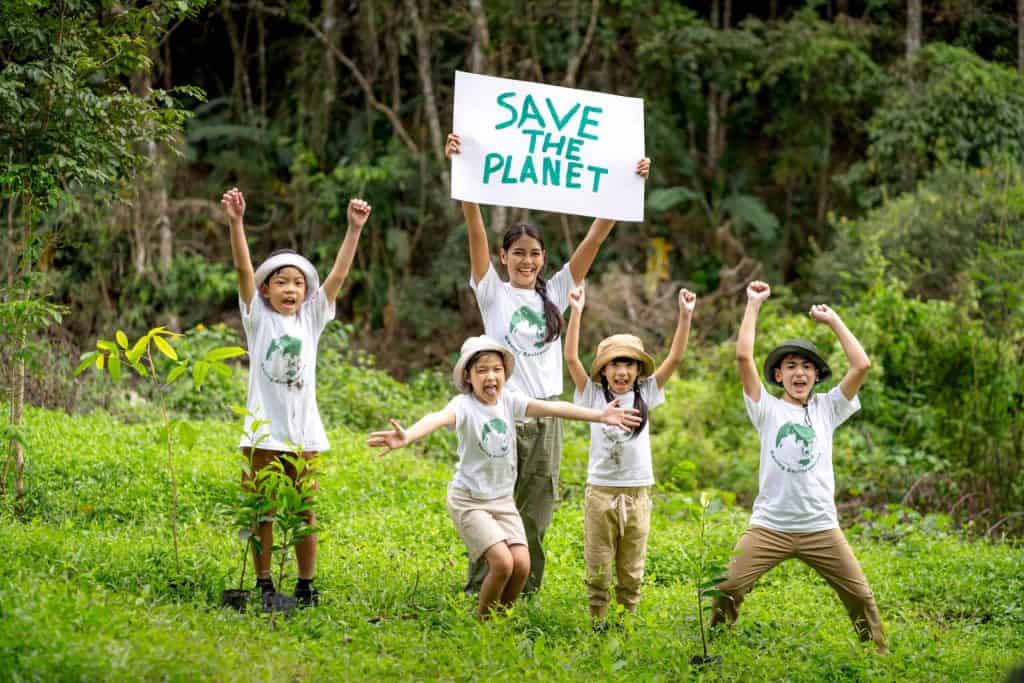
Rebuilding habitats is one of the ways Wildlife SOS is combating the effects of climate change.
©Tapui/Shutterstock.com
To counteract some of these negative impacts, Wildlife SOS has an additional focus on preserving habitats. “One of the ways Wildlife SOS is addressing these long-term challenges is through large-scale habitat restoration. Our reforestation program, which has planted more than 900,000 trees, is focused on restoring healthy, functioning ecosystems rather than simply counting the number of trees planted,” Sharp shares. “Thriving forests support a wide variety of native species, improve soil and water conditions, and provide food and shelter for wildlife that have lost parts of their habitat. Healthy forests also play an important role in capturing carbon and helping landscapes become more resilient during periods of heat, drought, or heavy rainfall.”
How You Can Help at Home
As Wildlife SOS fights to keep Asian elephants from becoming victims of human activity and climate change, there are ways we can help. These include supporting elephant conservation through:
- Pledging to refuse to ride elephants: Most elephants used in the Indian tourism industry were taken from the wild. Reducing demand for elephant rides directly reduces the incentive to capture and exploit wild elephants. To learn more and make the pledge, visit RefuseToRide.org.
- Supporting non-profit groups that are involved in conservation.
- Spreading awareness about the plight of the Asian elephant and other species that are profoundly affected by climate change.
- Get involved in community outreach: Wildlife SOS conducts outreach in communities affected by human-elephant conflict. Families learn how to stay safe, how to protect their homes and crops, and how to deter elephants safely and effectively. Outreach is offered by many conservation groups, depending on the cause.