
Quick Take
- Coconut octopuses deliberately make themselves more vulnerable to predators while carrying their shelter, but they have a calculated reason for doing so. See the risk they take →
- Unlike hermit crabs, these octopuses don't actually live in their shells, and that distinction explains the bizarre way they move. How they use shells →
- The stiff-legged tiptoe gait looks clumsy, but it's a surprisingly strategic survival move. Watch the stilt-walking →
- Choosing the wrong shell material can be fatal rather than merely inconvenient, and coconut octopuses have adapted a specific method to avoid that mistake. How they pick shelters →
Ocean creatures make unique places their homes. Whether it’s in the crevices of coral reefs or in the dark of the deepest parts of the sea, animals live everywhere. The coconut octopus is one example, and as the name suggests, they often live in coconut shells! This YouTube video by All Things Marine Life shows a coconut octopus in different objects. Read here to learn more.
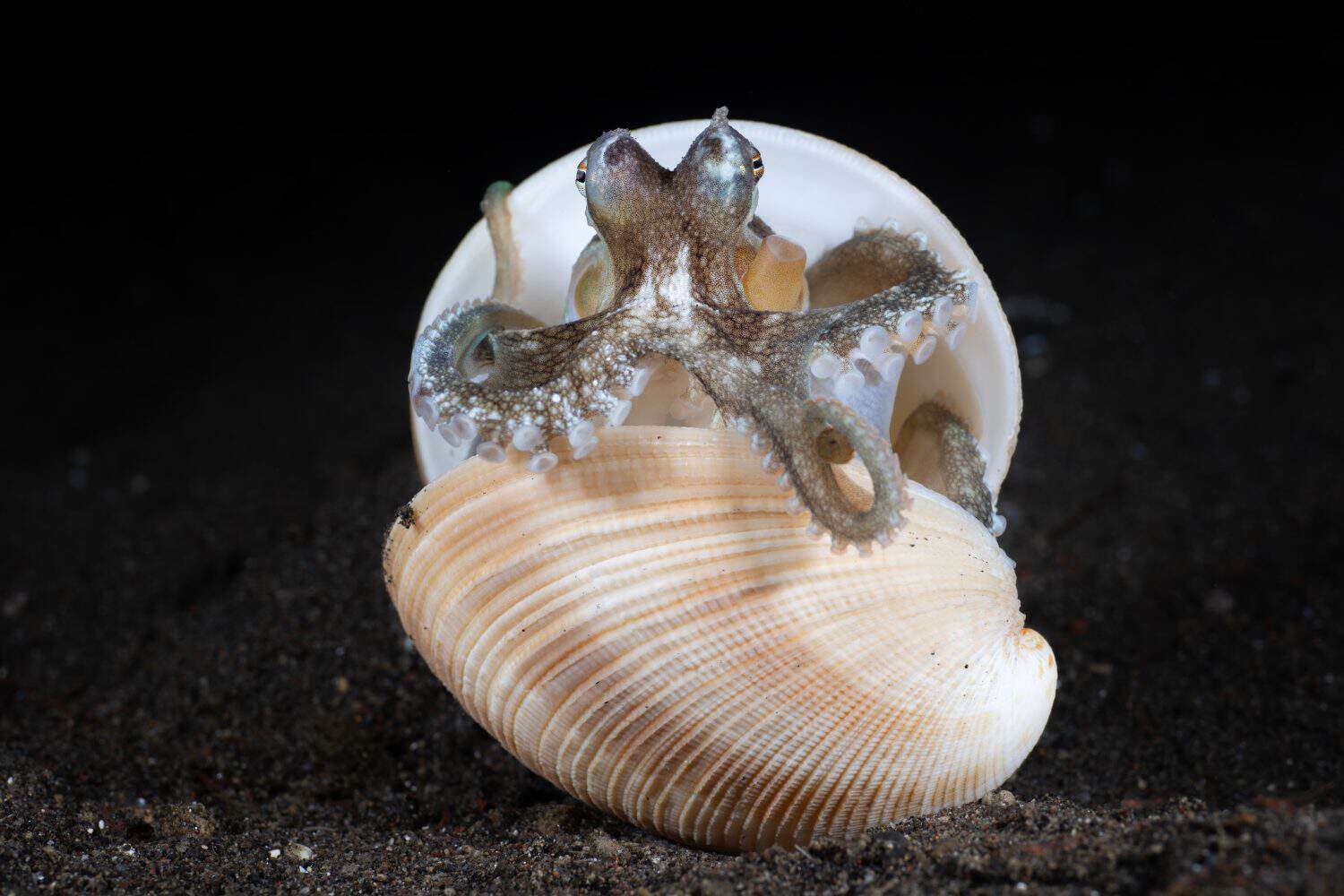
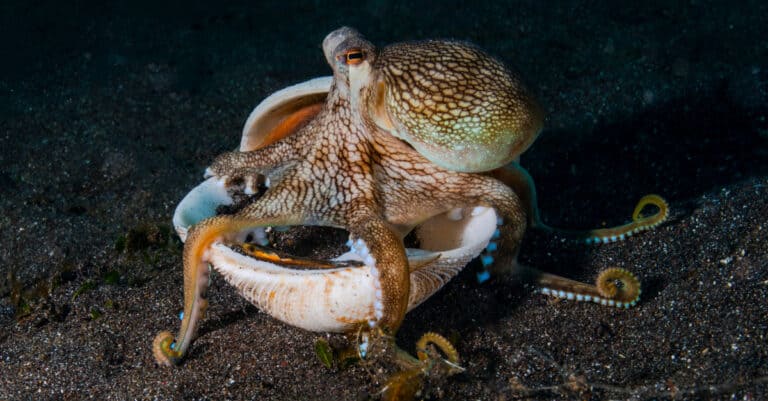
Coconut octopuses use multiple objects for their shelter, such as bringing two halves of a coconut together.
©DiveIvanov/Shutterstock.com
Where Coconut Octopuses Live
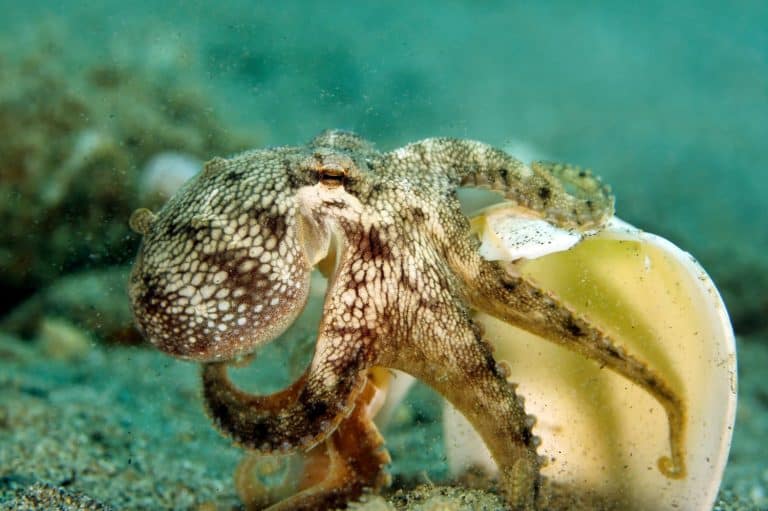
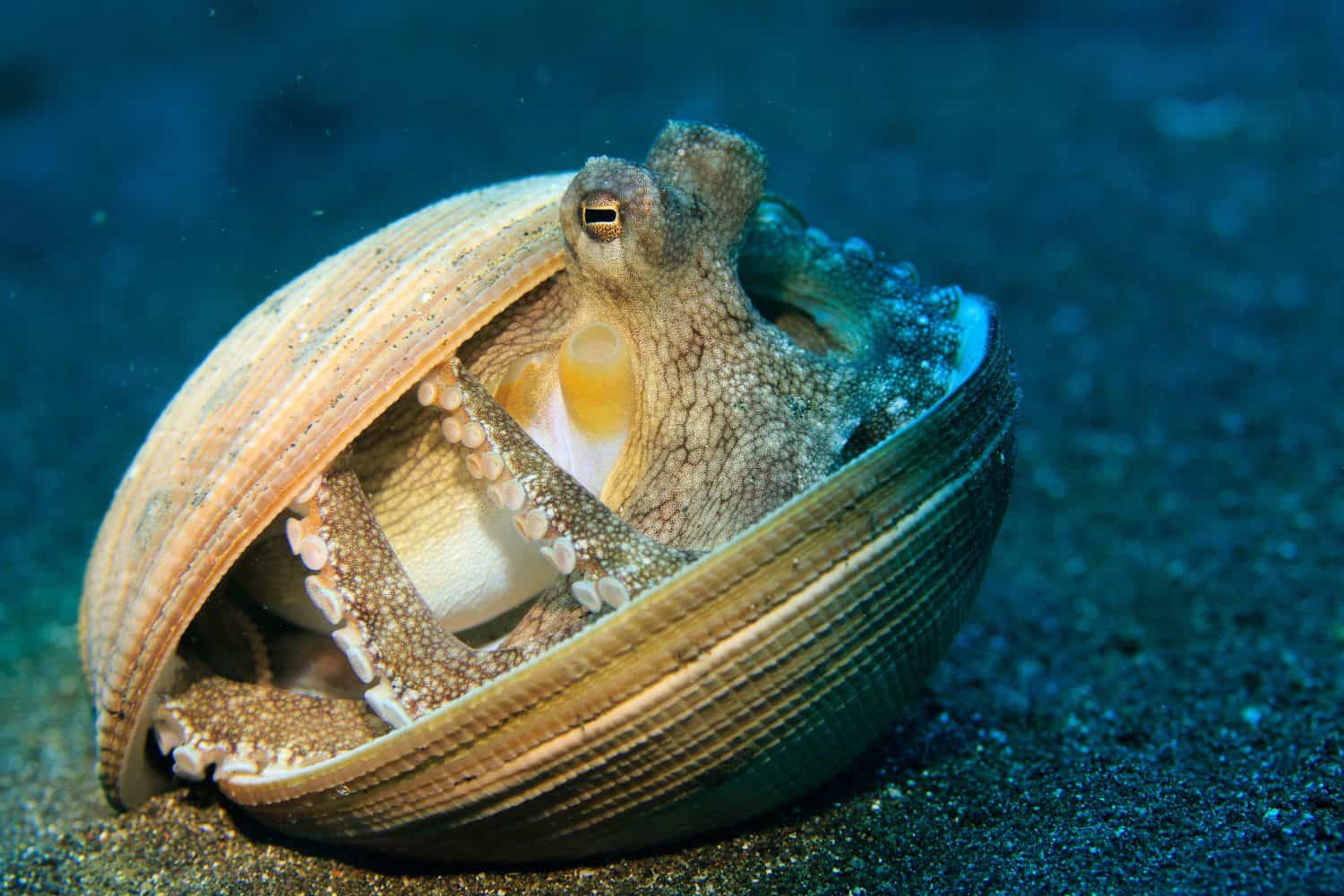
While most octopus species live in hidden spots like rocky crevices, coconut octopuses are special. Like hermit crabs, this species lives primarily on sandy or muddy seafloors in shallow coastal waters such as bays, lagoons, and inlets, though it can also be found in coral reefs and seagrass beds. Because of this, they have adapted to their environment by living in the shells of whatever objects they can find. Coconut octopuses gather pieces of their shells that they stack together and later fit themselves into. This includes objects like coconut shells, sea shells, and unfortunately, plastics as well.
The best part about these shells is that they offer protection from predators. They are hard enough to stop a predator’s bite but are still light enough to carry around. Coconut octopuses are surprisingly small and like to make sure they fit comfortably into their shells. Unlike hermit crabs, these octopuses don’t live in their homes forever and use them more like a tool. It’s not uncommon to see them leave their shell behind while they do something else, like hunt, before coming back to it later. Moving their shelter around frequently has made for some interesting-looking behaviors like stilt walking. But what is it?
Octopus Crab Stilt Walking
An unusual behavior for coconut octopus is how they transport their shells. When moving their shelter, coconut octopuses do not protect themselves and instead carry the shells under their bodies. This behavior leaves them exposed to predators and can be risky. To carry their shells, they walk around as if they are on stilts. Their arms become stiff as they raise themselves off the seafloor, tiptoeing to where they want to drop off their home. The payoff of carrying shells around comes later. While they are exposed to predators, they can quickly drop the shell to hide in, or wait until they get to where they want to go. The unique way coconut octopuses find and use shelter highlights how they have adapted to the limited resources in their environment.