
Quick Take
- A single journalist and one borrowed pigeon accidentally launched an entire commercial postal industry, and the story behind that first flight turns out to be stranger than it sounds. Discover the first flight →
- Two rival pigeon post companies competed for the same customers, and their birds ended up creating chaos in ways nobody had anticipated. Read about the rivalry →
- The stamps produced for this service were unlike anything in postal history, yet almost none of them were ever actually used. Explore the unique stamps →
- Great Barrier Island's isolation was so extreme that even a fast modern ferry barely conquers it, and the pigeon solution starts to feel surprisingly logical once you understand the geography. See the island's isolation →
Humans have been employing animals for thousands of years, and some examples are quirkier than others! Take the New Zealand pigeon post, for example, that operated early in the 20th century. There are still pigeongrams and stamps from this unusual courier service surviving today!
Communicating With an Isolated Island
Great Barrier Island is the largest of the Hauraki Gulf islands in the Auckland region. It lies around 62 miles northeast of central Auckland. These days, it is a popular destination for mountain biking, hiking, and camping, but it is very remote.

Great Barrier Island is very isolated.
©Babak Dadvand/Shutterstock.com
It takes around four to four-and-a-half hours on a fast ferry to reach it, so you can imagine how isolated it was in the 1800s! It took days for news of what was happening on the island to reach Auckland. Communicating with the mainland was a challenge and required innovative thinking. Prior to the pigeon post being established, the primary method of communication was a weekly ship visit.
How Did the New Zealand Pigeon Post Start?
It all started when a New Zealand Herald reporter arrived on the island in 1896 to complete an article on the commemoration of a steamship wreck and those who lost their lives in it. He was not alone. He brought a pigeon called Ariel, who belonged to Auckland-based pigeon fancier Walter Fricker.
The reporter attached his completed article (which covered five pages of letter-sized paper) to Ariel and released her. It took less than two hours for the bird to get back home!
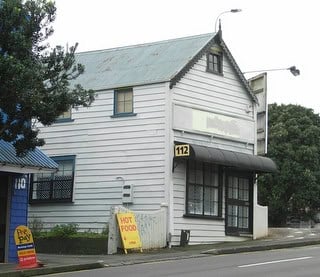
A pigeon post building in Auckland
©Grep42star, CC BY-SA 3.0, via Wikimedia Commons – Original / License
Fricker’s Great Barrier Pigeongram Agency
The following year, Fricker’s Great Barrier Pigeongram Agency was established. Every week, the pigeons traveled to the island by steamer and then returned with the post. There was soon competition in the form of Original Great Barrier Pigeon-gram service. There ensued some confusion with pigeons following the wrong birds to the wrong lofts! The competition for customers was fierce!
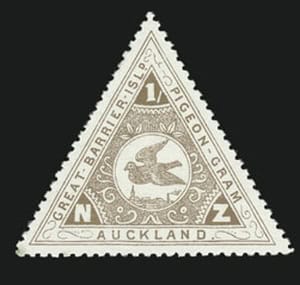
©Great Barrier Pigeongram Agency, Public domain, via Wikimedia Commons – Original / License
Messages were written on lightweight rice paper, called flimsies, and, of course, there had to be stamps, some of which were triangular. However, only a few of them were ever used.
In 1908, the first telegraph cable was laid between the island and the mainland, and the pigeons could take a well-earned retirement.