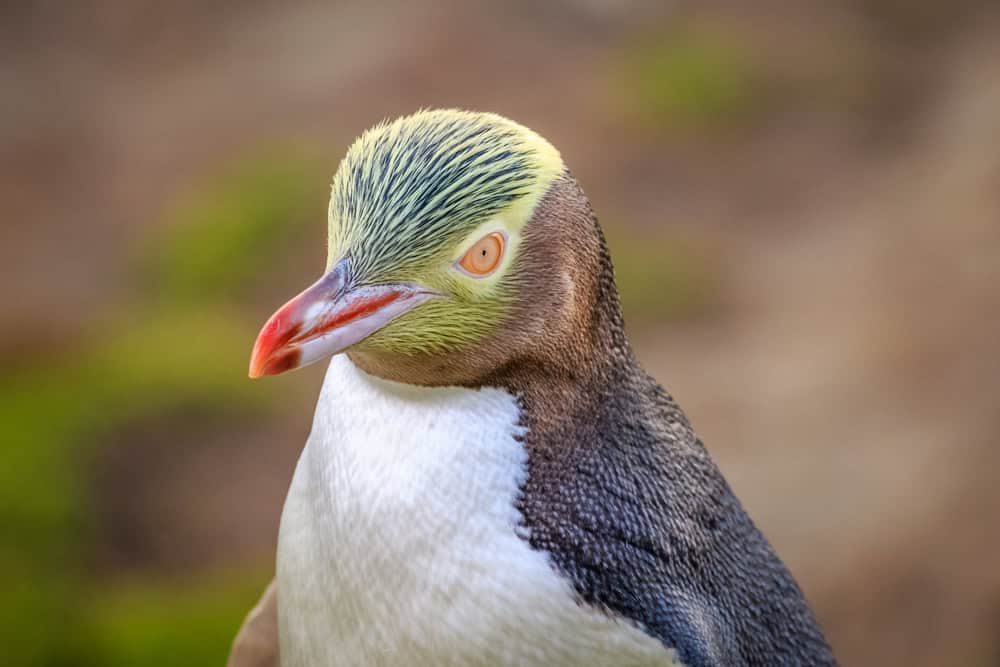

Genetic research has revealed that there is a lot more to New Zealand’s 2024 Bird of the Year than meets the eye. Scientists have been investigating the genome of the yellow-eyed penguin, known locally as the hoiho. It turns out that the current population is actually made up of three subspecies. Here we share how that was discovered and what it means for their conservation.
Meet the Hoiho
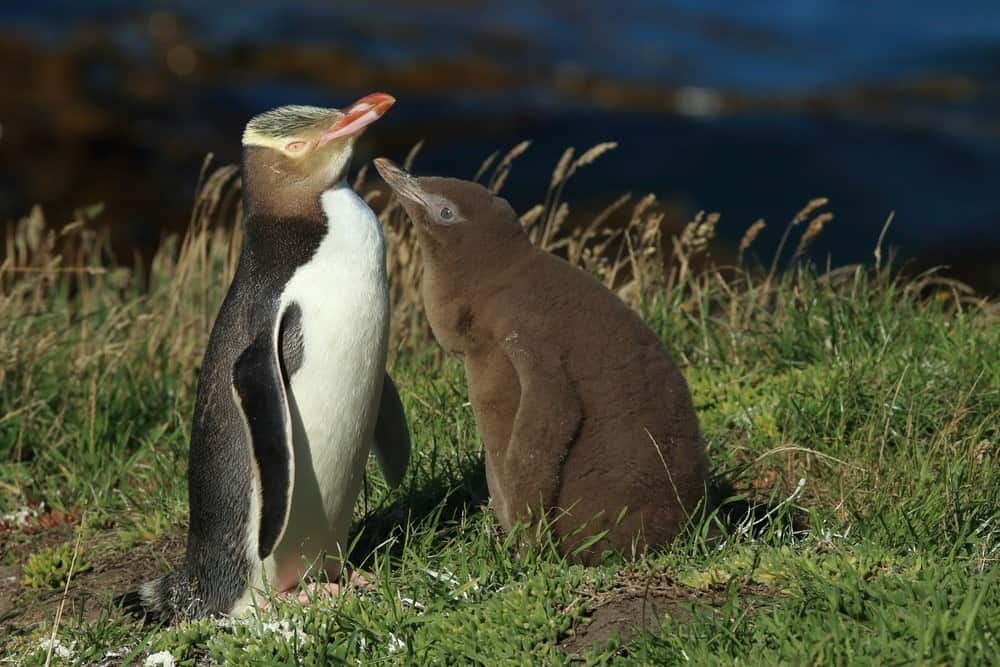
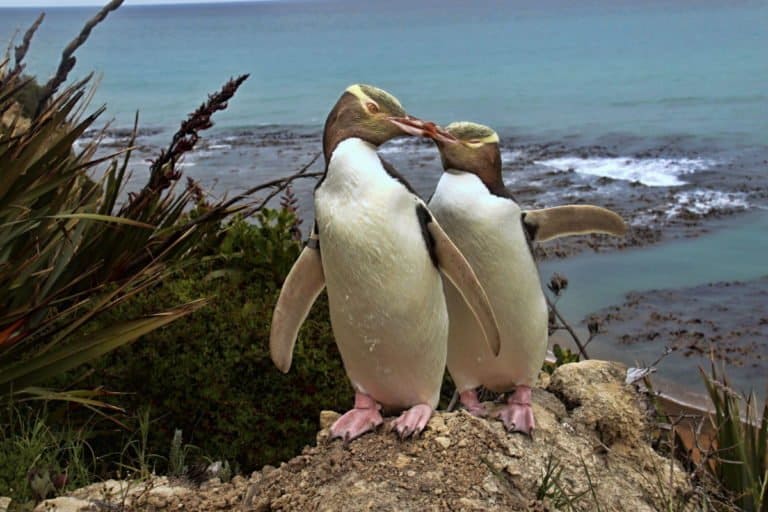
Yellow-eyed penguins nest between July and September.
©Frank Fichtmueller/Shutterstock.com
The hoiho (Megadyptes antipodes) is the largest of the penguins breeding on the New Zealand mainland. They do this on the southeast coast of the South Island, on Stewart Island and adjacent islands, and in the subantarctic on the Auckland and Campbell Islands. Their breeding habitats are mainly mature coastal forests and regenerating coastal scrub, but they also breed in pasture, windbreaks of planted exotic trees, and sometimes even on relatively exposed cliffs. The nests are simply shallow bowls made of twigs, grass, and leaves. Nesting takes place between July and September, and the chicks fledge from February to April.
This is a tall and heavy penguin species that can be identified by their distinctive pale yellow band of feathers passing across the nape and around their eyes. Males and females look very similar. They also have a distinctive call, which is a high-pitched and tremulous bray. A breeding pair will often call together, forming a duet, and this is how they got their name. Hoiho means ‘noise shouter’ in Māori.
These penguins forage for food in the sea around 1.2 to 15 miles from the shore. They can dive up to 400 feet under the surface to reach bottom-dwelling species. These include sprat, red cod, opalfish, ahuru, silversides, and blue cod. They will also grab cephalopods and crustaceans if they can.
Threats Faced by the Hoiho
Hioho penguins are thought to be one of the world’s rarest penguin species. As of 2025, there are estimated to be only 2,600–3,000 mature individuals remaining. In the last 20 years, the northern population has declined by a worrying 65 percent, with some estimates suggesting a decline of up to 80–83% since the late 1990s. In 1999, a survey of nests in the Auckland Islands identified 741 breeding pairs; however, a similar survey conducted in 2019 found only 265. A survey carried out at another breeding site on Rakiura found a decline from 154 pairs in 2008/09 to 44 pairs in 2020/21.
The decline has been attributed to a number of threats on land and in the sea. When on land, the penguins face habitat fragmentation and loss, which puts them at greater risk of disease, predation, heat stress, and hypothermia. Diseases affecting this species include diphtheritic stomatitis and avian malaria. Recently, a deadly neonatal disease called respiratory distress syndrome (RDS) has further contributed to a decline in breeding pairs. Non-native species prey on their chicks, including feral cats, ferrets, and stoats. Unregulated viewing by humans at high intensities also reduces breeding success. This is also associated with lower chick weight at fledging, which reduces the chicks’ chances of survival. In the water, they are hunted by sharks, barracouta, fur seals, and New Zealand sea lions. They also get stuck in inshore set nets.
New Genetic Research
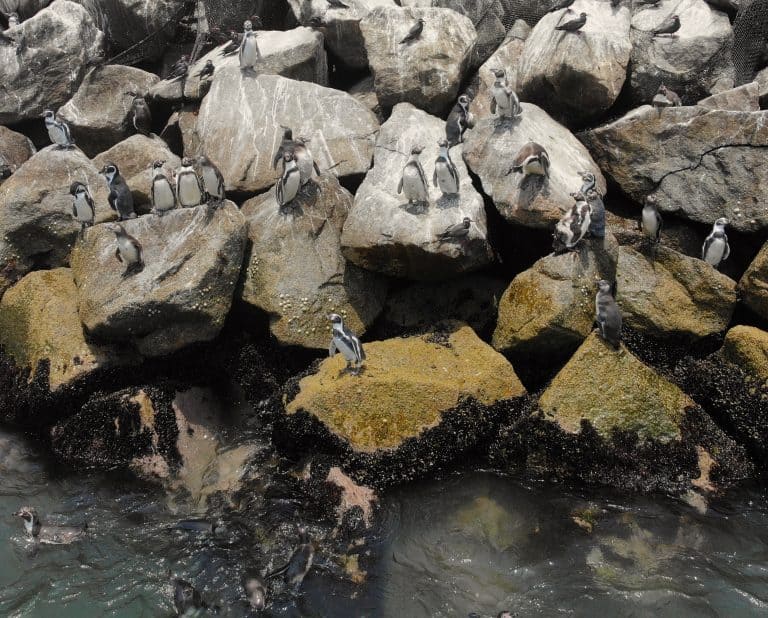
Scientists have mapped the hoiho’s genome.
©Gio.tto/Shutterstock.com
To investigate the genetic basis of respiratory distress syndrome (RDS), scientists sequenced the complete genome of these penguins. They hoped this would help identify vulnerabilities in the penguins’ ability to fight off the disease. The study, led by scientists from the University of Otago – Ōtākou Whakaihu Waka, the Department of Conservation, and Ngāi Tahu, is in the preprint stage ahead of peer review. They analyzed the DNA of 249 yellow-eyed penguins from across the mainland and Enderby and Campbell Islands.
The researchers discovered significant genetic divisions in each location, consistent with three subspecies. Referring to ancient DNA from two extinct species of penguin, they concluded that the three subspecies diverged between 5,000 and 16,000 years ago. Speaking in this news release from the University of Otago, Senior author Professor Jemma Geoghegan, of Otago’s Department of Microbiology & Immunology, said, “This is a turning point for hoiho conservation. Each group has a unique evolutionary legacy specifically adapted to its environment, and without swift, targeted action, we could lose one forever.”
This important finding offers an explanation for why the disease affects mainland chicks but not their subantarctic relatives. It suggests that genes control immune or respiratory pathways. This could make the northern subspecies more susceptible to the disease.
Future Conservation
These findings allow future conservation efforts to be targeted at specific subspecies where they will be most effective. Speaking in the above news release, fellow study author and Dunedin Wildlife Hospital veterinarian Lisa Argilla said, “For the northern population, extinction is not a distant possibility; it is an imminent threat. Without urgent, bold, and collaborative action, we risk losing these precious birds forever.”