
Quick Take
- Alaska’s hunting rules center on subsistence and common use, not just sport, guiding how communities access wildlife.
- On federal lands, federal subsistence rules apply; on state lands, state regulations apply.
- Nonresidents must be accompanied by an Alaska-licensed guide or qualifying resident relative when hunting brown/grizzly bear, Dall sheep, or mountain goat, and for any other big game hunting.
Alaska’s hunting rules look different from those of other states, and for good reason. Alaska’s own constitution actually reserves fish and wildlife for what’s known as common use, but what does this mean? How does this alter their hunting rules and regulations throughout the state, and what should you know about Alaska if you’re hoping to hunt there in the future?
There’s another vital component to hunting in Alaska that differs from many other states: subsistence hunting is a formally defined use category, one that involves even further complications and rules. When you’re out in the wilds of this particular state and curious about hunting, this is what you should know.
Using information from official Alaska agencies and recent scientific work, we dive deep into the inner workings of hunting in Alaska, and why this state has rules in place unlike any other state. Let’s check out the main differences between Alaska’s hunting laws and those of other states and learn why this state is so unique in its hunting opportunities.
What is Subsistence Hunting in Alaska?
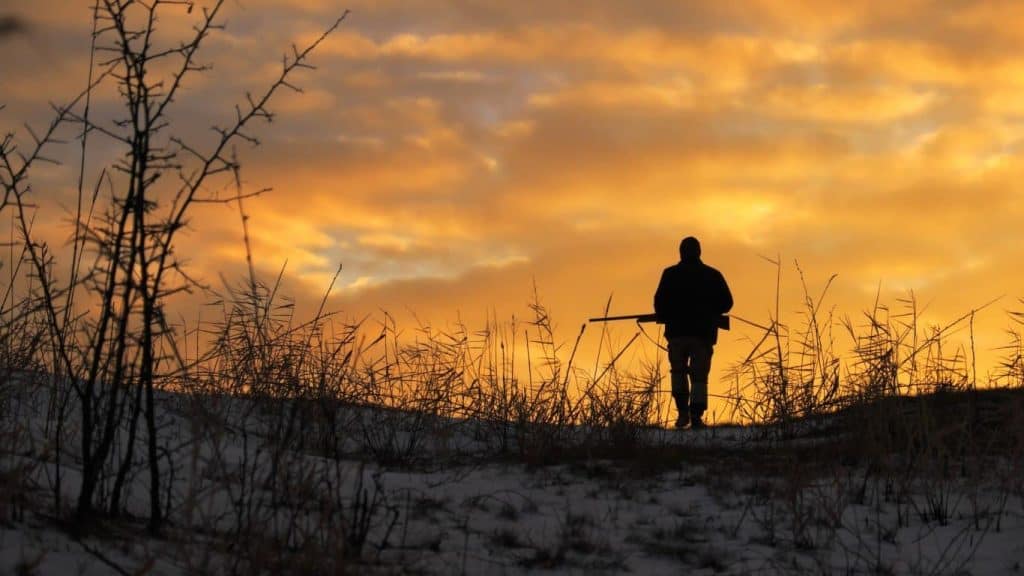
Trading hunted game in Alaska is a standard aspect of their hunting laws.
©ESOlex / iStock via Getty Images
In Alaska, subsistence hunting is a vital and historical aspect of its legal hunting programs. Alaska’s Department of Fish and Game explains that both state and federal law define subsistence as customary and traditional uses of wild resources for direct personal and family consumption. In addition, these uses include sharing and customary trade as fundamental aspects of subsistence.
Compared to any other state where hunting is legal, Alaska’s system is designed around how harvest actually functions in many communities. Everything from food, storage, distribution, and shared effort are considered, rather than assuming every household hunts for their own solitary needs. But is subsistence truly a large aspect of the hunting programs offered in Alaska?
Recent reports from the U.S. Forest Service and Alaska Department of Fish and Game continue to document the importance of subsistence harvests for rural households in Southeast Alaska. In their data, it became clear that wild foods remain vital for the survival of certain rural communities, and that public forests are necessary for those that opt for subsistence hunting.
Food access and security within Alaska’s borders can be incredibly complex, even in communities with access to the average grocery store. Besides its roots in Alaskan tradition, subsistence hunting keeps wild foods central and necessary to many Alaskan households.
Alaska’s Hunting Rules Vary Depending On Where You Hunt

Rural land designations can affect hunting rules, so always read up before you head out.
One of the biggest differences in Alaska’s hunting rules compared to elsewhere in the U.S. is the notion that regulations differ depending on the land. Certain rules apply to federal public lands in Alaska, while others apply to state lands. Enforcement also differs, depending on what lands you opt to hunt on.
For example, a hunt on state land is typically enforced through state authorities and state regulations, while a hunt on federal land can involve federal enforcement and federal rules that a hunter may not be aware of if they only read state-based hunting guidelines. Alaska’s hunting regulations guidance states that hunters must check federal rules when they’re on federal public lands where federal subsistence management applies.
This is largely because the federal system is designed to provide an opportunity for a subsistence way of life for rural Alaskans on federal public lands and waters while still maintaining healthy fish and wildlife populations. Communities throughout the state are granted rural or nonrural status for federal subsistence purposes, which is why it’s important to know what lands you’re hunting on before setting out.
Rural Exemptions and Legalities in Alaska’s Hunting System

Alaska’s hunting rules were challenged in the past, adding a complicated layer to what counts as rural subsistence.
©iStock.com/rarrarorro
People may describe Alaska’s hunting system as having rural exemptions, but a more accurate way of putting it is that Alaska has competing legal priorities that can’t be solved by a single statewide program. The state cannot prioritize one group of residents over another, but the notions of subsistence can complicate things.
For example, an Alaska Supreme Court ruling involved a case that challenged this rural preference system for subsistence. Because of this case, state management ended after the Alaska Supreme Court found out a rural priority violated the state constitution. This is one reason why the federal subsistence program became a clear and separate rule on federal lands.
But this isn’t the only confusing aspect of hunting in Alaska, especially given the prevalence of big game hunting opportunities.
Alaska’s Rules for Meat and Ethical Hunting
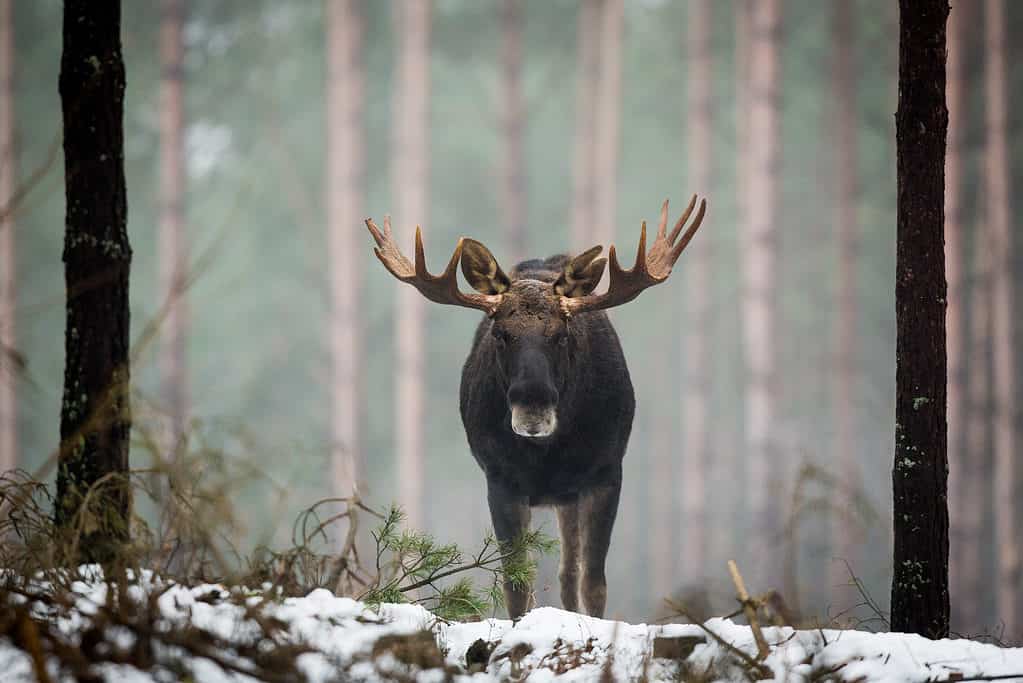
Big game hunting in Alaska has specific rules, such as leaving meat on the bone and transporting carcasses only if you can remove the entire animal.
©Szczepan Klejbuk/Shutterstock.com
Unlike other U.S. states, Alaska’s salvage culture is explicit and practically rooted, largely because land access is difficult and big game retrieval is a real issue. ADF&G guidance tells hunters that, after killing any animal, it is their responsibility to salvage all edible meat in accordance with Alaska regulations. Salvage expectation is broad across big game species, with specified exceptions.
Laws and rules reinforce ethical big game hunting with practical rules. One main rule is simple enough: don’t shoot it if you can’t pack it out. However, some hunting units also require meat to remain on the bone during transport, further complicating this pack it out rule.
This is why hunting in Alaska can feel especially confusing to those visiting from out of state. Some regions require specific handling in the field for certain species and times of the year, especially for moose and caribou. Hunters are advised to keep meat on the bone under certain timing and location conditions, but there are additional rules that apply to hunters from out of state.
Nonresident Rules Are Species-Specific
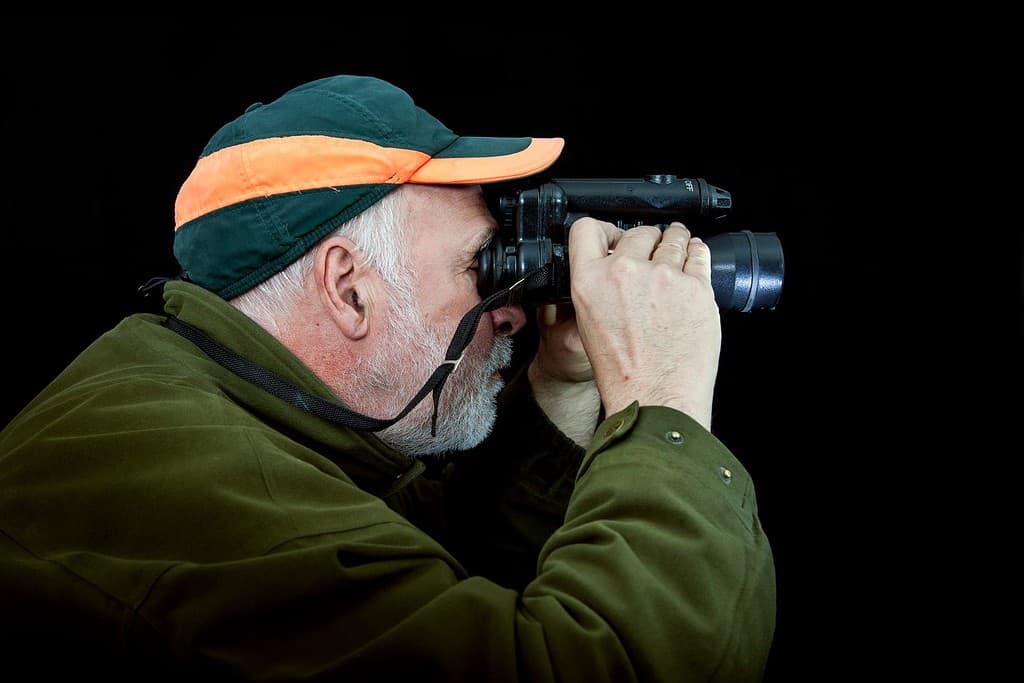
Not just anyone can show up and start hunting in Alaska, as there are rules for out-of-state hunters.
©Edgar G Biehle/Shutterstock.com
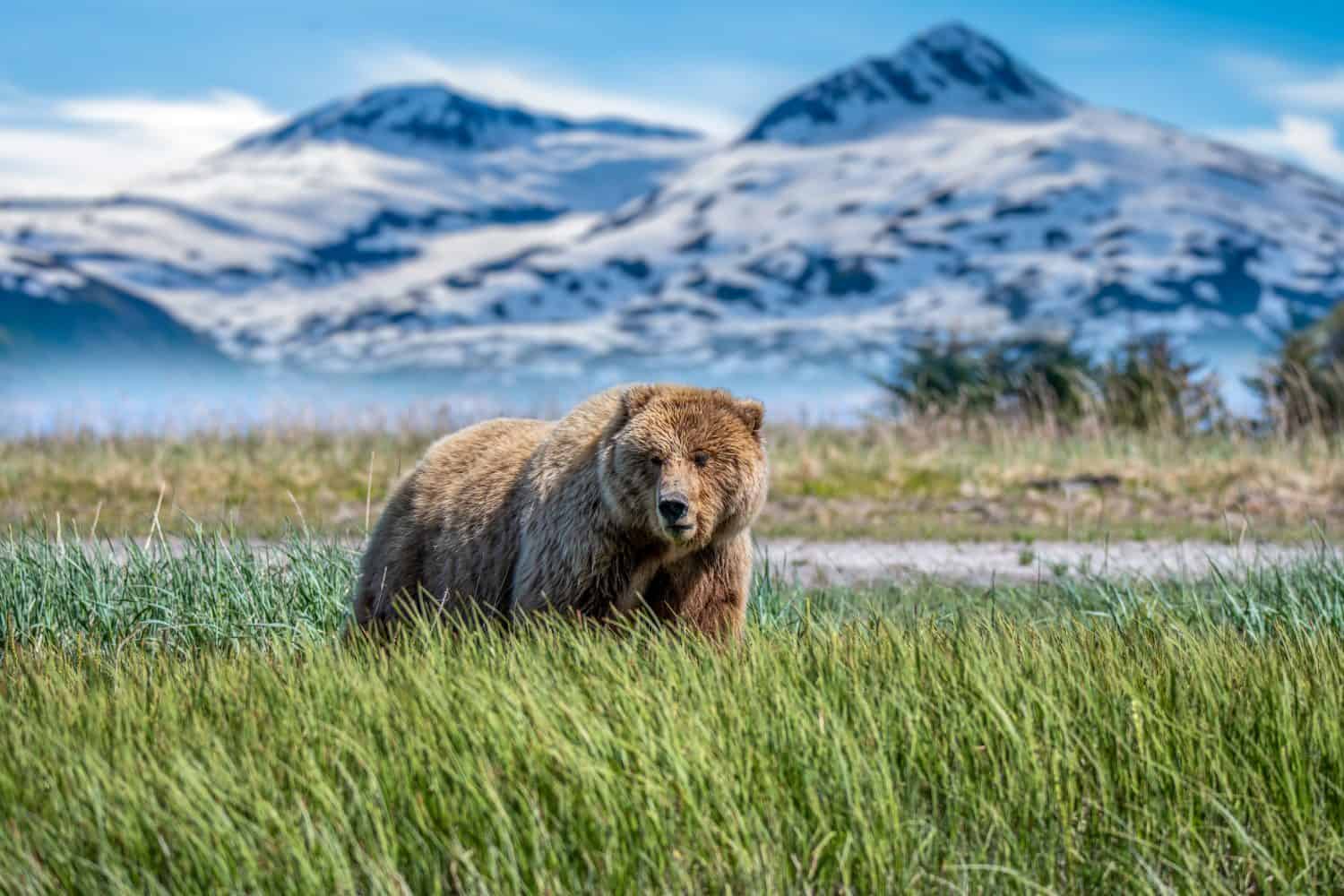
Alaska has even more hunting rules for certain high-demand big game species. ADF&G states that nonresidents hunting of brown or grizzly bears, Dall sheep, or mountain goats must be personally accompanied by an Alaska-licensed guide or a qualifying Alaska resident relative.
Additionally, nonresident aliens (non-U.S. citizens) need guide accompaniment for any and all big game hunting, while nonresident U.S. citizens only need a guide for brown/grizzly bear, Dall sheep, or mountain goat. This is a ultimately a wise choice that’s partially tied to enforcement but primarily rooted in safety and oversight across remote terrain that doesn’t have very many eyes on it. It also changes the entire planning and cost of hunts like these, a process that might be relatively straightforward in other states.
It is far more complicated to hunt in Alaska if you aren’t a resident in the state. Implementing these rules is a strategic decision; not just anyone can show up in rural Alaska and hunt for fun. This keeps both wildlife and hunters safe, especially if they’re unfamiliar with the state and its rugged wilderness.
Locking Tags And Sealing Requirements
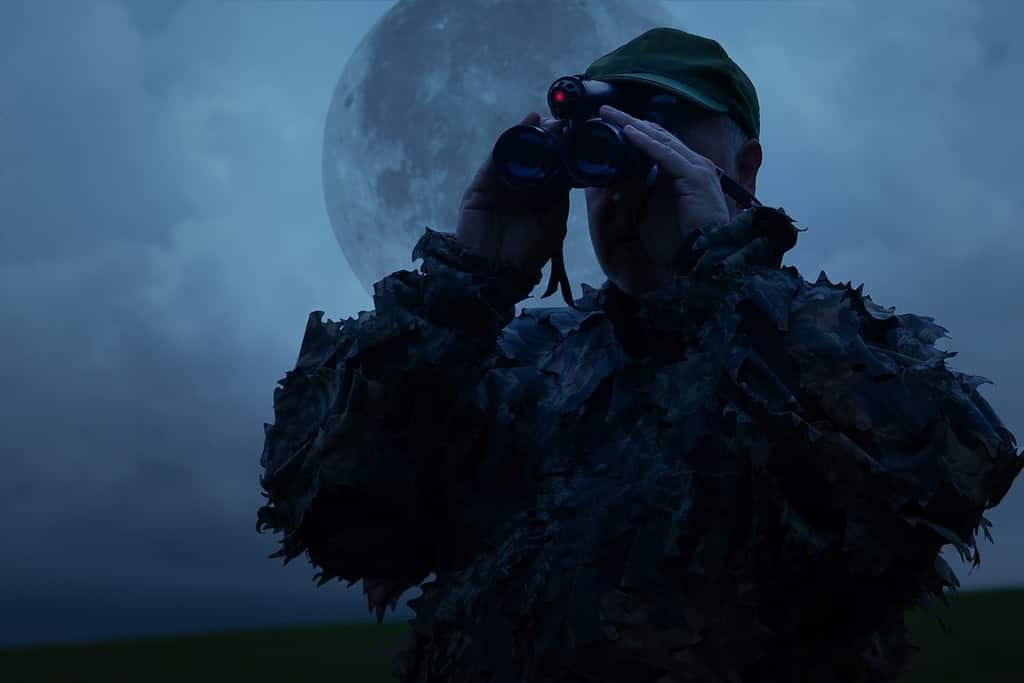
Alaska uses specific tags and sealing requirements for certain species.
©Edgar G Biehle/Shutterstock.com
If these rules aren’t enough, some Alaska big game harvests involve additional steps that many hunters never encounter in other states. For example, a unique locking tag must be locked onto the animal immediately after the kill and remain there until the animal is processed or exported, creating traceability for certain hunts and species.
There are also sealing requirements for bears and other species. Sealing essentially involves taking specified parts of any hunted game to an official sealing officer who records data and affixes seals. This also helps protect Alaska’s unique wildlife and ensures the state has ample data to utilize for subsequent hunting years.
Intensive Management in Alaska’s Hunting System
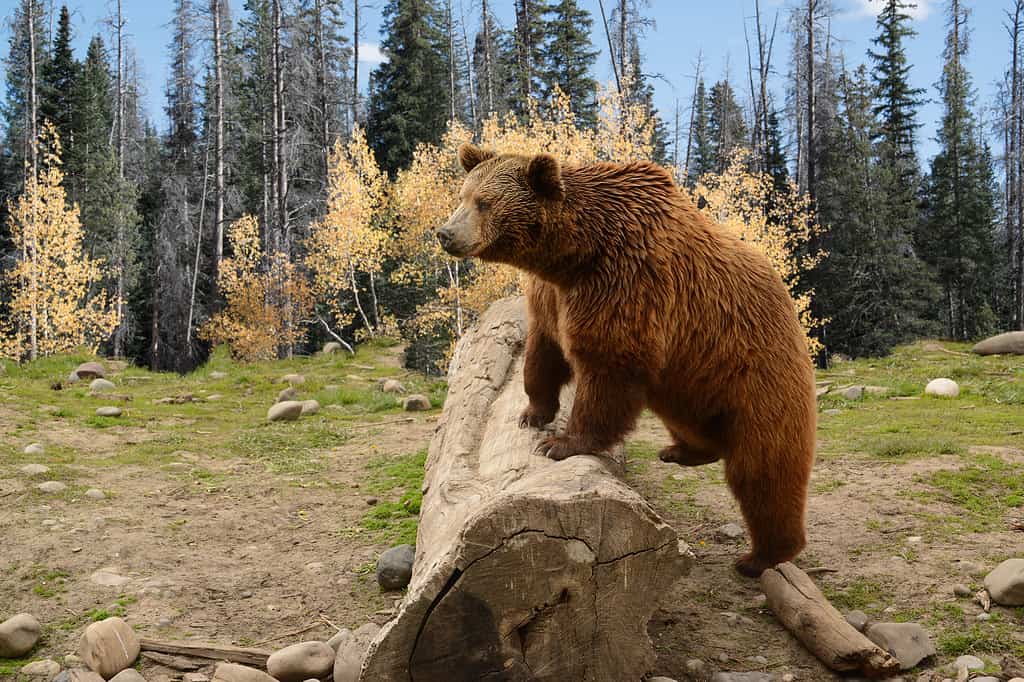
Prey and predator populations play a role in Alaska’s yearly hunting rules.
©Georgia Evans/iStock / Getty Images Plus via Getty Images
Alaska actually has a formal intensive management framework aimed to increase prey abundance so that human harvest needs are met. When certain populations dip below what the Board of Game determines is needed to meet people’s needs, this group can direct ADF&G to investigate causes, implementing steps to increase those species numbers. These species often include deer and moose.
ADF&G is also involved in predator management, not just prey. Alaska’s predator control is aimed at increasing prey numbers to allow increased harvest by humans while maintaining healthy populations for the state’s typical cast of predators who also need to eat.
This is one of the main reasons Alaska’s hunting looks so different from other states. In many locations, wildlife management is built around setting seasons on a calendar and generally protecting local habitats. However, in Alaska, management can incorporate prey availability and predator impacts into any given season, shifting tag availability and hunting locations year after year.
Species Management in Alaska’s Borders
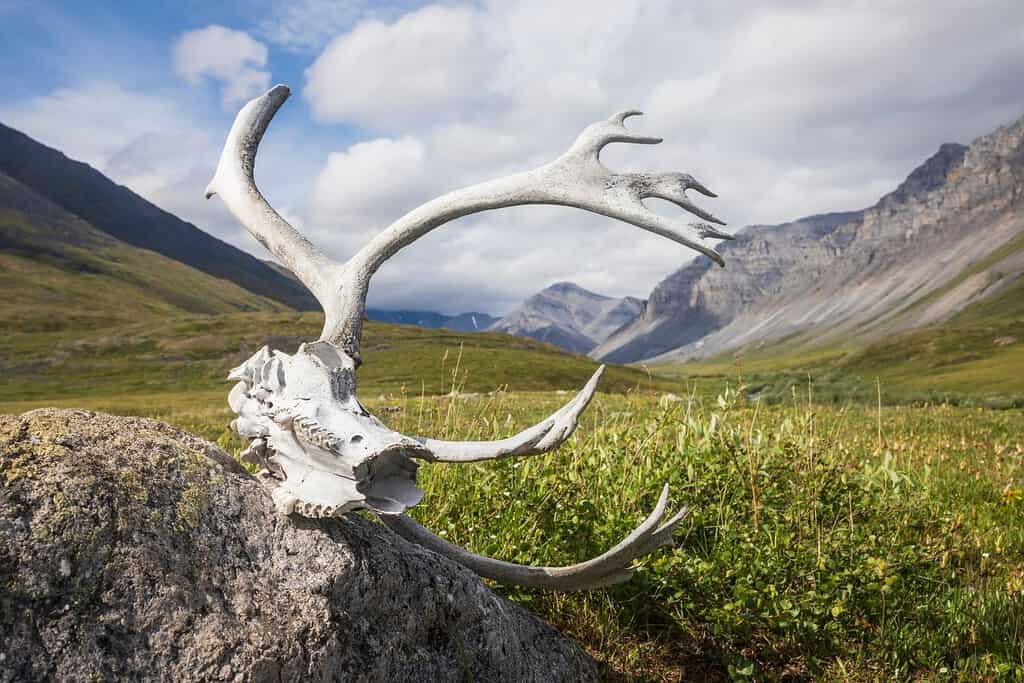
Vulnerable populations are monitored in Alaska, with this data fueling yearly hunts and harvest limits.
©BlueBarronPhoto/Shutterstock.com
Alaska’s big game rules are shaped by ecology, both locally and abroad, and these rules are shifting as much as the game populations within the state’s borders. Caribou populations, for example, are experiencing an overall long-term decline, with climate change and an expanding human footprint affecting distribution, movements, survival, and the species’ productivity, making their numbers unstable.
While some caribou herds in Alaska, such as the Western Arctic Caribou Herd, continue to decline and face hunting restrictions, others like the Mulchatna herd have shown recent population increases. Hunting opportunities and regulations vary by herd and region. Plus, state officials monitor everything about vulnerable hunting species, including their nutrition, reproduction, diseases, and predation impacts on young.
At the end of the day, Alaska’s hunting managers deal with several limiting factors all at once rather than simple tag numbers or herd populations. The state’s ecosystem is far larger, and more complex compared to other locations, especially given the prevalence of subsistence hunting rather than simply hunting for sport.
Alaska’s Hunting Opportunities Are Unique
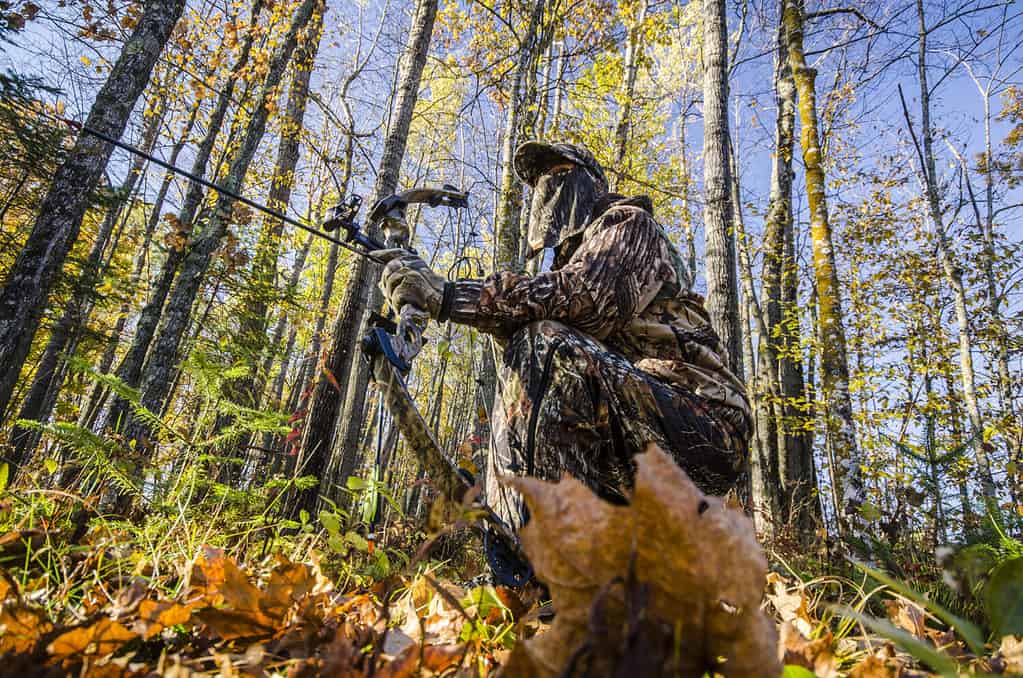
If you’re interested in hunting in Alaska, know that this state does it differently than just about anywhere else.
©paul geilfuss/Shutterstock.com
Ultimately, Alaska’s hunting rules are different from those of other states because Alaska’s goals and constraints are different. Hunting here isn’t treated as a sport or simple hobby. It’s an activity that’s woven into daily life, food security, long-term wildlife stewardship, and many other state-specific aspects.
The same hunt can change depending on whether you’re on state land or federal land, and that alone makes Alaska unique. Add in the expectation that animals are used carefully and completely and you have a very different hunting experience compared to anywhere else.
If you’re an out-of-state hunter interested in hunting in the wilds of Alaska, understand that the state actively manages certain species to protect both animal populations and human communities. Alaska’s hunting system is more layered and personal than many hunters expect, making it just as special as the state itself.