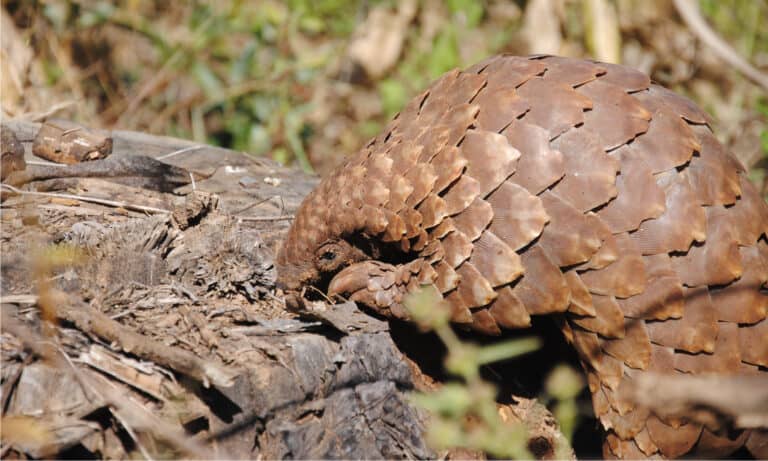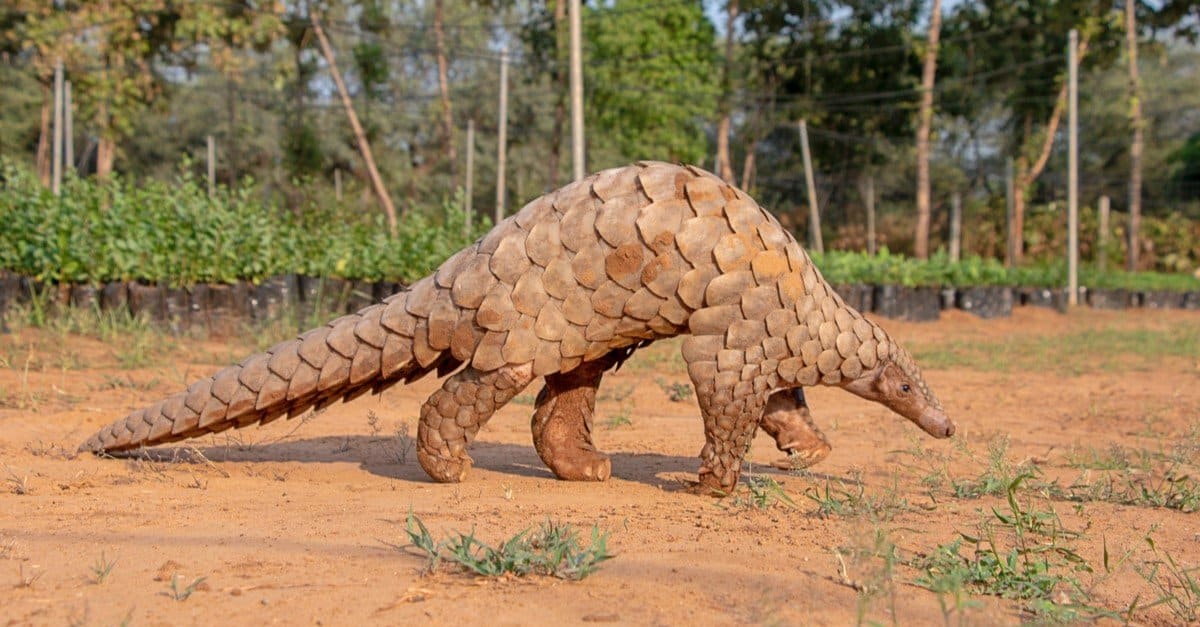

Also known as scaly anteaters, pangolins are mammals of the order Pholidota and the family Manidae. They are dispersed throughout Southern, Central, and East Africa and parts of Asia. Pangolins prefer sandy soils and can be found in woodlands and savannas near water sources.
The name “pangolin” is derived from the Malay word pengguling, which means “one who rolls up.” However, the modern name in Standard Malay is tenggiling; in the Philippine languages, it is tanggiling, goling, or balitong, and in Indonesian, it is trenggiling (all with the same meaning).
Pangolins are not the most elegant or graceful animals you will come across, but they are the world’s most trafficked mammals. Read on to discover other incredible facts about pangolins and why they are in high demand in countries like China and Vietnam.
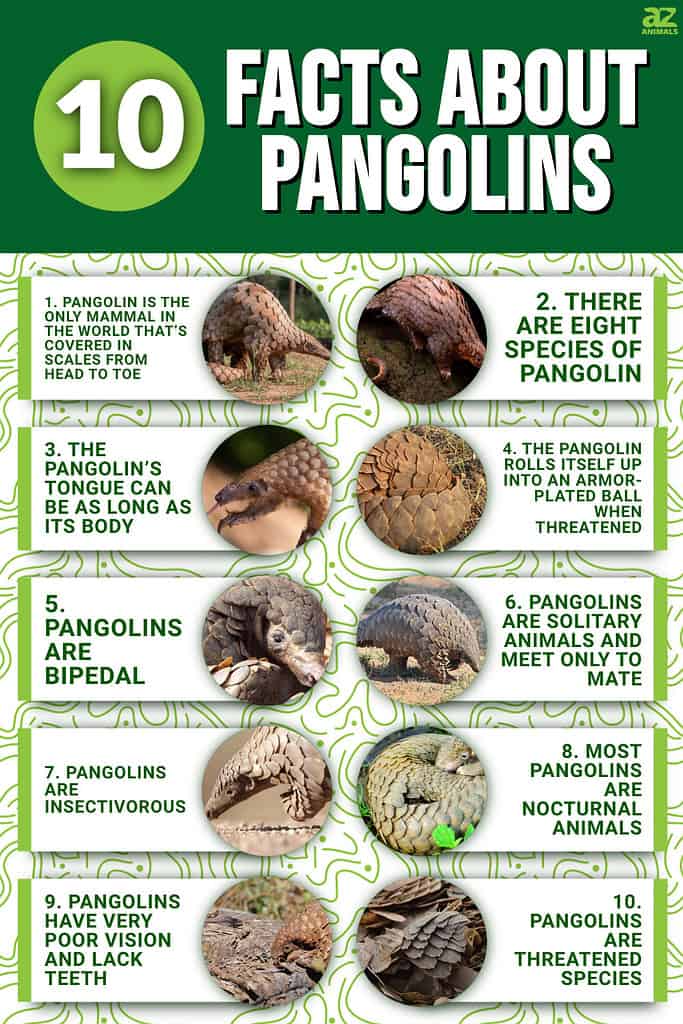
1. Pangolin is the Only Mammal in the World that’s Covered in Scales
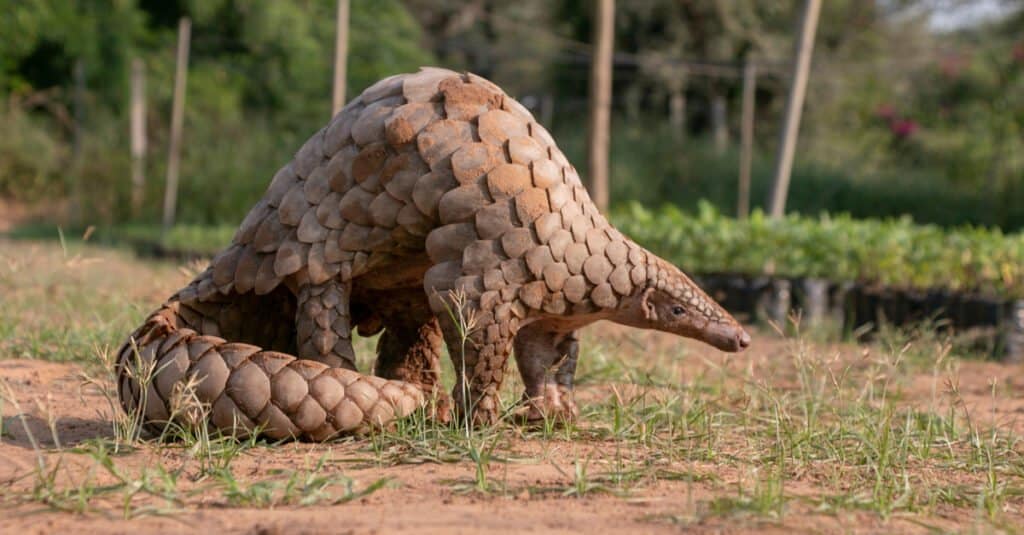
Pangolins are the only mammals wholly covered in scales.
©Vickey Chauhan/Shutterstock.com
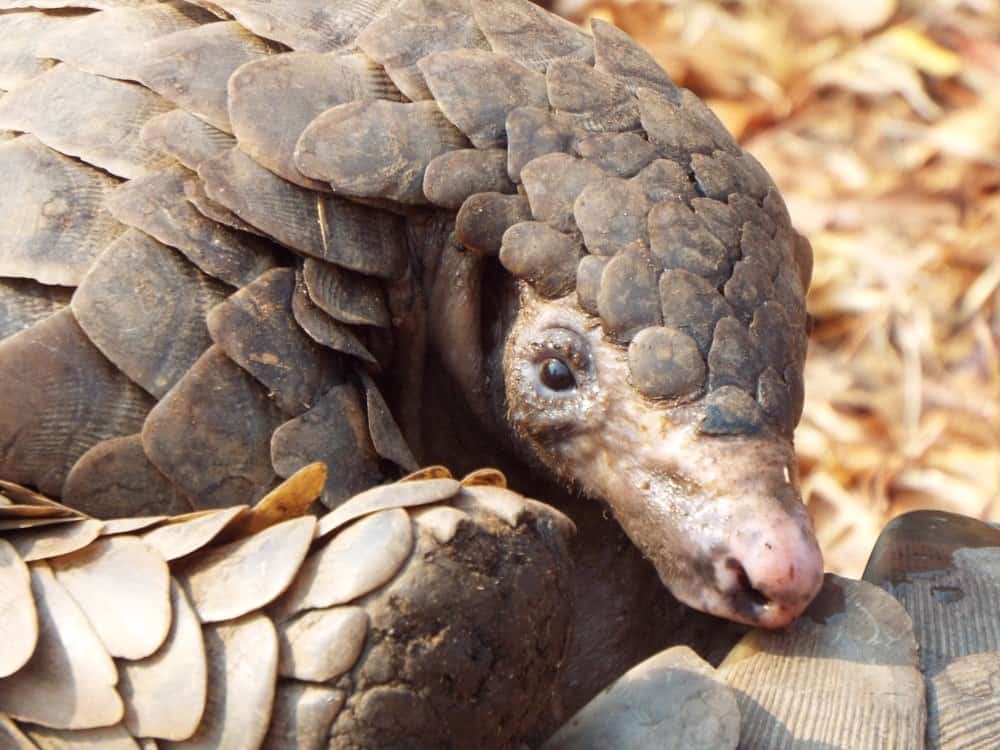
Pangolins are the only mammals wholly covered in scales. Their scales make up 20% of their body weight. This is why many people think of pangolins as reptiles, but they are mammals. Their scales are more like a pinecone in appearance, making them different from those of a reptile. Pangolins’ scales are hard and made of keratin, the same protein that makes up our fingernails, toenails, hair, and the “teeth” of baleen whales.
2. There are Eight Species of Pangolin
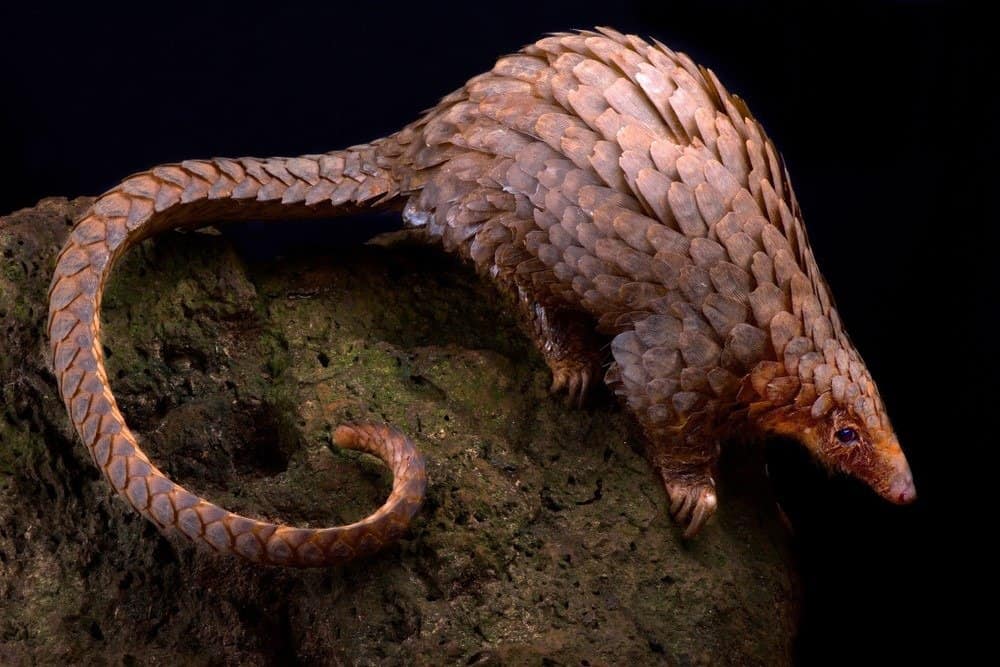
There are eight species of pangolins.
©reptiles4all/Shutterstock.com
Next, you might be surprised to know that there are eight species of pangolin, and all are listed as endangered species. The African ones are the Temminck’s pangolin, the giant pangolin, the black-bellied pangolin, and the white-bellied pangolin. The Asian ones are the Philippine pangolin, the Sunda pangolin, the Indian pangolin, and the Chinese pangolin.
The African black-bellied is the smallest pangolin, with a length of 12 to 16 inches. Its weight ranges from 3.5 to 5.5 pounds. The giant pangolin is the largest, with a length of 4.6 feet. The giant pangolin weighs approximately 73 pounds.
3. The Pangolin’s Tongue Can Be as Long as Its Body
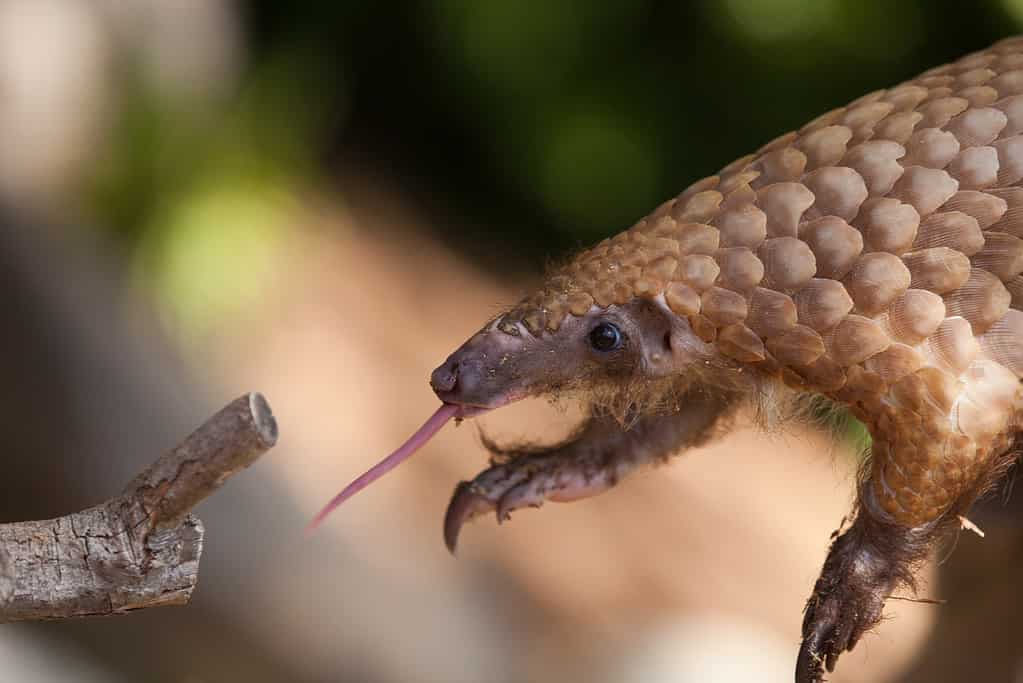
Pangolin’s tongues are very sticky, allowing them to collect insects.
©DarrenBradleyPhotography/iStock / Getty Images Plus via Getty Images
When extended, the pangolin’s tongue can reach 14 inches. Its tongue is attached near its pelvis and the last pair of ribs, not in the mouth like most mammals. The tongue is also very sticky, allowing the pangolins to collect insects. The tongue can be retracted deep inside a sheath in the pangolin’s chest cavity when not in use.
4. They Roll into an Armor-Plated Ball When Threatened
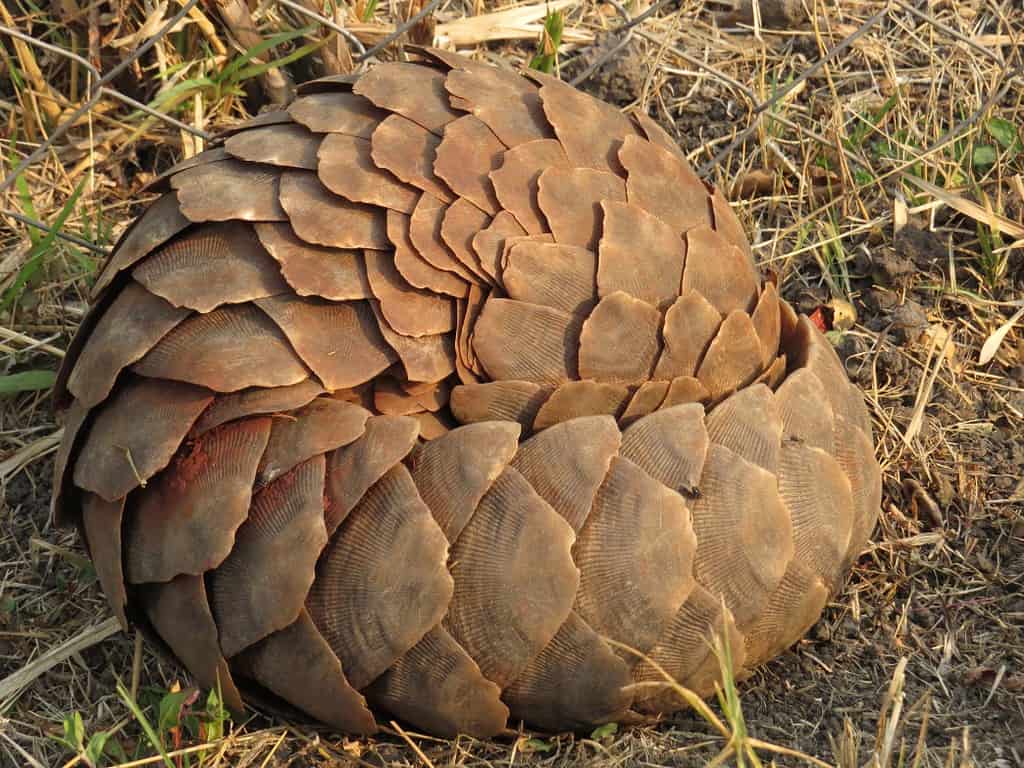
Pangolins quickly roll into a ball to protect their undersides when threatened.
©U.S. Fish and Wildlife Service Headquarters, CC BY 2.0 – Original / License
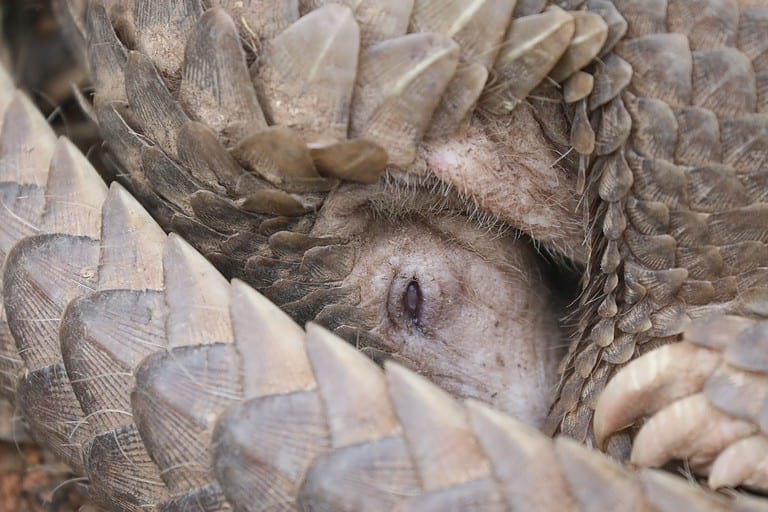
Pangolins quickly roll into a ball to protect their soft undersides when threatened. They also tuck their faces under the tail. Their scales are hard and sharp for extra protection against predators. Even big cats never succeed in biting their way through a pangolin’s armor.
In addition to curling up, pangolins also emit a noxious-smelling chemical from their glands, similar to skunks, except they don’t spray. Predators often give up and leave these animals alone. Sadly, the pangolin’s ability to curl into a ball does not protect it from humans.
5. Pangolins are Bipedal
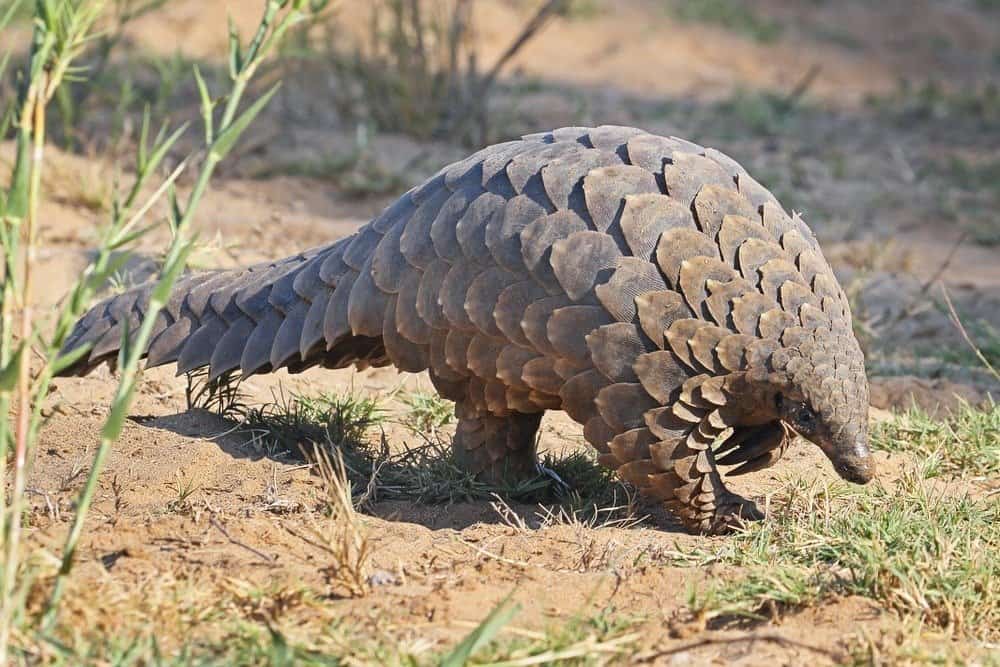
They developed bipedalism due to their long, curved, powerful claws on their forelimbs, which are not efficient enough to aid movement.
©Patrick Fonseca/Shutterstock.com
Pangolins can walk on their hind legs while holding their front limbs and tail off the ground. However, they can still use their four limbs to walk. They developed bipedalism because their long, curved, powerful claws on their forelimbs were not efficient for walking. Pangolins usually keep their front paws curled to protect their sharp front claws when walking on all fours.
6. Pangolins are Solitary Animals and Meet Only to Mate
Pangolins mate once a year, normally during the summer or autumn.
©Eugene Troskie/Shutterstock.com
Surprisingly, pangolins are shy, solitary animals who only come together to mate. Mating typically occurs at night when males and females meet near a watering hole. Males do not actively seek out females; instead, they mark their locations with feces and urine so females can find them. If any competition arises over females, males fight for the opportunity to mate with her using their tails as clubs to hit each other. Pangolins mate once a year, normally during the summer or autumn, although this depends on the individual species and the location.
7. Pangolins are Insectivorous
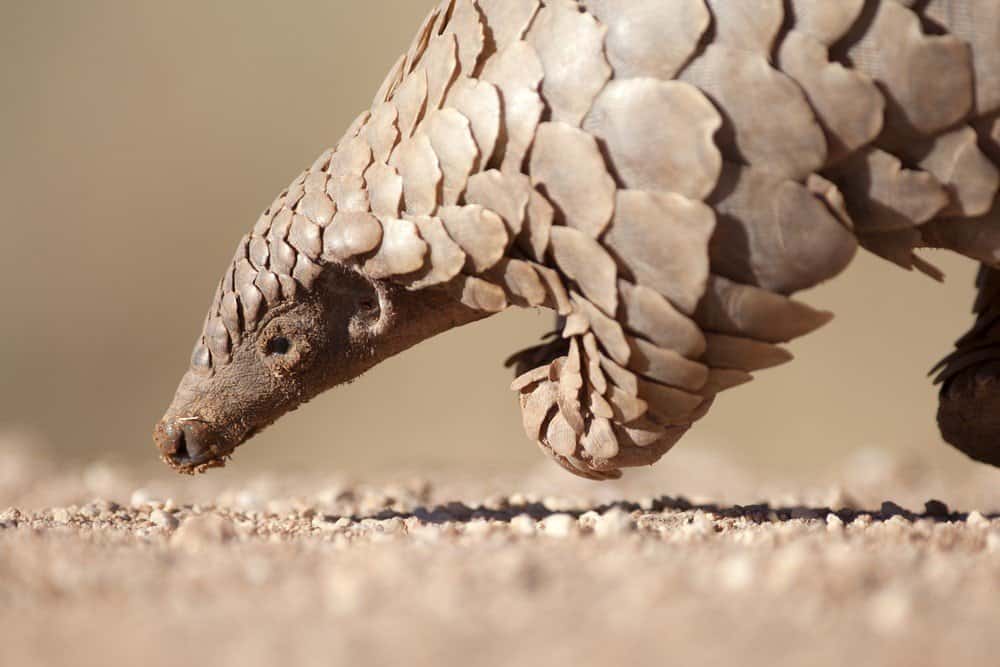
These animals have a specialized diet since they only eat one or two species of insects.
©2630ben/Shutterstock.com
The pangolin’s diet consists primarily of insect species, including termites and ants. They eat the larvae as well. These animals have a specialized diet, typically eating only one or two species of insects and consuming about 5 to 7 ounces per day. They don’t exceed this amount even when many insects are available. Pangolins are regarded as important regulators of termite populations in their natural habitats.
8. Most Pangolins Are Nocturnal Animals
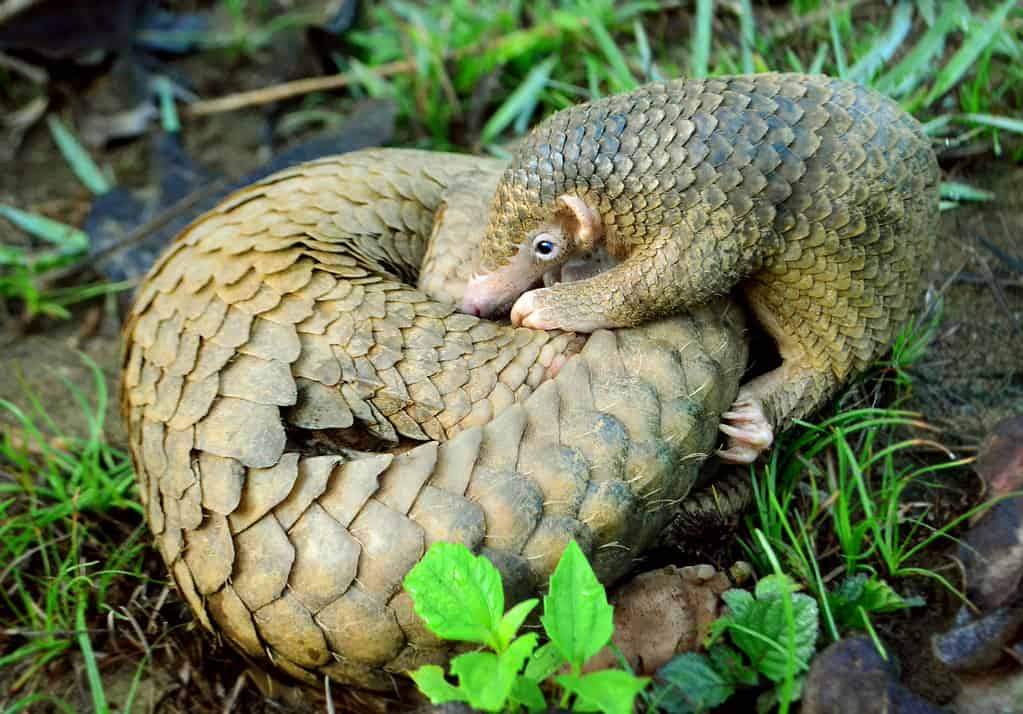
Pangolins are typically nocturnal.
Most pangolins are active during the night and sleep during the day. They use their well-developed sense of smell to find insects at night and remain in their burrows during the day. The long-tailed pangolin (black-bellied pangolin) is among the few species of pangolin that stay active by day, while others are fast asleep and curled up into balls.
9. Pangolins Have Very Poor Vision and Lack Teeth
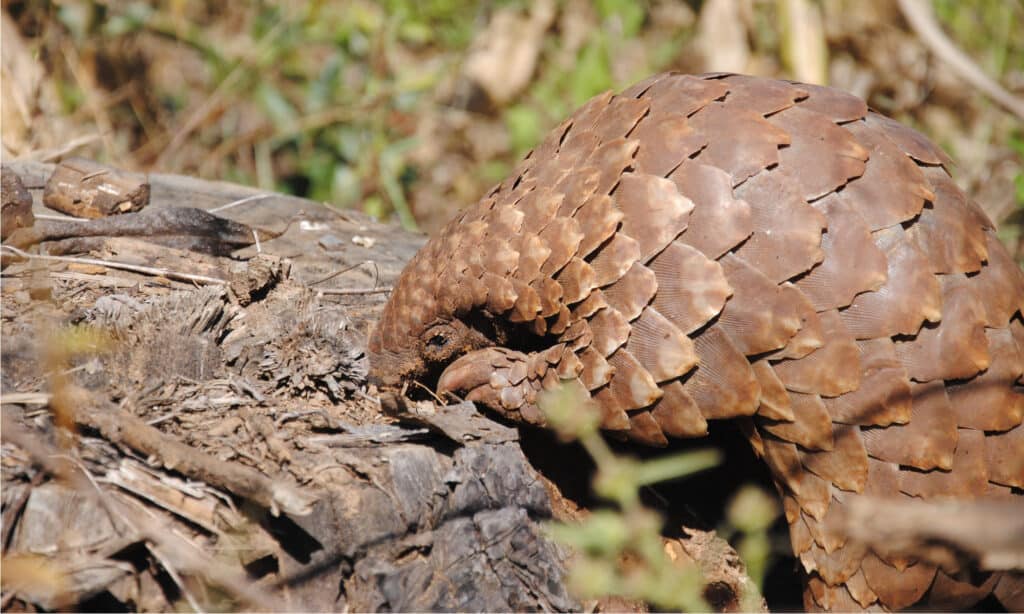
Pangolins ingest gastroliths (small stones), which accumulate in their stomachs to help digestion.
©Gemma Campling/Shutterstock.com
Another interesting pangolin fact is that they don’t have teeth. They also have poor vision and rely heavily on smell and hearing to locate prey. They have sharp claws and powerful front legs to help them break open termite burrows or mounds. Their tongue structure and stomach play a key role in helping pangolins obtain and digest insects.
Since they can’t chew prey, pangolins ingest gastroliths (small stones), which accumulate in their stomachs to help digestion. The pangolin’s gizzard also has spines made of keratin that help it grind up and digest its food.
10. Pangolins are a Threatened Species
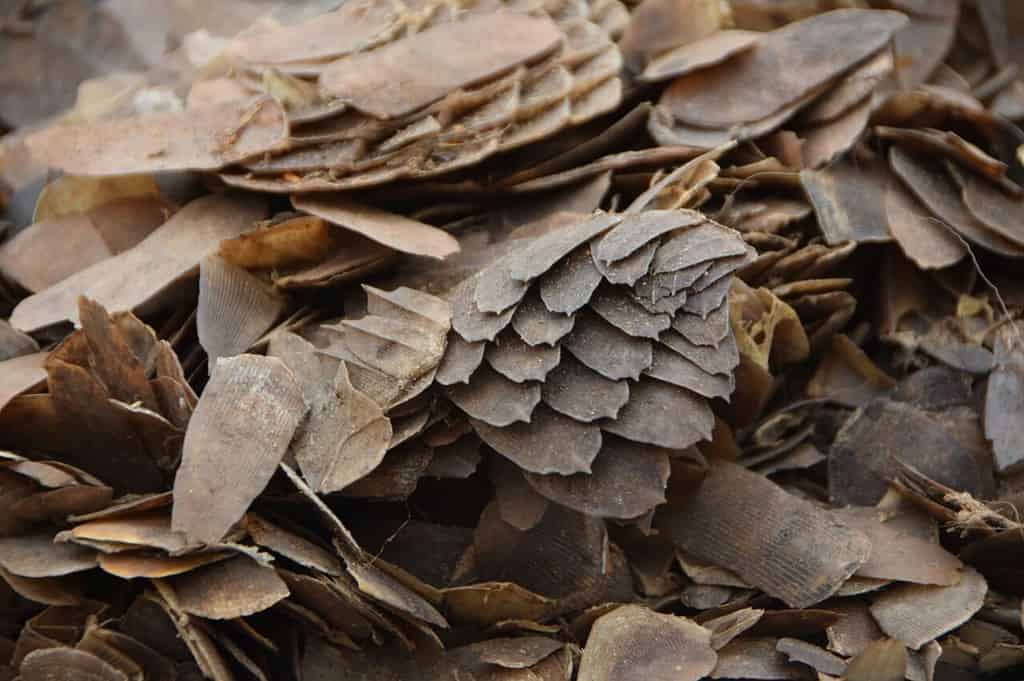
The large-scale illegal trade in Asian pangolins is drastically decreasing their numbers, slowly driving them to extinction.
©U.S. Fish and Wildlife Service Headquarters, CC BY 2.0 – Original / License
Pangolins are threatened with extinction since their meat is considered a delicacy, and their scales are believed to cure several illnesses, particularly in China and Vietnam. The large-scale illegal trade in Asian pangolins is drastically decreasing their numbers, slowly driving them to extinction.
Pangolin trafficking has become a major illegal business. The government of Cameroon burned eight tonnes of confiscated pangolin scales in 2017; this equals around 15,000 dead pangolins. All eight pangolin species are now listed on the IUCN Red List as either vulnerable, endangered or critically endangered.