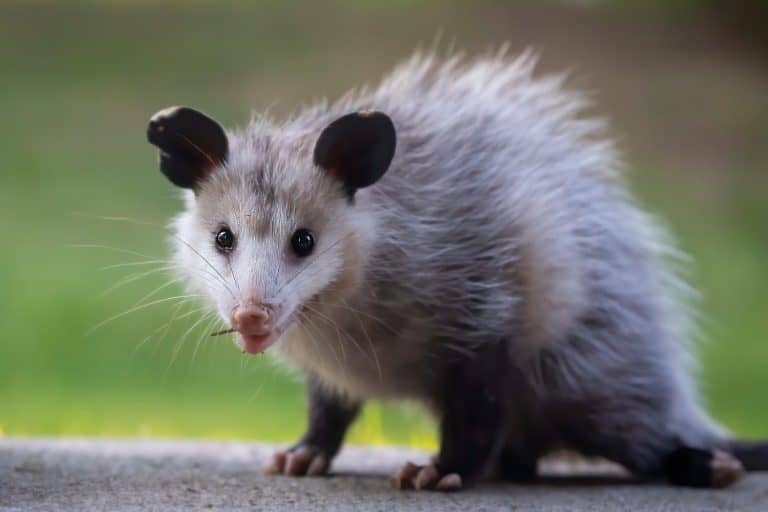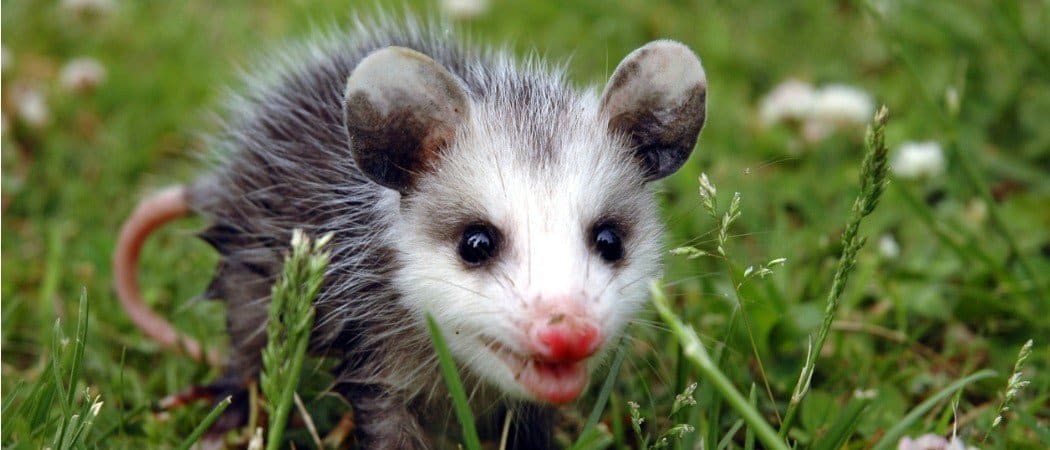

If you’ve ever come across a possum in the wild or seen one in a zoo, you might have assumed it was related to a rat. That’s what I thought when I saw my first possum one night in my backyard. Aside from its white face, it looked a lot like the large rats I had seen before.
I was totally wrong.
It turns out the Virginia opossum (also referred to as simply “possum”) is actually a marsupial. That’s right. Possums are very distant relatives of kangaroos and koalas. Who knew?
The Virginia opossum is a nocturnal and solitary animal, about the size of an adult house cat, and has a prehensile tail. They use the tail as an extra appendage to hold and move bundles of leaves, twigs, and grass to their nests. The possum’s tail is also used for stability as they climb trees, even acting as an extra leg for leverage.
However, the possum’s dramatic act is not exactly what it appears to be. Seemingly on command, they fall down and look like they’re no longer alive! But the possum’s dramatic act isn’t quite what it seems.
Read on to find out what’s really happening when possums “play possum.”
What Are Possums Really Doing?
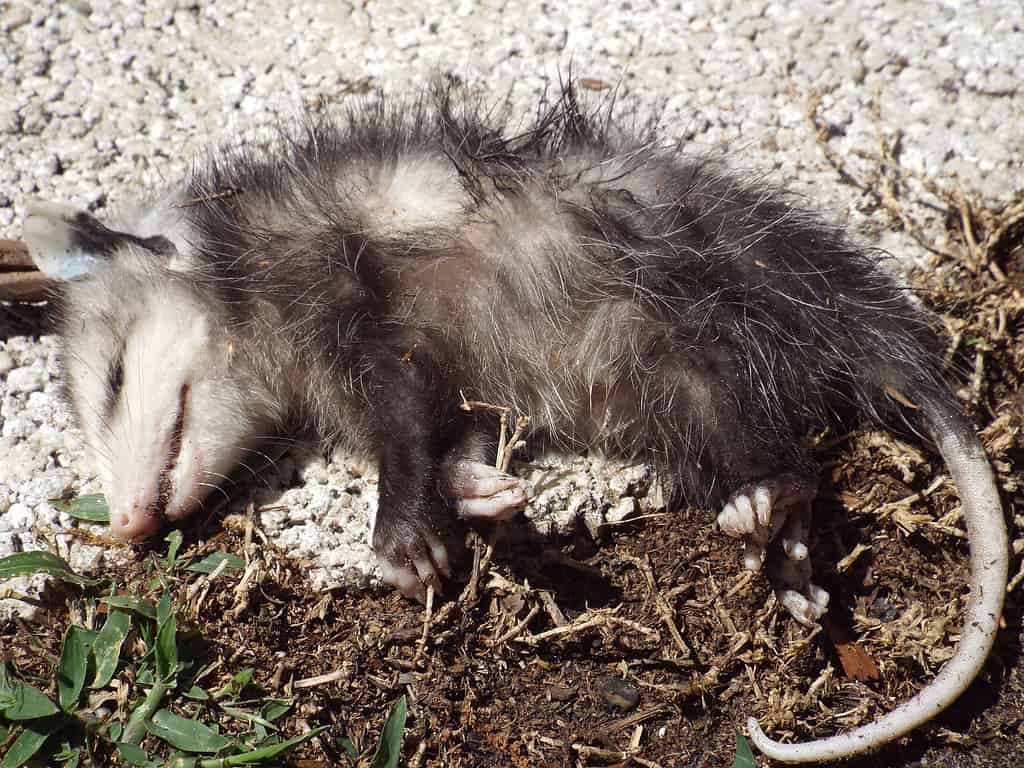
This young possum does an excellent job playing possum.
©Johanna Boomsma/iStock via Getty Images
When possums “play possum,” it isn’t something they do voluntarily, and they’re definitely not playing. This response is actually an involuntary reaction to a stressful situation that causes extreme fear in the possum. It’s a process called thanatosis, also referred to as tonic immobility. When a possum falls over and looks lifeless, it is a subconscious effort to convince a perceived threat that the possum is not desirable prey.
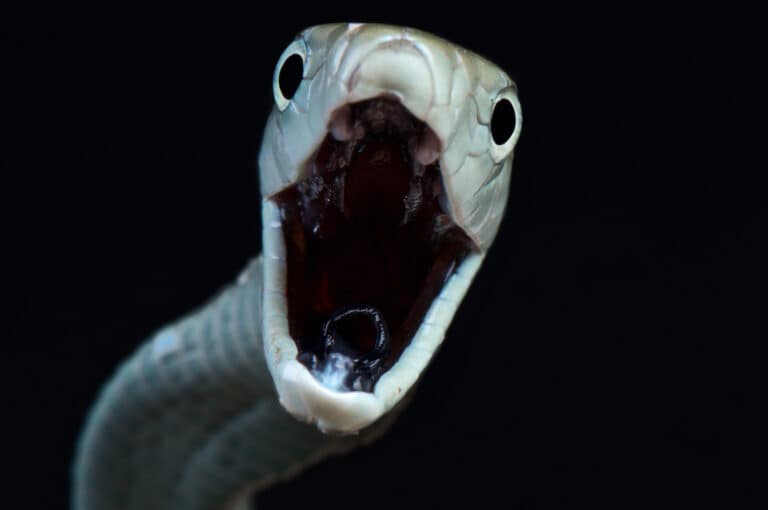
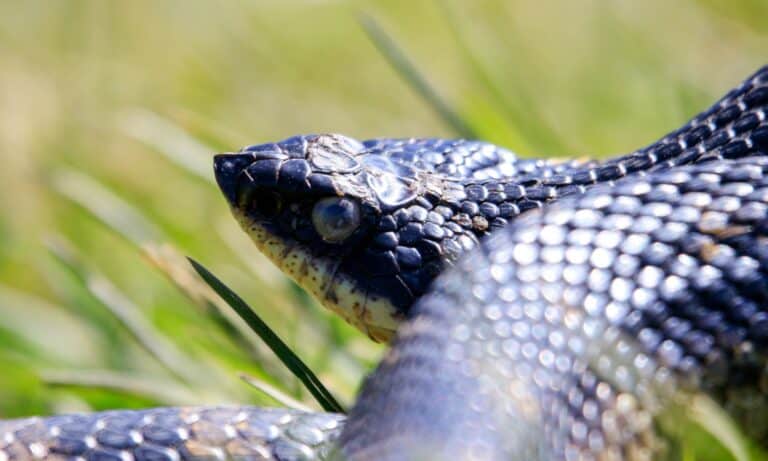
And while possums are the most famous critters to exhibit this behavior, they aren’t the only animals that do it. Guinea pigs, several snake species, and even lemon sharks have been observed pretending to perish in stressful situations. Scientists generally believe that thanatosis is the animal’s way of convincing a predator to seek out alternative prey — something they can actively pursue.
The possum does more than just fall over during thanatosis. It also bares its teeth, sticks out its tongue, and even empties its bowels. If that isn’t enough to ward off a predator, the possum has one last trick up its furry sleeve — it excretes stinky fluids. This is a final effort to convince its foe that the possum truly isn’t delectable prey.
What To Do When You Find a Possum Playing Possum
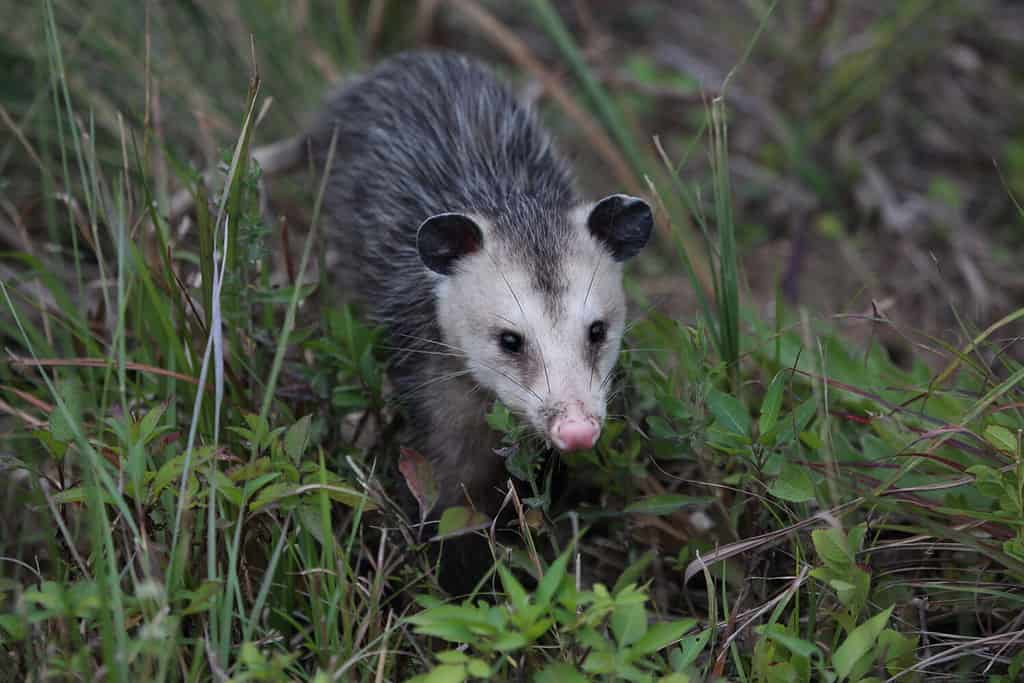
Possums “play possum” usually as a last resort.
©Arend Trent/Shutterstock.com
If you come across a possum and startle it, the possum may go into “playing possum” mode. That’s what happened when I unexpectedly came across the possum in my backyard. I came around the corner of my garden shed in the dark, and the possum was just a few feet in front of me. Both of us were very startled. The small possum fell over immediately.
If this happens to you, the best thing to do is leave the possum alone and walk away. That’s what I did.
Whatever you do, don’t prod it, touch it, or try to roll it over or move it. Since the possum’s muscles will remain stiff, you may believe it has perished. It has not. What you’re really doing when you bother the possum is prolonging its catatonic state.
When left alone, the possum’s catatonic state can last just a few minutes or several hours. You never can tell. Despite appearing lifeless, the possum is still aware of its surroundings. It will only come out of its catatonic state once it senses that the threat of danger has fully passed.
Once the possum feels safe again, it will slowly begin to recover. This process usually starts with small twitching movements, especially around the eyes. Eventually, the possum will get up and move along as though nothing had happened. That’s what happened with the possum in my backyard. I made a mental note to go back and check on the situation in a few hours. When I did, the possum was long gone.
Do All Possums Play Possum?
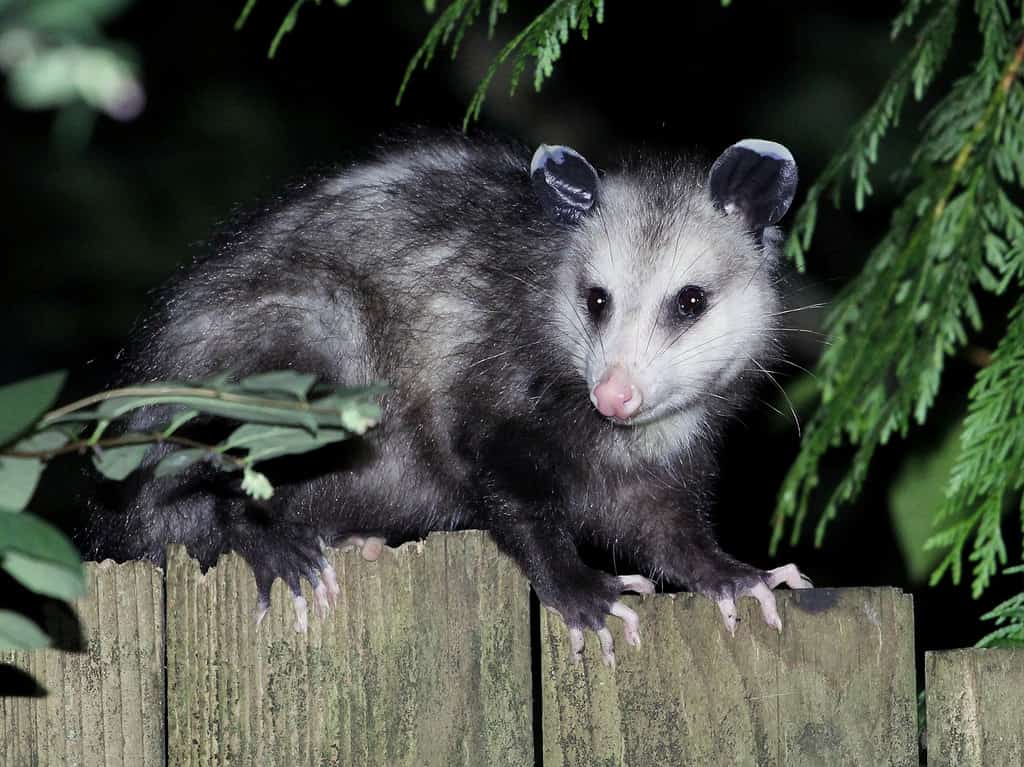
Possums are most active at night, as are their predators.
©randimal/iStock via Getty Images
No, not all possum species exhibit this behavior. The Virginia opossum is most famously associated with “playing possum.” In contrast, Australian possums, which are a different group of marsupials, do not display this behavior. However, if you are in the United States, all Virginia opossums you encounter are capable of “playing possum.” Still, this is not their primary defense mechanism.
Usually, when confronted with a threat, the possum will growl and hiss to intimidate and warn. If possible, it will also try to run away. Only if escape seems impossible does the involuntary thanatosis reaction occur. While all possums are capable of this behavior, younger possums tend to play possum more frequently than older adults. Young possums often lack the experience or confidence to confront a threat. Adult possums, having encountered more threats in their lifetimes, often react more aggressively and may attempt to run away before resorting to appearing lifeless.
For all possums, thanatosis is a last resort when confronted with a threat.