
Quick Take
- Every other electric ray on the planet has dorsal fins, which raises the question of why this one evolved without them. Explore the missing fins →
- Something barely larger than a human thumb still packs enough electric punch to defend itself, and the list of predators it faces is stranger than you'd expect. See its predators →
- Its jaws tell a story about what this miniature predator actually hunts, and the answer is not what most people would guess. Discover its actual diet →
- Scientists still can't fully explain why this ray ditched its fins, and to make matters worse, the leading theories contradict each other. Read the competing theories →
There are approximately 70 different species of electric rays in the world. Some of the best-known electric rays are the Atlantic torpedo ray and the Pacific torpedo ray. These rays are anything but small, measuring between five and six feet in length. In contrast, the smallest ray in the world is significantly smaller—about the length of a human thumb. This ray is the finless sleeper ray, and it is indeed tiny.
How Large Is the Finless Sleeper Ray?
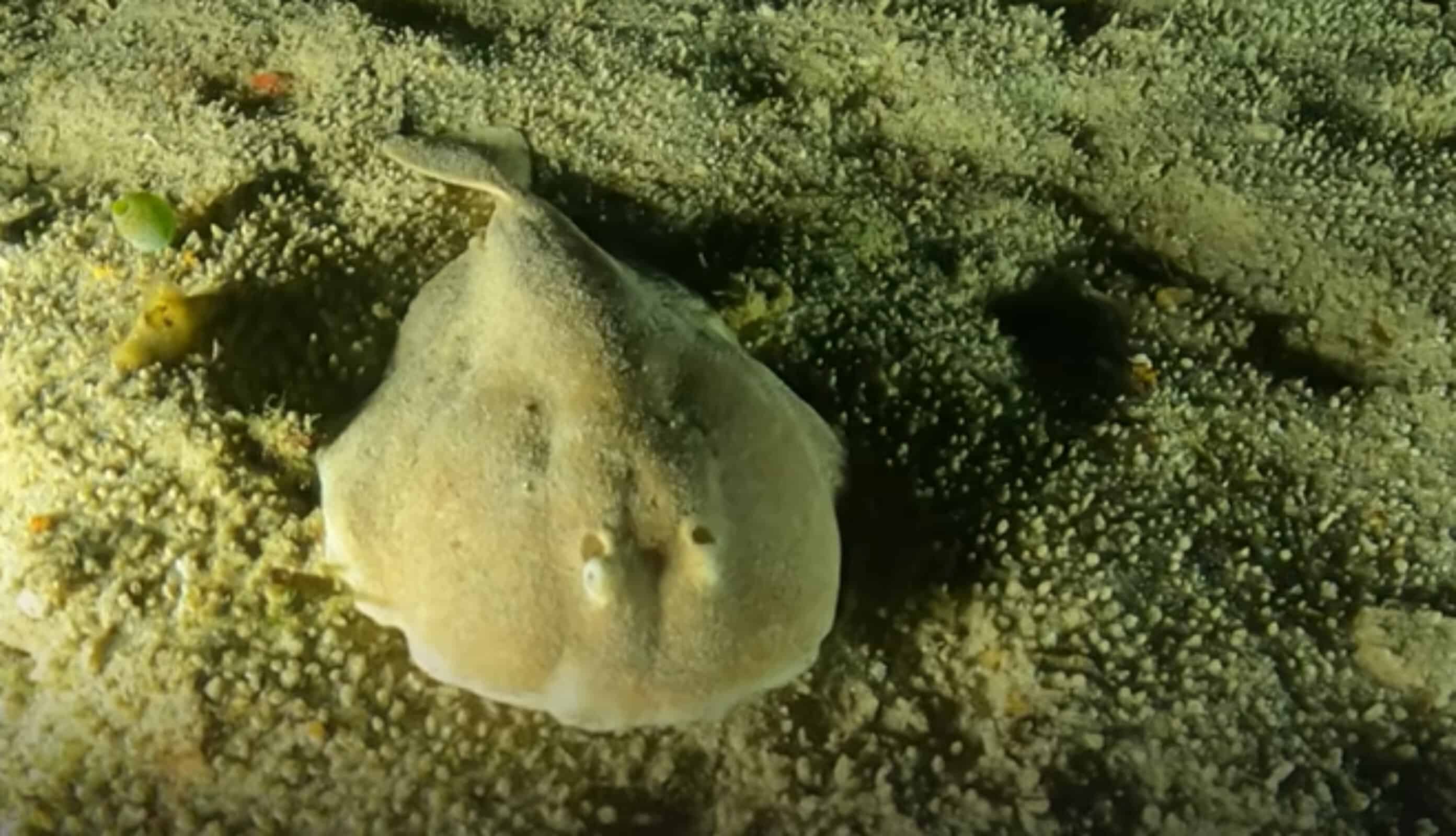
The finless sleeper ray is the smallest ray in the world. Like its much larger relatives, it is a species of electric ray capable of delivering an electric shock. However, unlike other electric rays, the finless sleeper ray lacks dorsal fins.
The finless sleeper ray can grow up to 15 centimeters long. According to Andy Murch, host of YouTube’s Sharks and Rays, a finless sleeper ray this size “would be an absolutely gargantuan one.”
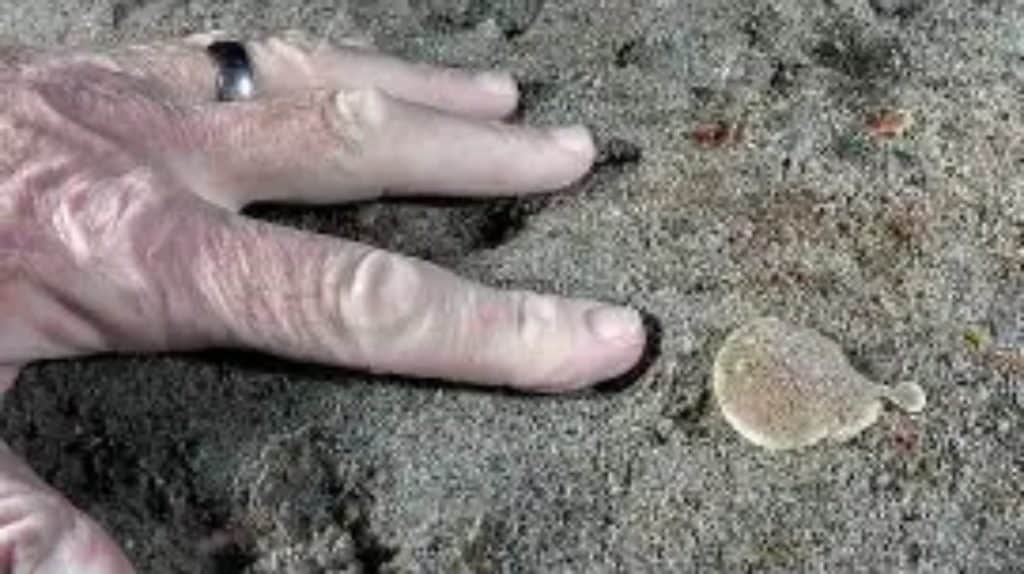
Finless sleeper rays are the smallest rays on the planet.
© – Original
“Most of them top out at 10 centimeters,” Murch explained on Sharks and Rays. “This is a truly, truly miniature little predator.”
Murch went on to say that he found an adult finless sleeper ray approximately 10 centimeters long while diving. However, he was very excited about finding a juvenile that was “barely larger than [his] thumb,” putting into perspective just how tiny these little rays are.
Finless Sleeper Rays Do Not Have Dorsal Fins
The finless sleeper ray is the only member of its genus. It is also the only member of the family Narkidae that lacks dorsal fins. If other rays need dorsal fins, what makes the finless sleeper ray different?
“The interesting thing about the finless sleeper ray is that not only is it the smallest ray in the world, they have no dorsal fins,” Murch stated on Sharks and Rays. “That’s quite significant because all other electric rays either have one or often two dorsal fins. Pretty small dorsal fins, but still, all of them have dorsal fins.”
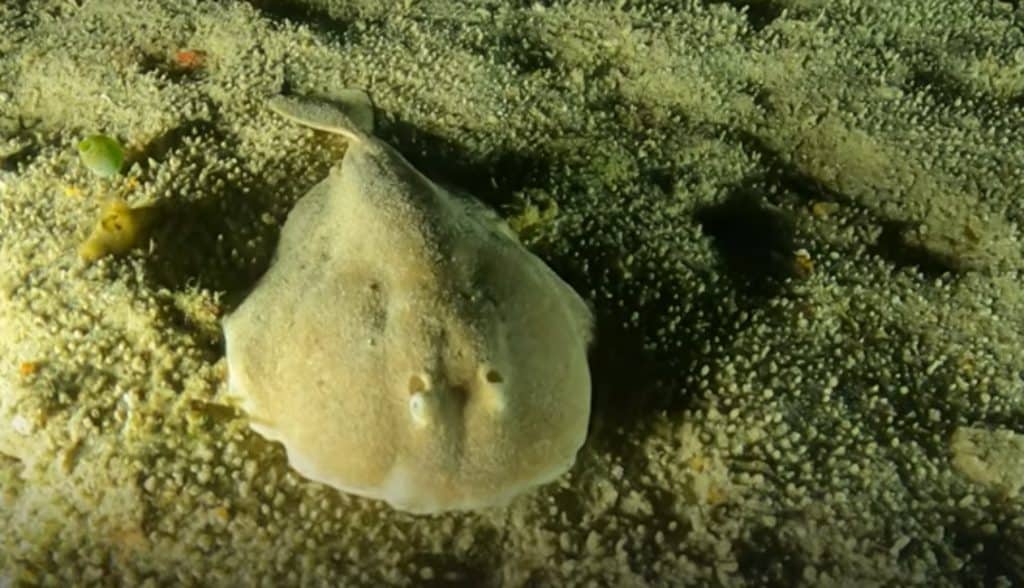
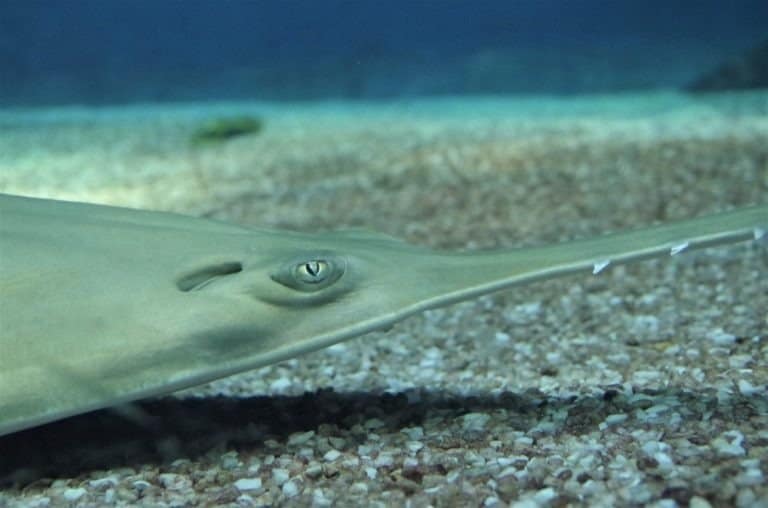
Finless sleeper rays do not have dorsal fins likely because of their small stature.
© – Original
Murch went on to explain that he believes the ray evolved over time so that its dorsal fins became vestigial and eventually disappeared completely. Possible reasons for the loss of dorsal fins include:
- The tail and pectoral fin disc provide enough lift for movement
- The ray’s small size, its habitat, and its diet make dorsal fins unnecessary
- Dorsal fins help larger rays stabilize themselves, but because finless sleeper rays are so small, stabilization is not needed
Whether one or more of these reasons explain why finless sleeper rays lack dorsal fins remains under investigation. But, as Murch’s video shows, the lack of fins does not slow the tiny rays down.
Where the Finless Sleeper Ray Is Found
The finless sleeper ray is found along the coast of Southeast Asia in the Indian and Pacific Oceans. From the Malay Peninsula, including Thailand, to Vietnam, and Borneo, the finless sleeper ray is a constant on the floors of the coastal waters.
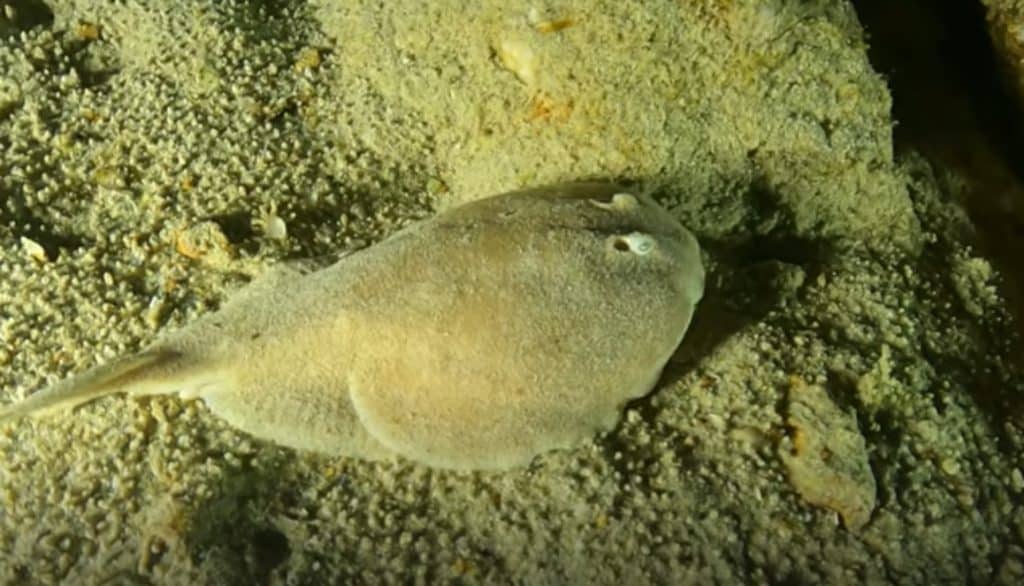
Finless sleeper rays live in shallow sandy or muddy waters in Southeast Asia.
© – Original
Finless sleeper rays are endemic to this region. They prefer living in shallow waters with sandy or muddy substrate. They both bury themselves in the mud or sand and hunt for their prey there as well.
What Does the Finless Sleeper Ray Eat?
Finless sleeper rays are more active at night than during the day. This, along with their small size, has made it difficult to determine exactly what the rays’ diet consists of.
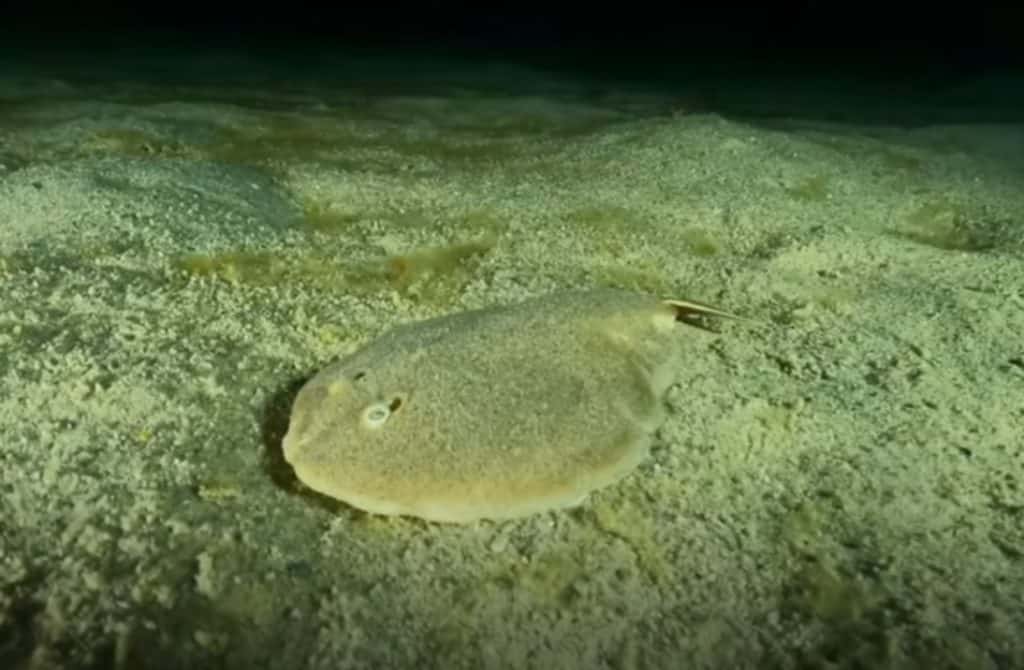
Finless sleeper rays are believed to eat invertebrates.
© – Original
According to Murch, finless sleeper rays are predators that eat small invertebrates. A 2007 study from Integrative & Comparative Biology notes the “robust structure of its jaws.” Because of this, it is believed the rays enjoy prey with hard shells.
Predators That Target the Finless Sleeper Ray
Observing finless sleeper rays in their environment is difficult to do. Observing one being preyed upon by another species is rare. Therefore, just what creatures target the finless sleeper ray is not entirely known.
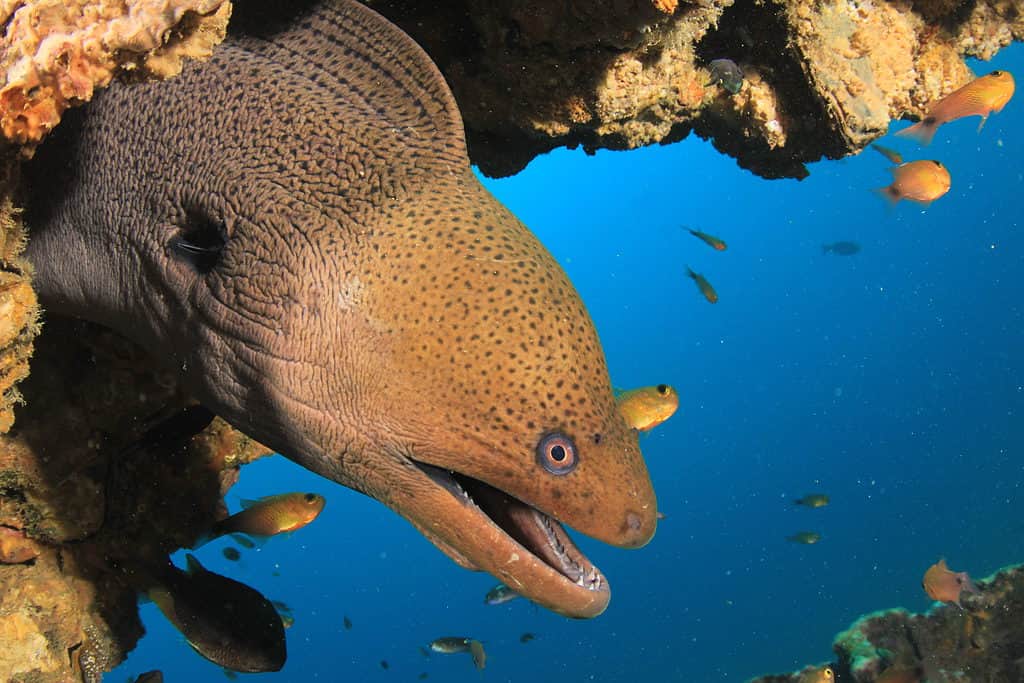
It is believed that moray eels are one of the creatures that target the finless sleeper rays.
©Rich Carey/Shutterstock.com
The predators believed to hunt the finless sleeper ray include:
- Moray eels
- Grouper
- Snapper
- Octopus
- Cuttlefish
- Stingrays
- Skates
This list is likely incomplete. Given the habitat of finless sleeper rays, it is likely that other bottom-dwelling sea creatures are their primary predators. But, until more observation is done of the smallest rays on earth, against which predators the rays must defend themselves with electric shocks will remain a mystery.