
Quick Take
- Scientists spent decades convinced they knew why prey animals outrun predators, but new research says they had the wrong answer the whole time. See the old model →
- The gap between a predator catching its meal and going hungry may come down to something that happens in under a tenth of a second. See reaction time research →
- The predator-prey arms race isn't just about speed and agility. Most researchers have ignored a second battleground until now. Discover the neural arms race →
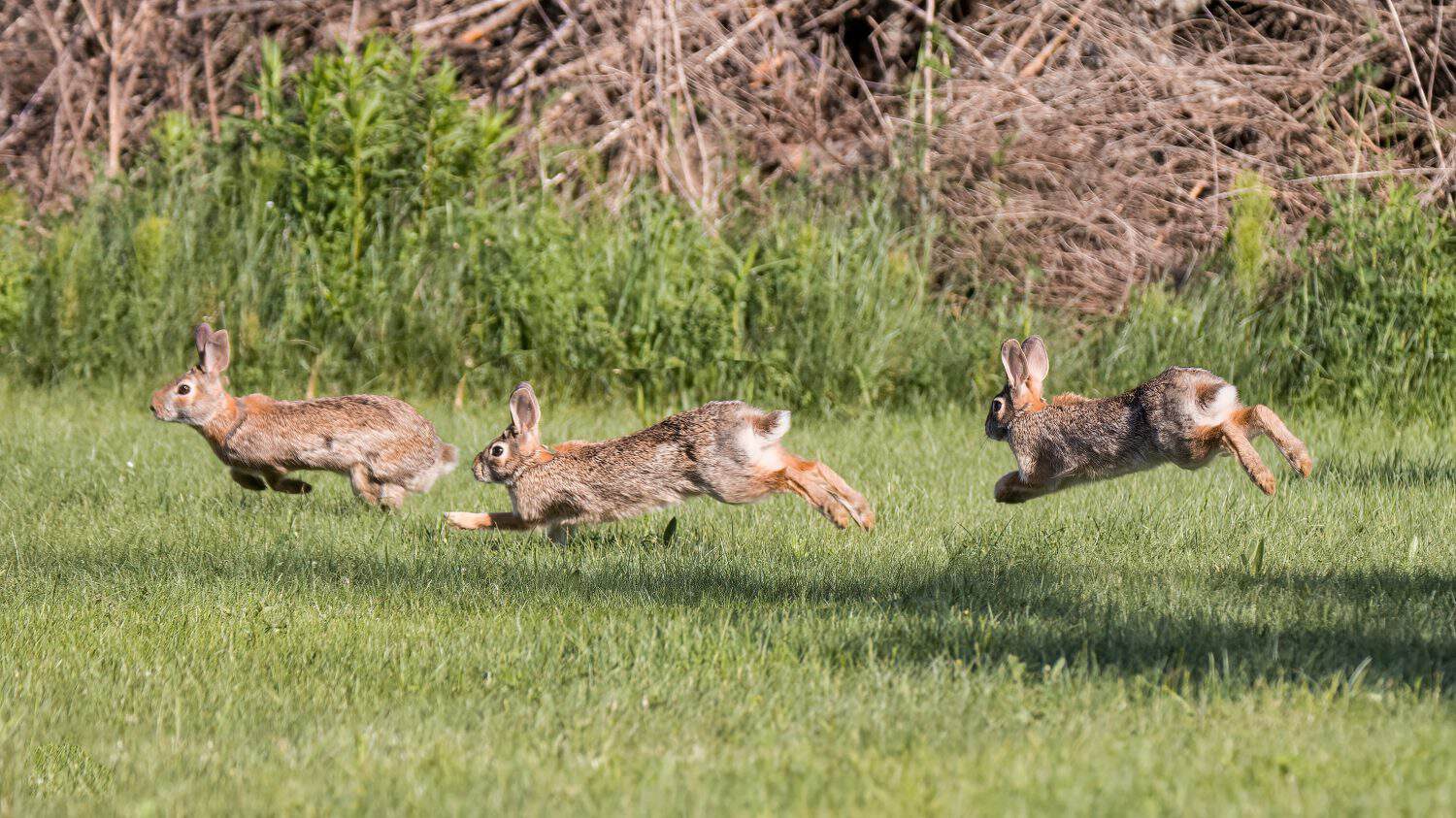
A cottontail rabbit seems like the most delicate, vulnerable creature on Earth until it starts running. Even a seriously bloodthirsty fox has to reach top speeds just to have a chance of catching it. Then, if it comes down to the wire, a well-placed kick by the rabbit ensures that it will live on, and the fox will go hungry for another day. Such is the high-stakes world of predator-prey relations. Prey animals always seem to have the short end of the stick. They get eaten, after all. New research, however, suggests that prey ultimately escape 90% of attacks due to one standout feature.
For decades, scientists thought that most prey outmaneuvered their predators through pure maneuverability. After all, a small frame means a better chance at turning on a dime. A new study published in the Proceedings of the National Academy of Sciences (PNAS) suggests that prey manage to elude their betters 90% of the time due to quicker reaction times.
A Tale as Old As Time
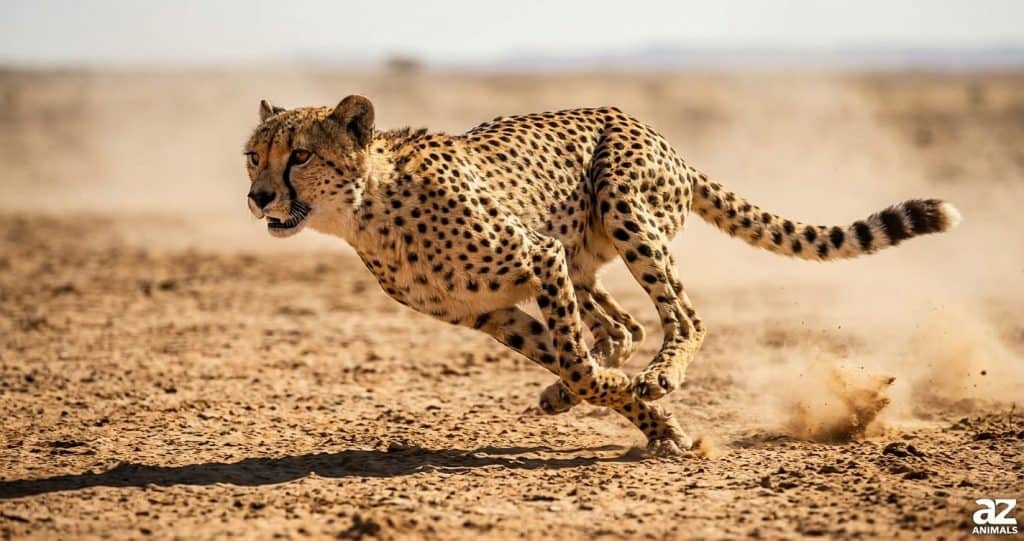
Even some of the fastest predators on Earth, like cheetahs, don’t always catch prey animals with the ease their velocity might suggest.
©A-Z Animals
As the saying goes, there is always a bigger fish. More than that, however, there is always a bigger creature ready to use you for its next meal. At the top of the food chain, humans typically get to live in ignorance of the palpable feeling of being hunted. For every other animal on earth, especially the herbivores, being hunted is an everyday reality.
Prey animals flee predators at every level of nature. Flies get eaten by birds, and birds get eaten by house cats. House cats even get eaten by coyotes. And yet, most prey animals escape being eaten. In fact, prey animals elude their predators about 90% of the time. Previously held notions about this counterintuitive fact led to restricted experiments. Take the turning gambit, for example. This older experiment measured the turning radius and velocity of a prey animal and divided it by those of their predator.
This model provided enough accuracy for scientists to consider it valid. No one, however, had attempted to see if the turning gambit held fast across different media like air or water. At least, until researchers from the University of Amsterdam took a closer look.
A New Paradigm
Thanks to new insights from researchers at the University of Amsterdam Institute for Biodiversity and Ecosystem Dynamics (IBED), the turning gambit is in for a bit of a makeover. Their study, entitled “The allometry of vertebrate pursuit predation,” found that reaction time played a far greater role in prey escape than maneuverability.
The data the researchers compiled revealed a significant mismatch. For one, prey animals were generally not maneuverable enough to compensate for their slower speed. Plus, in aquatic environments, models predicted predators as having a huge advantage. The data showed, paradoxically, that aquatic predators had one of the lowest capture success rates on Earth. In those environments, predators only caught prey about 10% of the time.
This led the researchers to wonder about the possible reason behind these discrepancies. It turns out that reaction time played a far bigger role in prey evasion than any sense of maneuverability. They found that even a fraction of a second was enough for prey animals to evade their predators. This is especially evident in water, which is approximately 1,000 times denser than air, giving prey something to push against to make life-saving sharp turns.
As Lars Koopmans, a PhD candidate at IBED, explained to EurekAlert!, “It’s this little head start, or benefit of starting to turn earlier, that gives prey enough space to evade. In the water where animals are especially maneuverable, prey can even slip behind the predator before it realizes what has happened.”
Going Forward
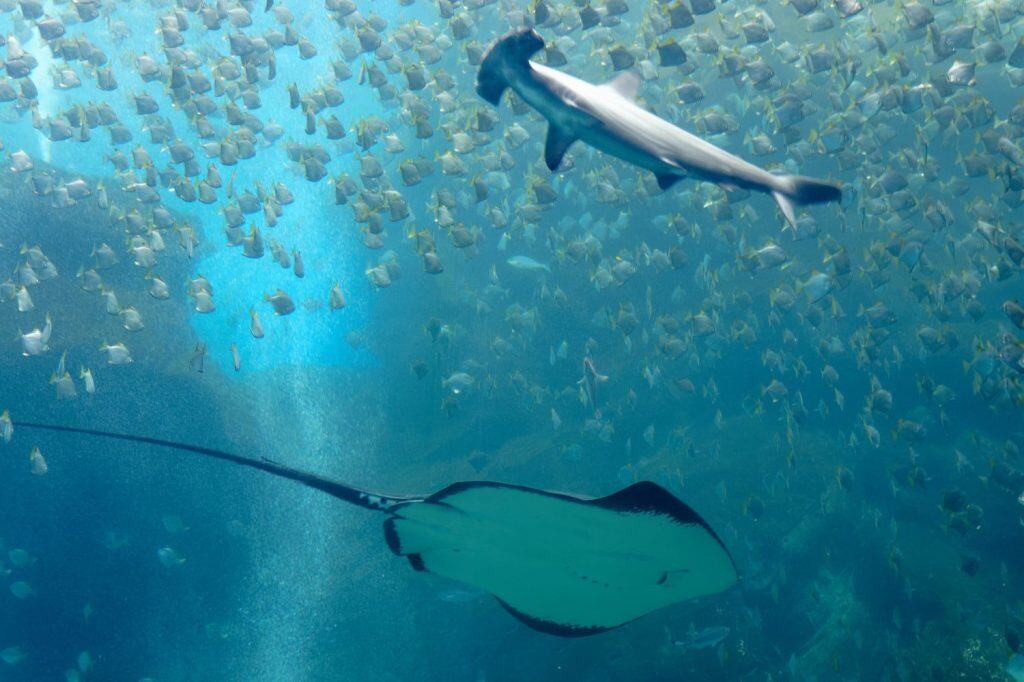
A model may be in place, but the researchers still don’t know how much cognition is involved in prey reaction time.
©AaronChenPS2/Shutterstock.com
Despite new data resulting in new insights, the researchers behind the study are quick to point out that they don’t have all the answers. Their model, based on reaction time, offers a new explanation for how prey evade predators. However, it doesn’t paint a full picture. For example, the new model predicts that an aquatic prey animal must time its movements within a 100-millisecond window. Only within this narrow band will it evade its predator, but the predator still has to be within striking distance.
The reality of how aquatic prey animals achieve these blinding turning speeds remains unknown. With a model now in place, the researchers are testing it on the battlefield of the sea. They have begun filming predator-prey interactions on coral reefs. Researchers predict that the crunch-point involves both perceptual speed and biomechanical movement. As Koopmans explained to EurekAlert!, “The main focus has been that predator-prey interactions are just a biomechanical arms race where one goes faster, and the other one also tries to go faster to compensate. This changes the view: it’s also a neural arms race.”