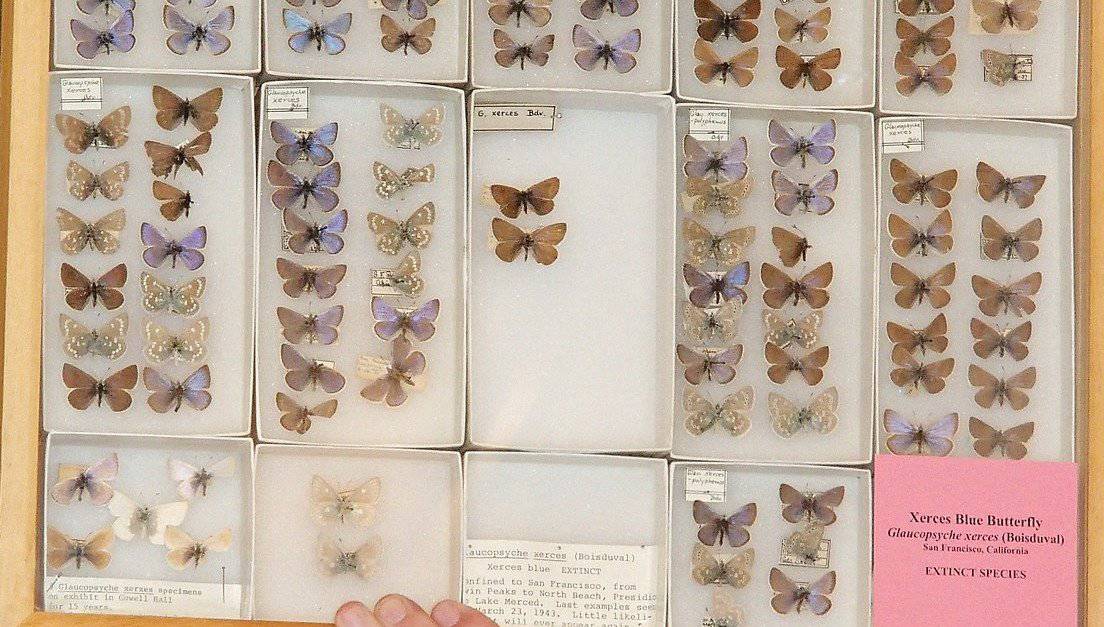

Due to humanity’s drive for development and growth, we have lost a considerable number of species. One such species is the Xerces Blue butterfly. This butterfly went extinct in the early 1940s and is an example of how humans negatively impact the environment. This Instagram post by @the_archaeologist_official discusses the story of this butterfly’s extinction. Read here to learn more about the Xerces Blue Butterfly.
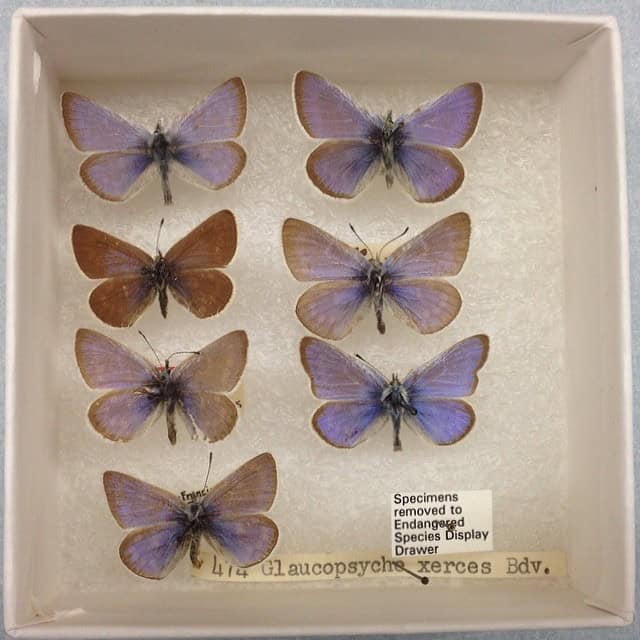
What Was the Xerces Blue?
The Xerces Blue butterfly was a small, blue butterfly that lived in the coastal sand dunes of California. Living primarily on the San Francisco Peninsula, these butterflies relied heavily on the natural environment for their survival. The unfortunate extinction of this butterfly continues to act as a symbol for conservation efforts in the United States. It is notable for being considered the first American butterfly or insect species whose extinction was directly caused by human activity. This serves as an important lesson regarding future human activities that may disturb the natural environment. The last confirmed and recorded sighting of an Xerces Blue was in the early 1940s.
What Caused the Xerces Blue Extinction?
There are a few reasons why extinction occurred, but it was mostly the result of human activity. Given the extremely specific habitat of these butterflies, any sort of disturbance was damaging to the population. The larvae of these butterflies relied heavily on native legume plants such as lotus and lupine for feeding and reproduction. The butterflies were able to survive in this fragile system for thousands of years, but when humans started to develop the land, these plants disappeared. Possibly due to a lack of knowledge, maintaining the population became difficult, and it soon collapsed. Although tragic, this grim reality serves as an important reminder for the future. By working together with the environment, humans can continue to develop while preserving the beautiful biodiversity that benefits the earth.