
Quick Take
- With sloths, the females are the ones responsible for mating calls.
- Three-toed sloth mating calls are often described as high-pitched screams or shrill whistles.
- These calls travel long distances through dense rainforest canopy, alerting any solitary males.
- Two-toed sloths rely less on vocalizing to attract mates and more on pheromones and chemical signaling.
Sloths are some pretty interesting animals. Beyond their reputation for being slow, a host of different traits reveals a lot about their evolution and behaviors. Take for example their mating calls. Rather than males trying to impress females with loud vocalizations, it is the female who produces mating calls. This Instagram post by @intels talks about these fascinating rituals. Keep reading below to learn more about sloths’ mating calls.
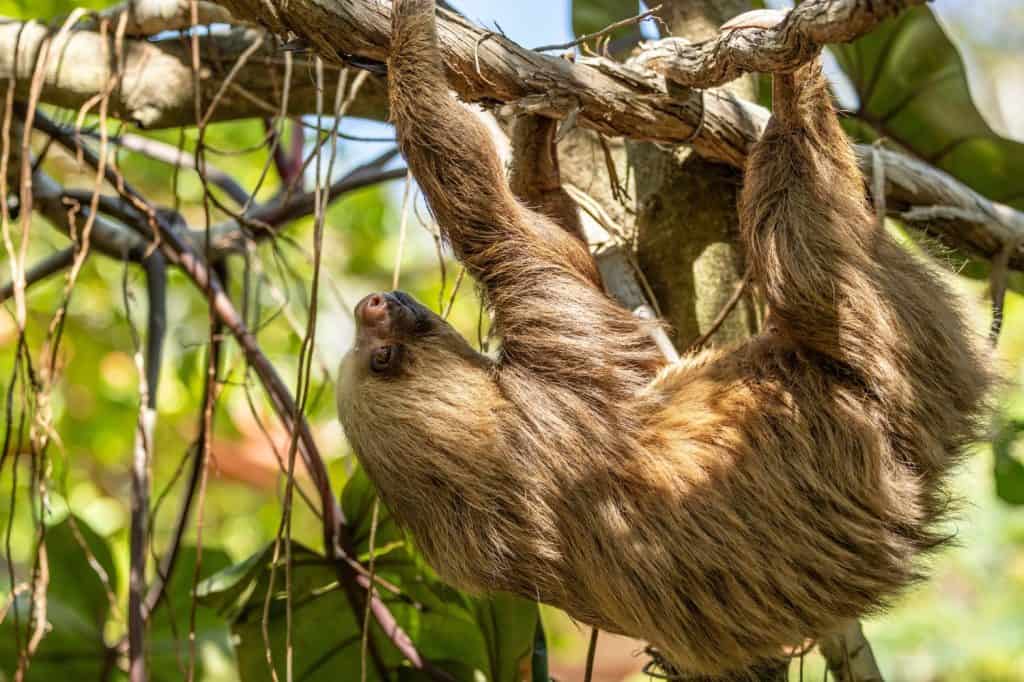
The mating call of sloths depends on their genus, which is split up based on how many toes they have.
©Luciana Smania/Shutterstock.com
About Female Sloth Mating Calls
Female sloths, specifically three-toed sloths (genus Bradypus), are known for emitting loud vocalizations when ready to mate. These sounds are often described as high-pitched screams or shrill whistles. This behavior contradicts the common image of sloths as quiet. However, the screams are important in rainforest canopies where trees create low visibility. These calls travel long distances to potential mates, alerting any solitary males throughout the forest. Females often emit repeated loud calls over extended periods during their estrus (or heat) to find a mate. Without these screams, and given their already solitary lifestyles, sloths would not easily be able to reproduce. Similarly, sloths have a sedentary lifestyle. Since these animals greatly limit their motion, screams help females remain sedentary.
Mating signals look different between sloth species. Three-toed sloths are known to scream, but two-toed sloths are a bit different. Two-toed sloths, in the genus Choloepus, rely less on vocalizing to attract mates. Instead, they use pheromones and chemical signaling by rubbing glands onto trees and the surrounding area. These pheromones signal the female’s reproductive status to potential mates. When males detect either the pheromones or calls, they travel through the canopy to see the female. Sometimes, multiple males arrive at the same time. If this occurs, the males may compete physically for the female. After mating, the male leaves. A female will mate with more than one male, as sloths are polygynous rather than monogamous.