





Quick Take
- The world's slowest mammal has a secret weapon that kills predators from the inside out, and it all starts with what sloths choose to eat. Explore sloth diet →
- Sloths are helpless on the ground yet outperform most mammals in one surprising physical activity. See swimming ability →
- Two-toed and three-toed sloths look nearly identical, yet their evolutionary paths reveal something that changes how scientists think about adaptation. Trace their evolution →
- Modern sloths owe their survival to a single behavioral shift, and it is one their elephant-sized ancestors never made. Discover survival shift →
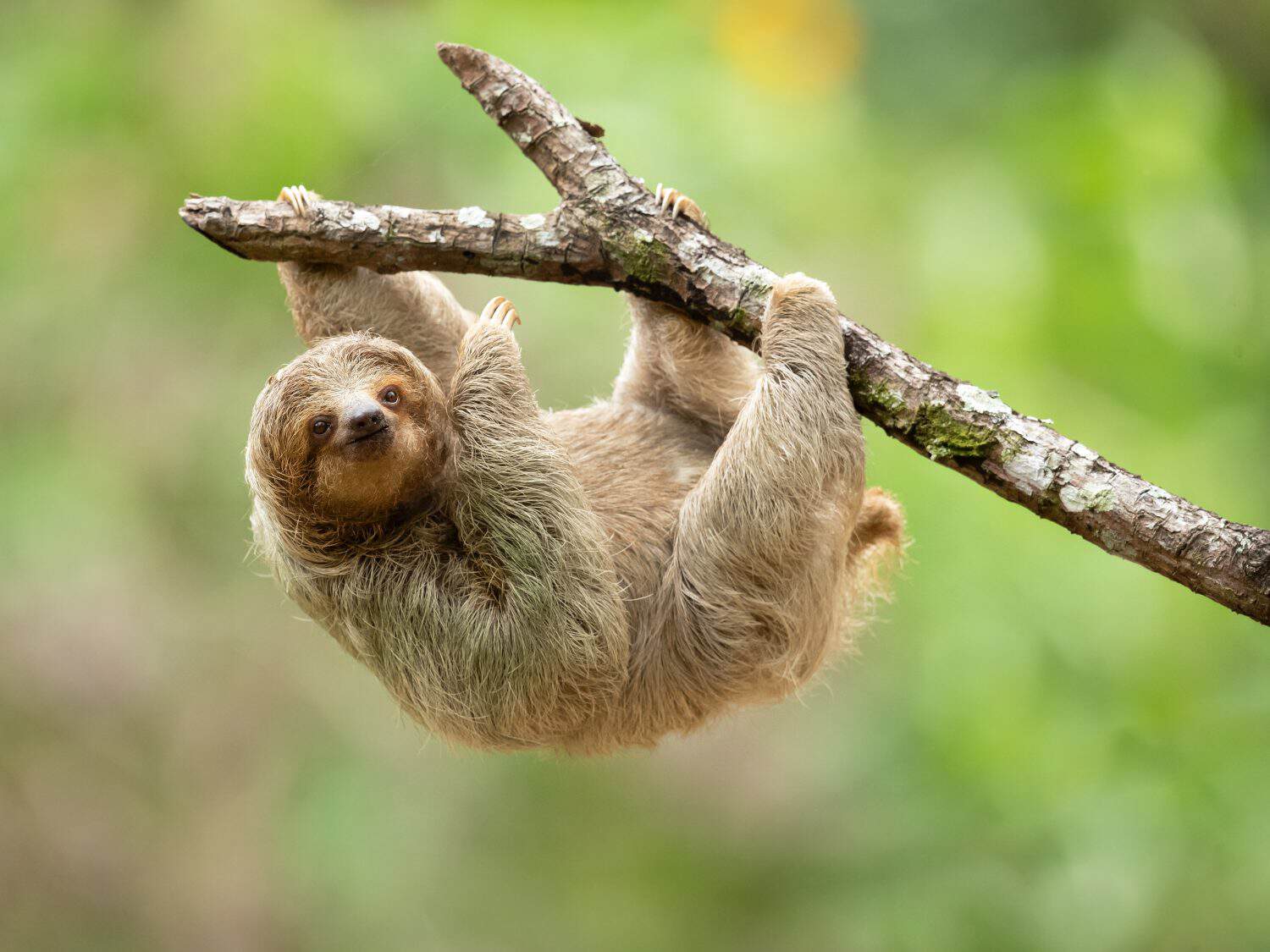
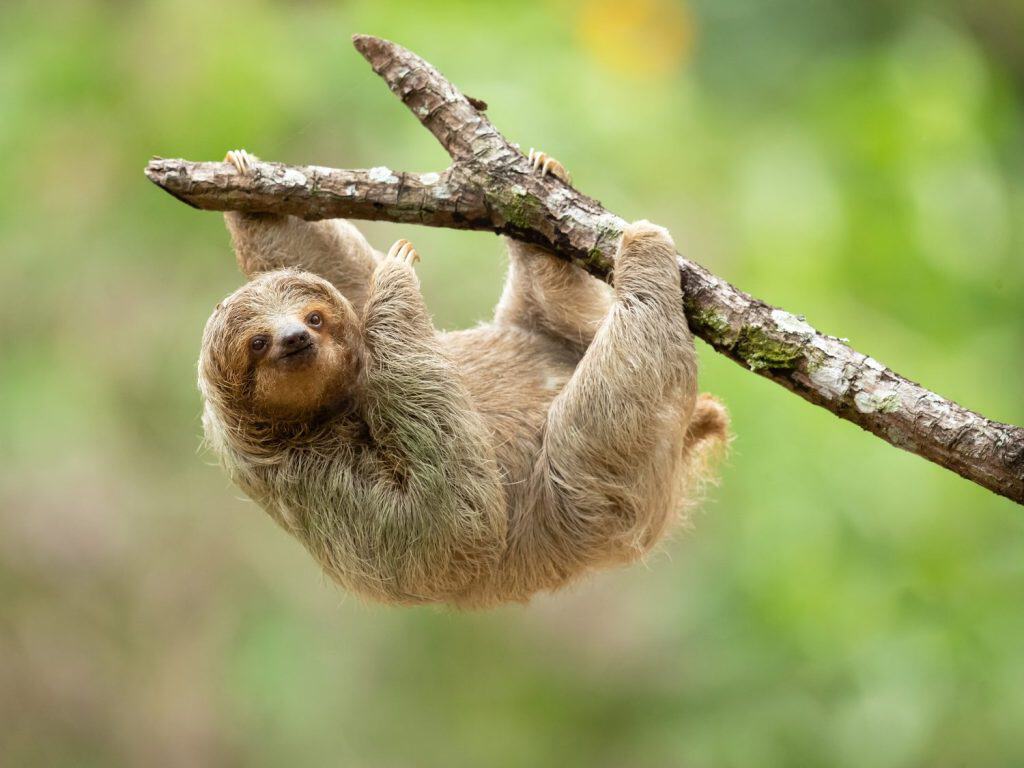
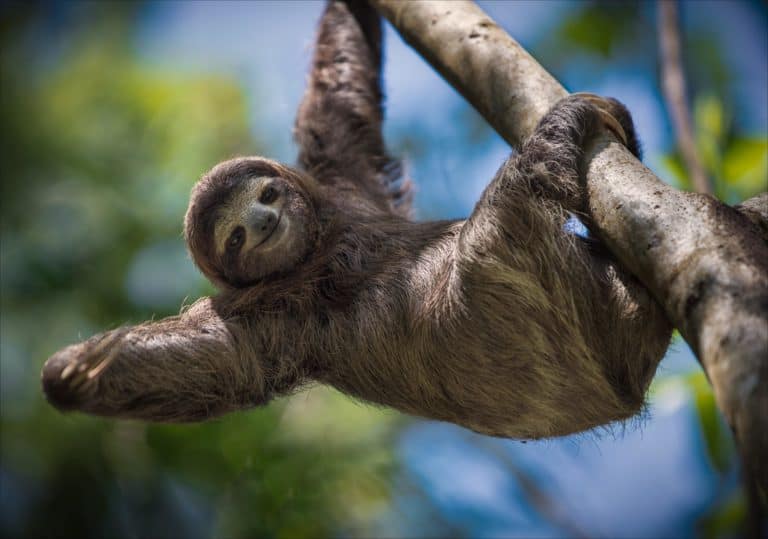
Sloths live in the treetops of Central and South American rainforests. They spend their days foraging and eating leaves, buds, and twigs. These slow-moving mammals sleep 8 to 10 hours and only move as far as about 40 yards each day. But they have excellent swimming skills, thanks to their long arms.

5 Sloth Facts
- Sloths move slowly due to their extremely slow metabolic rate.
- Sloths come out of the treetops only once per week to relieve themselves.
- There are between five and seven species of sloths, one being critically endangered and another vulnerable.
- There are two-toed sloths and three-toed sloths today, all about the size of a dog.
- Ancient giant sloths, called Megatherium, were the size of modern elephants.
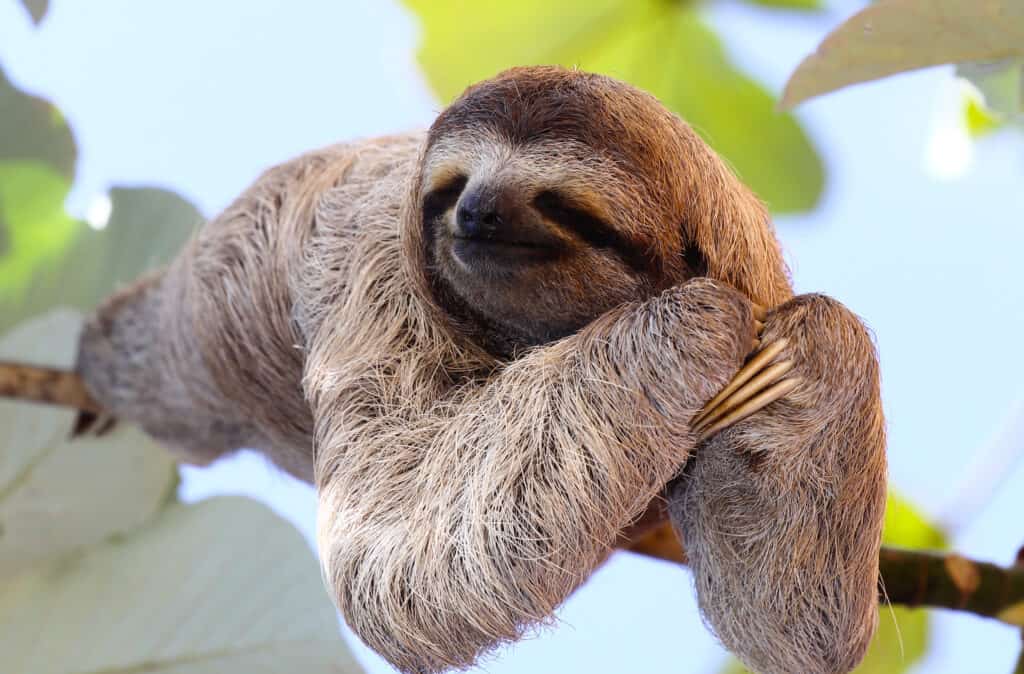
Sloths sleep 8 to 10 hours and only move as far as about 40 yards each day.
©Janossy Gergely/Shutterstock.com
Evolution
Sloths are members of the superorder Xenarthra — making them relatives of armadillos and anteaters. These animals originated in South America during the late Paleocene around 60 million years ago and are known for their slow metabolisms and lack of teeth.
Recent studies and analyses of full mitochondrial DNA from sloth fossils that were 10,000 to 45,000 years old revealed an astonishing conclusion. Three-toed sloths are related to a broader clade of extinct ground sloths, including Megatherium and Megalonyx, bison-sized and larger creatures that roamed the North American continent until about 15,000 years ago. Two-toed sloths, although quite similar to their three-toed neighbors, are related to the giant South American Mylodon, a ground sloth that went extinct on the mainland around 10,000 years ago.
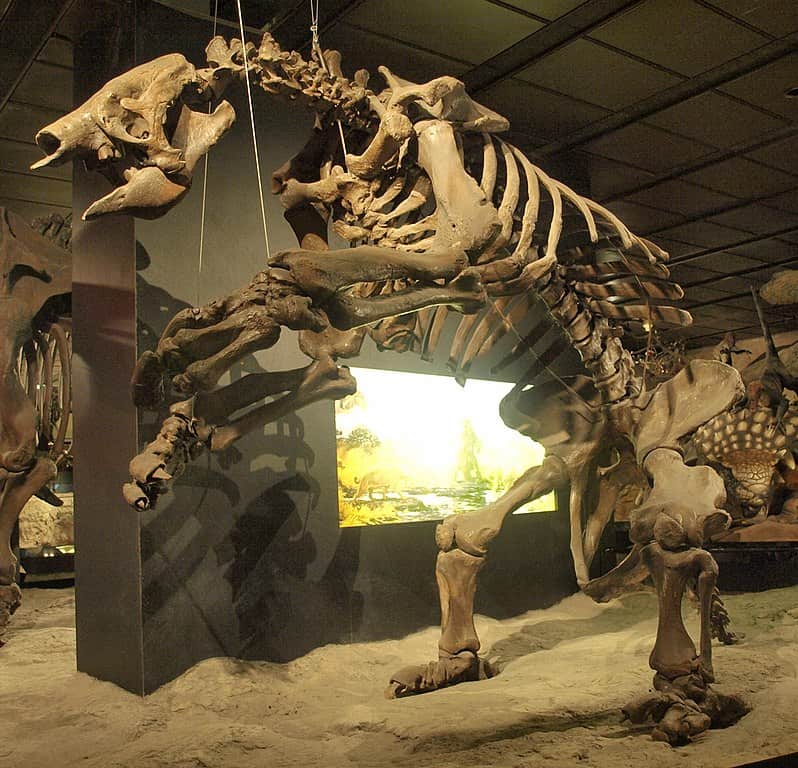
Eremotherium weighed as much as Megatherium but ranged more extensively than its size-mate, reaching as far as Mexico and the United States.
©Wikipedia Loves Art participant "Kamraman" / CC BY-SA 2.5 – Original / License
The two types of sloths that we know and love today escaped extinction when they began to live in the trees. Even more interesting, these two sloth types — the two-toed and three-toed sloths — evolved into tree dwellers completely independently of each other. This is an example of convergent evolution — when different species take different evolutionary routes to reach the same adaptations. The two types of sloths evolved into several species — with three-toed and two-toed varieties — though sources vary on the exact count, citing anywhere from five to seven species total.
Classification and Scientific Name
Commonly called sloths, these animals belong to the order Pilosa and suborder Folivora. This consists of two distinct families: the three-toed sloths (Bradypodidae) and the two-toed sloths (Choloepodidae/Megalonychidae). Distant cousins in the sloth superorder Xenarthra include anteaters and armadillos. They get their name from the Old English combination of the word “slow” with the suffix “-th.”
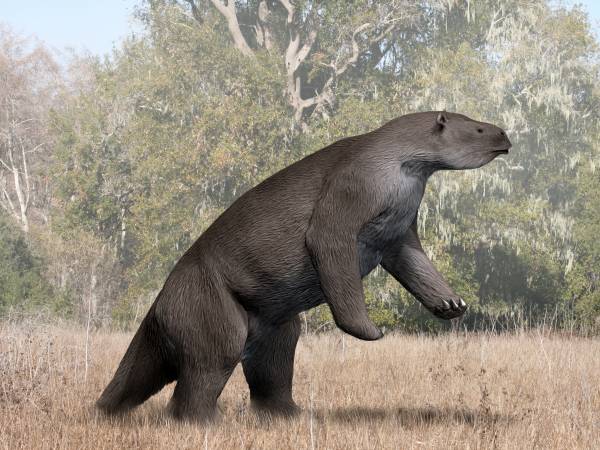
Megatherium americanum looked like a very large tree sloth with seven-inch-long claws.
©Nobu Tamura email:[email protected] http://spinops.blogspot.com/ / CC BY-SA 4.0 – Original / License
Species
- Pygmy three-toed sloth (Bradypus pygmaeus). Also known as the monk sloth or dwarf sloth, this species can only be found on the island of Isla Escudo de Veraguas off the Caribbean coast of Panama.
- Maned sloth (Bradypus torquatus). This three-toed sloth is distinguished by its lack of facial markings and long, coarse brown fur.
- Pale-throated sloth (Bradypus tridactylus). This sloth can hang upside down for up to 18 hours and even sleeps and gives birth upside down.
- Brown-throated sloth ( Bradypus variegatus). Found in the forests of Central America and South America, this species is the most common of the three-toed sloths.
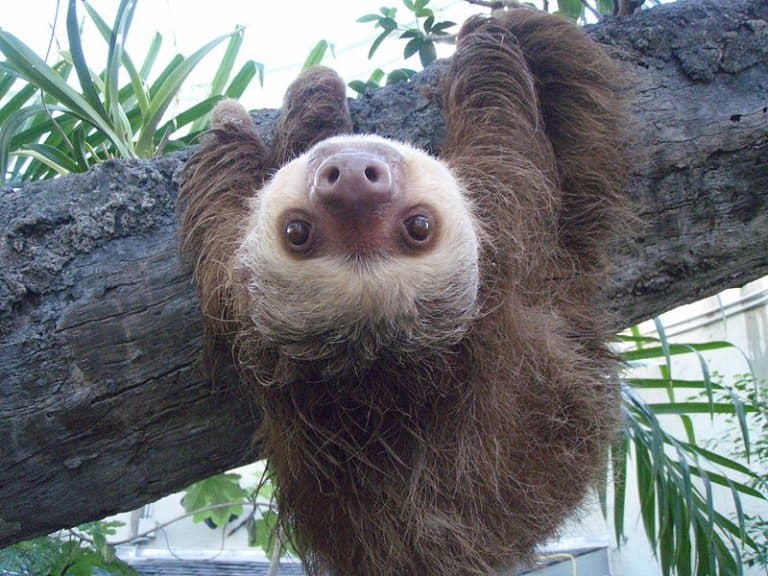
- Linnaeus’s two-toed sloth (Choloepus didactylus). With two toes on its front legs and three on its back legs, this little sloth is considered to be the slowest animal in the world — even slower than other sloths!
- Hoffman’s two-toed sloth (Choloepus hoffmanni). Also known as the northern two-toed sloth, Hoffman’s two-toed sloth is a solitary creature that can be found in mature rainforests and deciduous forests in South and Central America.
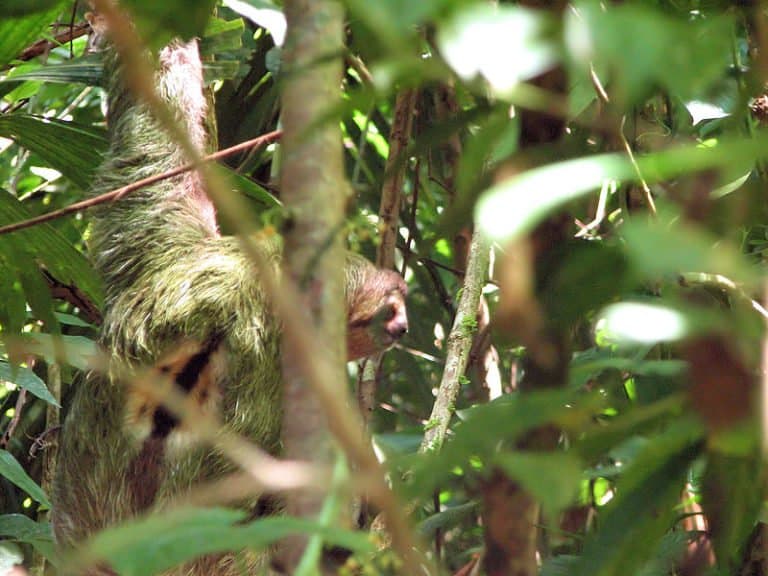
The green tint on a sloth’s fur is algae that serves as camouflage.
©iStock.com/Nachosuch
Appearance and Behavior
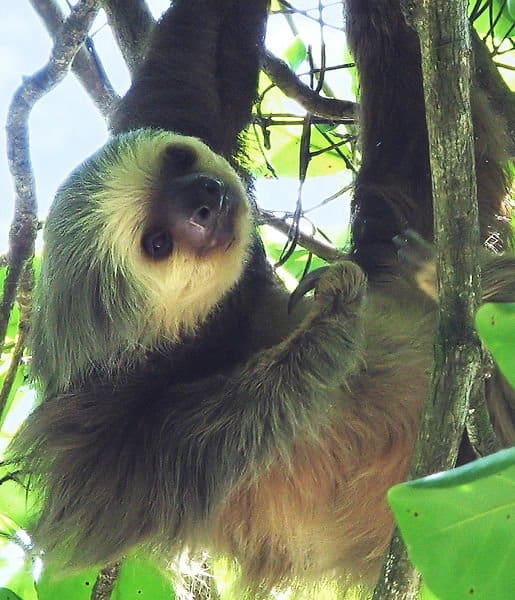
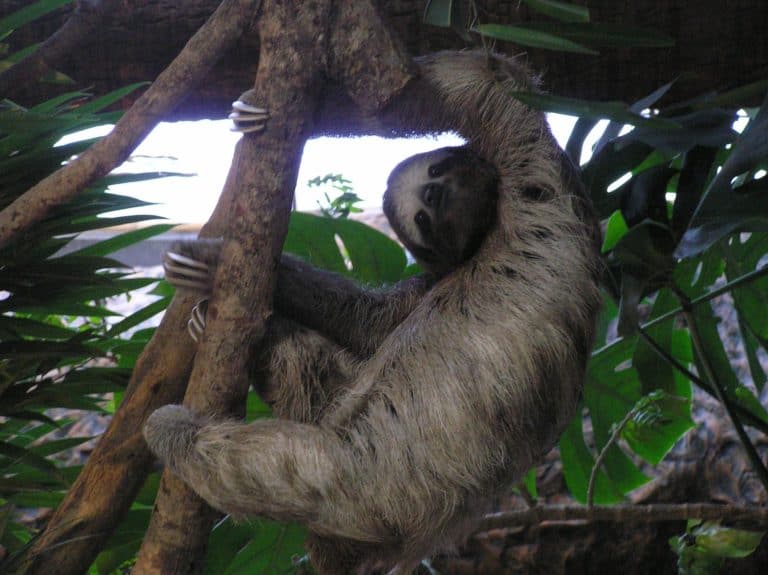
Sloths measure from 24 to 31 inches long. They weigh between 7.9 and 17 pounds as adults. Two-toed sloths have two toes on their front feet and three toes on their back feet. Three-toed sloths have three toes on all feet and a stubby tail that measures from two to 2.4 inches long. Between these, the two-toed sloths are larger. Both types have long arms and legs, rounded heads, and small ears.
Other differences between two-toed and three-toed sloths include the number of bones in their necks. Two-toed sloths have five to seven neck vertebrae. Three-toed sloths have eight or nine of these vertebrae. This makes sloths unique among mammals: most other mammals have seven neck vertebrae, except manatees (which have six) and two-toed sloths (which can have a different number). The number of neck vertebrae in sloths varies between five and nine. Because of the extra neck vertebrae, sloths can turn their heads further around than humans.
These animals have poor eyesight and hearing, but they can see in color. Because of these poor senses, they rely heavily on the senses of smell and touch.
These mammals also have a very slow metabolism and low body temperature. Their temperature varies as low as 68 degrees Fahrenheit according to their environment, but the range typically stays between 77 degrees and 95 degrees Fahrenheit.
The outer coat of sloth fur grows in the opposite direction as that of other mammals. Mammal hair typically grows toward the arms and legs. But sloth hair grows away from their arms and legs, parting down the middle of their chest and belly. This provides better protection against the elements since they spend most of their life hanging upside down.
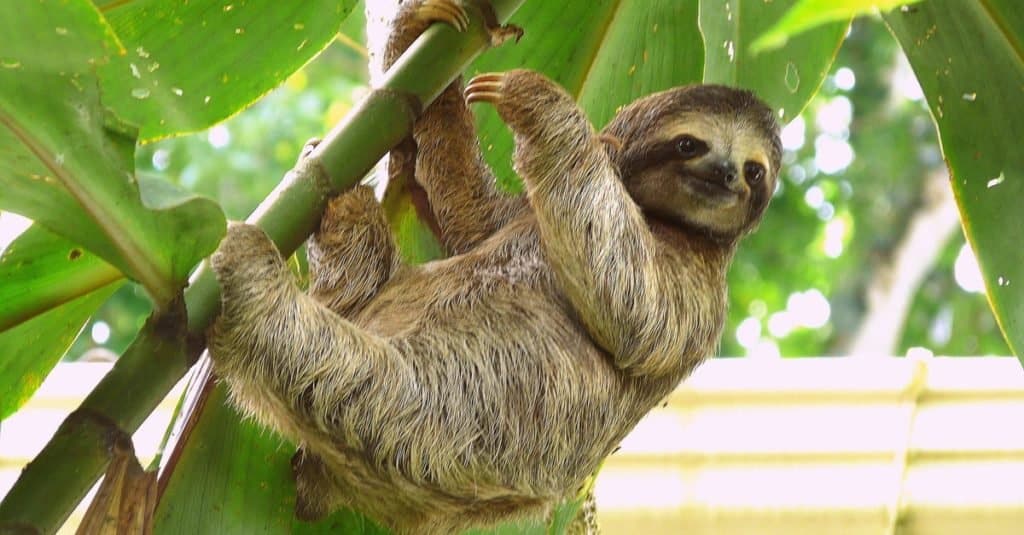
Because sloths are among the slowest mammals, their fur grows algae inside each of the hollow hairs. This green algae acts as camouflage and helps them hide from predators in the treetops. Among the creatures living on their fur and in this special ecosystem are mosquitoes, sandflies, lice, mites, ticks, beetles, and moths. The moths fertilize the algae on their fur, helping more growth.
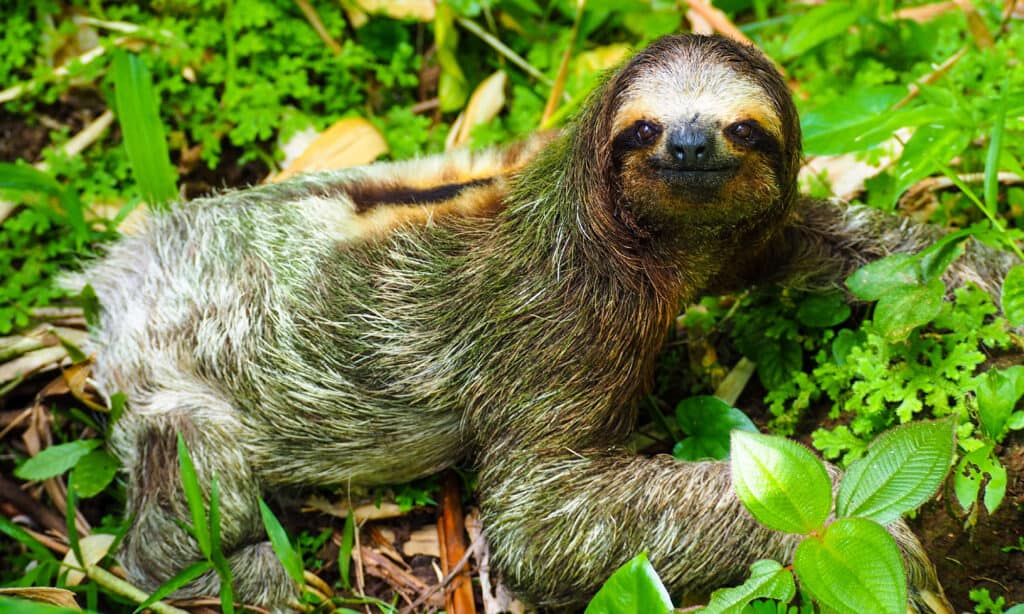
Sloths come out of the treetops once a week to relieve themselves.
©Kristel Segeren/Shutterstock.com
The limbs of these animals enable the mammals to hang from tree limbs. But these limbs do not support their weight well. This makes these animals helpless and clumsy on the ground. They can only drag themselves by their claws on the ground. So they only come out of the treetops once weekly. They do so to relieve themselves, then go back into the trees where they are less at risk from predators.
Despite not being safe or able to move well on the ground, sloths swim very well. They do a breaststroke like a human, using their long limbs to easily push themselves forward through the water. Their bodies float very well, too.
These animals do not spend time around each other, except for mating and rearing young. They act aggressively with sloths of the same gender. They lead mostly nocturnal, solitary lives.
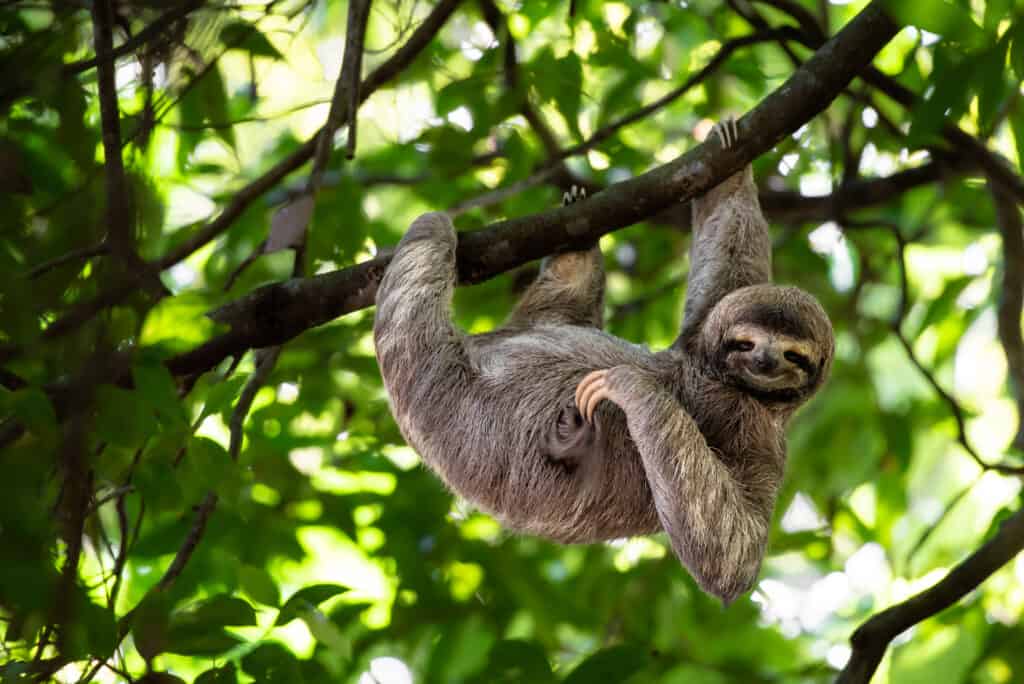
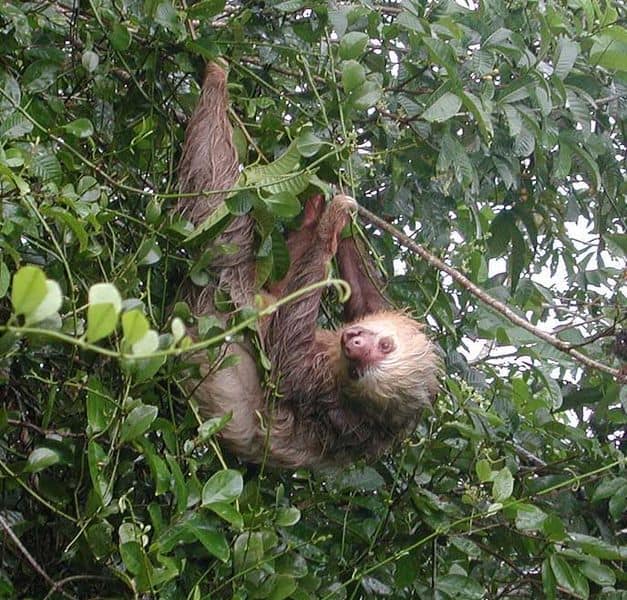
Sloths live in Central and South America — often spending their whole lives in one tree.
©Lukas Kovarik/Shutterstock.com
Habitat
Modern sloths live in Central America and South America, but their ancestors lived in North America. In Central and South America, they prefer the tall trees in rainforests, cloud forests, and mangrove forests. Each sloth may move among several trees throughout the course of its lifetime. However, many spend their entire lives in the tree where they were born.
These animals sleep, eat, mate, and raise young while hanging from tree limbs. The only reason the animal leaves the treetops is to use the bathroom once weekly, find a mate, or expand their territory.
Diet
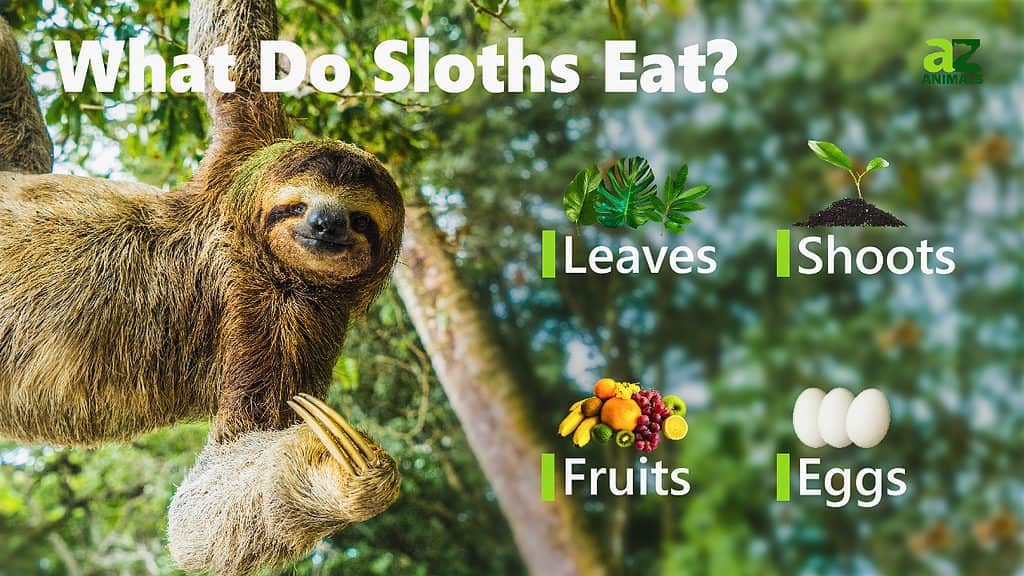
Three-toed sloths eat mostly plants, making them herbivores. They prefer leaves from the leafy cecropia tree. Two-toed sloths eat both plants and small animals. They enjoy leaves, fruits, small lizards, and insects.
These mammals have multi-chambered stomachs that contain many bacteria that break down plant materials. They digest food very slowly. It takes from one week to a month for them to digest most of their meals. These meals also prove low in nutrients, so they do not get energy from most of their food. Scientists believe this lack of energy is why they move so slowly.
Predators and Threats
The primary predators of these animals include jaguars, snakes, large birds of prey, and humans. They defend themselves by swiping at predators with their long, sharp claws that extend from their lengthy arms. Humans hunting sloths for meat have realized that shooting them can prove pointless, as these animals tend to remain hanging from towering tree limbs by their claws even in death. The best defense this animal has against any predator is using their algae-covered fur as camouflage in the trees.
These slow-moving animals eat poison ivy, which is toxic to the predators that consume them. Although they easily die at the hands of a snake, jaguar, or large bird of prey, the poison ivy in the sloth’s system suffocates the predator that eats it. The plant’s toxins cause the predator’s throat to swell, stopping its breathing.
Besides animal predators and man, these animals face other challenges to their existence. Sloths are believed to have existed on Earth, in one form or another, for at least 40 million years. But today, they face habitat destruction, road-building, traffic, power lines, tourism, and the pet trade as their threats.
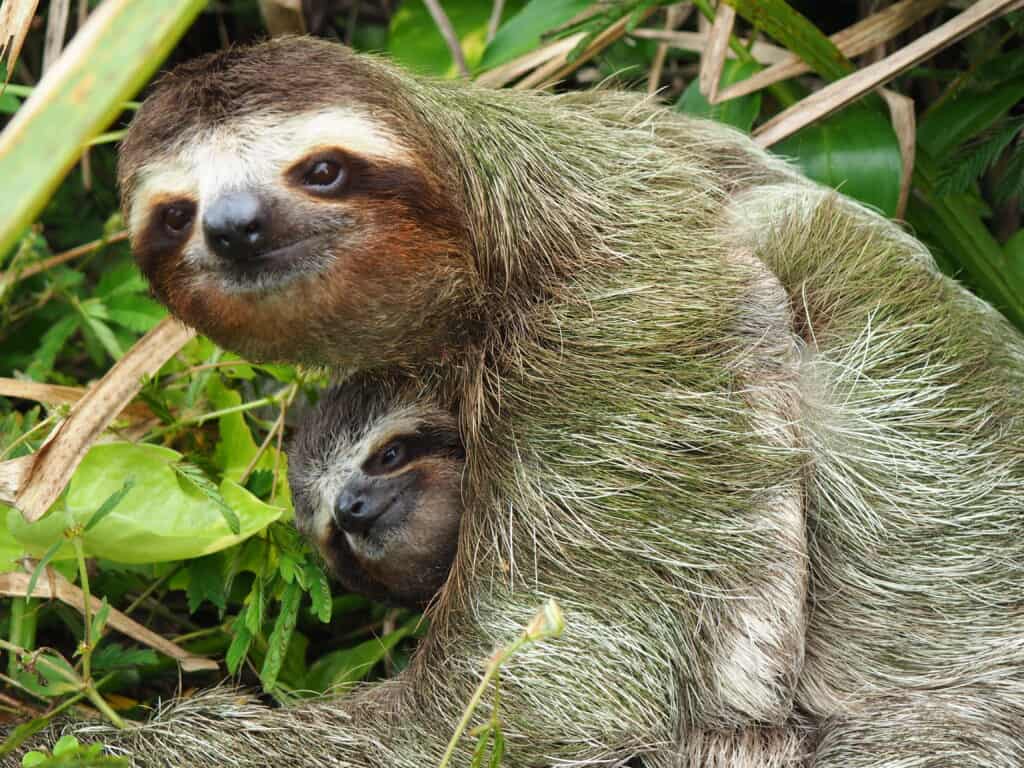
Baby sloths stay with their mothers for five months.
©Kristel Segeren/Shutterstock.com
Reproduction, Babies, and Lifespan
Some species mate at the same time each year. The maned sloths breed any time of year. Three-toed sloths have only one baby at a time after six months of pregnancy, whereas two-toed sloths are pregnant for 12 months. These newborns live with their mothers for five months. They cling to their mothers’ bodies during this time. Sometimes they fall to the forest floor, and their mothers prove either too lazy or too slow to retrieve them. As a result, the babies die not from the fall, but from being abandoned where they landed.
When a baby has grown to five or six months of age, it leaves its mother. They claim a piece of her territory as their own. Although they do not live together again, the mother and her offspring continue to communicate throughout their lifetimes. They use loud calls to “talk” to each other.
For humans, it is difficult to determine whether an individual sloth is female or male. Zoos often receive a different gender than they expected. Scientists do not yet know the lifespan of these animals in the wild. But sloths in human care live for about 16 years on average. One female at the Smithsonian National Zoo in America lived for 49 years.
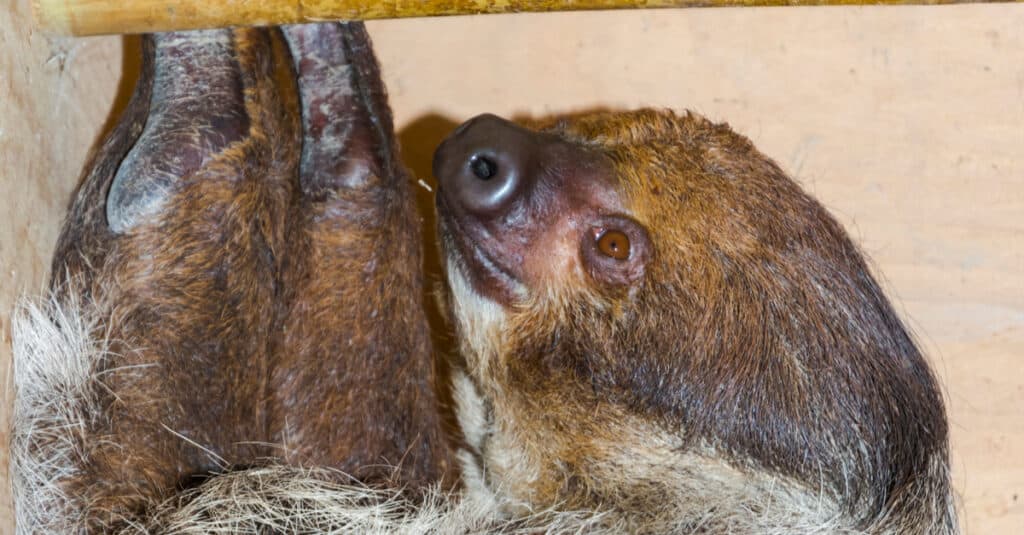
Linnaeus’ two-toed sloth or unau in a zoo.
©belizar/Shutterstock.com
Population
These animals continue to thrive in South America and Central America. On Panama’s Barro Colorado Island, these animals make up 70 percent of tree-dwelling mammals. Four of the six currently recognized living sloth species do not face extinction. They are listed as “least concern.” But Eastern Brazil’s maned sloth is classified as “vulnerable.” Panama’s pygmy sloth that lives on that country’s islands is critically endangered.
Multiple sloth conservancy organizations exist today. They work to preserve the habitat and the animals themselves. These organizations educate people about the biology, ecology, and conservation of these animals. They also rehabilitate injured sloths and return them to the wild.
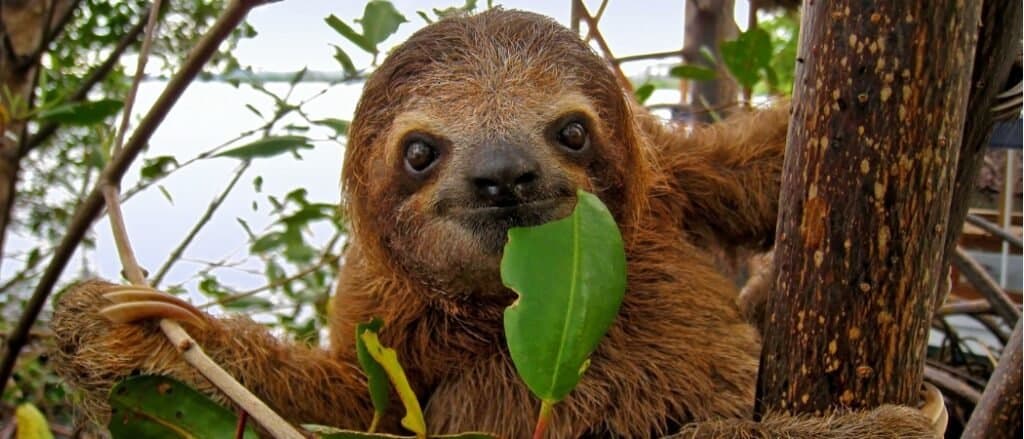
Baby brown-throated sloth eating a leaf.
©Damsea/Shutterstock.com
Sloth Pictures
View all of our Sloth pictures in the gallery.

jdross75/Shutterstock.com
Sources
- David Burnie, Dorling Kindersley Animal, The Definitive Visual Guide To The World's Wildlife / Accessed November 24, 2008
- Tom Jackson, Lorenz Books The World Encyclopedia Of Animals / Accessed November 24, 2008
- David Burnie, Kingfisher The Kingfisher Animal Encyclopedia / Accessed November 24, 2008
- Richard Mackay, University of California Press The Atlas Of Endangered Species / Accessed November 24, 2008
- David Burnie, Dorling Kindersley Illustrated Encyclopedia Of Animals / Accessed November 24, 2008
- Dorling Kindersley Dorling Kindersley Encyclopedia Of Animals / Accessed November 24, 2008
- David W. Macdonald, Oxford University Press The Encyclopedia Of Mammals / Accessed November 24, 2008