
Quick Take
- Chickens can recognize faces and hold grudges. Changing your hat won't fool them. How chickens remember faces →
- That clucking isn't random noise. Scientists have decoded something far more structured hiding inside it. Explore chicken vocalizations →
- A newly hatched chick can catch you cheating at a shell game. Here's what that reveals about bird intelligence. See the shell game science →
- One rooster faked danger every single morning, and it worked every time. Social manipulation isn't just a human trait. Discover rooster deception →
A Closer Look at What Chickens Remember
The idea that chickens are simple-minded might be built more on myth than reality. Scientists have discovered that these birds store up remarkable amounts of information, relying on a powerful memory that often goes unnoticed.
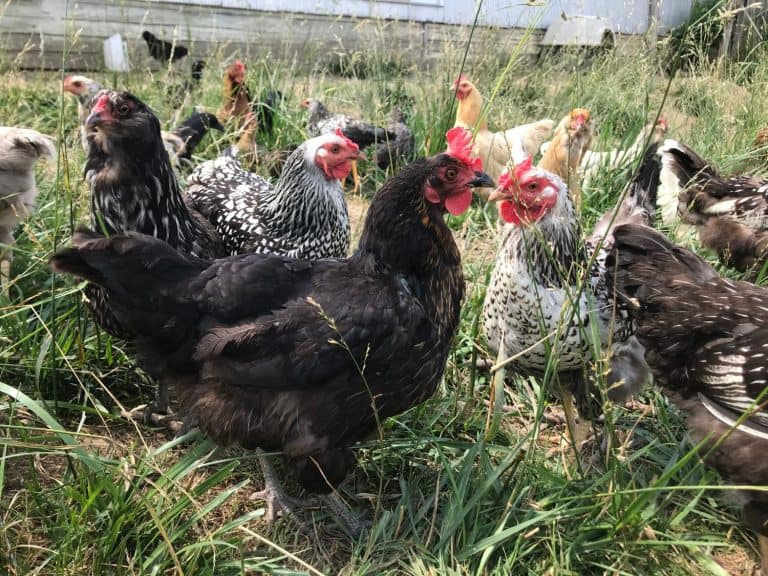
Chickens don’t just recall the faces of their flock mates. They’re able to recognize up to one hundred different individuals, including both chickens and people. Memories stick: if someone wrongs a chicken, the bird won’t forget, and even a change of hat or glasses won’t fool it.
Researchers point out that a chicken’s recall doesn’t fade after a few seconds. They keep track of faces and the body language of others for months at a time. Their spatial memory is equally impressive. Chickens remember exactly where to find their favorite feeding spots, high perches, or that off-limits corner of the garden where strawberries grow, along with the best routes to avoid predators and vigilant gardeners alike.
Communication and Social Life in the Coop
Beneath the typical “cluck cluck” is a nuanced world of vocal signals. Scientists have documented over thirty distinct vocalizations in chickens. There’s a call for hunger, a specific alarm for aerial predators like hawks, and a separate warning for dangers on the ground, such as foxes, cats, or unfamiliar humans.
Mothers in the chicken world start communicating with their chicks before the eggs even hatch. Chickens emit recognizable sounds from outside the shell, which the developing chicks respond to with faint cheeps. According to multiple studies on parental communication among birds, this early exchange helps chicks identify their mother’s voice and read signals of comfort or threat moments after they emerge.
Social strategy is part of daily life, too. Roosters sometimes feign danger with a false alarm, drawing hens close and placing themselves at the center of attention. In one documented case, a particularly cunning rooster used a pretend warning every morning, as a ruse to distract other chickens and snatch the first pick of fresh feed.
Chickens and Their Surprising Math Skills
The surprises continue with what chickens can count. While their arithmetic may not rival a calculator’s, chicken intelligence includes the ability to distinguish different quantities and track moving objects, skills most obvious in young chicks.
Research shows that newly hatched chicks can tell the difference between sets of two and three objects. If three worms hide behind a screen and only two reappear, even a chick from the egg will notice something’s off. Adult hens can count at least up to five, making them quick to detect if an extra egg has appeared, or gone missing, from their nests.
Experiments reveal just how sharp their numerical sense is. When presented with a “shell game,” chickens often choose the container with the most hidden treats, never mind any attempts to confuse them with tricky swaps. An Italian study confirmed that chicks can follow invisible moves and solve simple addition, providing evidence of their early mathematical abilities.
Learning, Problem-Solving, and Emotion
The chicken coop can be as lively as a classroom. Hens and roosters constantly observe, imitate, and teach each other. Video experiments have shown that chicks will mimic virtual chickens on a screen if it means earning a reward, a nod to their capacity for social learning.
Chickens have repeatedly demonstrated creative problem-solving in pursuit of a goal, especially when food is involved. Standard experiments have included levers and strings that, when operated correctly, open a treat container. Most chickens learn the task quickly and adapt if the setup changes.
Stories from chicken keepers echo the research. One farmer from Brittany reported that her hen, Marguerite, watched someone undo the coop latch for weeks before imitating the maneuver herself, eventually leading the flock out, an example of curiosity and imitation in action.
Chickens also show emotions in ways some would never expect from a bird. They experience fear, joy, frustration, even attachment, whether to other chickens, their chicks, or to the humans who feed them. There are tales of hens brooding over orphaned ducklings with the same care shown to their own hatchlings, crossing the boundaries of species with instinctive nurture.
What Chickens Deserve, Given What We Now Know
This deeper understanding of chicken intelligence raises new questions about the way these animals are treated. Research now depicts chickens as thinkers, capable of planning, remembering, problem-solving, and expressing complex feelings. They aren’t feathered automatons; they’re sentient beings with rich inner lives.
When confronted with images of chickens kept in crowded cages, deprived of light, space, or any mental stimulation, the gap between science and practice is hard to ignore. As research reveals more about these birds’ skills and personalities, it challenges old misconceptions and suggests new responsibilities.
For anyone with a backyard, raising a few hens can bring daily surprises, offering windows into their unique blend of memory, learning, and character. For everyone else, choosing eggs from free-range or organic sources becomes not just a dietary choice, but a gesture recognizing chickens for what they are, creatures worthy of curiosity, care, and dignity.