
The sass levels of the cows in this crazy Instagram post are dialed up to the highest levels! If you’ve never seen cows leaping around, chasing their mates, playing with balls, or wearing a pair of boots, you need to check out that post. Here, we attempt to explain what these boisterous bovines are up to!
What Do We Know About Cow Behavior?
Cows are the most common domesticated large ungulate on the planet. Their scientific name is Bos taurus. They are raised for meat, milk (and dairy products), and are used as draft animals to pull carts and implements. Their skin is used for leather. We tend to view cows as sources of economic utility, rather than seeing them as animals with emotions and personalities, the way we are willing to view our pets. Yet, there is increasing evidence that cattle have complex emotional, social, and cognitive functioning.
Cow Emotions
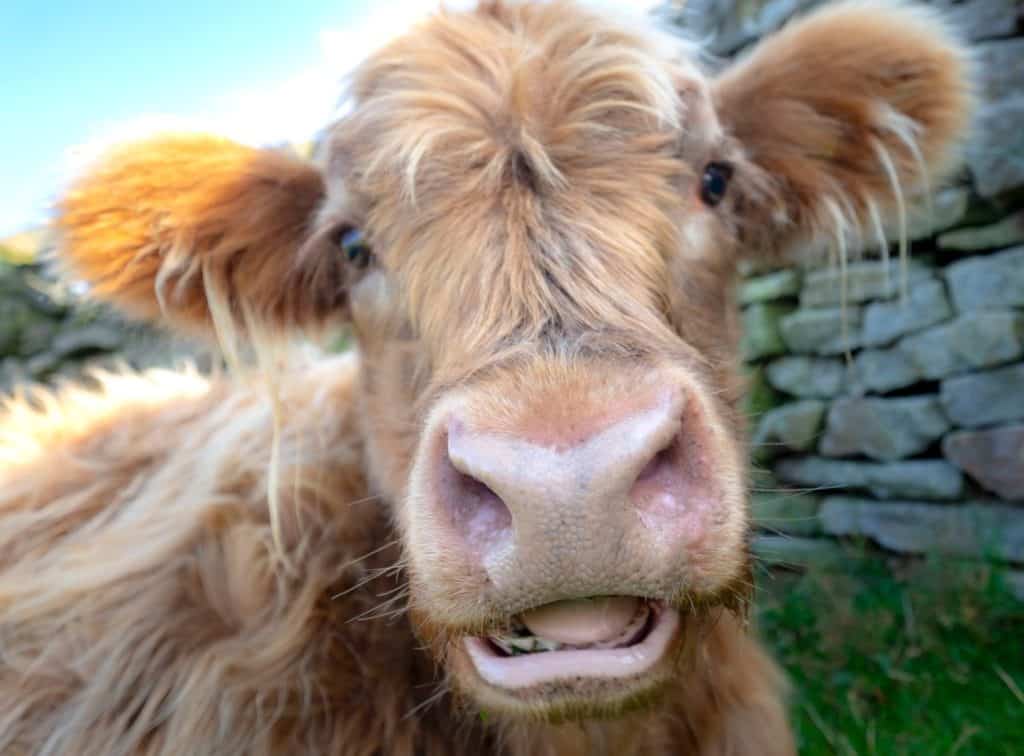
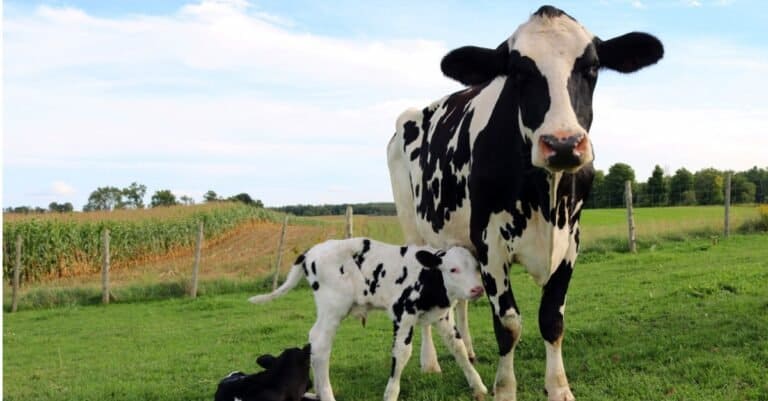
Cows do have emotions.
©Jan Bray/Shutterstock.com
The concept of emotion is difficult to define. Under the umbrella of emotions lies behavioral, neurophysiological, cognitive, and conscious processes that are highly individual and difficult to evaluate in humans, let alone in cows! Nevertheless, most people are now willing to accept that many animals, especially mammals, are capable of experiencing some type of emotion. Plenty of research indicates that cows can experience both positive and negative emotions, which vary in intensity. Cows experience emotional states that we would describe as fear, anxiety, frustration, and contentment. Their emotional state can be assessed using body posture and behavior, as well as heart rate and nasal temperature.
Play Behavior in Cattle
Many of the cows and calves in the Instagram post are displaying play behavior. Some are running around a field, and some are playing with balls. Play behavior in cows can indicate a positive emotional state. Conversely, the lack of play behavior can be a sign of a negative emotional state. In cows, play can take the form of object play (playing with an object such as a ball), social play (interacting with other cows, other animals, or humans), and locomotor play (moving around). You see all three in this Instagram clip!
Play in cattle is linked to curiosity and innovation. It is more common in younger animals, and many of the bovines in this clip are calves. When cows play, their bodies release endorphins. Also, when they indulge in social play, it benefits social learning.
What Play Behavior Means
Baby calves will start to play when they are just two weeks old and play behavior peaks at about four months of age. This can include play-fighting, social licking, or play mounting. Play behavior is a reflection of the cow or calf’s circumstances. So, for example, cows often engage in play upon being released into a field after being confined in a barn. This is when you are likely to see a lot more galloping and bucking. Also, when dairy calves are given more milk and are housed with other calves, they are more likely to play. Running around is seen more often in paired calves than in calves housed alone. Overall, cows deprived or placed in negative situations show decreased play. So, we can safely assume the cows in this clip are well cared for and happy!
Cow Personality
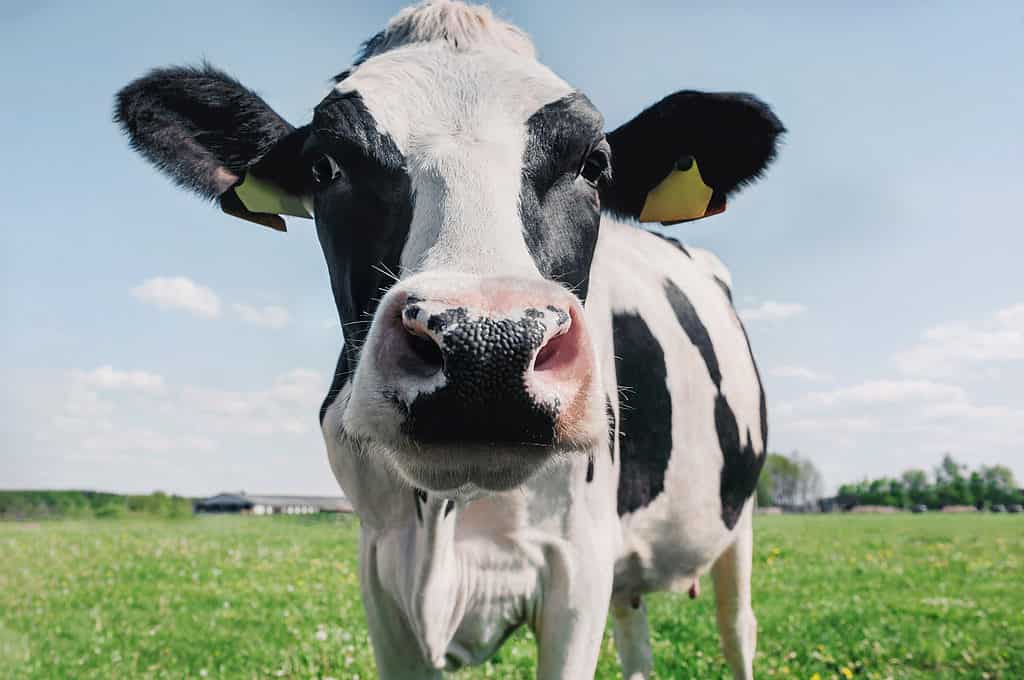
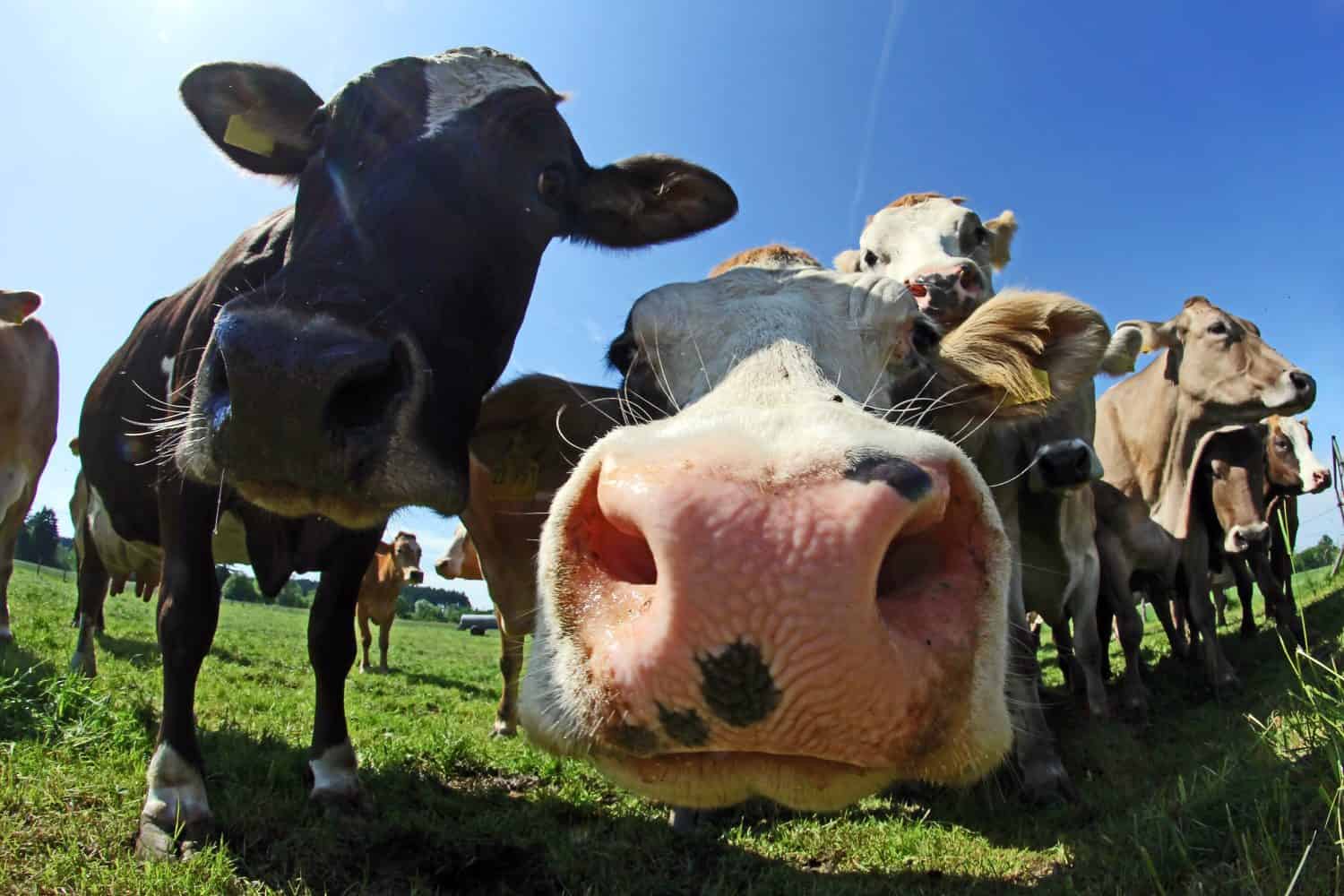
Domestic cows are curious about new things in their environment.
©Alena Demidyuk/Shutterstock.com
We called the cows in this clip “sassy” but do cows actually have a personality? For the purposes of scientific studies on cow behavior, cow personality is defined as “a set of traits that differ across individuals and are consistent over time.” To accept that cows have personality means that we have to also accept that they have individuality.
In humans, psychologists say personalities are made up of openness, conscientiousness, extroversion, agreeableness, and neuroticism. Personalities (or temperaments) have been detected in loads of animals, including fish, birds, reptiles, and especially in mammals like pigs and cats. Plenty of evidence reveals that cows have personalities. For example, individual cows have been shown to have a predictable reaction to stress that was related to their pre-determined temperament type!
Cows form strong emotional bonds with their kin; however, we still do not know if sociability is a personality trait in cows. There is some evidence that cows become accustomed to human handlers who provide a positive experience.
Recent research continues to uncover new aspects of cow personality, including how specific traits influence behavior, adaptation to new environments, and even genetic associations. However, the full complexity of cow personality and how different traits interact is still being explored. More research on complex personality traits is needed. So, for now, we will just carry on calling them sassy!