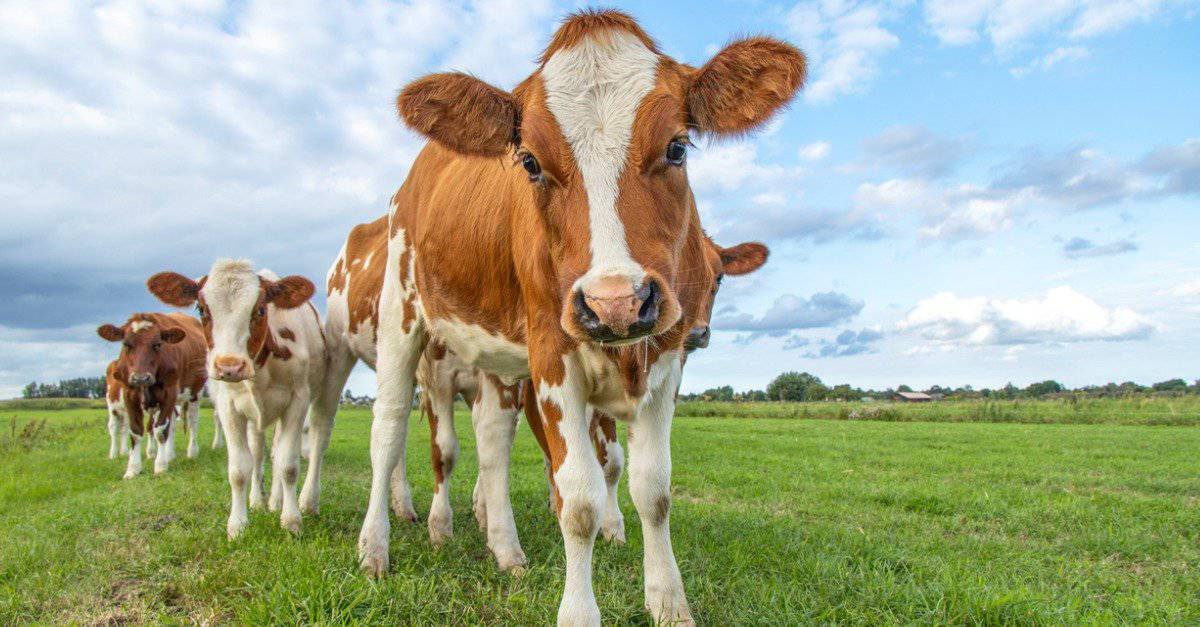

Baby cows (Bos taurus) are playful, social, and emotional animals that love running, playing, and making friends. They are friendly mammals capable of communicating with one another and are known to hold a grudge. A cow is considered a calf from birth until it is weaned, which is typically between six and nine months old. After weaning, they may be called weaners or weaner calves, and yearlings once they are a year old. Continue reading to learn five incredible calf facts with adorable pictures.
1. Baby Cows Love to Make Friends
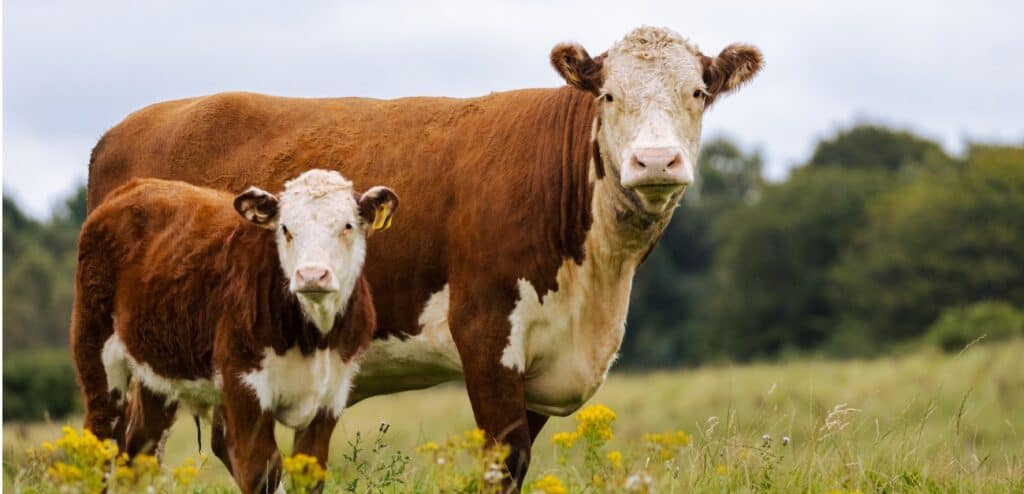
Calves are extremely social creatures that feel emotions.
©iStock.com/Scott Allan
Baby cows, also called calves (singular: calf), are some of the most social animals on Earth. Scientists say that cows have complex emotional states. They experience a wide range of emotions, including happiness, affection, fear, and anxiety.
Because of their well-developed social and emotional skills, calves love to make friends. They frequently interact with the cows around them by vocalizing and playing together. They can change the tone or intensity of their moo to convey different emotions.
Calves can hold a grudge. When they feel another cow has treated them poorly, they often refuse to further interact with them. In 2005, scientists observed cows making friend groups, staying within their cliques, and even snubbing cows whom they did not like.
2. Calf Spots are Unique
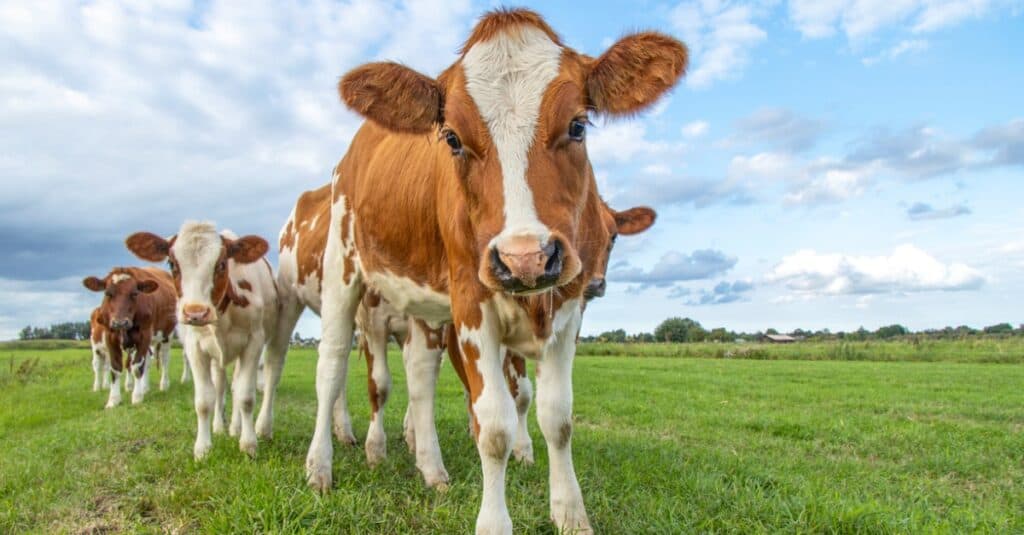
No two calves have the same spots.
©iStock.com/Clara Bastian
Calves are easy to spot due to their unmistakable spotted coats. Several factors make a calf’s spots unique, with breed being the most significant. A cow’s breed determines the color, placement, and density of its spots. Just like human fingerprints, the minute variations in the shape and size of a cow’s spots make each one truly unique.
However, some cows don’t have spots at all. Although movies and television often depict the classic spotted cow, many cows are solid-colored and come in a variety of colors. For example, beef cattle can be yellow, brown, black, white, gray, or red.
3. Baby Cows Have Nearly 360 Degree Vision
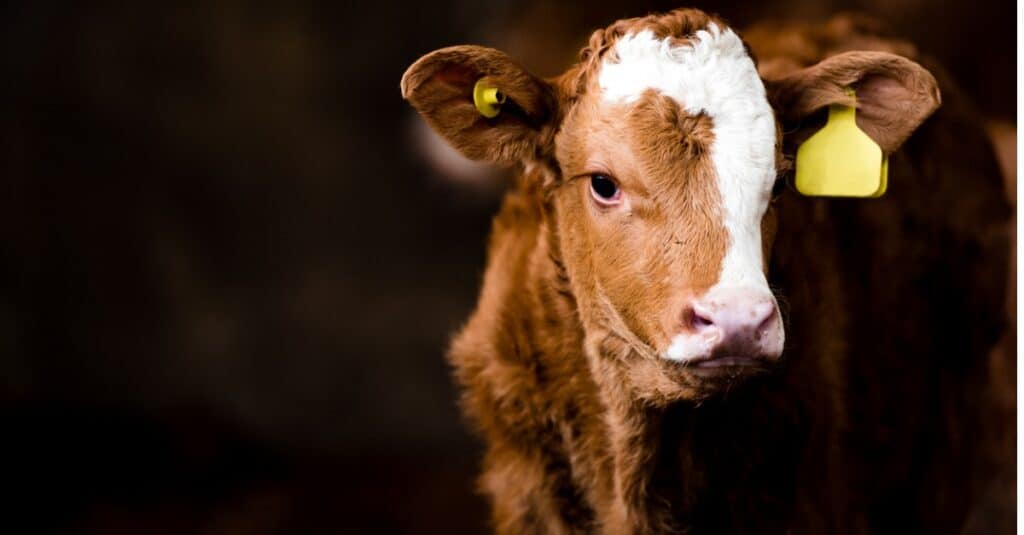
Cow babies can see nearly 360 degrees around them.
©iStock.com/James E Bailey
Humans have a limited range of vision compared to cows. While we can see what is before us and in our periphery, cows can see much more. This is because baby cows have panoramic vision, meaning that they can see almost 360 degrees without needing to move their heads. The only area a cow cannot see is directly behind it.
Despite their impressive range of vision, cows have poor depth perception. Because of this, when a cow encounters an obstacle or shadow in its path, it will lower its head to the ground. They do this to gauge how close they are to an obstacle.
4. Baby Cows Have an Excellent Sense of Smell and Hearing
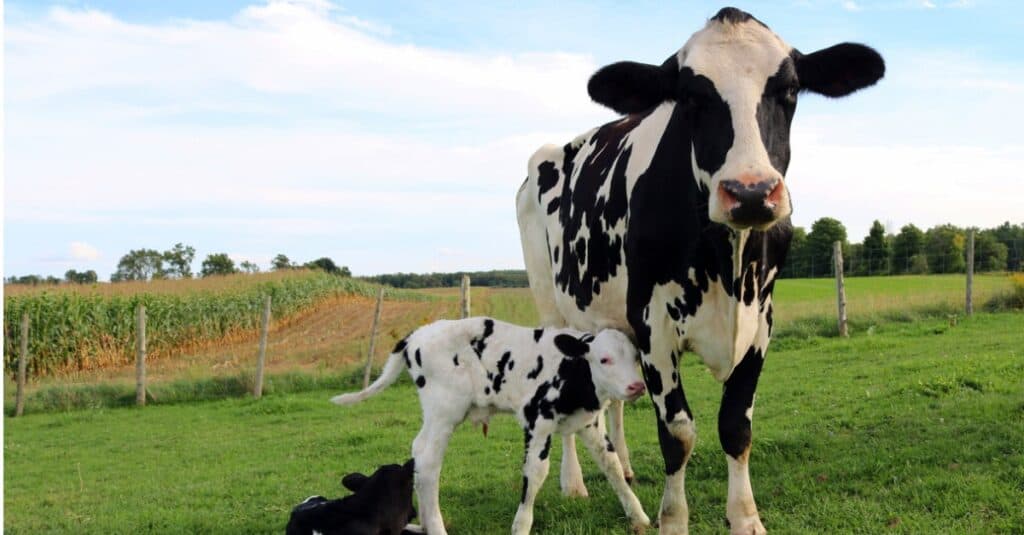
Calves can hear at frequencies that humans cannot.
©iStock.com/Diane Kuhl
Baby cows have excellent hearing and can detect frequencies both lower and higher than humans can hear. Specifically, cows can hear frequencies from 23 to 37,000 hertz. By comparison, humans can only hear frequencies from 25 to 23,000 hertz. Calves can hear sounds from 1.2-1.8 miles away under ideal conditions.
Baby cows also have a strong sense of smell. It is estimated that cows can detect odors up to six miles (about 10 kilometers) away, making their sense of smell one of their strongest senses. As a result, cows can smell predators before they see them. Farm-raised calves can also smell when food is being served and will come running at mealtime.
5. Calf Twins are Extremely Rare
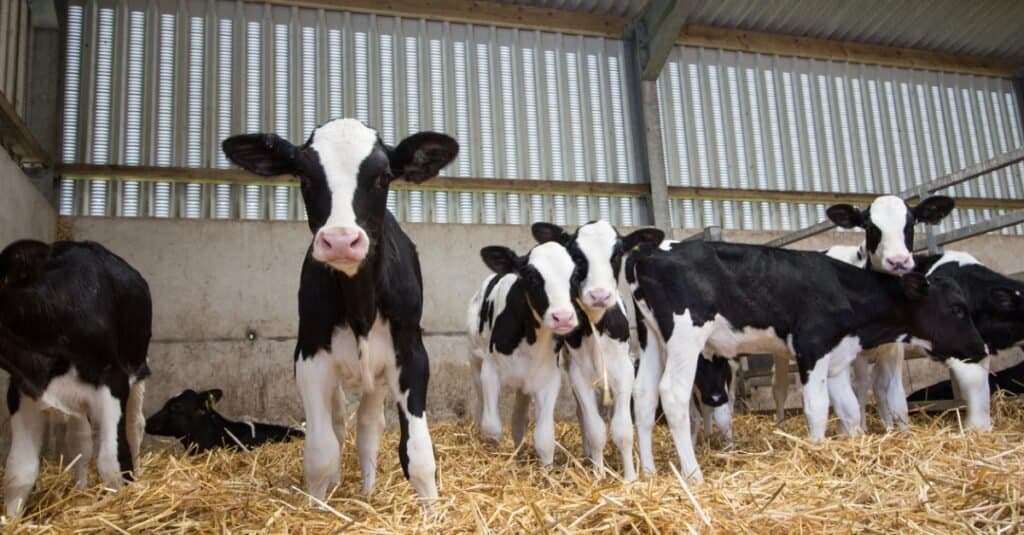
Mother cows rarely have more than one calf at a time.
©iStock.com/Deb Drury
When cows give birth, they almost always have a single calf. The odds of a cow giving birth to quadruplets are about 1 in 700,000, and the odds of all four calves being born alive are about 1 in 11.2 million. The odds of triplets are slightly higher at 1 in 105,000. Among multiple births, twins are the most common for cows. Still, iIt is estimated that about 2% of cow pregnancies result in twins, though this can vary slightly depending on breed and other factors.