
Quick Take
- Winter birds in Georgia rely on backyard feeders as insects disappear and seeds decline.
- Offer a variety of foods to attract cardinals, chickadees, titmice, goldfinches, and jays.
- Use multiple feeder styles and place them near shrubs for shelter.
Georgia’s winters may be mild compared to the icy months farther north, but even here the cooler temperatures and shorter days change the rhythm of bird life. As insects disappear and many plants stop producing seeds and berries, backyard feeders suddenly become important meal stops. Because Georgia stretches from the Appalachian foothills down to the wide coastal plains, winter bird communities shift from region to region. Even so, a handful of species show up at feeders across most of the state, bringing color and personality to yards when branches turn bare. Getting familiar with these winter visitors helps you choose the right foods and feeder styles so you can enjoy a lively mix of birds right outside your window.
Northern Cardinal (Cardinalis cardinalis)
Northern cardinal (Cardinalis cardinalis)
©iStock.com/Lynnae_Lowe
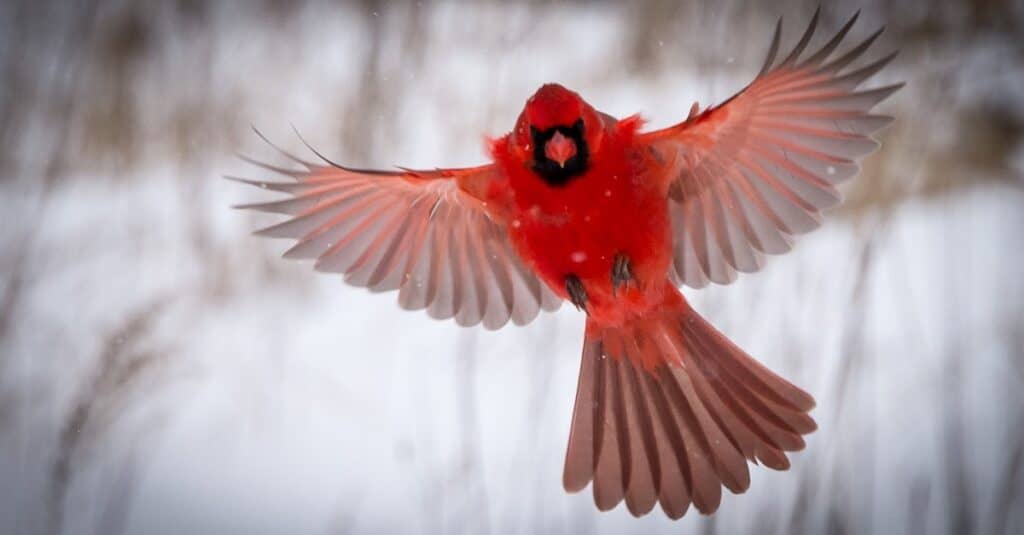
The northern cardinal is one of Georgia’s most recognizable backyard birds, especially in winter when the male’s bright red feathers stand out against muted landscapes. Males have a black face mask and tall crest, while females display warm brown plumage with soft reddish tones on their wings, tail, and crest. Both sexes have the same stout orange bill designed to crack seeds with ease.
Cardinals live across Georgia year-round, from mountain hollows to the coast. They’re especially common in yards with dense shrubs and small trees that provide shelter. In winter, they flock to platform or hopper feeders filled with black oil sunflower seeds, safflower, or mixed seed blends. Cardinals often arrive in pairs or small family groups, and their whistled songs cut through quiet winter mornings with a clarity that feels cheerful even when the sky is overcast with winter clouds.
Carolina Chickadee (Poecile carolinensis)
Carolina chickadee (Poecile carolinensis)
©Wirestock Creators/Shutterstock.com
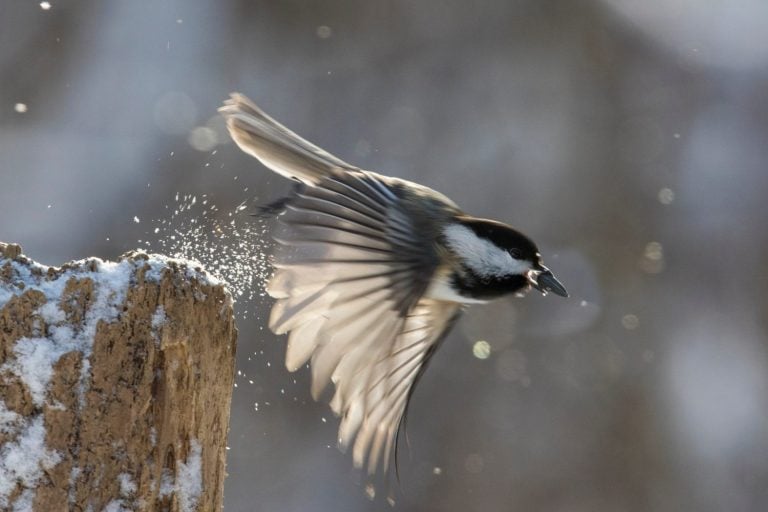
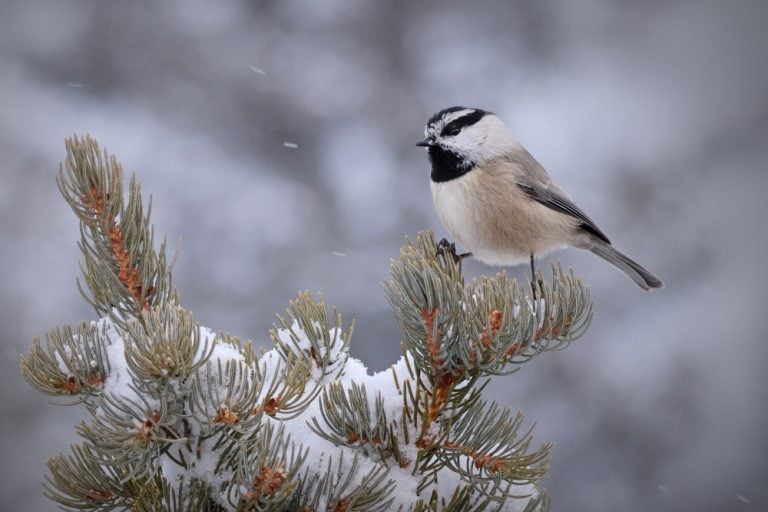
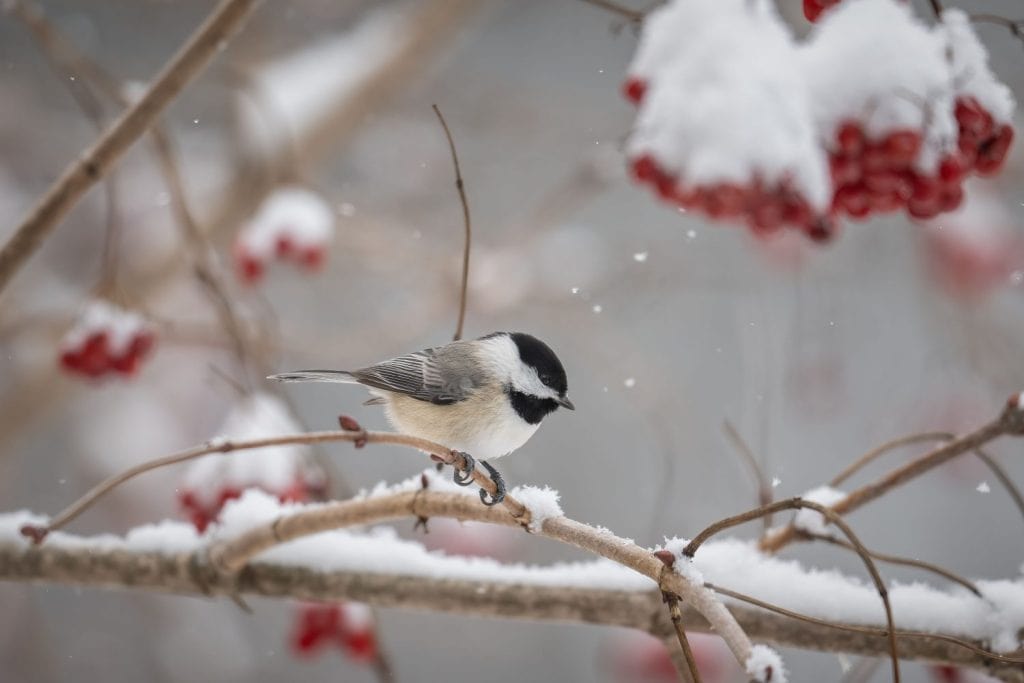
Small, quick, and bold, the Carolina chickadee brings constant activity to winter feeders. These tiny birds have a black cap and bib, white cheeks, and gray backs, with pale underparts that give them a crisp, neat look. In most of Georgia, this species takes the place of the black-capped chickadee found farther north.
Chickadees live throughout the state year-round, especially in well-treed neighborhoods, parks, and woodlands. In winter, they often travel with mixed flocks that include titmice, wrens, and nuthatches. At feeders, chickadees dart in to take a sunflower seed, suet crumb, or peanut piece, then carry it away to eat or wedge into a crevice for later. Their sharp, scolding calls and distinctive ‘chick-a-dee’ notes often signal that a feeding flock is nearby.
Tufted Titmouse (Baeolophus bicolor)
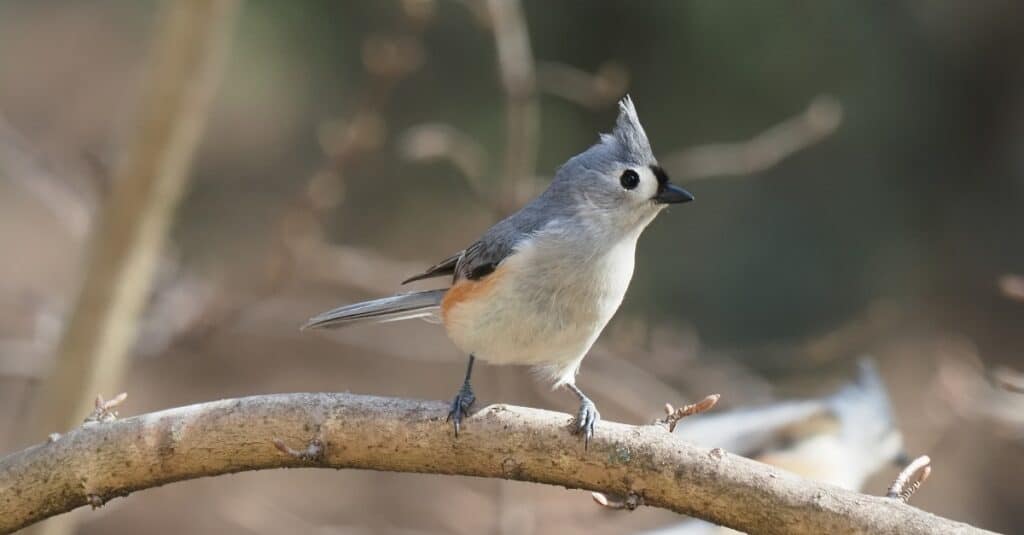
Tufted titmouse (Baeolophus bicolor)
©iStock.com/Tongtong Chen
The tufted titmouse is a lively, curious bird that adds plenty of personality to Georgia’s winter backyards. With a gray back, pale underside, soft peach wash along the sides, and a pointed crest on its head, the titmouse is handsome and easy to identify. The large dark eyes give this bird an alert, expressive look.
Titmice live year-round throughout Georgia in forests, wooded suburbs, and city parks. In winter, they often join chickadees and nuthatches in roaming groups that visit feeders frequently. They eat sunflower seeds, peanuts, and suet, usually flying off with a single seed to crack open away from the feeder. Their clear “peter-peter-peter” whistle often gives away their presence long before you see them.
Ruby-Crowned Kinglet (Corthylio calendula)
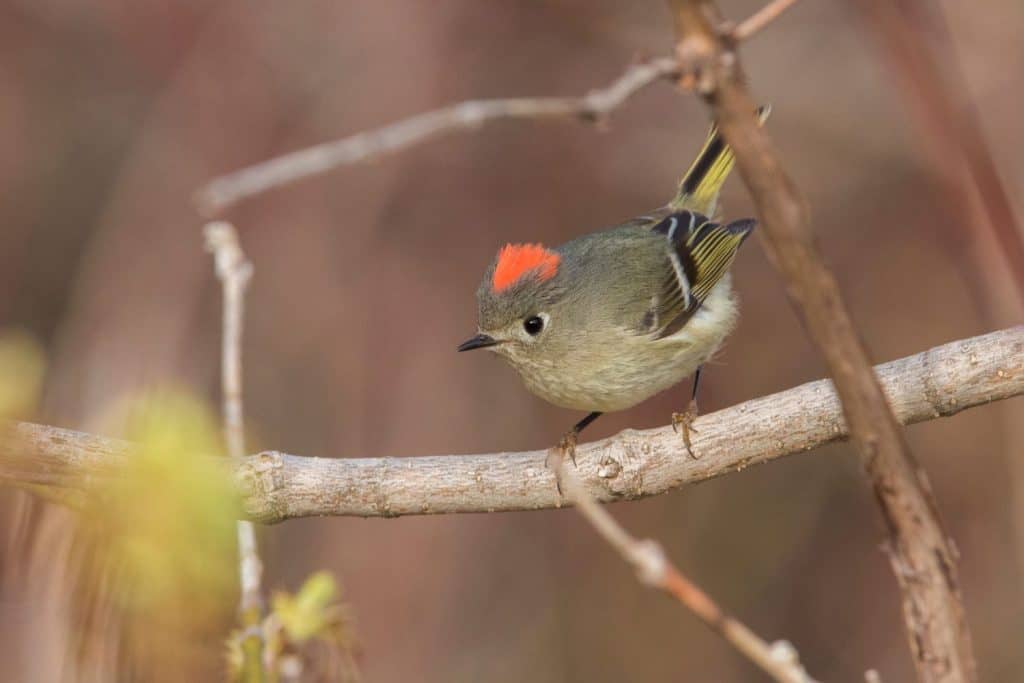
Ruby-crowned kinglet (Corthylio calendula)
©Mircea Costina/Shutterstock.com
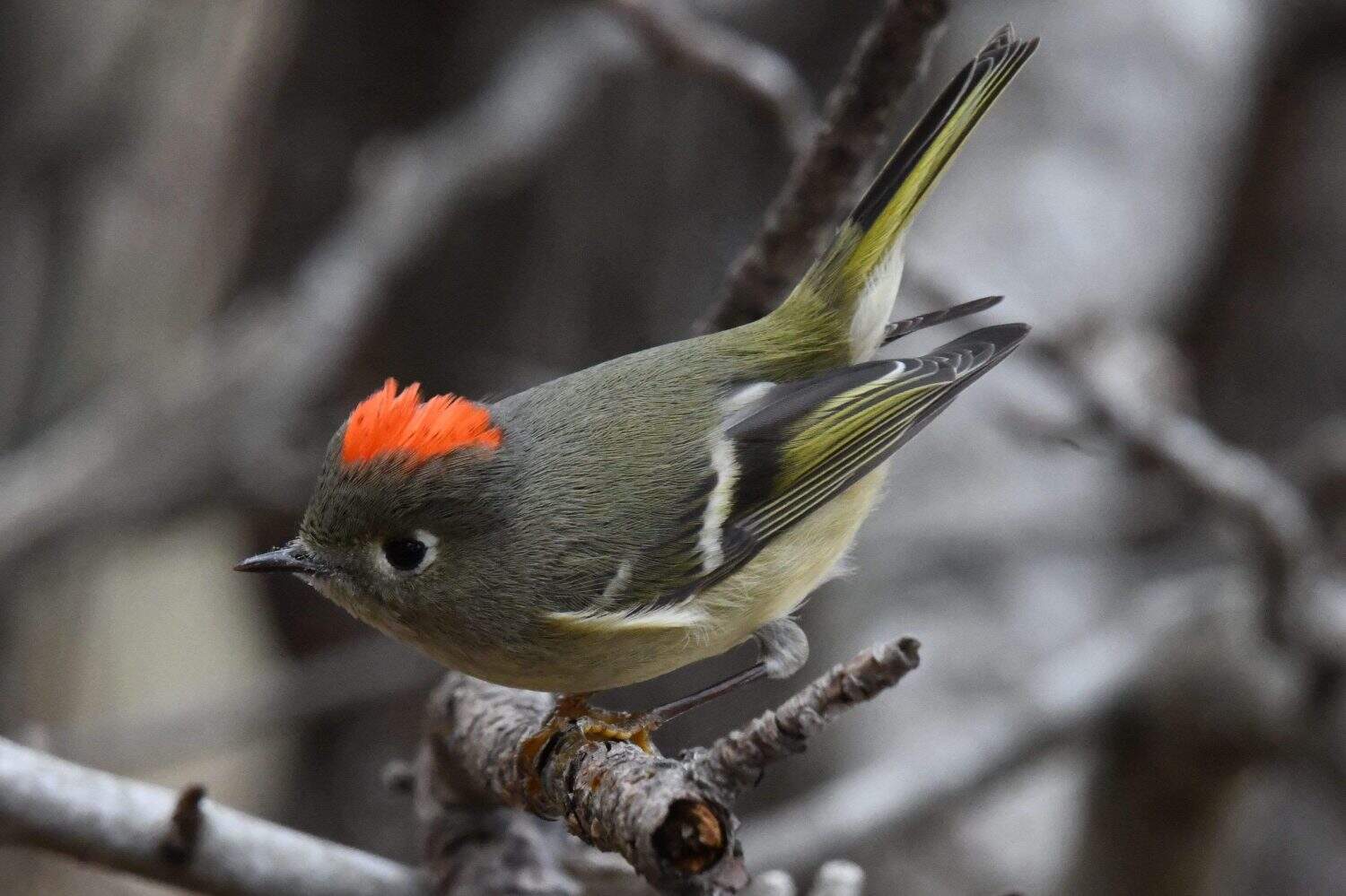
The ruby-crowned kinglet is one of Georgia’s smallest winter visitors — a tiny, fast-moving bird with olive-green upperparts, pale underparts, and a delicate white eye ring. The male’s ruby-red crown patch stays hidden most of the time but flares up when the bird is excited or agitated, making for a surprisingly dramatic moment when it happens.
Kinglets breed far to the north or at high elevations, then spread into Georgia for the winter. They frequent woods, thickets, and shrubby yards, flitting through branches almost nonstop as they search for insects and spider eggs. Because they’re mainly insect eaters, they don’t rely heavily on seed feeders, but they will visit suet — especially soft, high-fat varieties. Their rapid wing flicks and restless movements make them fun to watch, even on chilly days.
Downy Woodpecker (Dryobates pubescens)
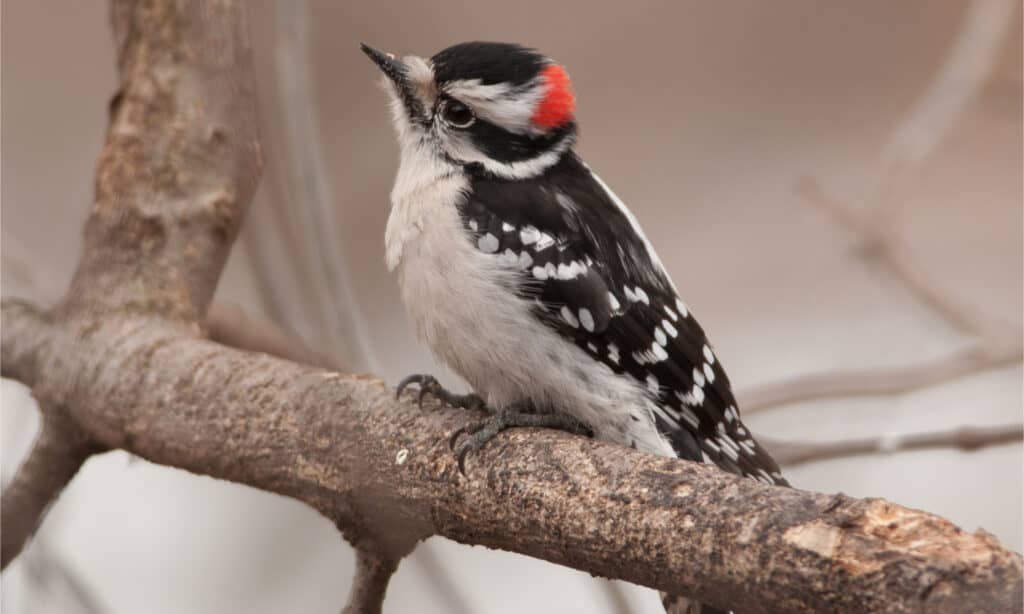
Downy woodpecker (Dryobates pubescens)
©Gerald A. DeBoer/Shutterstock.com
Georgia’s smallest woodpecker, the downy woodpecker, is a reliable winter feeder visitor across most of the state. It’s easy to identify with its black-and-white patterning, white belly, and white outer tail feathers. Males add a small red patch on the back of the head. The downy’s short bill helps distinguish it from the larger hairy woodpecker.
Downies live year-round in Georgia’s woodlands, river corridors, and older neighborhoods with mature trees. In winter, they spend a lot of time on suet feeders, where they peck steadily at high-energy suet cakes that help them stay warm. They’ll also take sunflower seeds and peanuts from platform or hopper feeders. Calm, methodical, and often found moving with chickadees and titmice, downy woodpeckers bring a steady rhythm to winter feeding stations.
American Goldfinch (Spinus tristis)
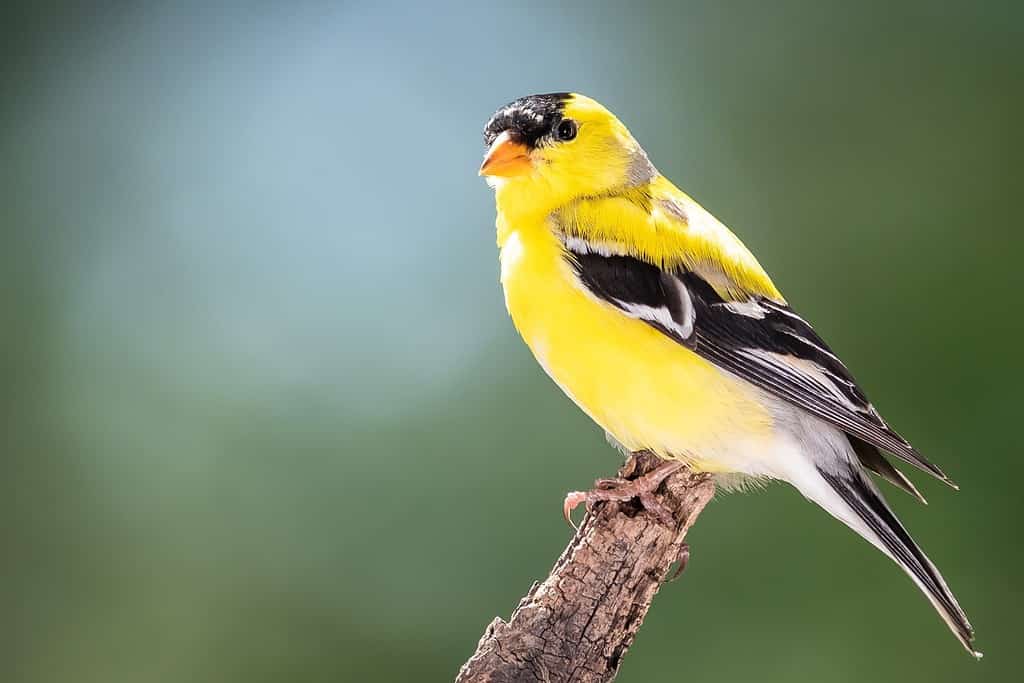
American goldfinch (Spinus tristis)
©rck_953/Shutterstock.com
Year-round, American goldfinches are present in Georgia, but they are much more abundant and visible at feeders during the winter months. In summer, their numbers decrease in many areas as they move to breeding habitats. In winter, they molt and take on a different color. The bright lemon-yellow of breeding males changes to olive-brown, while females remain similarly muted. Both sexes retain dark wings highlighted by bold wing bars.
Goldfinches favor open spaces like fields, roadsides, and suburban yards. At feeders, they gather in tight flocks that move between natural seed sources and backyard feeding stations. In winter, they show a strong preference for nyjer (thistle) seed offered in narrow tube feeders, though they also enjoy small sunflower chips. Their soft, musical calls add a gentle soundtrack to winter bird watching. If you leave coneflower and aster seed heads standing in your garden, goldfinches will gladly take advantage of the natural feast.
Brown-Headed Nuthatch (Sitta pusilla)
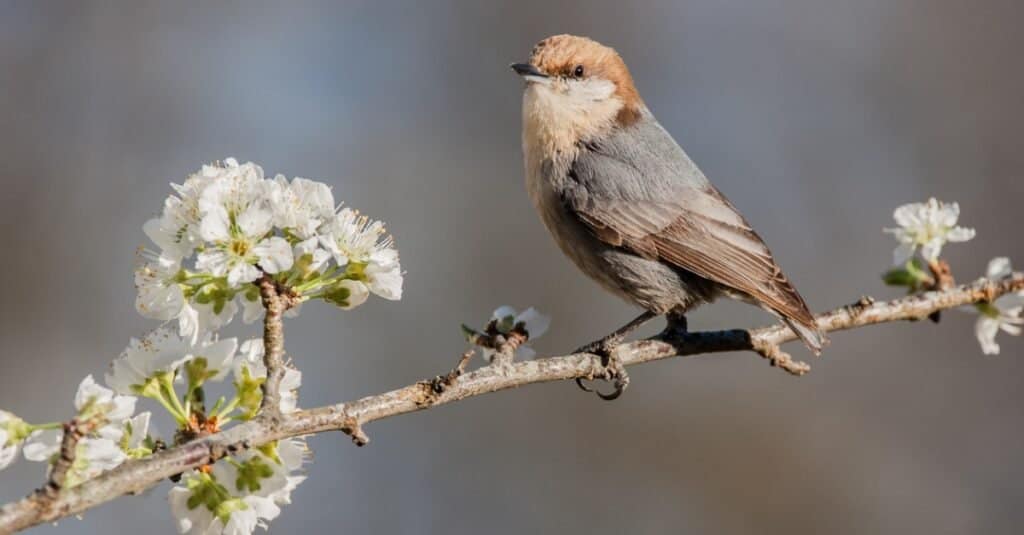
Brown-headed nuthatch (Sitta pusilla)
©iStock.com/MattCuda
The brown-headed nuthatch is a regional specialty — a bird of the southeastern pine forests and a treat for Georgia backyard birders. Small and compact, it has a gray back, buffy underparts, and a warm brown cap. Unlike its white-breasted cousin, the brown-headed nuthatch is closely tied to pine-dominated habitats.
This nuthatch lives year-round in the Coastal Plain and Piedmont, especially where longleaf, loblolly, or shortleaf pines are present. They readily visit suet feeders and also take sunflower seeds and peanuts from tube or hopper feeders. In winter, they often travel in small, noisy groups, giving high, squeaky calls that sound a bit like rubber toys being squeezed. If your yard includes pines or borders a wooded area, you’ll have a better chance of attracting this charming regional species.
Blue Jay (Cyanocitta cristata)
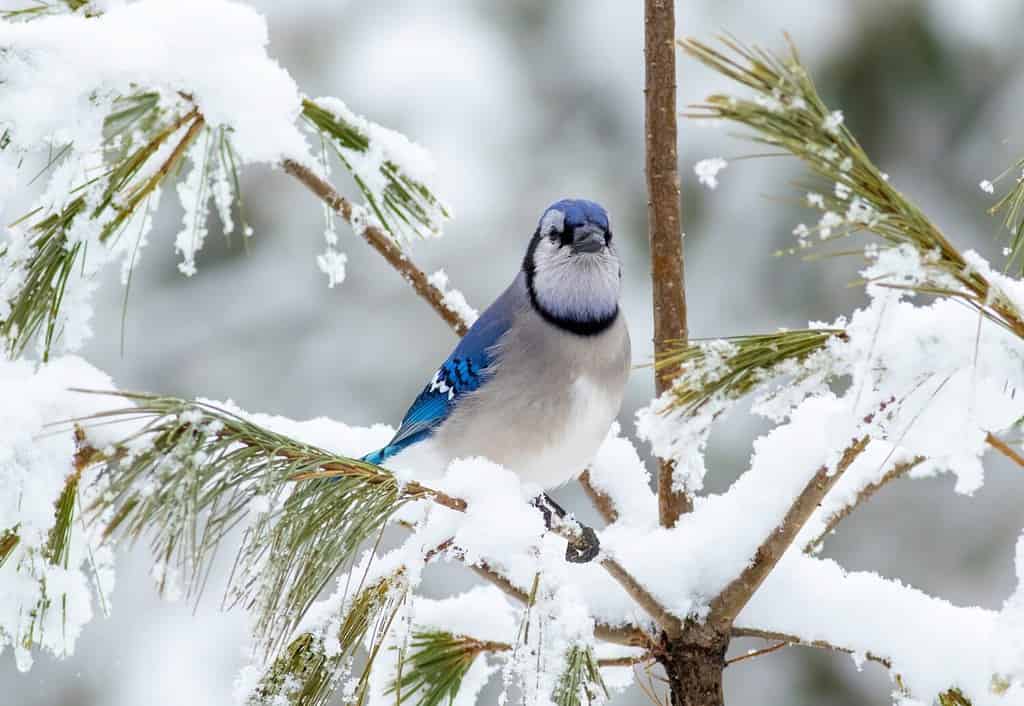
Blue jay (Cyanocitta cristata)
©Matthew Jolley/Shutterstock.com
It’s impossible to miss these big, bold, blue birds. With their bright blue backs, white faces, black necklaces, and expressive crests, blue jays are one of Georgia’s most eye-catching year-round birds. Blue jays move in small social groups during winter and communicate with an impressive range of calls — everything from loud screams to softer, more conversational notes.
At feeders, blue jays especially enjoy whole peanuts, sunflower seeds, and corn. Their strong bills allow them to crack open even the toughest shells. They also help oak forests by caching acorns in the soil and leaf litter, unintentionally planting future trees. Although they can be assertive at feeders, scattering smaller birds briefly, their charisma and intelligence make them one of the more entertaining winter guests in the yard.
Best Practices for Winter Bird Feeding

Using multiple types of feeders and seeds will attract a greater variety of birds to your backyard.
©Carla Elaine Mason/Shutterstock.com
Keeping birds healthy through the cooler months starts with clean feeders and fresh food. Since many birds gather close together in winter, it’s important to wash feeders regularly using a mild bleach solution, rinse them well, and allow them to dry completely before refilling. Any seed that has become wet, moldy, or clumped together should be thrown out immediately.
Offering a variety of foods helps attract different species:
• Black oil sunflower seeds for cardinals, chickadees, and titmice
• Nyjer for goldfinches
• Suet for woodpeckers, wrens, and nuthatches
• Peanuts for jays, titmice, and downy woodpeckers
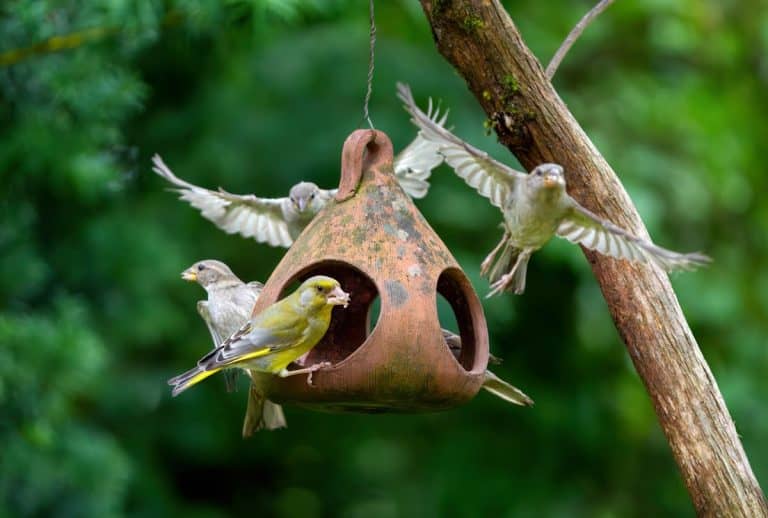
Use multiple feeder styles — tube, hopper, platform, and suet cages — to give each species a comfortable way to feed.
Placing feeders near shrubs or small trees allows birds to escape quickly if predators appear, but avoid putting them so close that cats can hide underneath. To reduce window collisions, add decals, patterned films, or screens to break up reflections. Placing feeders either within about three feet of windows or more than ten to twelve feet away also helps prevent high-speed collisions.
Winter Birds Bring Color and Energy to Georgia Yards
Even during Georgia’s mild winter months, backyard birds bring color, sound, and motion to otherwise quiet days. Northern cardinals stand out like bright ornaments against bare branches. Chickadees and titmice flit constantly between the feeder and the tree. Goldfinches sweep through in soft, calling flocks. And the brown-headed nuthatch — unique to the Southeast — adds a touch of regional pride.
By keeping feeders clean, food fresh, and the setup safe, you create a small refuge that helps birds conserve energy during the season. In return, you get the pleasure of watching some of Georgia’s most charismatic wildlife visit your yard day after day.