
Quick Take
- The same instinct that drove this mamba into a leaf blower makes ordinary household clutter a magnet for one of Africa's deadliest snakes. See the shelter instinct →
- Black mambas have a terrifying reputation, yet field herpetologists describe their default behavior in a way most people would never expect. Discover their true behavior →
- The name 'black mamba' is a mislead, and the real reason for it reveals exactly how this animal signals that things are about to go very wrong. Uncover the name's meaning →
- Moving a captured mamba the wrong distance can make the rescue backfire, and the reason why is something that changes how experts think about translocation entirely. Understand translocation risks →
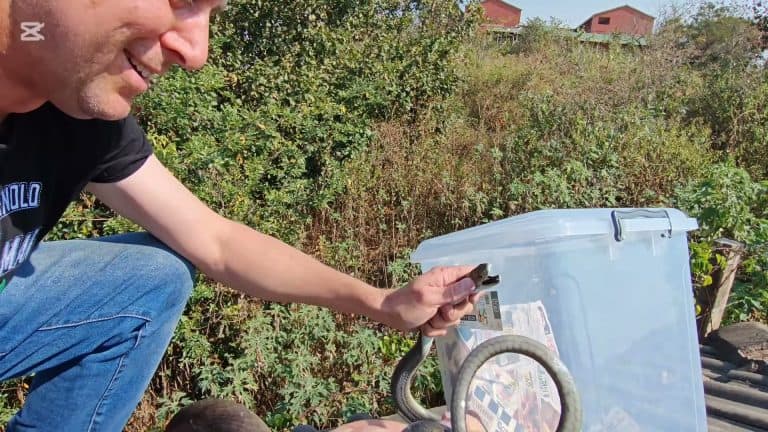
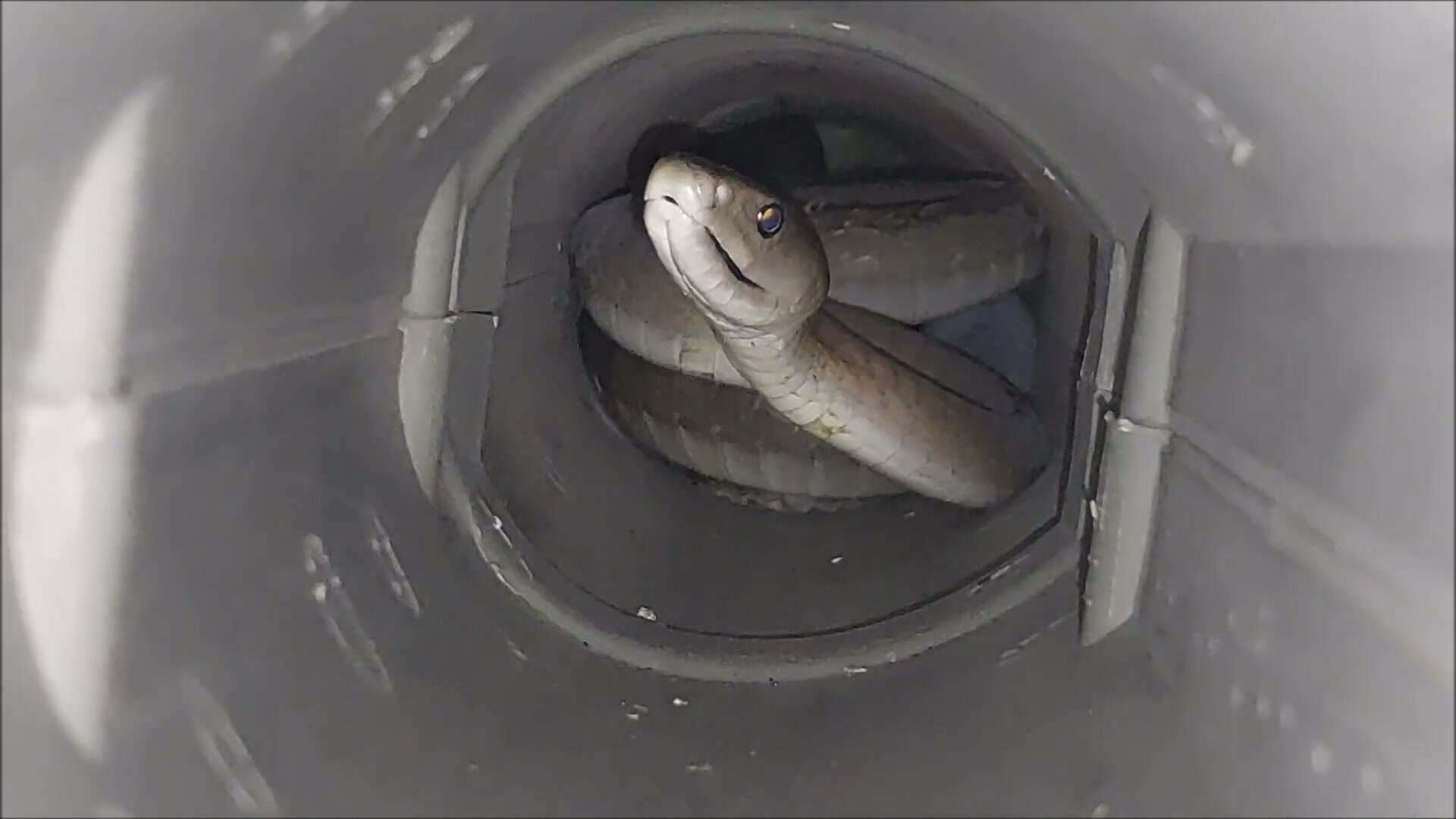
When snake rescuer Nick Evans was called to a shed in Westville, KwaZulu-Natal in 2024, the description sounded familiar: a large, dark snake, probably a black mamba (Dendroaspis polylepis). What was less familiar was where the animal had tucked itself away. After searching a neat shed with few obvious hiding places, Evans found the snake tucked inside a leaf blower, its head later emerging from one of the blower’s smaller pipes.
An Instinct for Confinement
It is an unusual hiding place, but the behavior behind it is well understood. Black mambas are diurnal, terrestrial-to-semi-arboreal elapids that rely heavily on retreat sites between bouts of foraging and thermoregulation. Research and field observations in KwaZulu-Natal show that black mambas repeatedly use secure refuge sites, including termite mounds, hollow logs, abandoned buildings, holes in anthills, and rock crevices. A dark, enclosed piece of equipment in a quiet shed fits the same basic template: a snug, sheltered space with limited access points.
Mambas do not seek out people, and they do not chase.
©reptiles4all/Shutterstock.com
This preference for tight, enclosed refuges is not unique to mambas. Many snakes select shelter that provides darkness, cover, and body contact with surrounding surfaces, a tendency known as thigmotaxis — the drive to maintain body contact with surfaces — in animal-behavior contexts. In practical terms, a narrow cavity gives a snake concealment and a protected place to rest.
Why Mambas Move In
The encounter also illustrates why mambas turn up so often in human structures in eastern South Africa. Suburbs like Westville sit within the snake’s natural range and contain exactly the resources mambas need: rodents and birds for prey, dense garden vegetation for cover, and outbuildings that mimic the cavities they would otherwise use in the bush. The African Snakebite Institute notes that black mambas are frequently recorded in roofs, garages, and storerooms, particularly in summer when activity peaks.
Fear vs. Fact
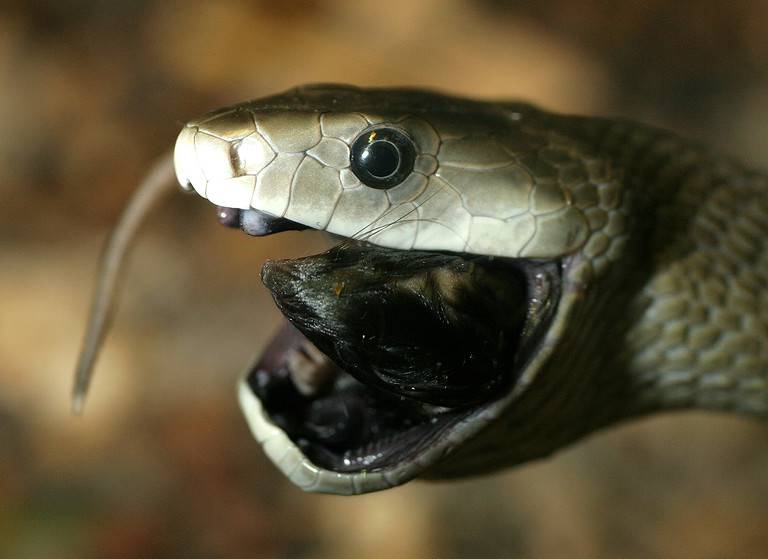
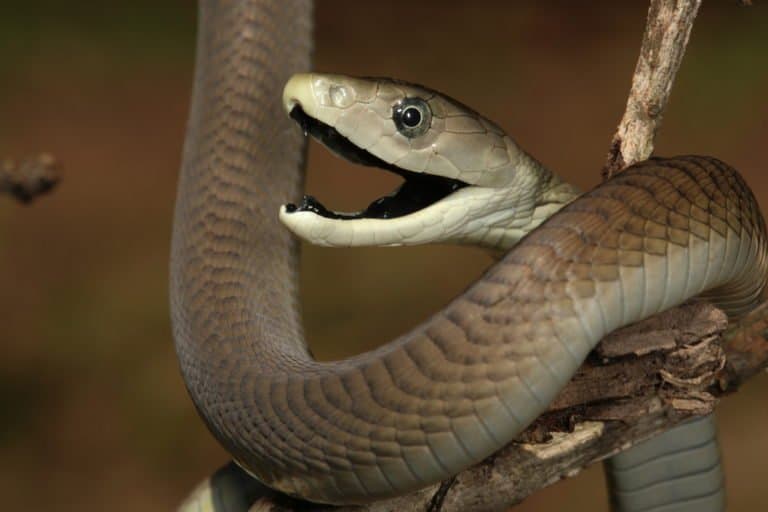
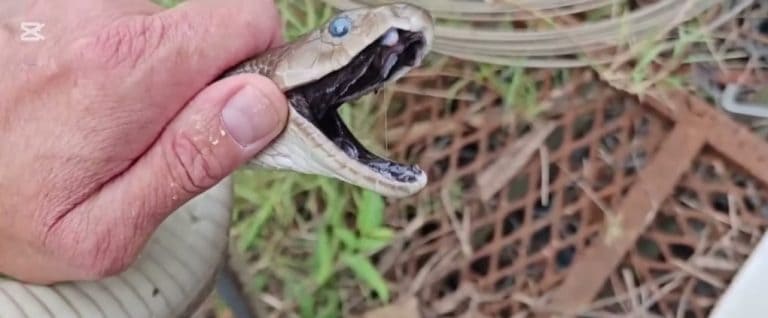
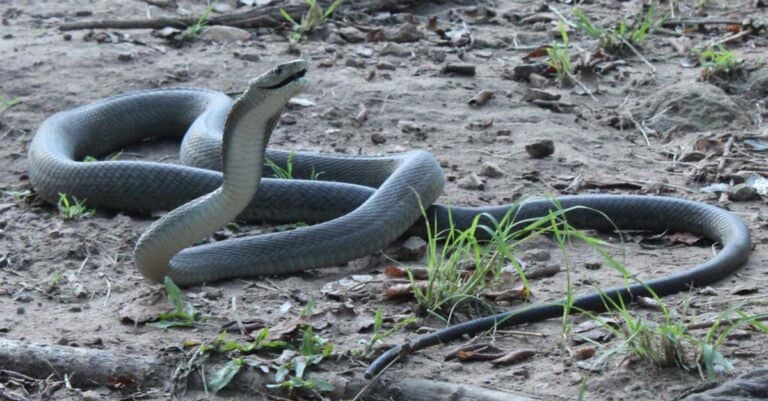
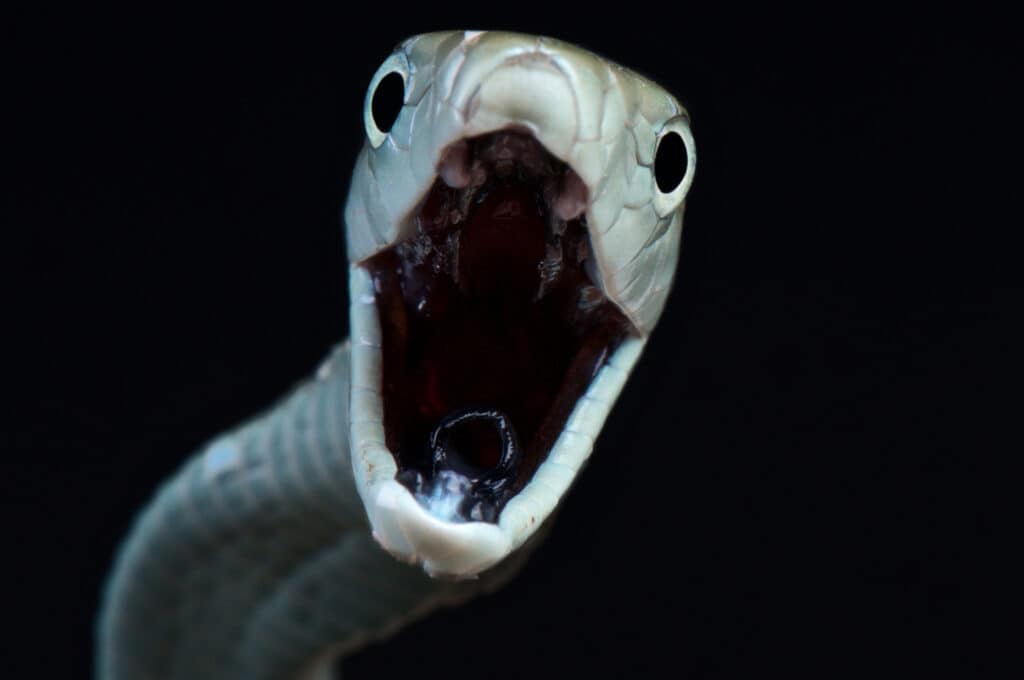
Reputation tends to outrun the biology here. Black mambas are highly venomous, with a neurotoxic and cardiotoxic venom that can be fatal without antivenom, and they are capable of moving quickly and striking repeatedly when cornered. They are also, by the consistent account of field herpetologists, shy animals that prefer to flee. A 2013 review by Spawls and Branch in The Dangerous Snakes of Africa, along with long-running observations by the Bayworld Snake Park and African Snakebite Institute, describes mambas as alert and nervous, with defensive displays (the gaping black mouth, slight hood, hissing) typically reserved for situations where escape is blocked. The animal in the leaf blower was doing what mambas usually do when discovered: trying to stay hidden.
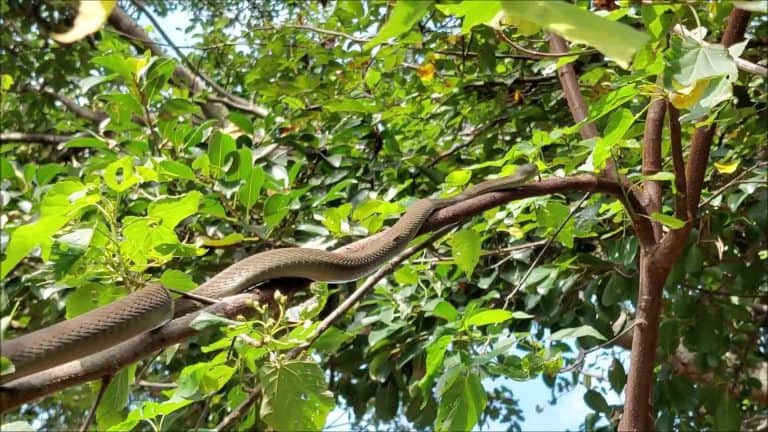
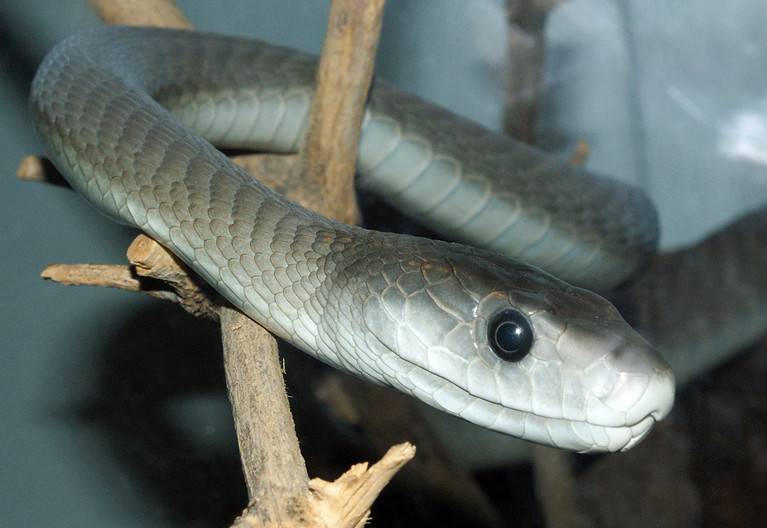
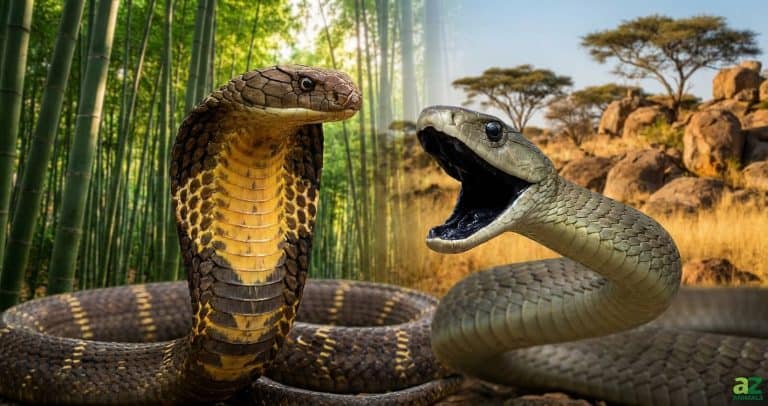
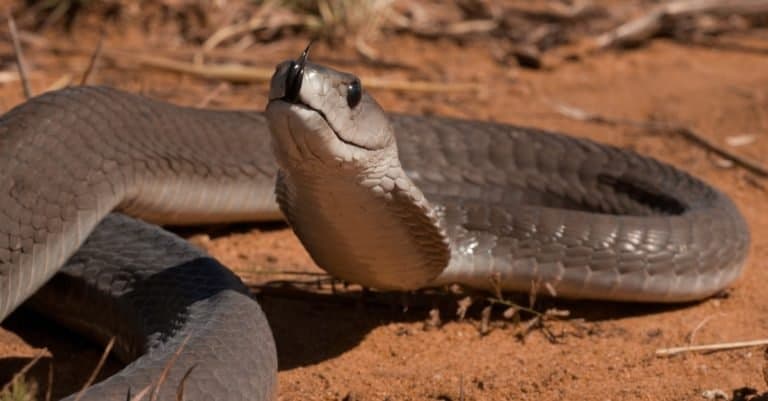
The size Evans reported, 2.4 metres (nearly 8 feet), is normal for an adult black mamba. Black mambas commonly reach about 2 to 2.5 metres, and exceptional individuals have been reported at up to 4.5 metres (nearly 15 feet), making the species Africa’s longest venomous snake. The coloration is also worth noting. Despite the name, the body is usually olive, grey, or brownish. The ‘black’ refers to the inside of the mouth, displayed in the gape that has become the species’ visual signature and the focus of the video’s opening frame.
Safe Removal and Prevention
Removal in cases like this relies on long-handled snake tongs and a clear bin, standard equipment used by trained rescuers across the region. The goal is to extract the snake without pinning or injuring it, then release it into suitable habitat away from homes. Translocation distance matters: studies on mamba and other elapid relocation suggest that very short moves often result in the snake returning, while excessive distances can disrupt the animal’s known refuge network and reduce survival. Rescuers in KZN generally aim for a balance, releasing snakes in protected green space within the broader home range area.
A few practical points emerge from the behavior on display. Mambas do not seek out people, and they do not chase. They do, however, exploit clutter, gaps under doors, and stored equipment. Keeping sheds tidy, sealing gaps, and storing items like leaf blowers with their openings blocked or covered makes such spaces less attractive as refuges. Calling a trained rescuer rather than attempting removal is the single most important step once a snake is found indoors.