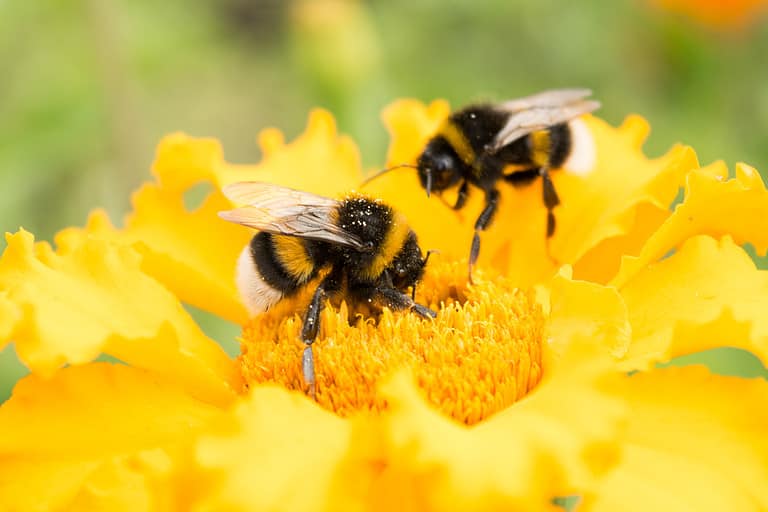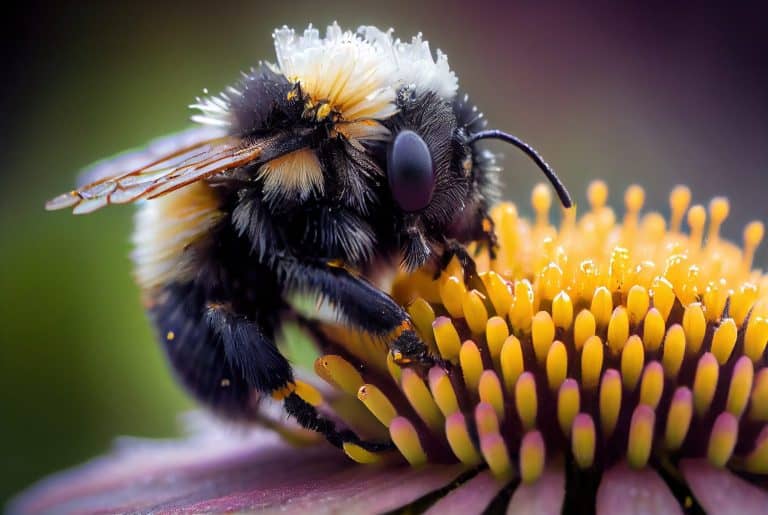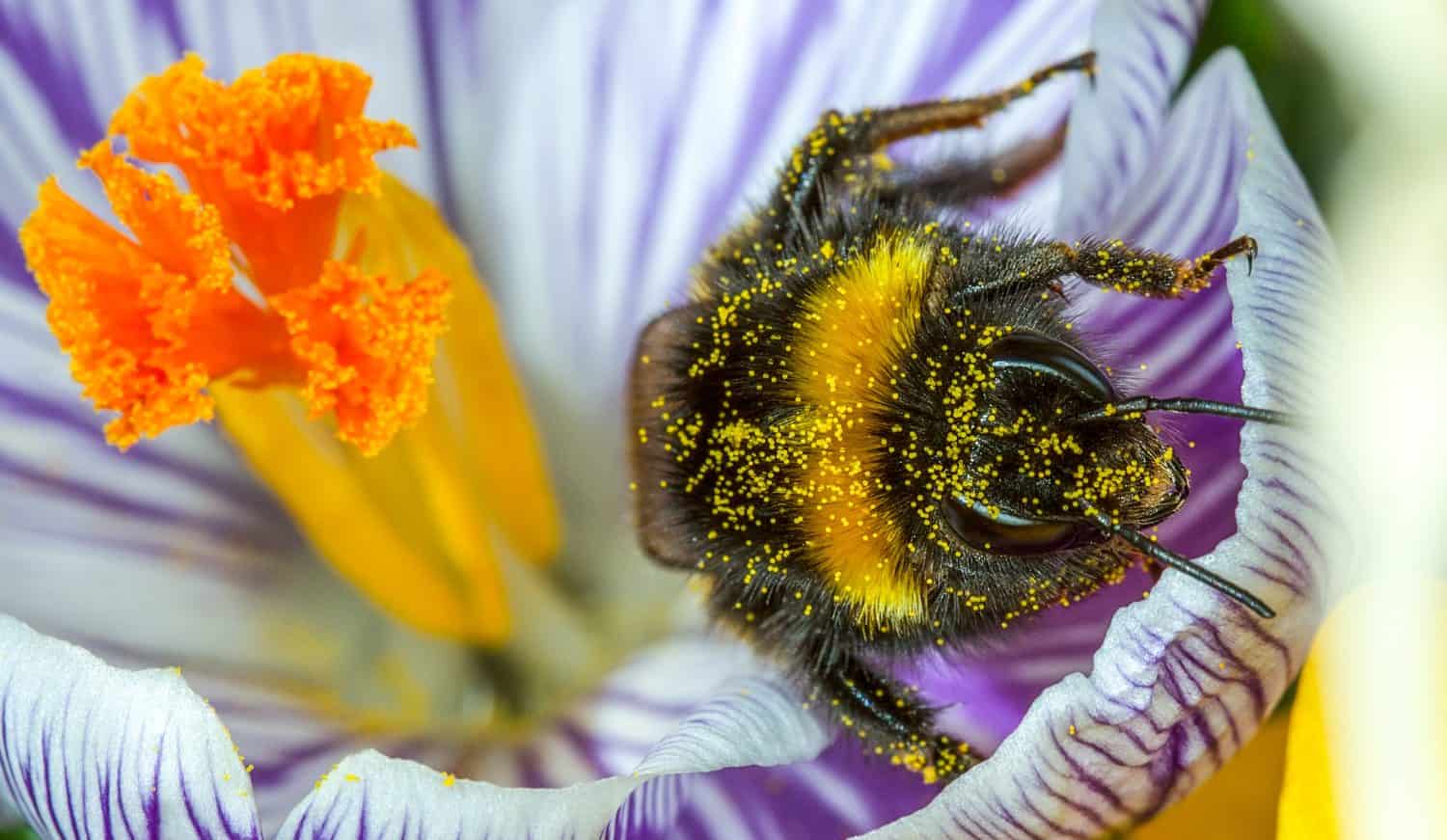

Bees are never happier than when they are feeding on nectar from a flower and getting covered in pollen. We all know that bees do this, but it’s still amazing to get such a detailed and up-close view as you get in this Instagram post. Read on to find out more about the science behind this heart-warming scene.
Why Do Bees Visit Flowers?
Bees visit flowers to access both nectar and pollen. Nectar is a sweet, viscous secretion produced by glands in flowers called nectaries. It attracts creatures such as bees to the flowers, and while they are feeding, they also get covered in pollen. Pollen is produced by the male parts of a flowering plant called the stamens. Plants need to transfer these male gametes to another plant of the same species, where they can fertilize the female gametes to produce a zygote (the beginning of a new plant). This is where the bee becomes very useful. Animals such as bees transport the pollen from one plant to another and are therefore vital for sexual reproduction in many plants.
Why Did So Much Pollen Stick to This Bee?
As bees fly, they develop a positive electric charge, while flowers tend to have a negative charge. This difference in electric potential helps pollen stick to the bee’s body as it brushes against the flower. So, as the bee’s body brushes against the stamens, the pollen is attracted to the bee by electromagnetic forces. The bee’s furry back and legs also help the pollen stick to its body.
Do Bees Use Pollen?
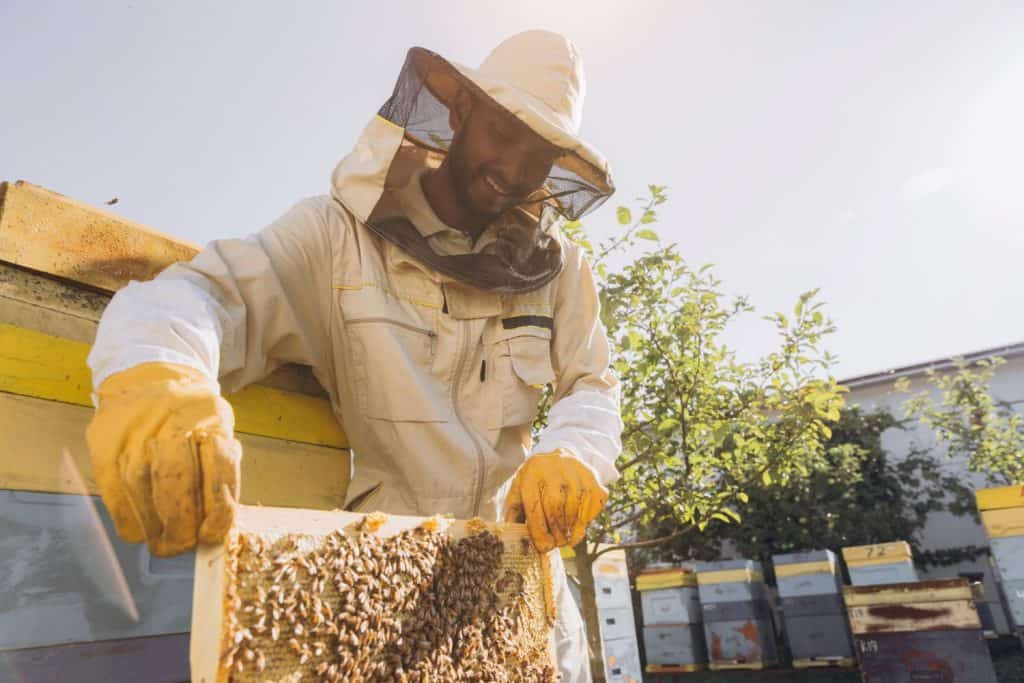
Honey bees need pollen.
©Anatoliy Cherkas/Shutterstock.com
Bees do not just carry pollen around—they also use it. Nectar provides the carbohydrates they need, while pollen supplies amino acids, protein, fats, and micronutrients for bee larvae. Some bees can carry both nectar and pollen at the same time. Honey bees can break open the tough coating of the pollen particle, and most of it is eaten by the nurse bees to produce royal jelly from their hypopharyngeal glands. The jelly is fed to young larvae, including workers, drones, and queens.