
Quick Take
- Bees aren't going blind or losing memory, so what is it about polluted air that stops them from finding flowers? See how VOCs mislead bees →
- Combined air pollutants do something to pollinator performance that neither does alone, and the scale of it is alarming. Explore the 68% performance drop →
- Cleaner air after 2050 sounds like a win for bees, but scientists warn that it could trigger an entirely different ecological problem. Discover the hidden ecological risk →
- Urban and rural bees face the same polluted skies, yet their exposure tells a surprisingly different story. Compare urban vs rural exposure →
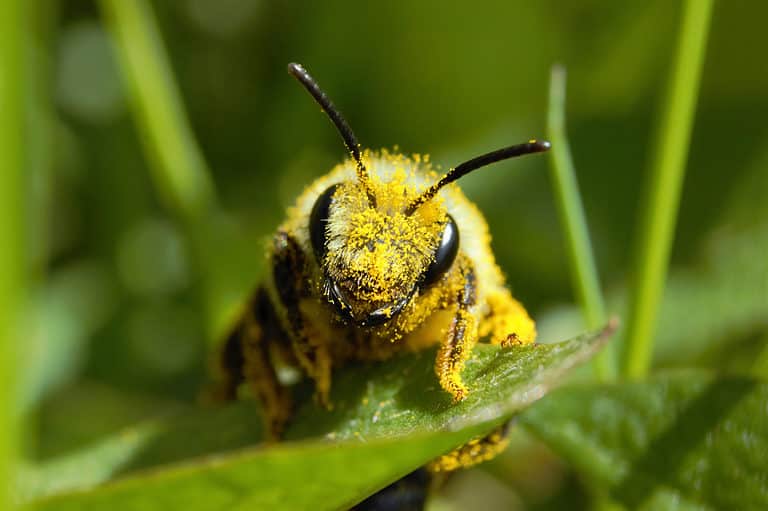
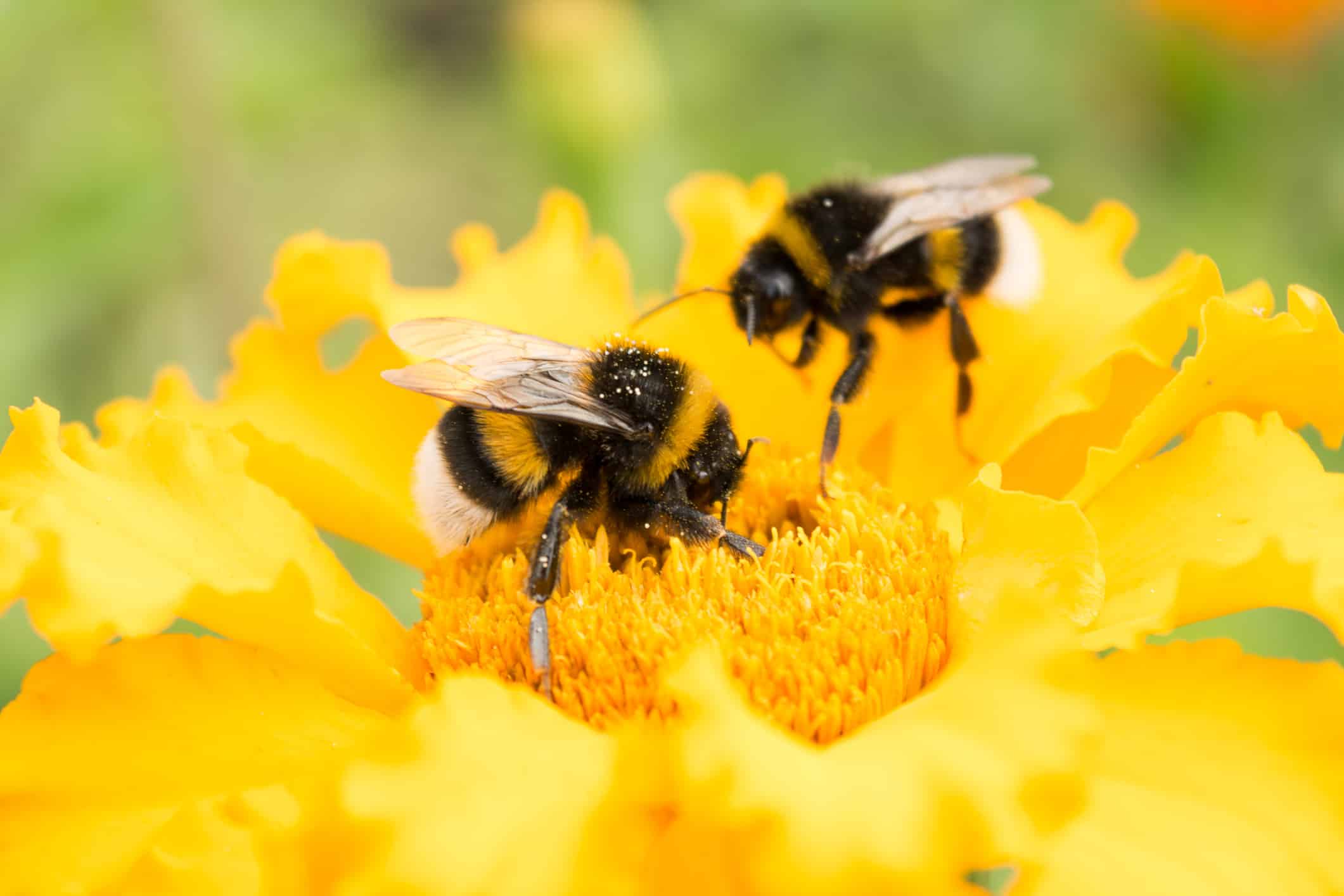
One third of the food we eat is made up of crops that are pollinated by bees. Yet in Europe alone, 23 percent of bee species are in decline. Pesticides have been a key driver of this loss, but scientists from Reading University have recently found that polluted air can make it harder for bees to find the flowers and the pollen that they so desperately need. The study also examined how predicted changes in atmospheric pollutants will likely impact these essential pollinators.
Changes in Levels of Atmospheric Pollution
Air pollutants such as ozone, nitrogen dioxide, and nitric oxide affect how insects forage and therefore alter their chances of survival. Despite efforts to clean up our air, these pollutants will likely persist for some time. They can react with each other to create new compounds. Importantly, they can also react with the volatile organic compounds (VOCs) plants emit to help pollinators find them! Without these clear chemical signposts, insects can struggle to locate flowers. This not only reduces foraging efficiency but also impacts pollination success.

Vehicle emissions are behind much air pollution.
©ddisq/Shutterstock.com
No one knows exactly what atmospheric pollutant levels will be in the future. That said, a reasonable estimate suggests the global transition away from fossil-fuel dependence will increase ground-level ozone concentrations until the middle of this century. Even though nitrogen oxides will decline, the other chemicals needed to create ozone (methane (CH4), carbon monoxide (CO)) will remain high. During the second half of this century, however, ozone levels are expected to drop. How will this impact pollinators such as bees?
How Will Bees Be Impacted by Atmospheric Pollution?
The researchers compiled data from 22 experimental studies that had measured the impacts of ozone and nitrous oxides on pollinator performance. They carried out a meta-analysis to determine pollinator responses in mixed-pollutant environments.
Overall, the meta-analysis showed that elevated concentrations of ozone reduced pollinator performance by an average of 42 percent. Pollinator performance is defined as searching efficiency, feeding efficiency, and abundance. Elevated nitrous oxides reduce pollinator performance by 46 percent. More importantly, when the two pollutants are combined, they may reduce performance by 68 percent. However, the interaction between these pollutants is much more complex and will need further research to figure out.
So, how is air pollution affecting the bees? The biggest impact concerns their searching efficiency, and air pollution reduces this by 67 percent. In contrast, feeding efficiency and pollinator abundance remained relatively unaffected. This is explained by the oxidative effects of ozone and nitrous oxides on floral VOCs, which pollinators rely on for navigation. Many insect crop pests rely on visual or tactile clues to find their host plants and are not so affected by air pollution. Pollinators, however, appear to be uniquely vulnerable.
Does the Concentration of Air Pollutants Matter?
This research was not able to establish whether there is a bigger effect at greater pollution concentration levels. The average ozone concentration in the studies included in this analysis was 161 parts per billion (ppb), but the levels of nitrous oxides varied a lot (21 to 17,500 ppb). The analysis clearly shows that harm occurs at the concentrations tested. However, there may be a biological threshold above which harm occurs, or there may be a more gradual (possibly linear) dose-response relationship. This has not yet been investigated in enough detail.
Future Atmospheric Pollution
The predicted increase in ground-level ozone levels poses a clear threat to pollinators, like bees and butterflies. These creatures are active during the day when ozone levels peak. Some crop plants (such as almonds and oilseed rape) and many wildflowers are especially at risk because their pollination peaks coincide with peak ozone concentrations.

Wildflowers rely on pollinators.
©Juancat/Shutterstock.com
Over the next two decades, this is likely to get worse, but the picture will not be uniform. In urban areas, for example, the higher levels of nitrous oxides serve to break down or ‘quench’ ozone levels at ground level. In rural areas, no such effect is seen because nitrous oxide levels are lower. There will also be variations between countries. India and China will likely have the highest pollution levels and therefore the most severe pollinator disruption.
Long-Term Good News – Or Is It?
After 2050, the levels of nitrous oxides and other ozone-precursor emissions are predicted to fall, giving a more hopeful picture. That said, this reduction is dependent on the decline of diesel vehicle fleets and global adherence to emission targets. The quicker emissions fall, the faster pollinators can recover.
Yet even this prediction is not straightforward. As atmospheric pollutants decline, the selective pressures that have affected pollinators and plants for decades will shift. While some plants did well under high air pollution levels because they could modify VOC production to counter VOC degradation, certain pollinators relied more on visual cues. As the environment gets cleaner, these plant–pollinator interactions may alter, and some species may lose out. Understanding these complex shifts will be key to guiding future conservation efforts.