
Quick Take
- After the hunt, humidity becomes the wasp's biggest enemy, and its solution to that problem is stranger than anything you'd expect from an insect. Explore the humidity solution →
- The bee-killer wasp doesn't just hunt honeybees. It performs a multi-step preservation ritual on them underground that rivals techniques humans took centuries to develop. See the embalming ritual →
- A paralyzed bee is useless as larval food unless one critical condition is met, and research reveals exactly how the wasp guarantees that condition. See the research findings →
In some of Europe’s driest sandy habitats, you’ll find a merciless insect: the European beewolf. This solitary wasp spends most of its time in the continent’s sandy plains and heathlands, foraging for nectar and burrowing underground. Despite being a relatively solitary species, female European beewolves engage in some particularly vicious behavior when it comes time to feed their growing larvae. These wasps seek out foraging honeybees, paralyze them with a well-placed sting, and carry them back to their underground burrows.
There, the bee is helpless as its wasp foe gets to work. Normally, the humid conditions of these burrows would make the paralyzed bee spoil over time. To combat this and ensure her children get a good meal, the female bee-killer wasp begins an intricate embalming process, covering the bee in secretions that stop mold growth and keep the entombed bee pliable enough for her larvae to eat. It’s a wasp-eats-bee world out there, and this process of honeybee embalming is a matter of survival. Without finding a food source for her growing larvae, the female bee-killer wasp’s offspring would surely perish. Let’s learn more about bee-killer wasps and how they turn honeybees into a preserved food source for their young.
Continue reading
The Bee-Killer Wasp
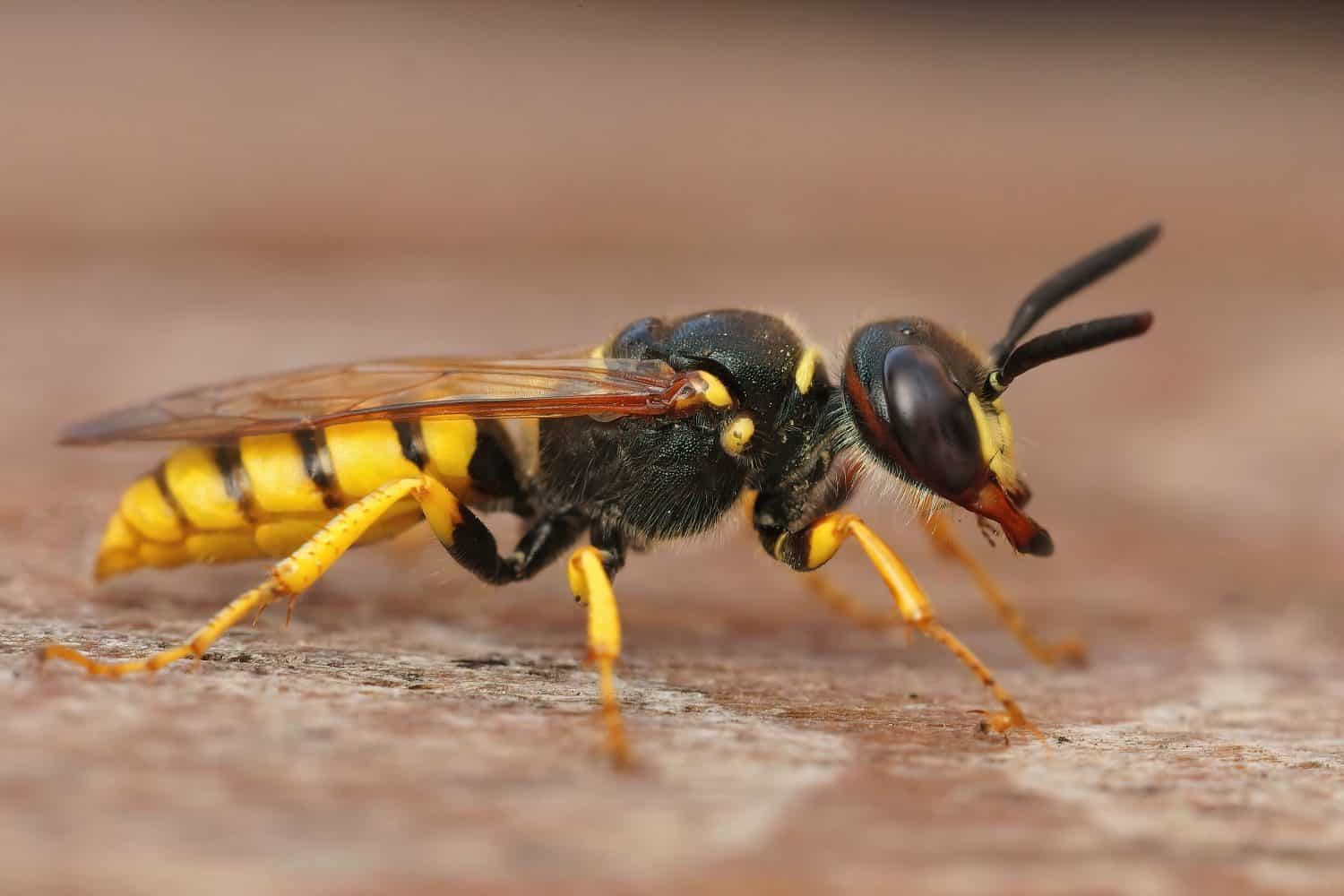
The European beewolf is a solitary wasp best known for paralyzing honeybees and embalming them to be used as a food source for larvae.
©Wirestock Creators/Shutterstock.com
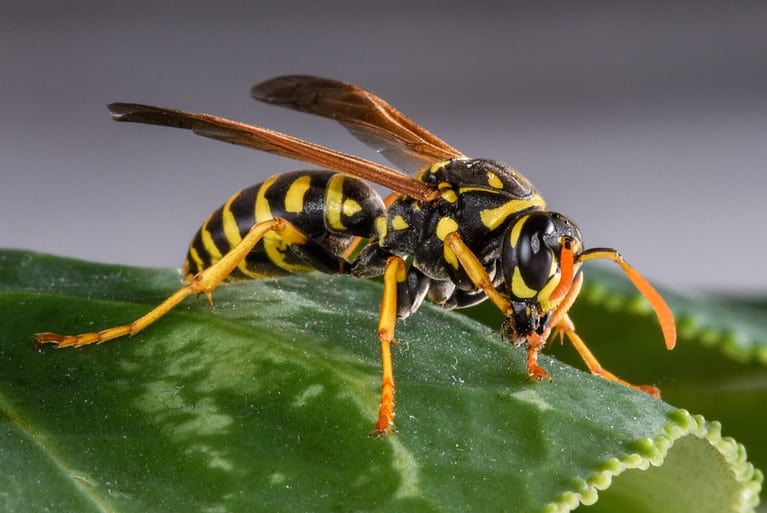
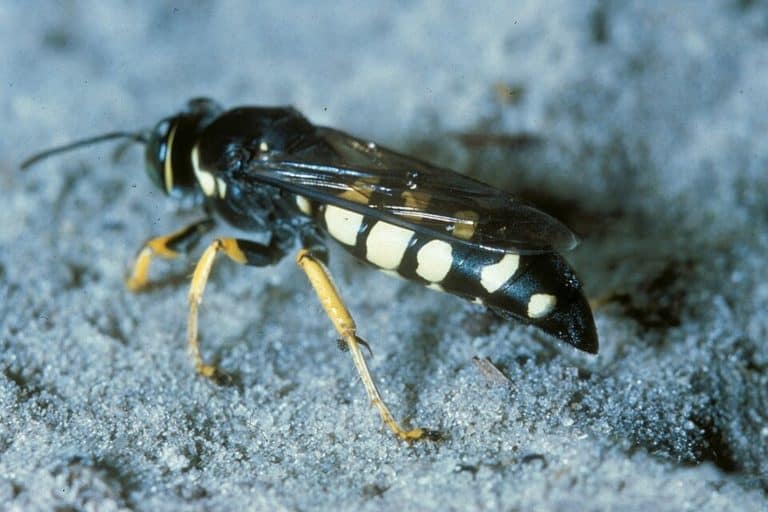
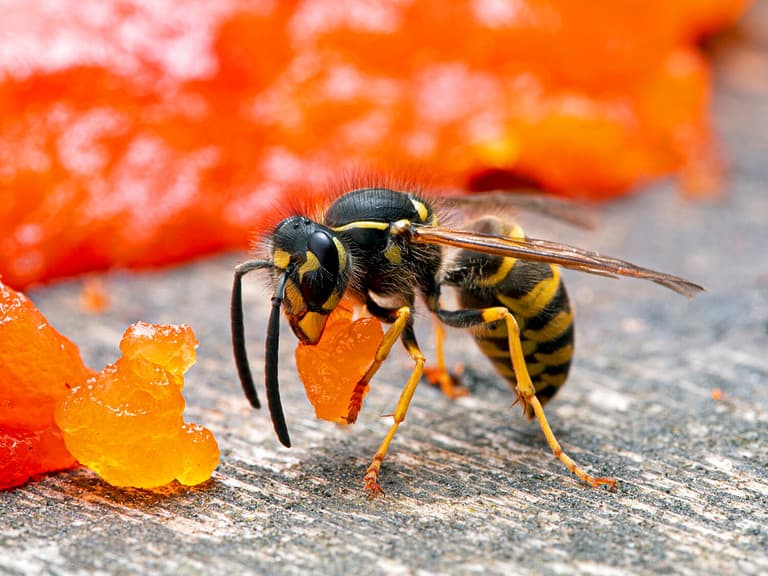
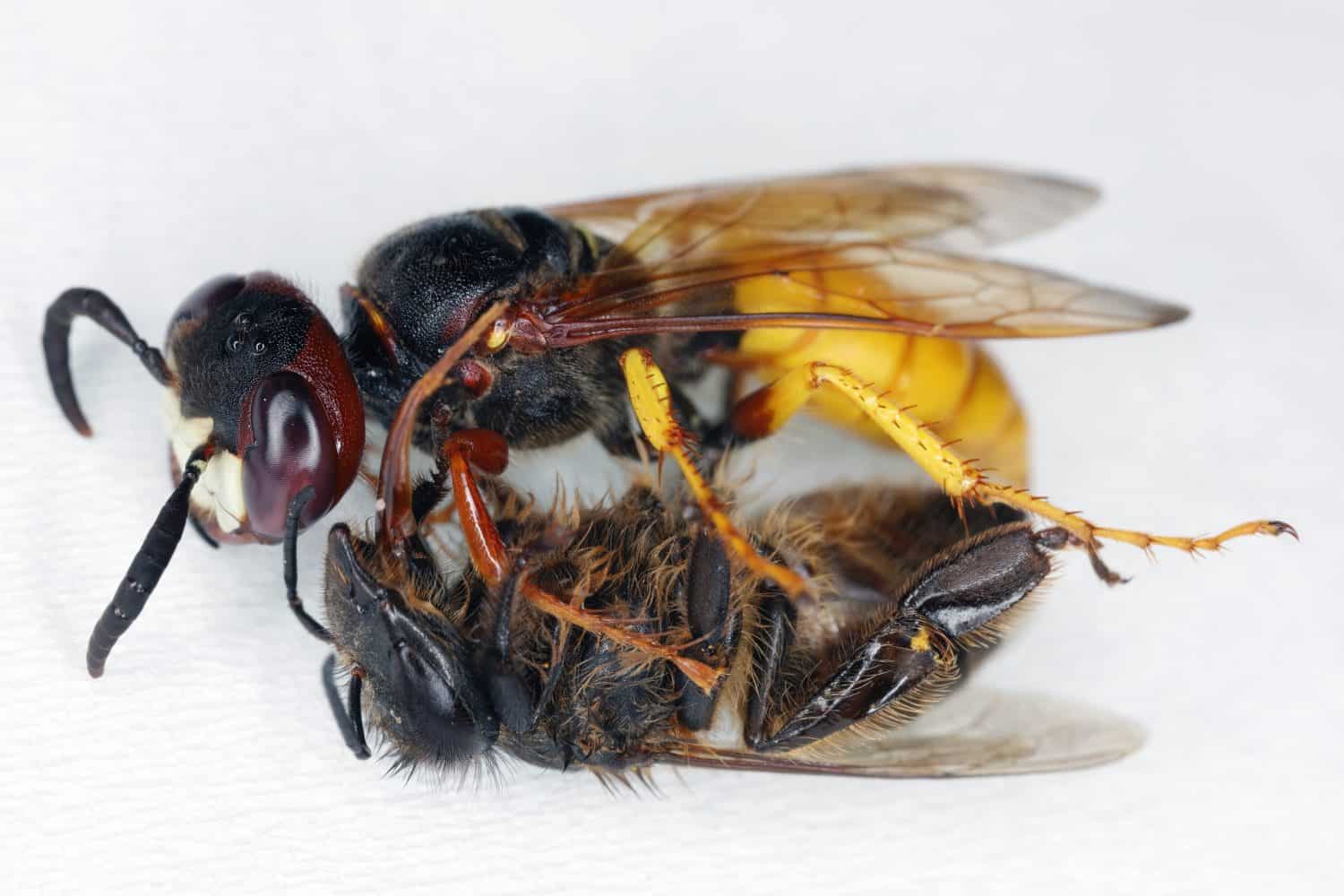
The European beewolf (Philanthus triangulum), also known as the bee-killer wasp, is a solitary wasp species found from Scandinavia to South Africa. They live primarily in areas with open sandy soil. A quick glance at one would make you think of bees, as they have bold black and yellow markings. Males have a sort of trident-shaped marking between their eyes. Females have paler faces with reddish stripes behind their eyes.
These wasps have symbiotic relationships with bacteria, an adversarial relationship with honeybees, and impressive engineering abilities. These three attributes are central to the bee-killer wasp’s life cycle. First, however, female bee-killer wasps construct an underground nest, often a meter beneath the earth, which features multiple brood cells that branch off the main thoroughfare. Once these chambers are complete, the female wasp secretes cultivated Streptomyces bacteria. This produces a defensive cocoon featuring a cocktail of natural antibiotics. As you’ll soon see, preventing fungus and mold growth is a top priority in these humid underground nurseries.
Constructing a safe rearing chamber is one thing, but feeding the larvae is another. Doing so requires the wasp to live up to her name. Female bee-killer wasps seek out foraging honeybees for an extended-release meal.
Signed, Sealed, Delivered
The process happens like this. A female bee-killer wasp leaves her newly constructed nest and surveys meadows full of flowers. She looks for honeybees preoccupied with gathering nectar and pollen. Once she homes in on a suitable target, she strikes from the air. Using a well-placed sting, the bee-killer wasp paralyzes the bee by piercing through the articular membranes immediately behind its front legs.
Almost instantly, this paralyzes the bee. It remains alive, at least temporarily. However, the sting prevents the bee from putting up any meaningful defense; it can’t respond with its own stinger or mandibles. Satisfied with her target, the female bee-killer wasp grabs the bee and carries it back to her burrow. It is here that the most merciless and impressive attribute of the bee-killer wasp manifests.
The female wasp begins covering the paralyzed bee with secretions, secretions containing hydrocarbons from her postpharyngeal gland. Functionally, this embalms the bee, serving two purposes. First, it preserves the bee’s cellular integrity after it perishes. It also prevents excessive water loss, keeping the food source from desiccating.
Food For Larvae
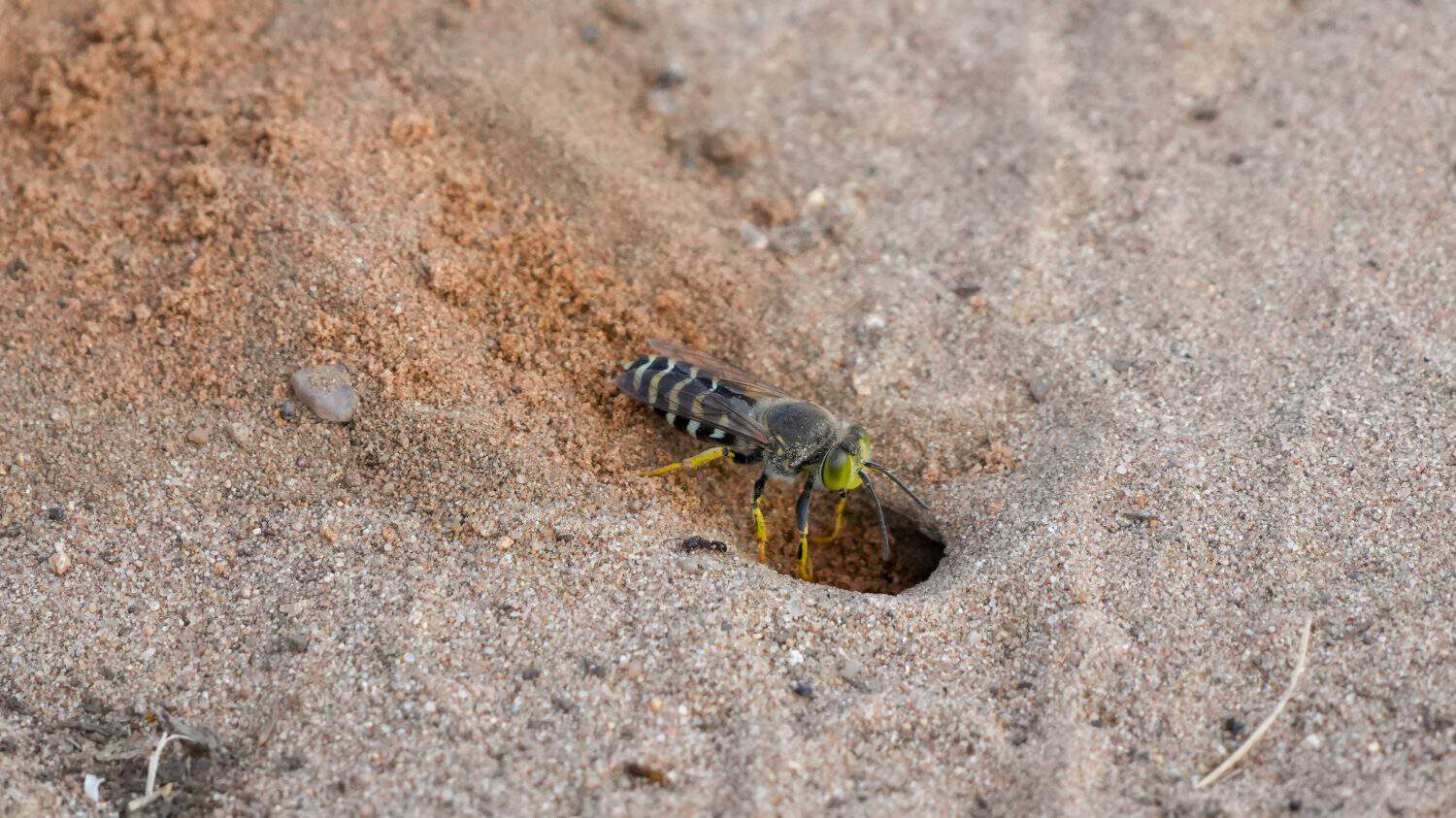
Living underground means doing anything possible to protect against harmful pathogens.
©Flowal93/Shutterstock.com
Research into this process produced some surprising results. A study published in the journal Physiological Entomology found that the hydrocarbons secreted by the female wasps keep the bees free of microbial contamination despite the humid conditions. Researchers noted that water loss is significantly lower in embalmed versus unembalmed bees.
This embalming process keeps the bees as a stable food source long enough for the bee-killer wasp larvae to feast on them and mature. Eventually, they leave the nest, and the process begins again. The nursery is sterilized, a bee victim is brought in and embalmed, and the larvae use it to grow, protected from various molds and fungi the entire time.
Nature can be a merciless place, where one creature’s success requires another’s death. But for the bee-killer wasp, forced to confront the pathogen-producing conditions of underground burrows, embalming bees and feeding them to her larvae is simply a matter of survival.