
The word rabies strikes fear into most people. Yet, on September 28 each year, we celebrate World Rabies Day. It may seem odd to celebrate such a deadly disease that has caused immense suffering to humans and animals in many parts of the world. However, marking this day allows us to reflect on the advances in infectious disease medicine, which have reduced, although not eliminated, the risks presented by rabies. It also gives us a chance to reflect on the history of our relationship with a deadly disease that has entered myth and folklore throughout the ages, more than almost any other illness. Here we will trace the history of rabies, from the earliest records to the latest scientific advances. On the way, we’ll look at some of the myths, legends, and discounted theories surrounding the disease.
What Causes Rabies?

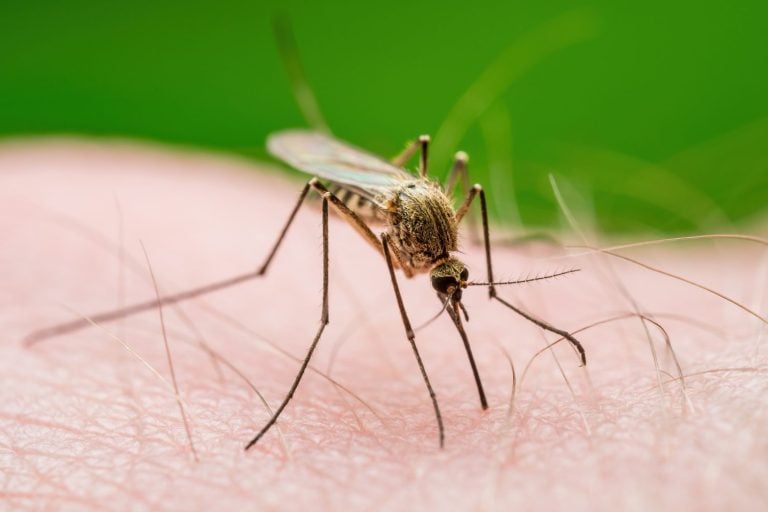
Rabies is caused by a virus.
©jarun011/iStock via Getty Images
The origin of the word rabies is either from the Sanskrit “rabhas” (to do violence) or the Latin “rabere” (to rage). The disease we now call rabies (it has also been called hydrophobia in the past) is caused by a lyssavirus and spreads primarily through the bite (or, less often, the scratches) of an infected animal. The virus is in the infected animal’s saliva, and it enters broken skin. From here, it invades the new victim’s central nervous system (CNS).
After this, it can take between one week to one year for the symptoms to start, but it is usually two to three months. The patient will generally experience fever and pain or tingling around the wound site. In the next stage, inflammation of the CNS causes either furious rabies with symptoms such as hyperactivity, hydrophobia, and hallucinations or paralytic rabies with gradual paralysis. Once the symptoms have started, the disease is inevitably fatal, with only a handful of documented survivors worldwide.
How Do People Get Rabies?
Only mammals carry rabies. Looking at the worldwide picture, most cases are caused by infected domestic dogs. Children between the ages of 5 and 14 years are frequent victims. Each year, rabies causes 59,000 deaths and costs $8.6 billion. It is recorded on all continents except Antarctica.
In the U.S., however, rabies has been largely controlled by vaccination in domestic dogs. Here, hematophagous (blood-feeding) bats are now the primary source of human infection. Other widespread US mammals, including skunks, foxes, and raccoons, can also carry the virus, and human infection from these animals is possible but rare. Human-to-human transmission of rabies is biologically possible, but there are no recorded incidents via bite wounds, only through organ transplants.
Rabies Vaccination
In countries like the U.S., we have a widely available rabies vaccination and treatment regimen. That is not the case in many other countries, especially among marginalized populations. Here, the vaccines can be inaccessible or unaffordable. Intradermal (shallow) injections of cell culture rabies vaccines are safe and cost-effective. They can be used for pre-exposure prophylaxis (preventative) and for post-exposure treatment in people who have been bitten.
Early History of Rabies
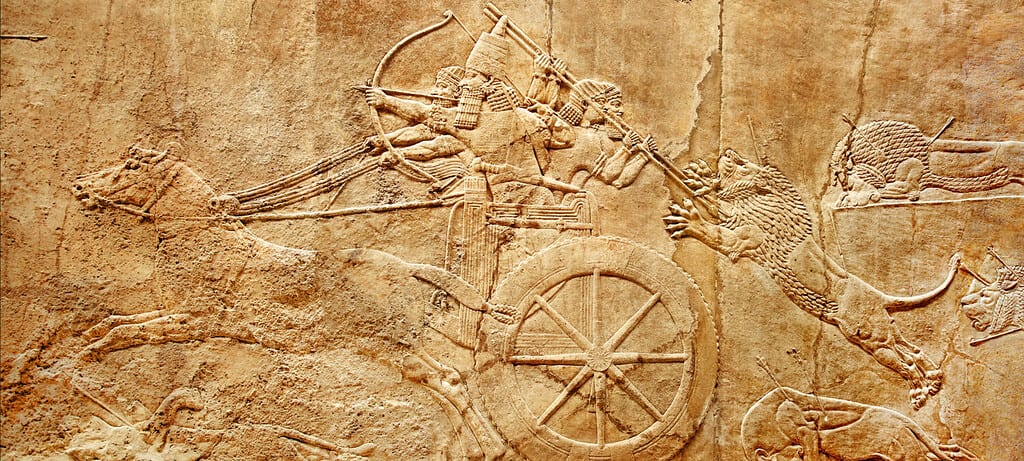
Rabies was recorded in Mesopotamia.
©Viacheslav Lopatin/Shutterstock.com
To learn about the earliest references to rabies, we need to travel back to the ancient Sumerian and Akkadian civilizations of Mesopotamia. A stone tablet from 1770 BCE lists the rules and regulations applying to dog bites and reveals that these people knew of a causal link between getting bitten by a rabid dog and human rabies infection. A portion of the tablet reads, “If a dog becomes rabid and the ward authority makes that known to its owner, but he does not watch over his dog so that it bites a man and causes his death, the owner of the dog shall pay forty shekels of silver.”
What’s more, some ‘dog incantation’ tablets refer to the “seed’ of rabies coagulating on a dog’s teeth, which shows that they already understood it was transmitted in saliva. The Akkadians were also realistic about the prospects of a cure and knew that a rabies infection was effectively a death sentence. Nevertheless, they also got a few things wrong! They believed that herbs placed on a dog bite would prevent rabies and that dogs were more likely to become rabid when a lunar eclipse occurred at year’s end
Rabies is also mentioned in ancient texts from India (1750–500 BCE), ancient China, Egypt, the Middle East, Greece, and Rome.
Ancient Greece and Rome
The great thinkers of the classical antiquity period applied their intellect to rabies. They also got some things wrong and many other things right. For example, Galen noted that there was a delay (what we now call the incubation period) between the dog bite and the onset of symptoms that could be several months. The Persian Avesta, composed in 200-400 CE, recommended that the best way to prevent rabies was to avoid dog bites. At the same time, texts from the Jin Dynasty (around 300 CE) prescribed the application of the biting dog’s brain tissue to the bite wound to prevent rabies!
The Middle Ages
Medieval medical practitioners and writers, including Mohammad-e Zakariā-ye Rāzi (Rhazes) discuss rabies and its association with dogs. These authors also accurately describe the incubation period, paralytic rabies, and the absence of hydrophobia in rabid dogs. Arnaldus de Villanova spoke about the importance of cleansing a bite wound inflicted by a rabid dog.
However, there were no significant advances in the clinical management of the disease. Religion, on the other hand, began to play a role in ‘treating’ patients. A miracle cure was deemed to be found at several specialized religious sites in Europe. One example is the church of Saint-Huber near Liège in Belgium, which became a specialized center for rabies prevention. It was also believed that applying a white-hot Key of Saint Hubert to dogs would prevent them from getting rabies. In France, humans bitten by rabid dogs had their foreheads incised and threads from Saint-Tügen’s supposedly miraculous stole were inserted while prayers and fasting were carried out. “Madstones” (which were often gallstones) were used as amulets in medieval Europe to absorb or otherwise neutralize rabies.
Cauterization of the bite wound to deactivate the ‘poison’ remained widespread in the management of rabies well into the 19th century. If this failed, however, patients at the Saint-Tügen chapel were suffocated between two mattresses!
Renaissance
Medical writers of this period continued to discuss rabies, and there were even some who dedicated whole books to the subject. Some of the previous preventative practices were condemned, but the protective effect of wound cleaning continued to be accepted. Rabies was used in an early form of biological warfare. Hollow shells containing the saliva of rabid dogs were fired by the Polish-Lithuanian army at their enemies in 1650.
At this time, very little rabies was recorded in Central and South America but it was circulating in Europe, Africa, and Asia. When seafaring European conquerors (and their dogs) arrived in the Americas and the Caribbean, they brought rabies with them.
On a more positive note, progress was being made in the prevention of dog bites in European cities, thanks to regulations relating to domestic dogs and the elimination of stray dogs. Medical scholars referred to the importance of saliva in the transmission of rabies. However, treatments were still based on myth rather than scientific fact. One was the application of “hair of the dog” that had bitten you to the wound.
Rabies and Vaccination – The Theory

Vaccinations prevent rabies in humans and dogs.
©olgagorovenko/Shutterstock.com
Around the turn of the 19th century, several significant breakthroughs in the understanding of rabies physiopathology and epidemiology were made. Experimental work showed that rabies could be transmitted by applying the saliva of rabid dogs to animals’ tissues. The focus for rabies infection was identified as the nervous system, and migration of the disease from the wound site was acknowledged.
Further scientific evidence supported that there was a filterable microorganism to blame for the disease rather than a ‘poison’. These microorganisms began to be referred to as a virus. What’s more, scientists established that the virus spread from the wound site, via the nervous system, to the medulla oblongata (part of the brain), which triggered the clinical disease. This explained the delay between the bite and symptoms. This suggested that it may be possible to intervene in this process with timely and adequate vaccination.
Vaccination Practice
Variolation is the practice of using dried-out scabs containing attenuated smallpox virus to directly immunize against and prevent more severe smallpox. This had been performed since the 10th century in China. Edward Jenner (among others) famously used the technique using the much milder cowpox virus in the late 1700s.
The first rabies vaccine experiments were carried out in 1799 by Eusebio Valli, an Italian physician. He claimed that he successfully immunized dogs by injecting the saliva of other dogs after submitting it to the gastric juices of frogs. He also went on to claim that he had used the technique to prevent rabies in two people bitten by a suspected rabid dog in Pisa. Several other scientists made similar claims. However, the first scientifically rigorous and accurately recorded experiments were carried out by Louis Pasteur and his colleagues at the École Normale Supérieure in Paris in December of 1880.
The first challenge was to create an “exalted virulence” strain of the virus with shorter incubation times and unfailing transmission so that experiments could be conducted in a timely manner. In 1884, Pasteur’s team reported that a prototype vaccine had successfully prevented the disease in dogs. It later prevented disease in humans, but only if it was administered before clinical symptoms had started.
The first human to receive the live attenuated rabies vaccine on July 6, 1885, was a 9-year-old schoolboy, Joseph Meister. He had been attacked and bitten 14 times by a rabid dog. He survived, and for the first time in 3800 years, human civilization had a method to prevent rabies in humans.
Modern Rabies Prevention

The rabies virus can be seen using an electron microscope.
©EzumeImages/iStock via Getty Images
Rabies post-exposure prophylaxis was further improved over the following decades. The rabies vaccine was further refined. Human rabies immune globulin (HRIG) was used to bridge immunity until the response to rabies vaccination occurs 10–14 days later. The HRIG is most effective when infiltrated in the wound and not intramuscularly (IM) remote from the bite wound. Monoclonal antibodies (produced either in animals or by yeasts or plants) have been approved and are being used in some countries as a replacement for rabies immunoglobulin (RIG) in post-exposure prophylaxis.
As for the virus itself, it was first successfully cultured in a laboratory in 1936 and first observed by an electron microscope in the early 1960s. Despite these dramatic advances, survival from clinically declared rabies remains extremely rare. There have been just a few documented cases of patients surviving the disease
Modern Rabies Myths
It is tempting to ridicule the beliefs and practices of ancient people when it comes to rabies. However, not everything that you are told or read about rabies today is true either! Here are just a few modern rabies myths.
Myth: Rabies treatment requires 20 shots with a long needle.
No, modern rabies treatment is typically four vaccinations in the arm, plus a dose of human rabies immune globulin (HRIG).
Myth: You can get rabies from blood and urine.
No, rabies is transmitted through saliva. It is also not transmitted through the air.
Myth: Rabies kills many people in the U.S.
No, 95 percent of human deaths from the disease occur in Africa and Asia. Rabies cases in humans in the United States are rare, with zero to two cases reported annually in recent years.