
Quick Take
- A veterinarian with twenty years of experience couldn't save her own donkey alone. See Courtney's response →
- Dolly was finally stabilized, but then a mysterious new threat emerged that stumped the entire medical team. Discover the mystery diagnosis →
- The answer to Dolly's most dangerous complication was already living on the family's farm, though they just didn't know it yet. Meet the unexpected donor →
- Whit Pierce had no veterinary training, but what he did when he found Dolly may have been the reason she survived long enough to get help. Read Whit's first actions →
The field of veterinary care can be the most rewarding or the most terrifying experience for people who love animals. Veterinarians and veterinary technicians see animals in their most vulnerable moments, and, tragically, often shepherd them on their journey to the other side. Those moments can sometimes also result in incredibly beautiful, transformative, and life-affirming experiences. Take the story of Dolly, the miniature donkey.
As reported by the Virginia Tech University news team, a local veterinarian received an emergency call from her husband about their donkey. What started as anxiety quickly became a full-blown panic. The incident required the expertise of the Virginia-Maryland College of Veterinary Medicine’s Veterinary Teaching Hospital. Fortunately, the high stakes event transformed into a beautiful example of compassion found in unexpected places. Let’s learn more about Dolly the donkey and how her medical emergency became a truly teachable moment.
A Panicked Phone Call
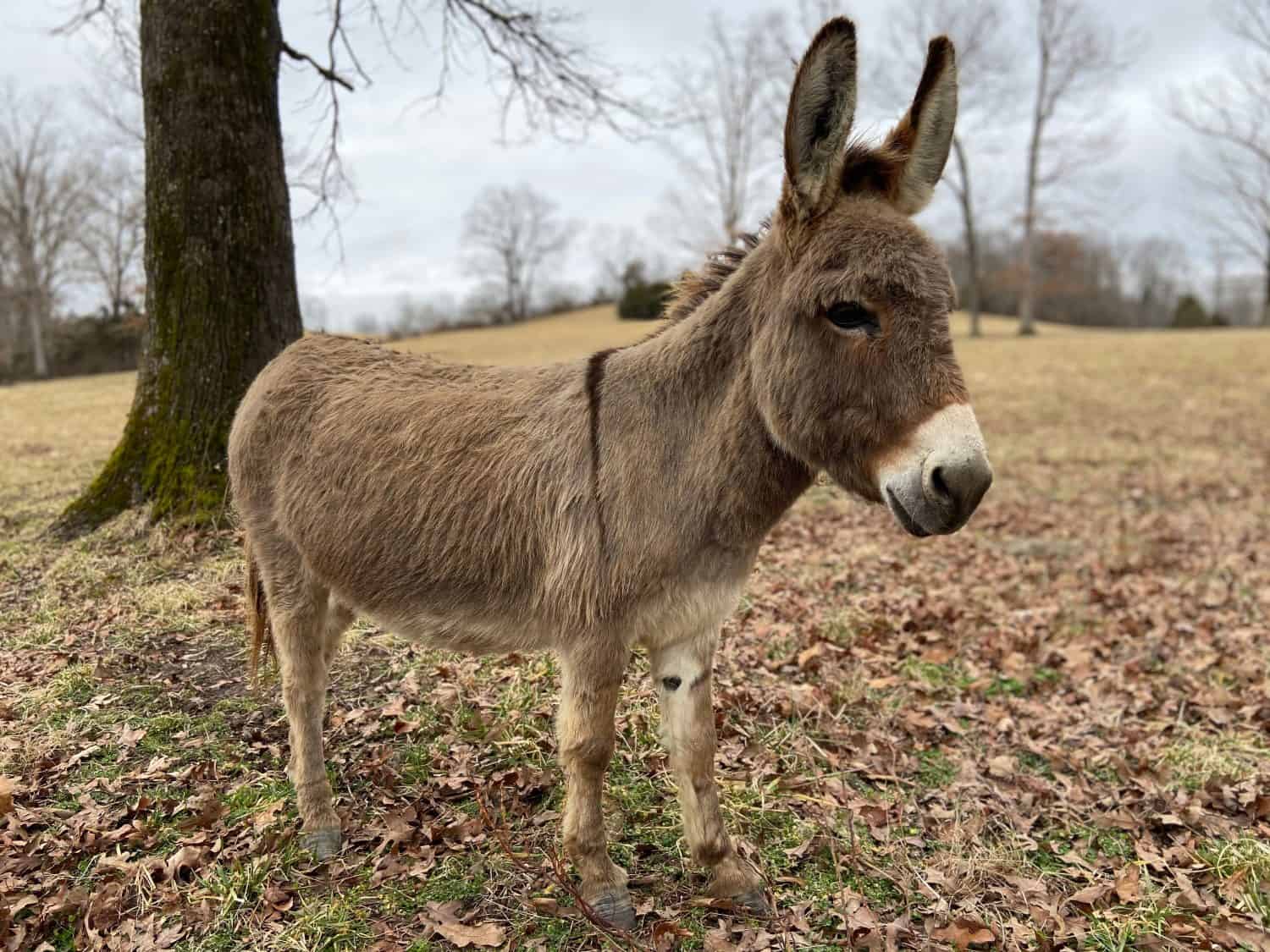
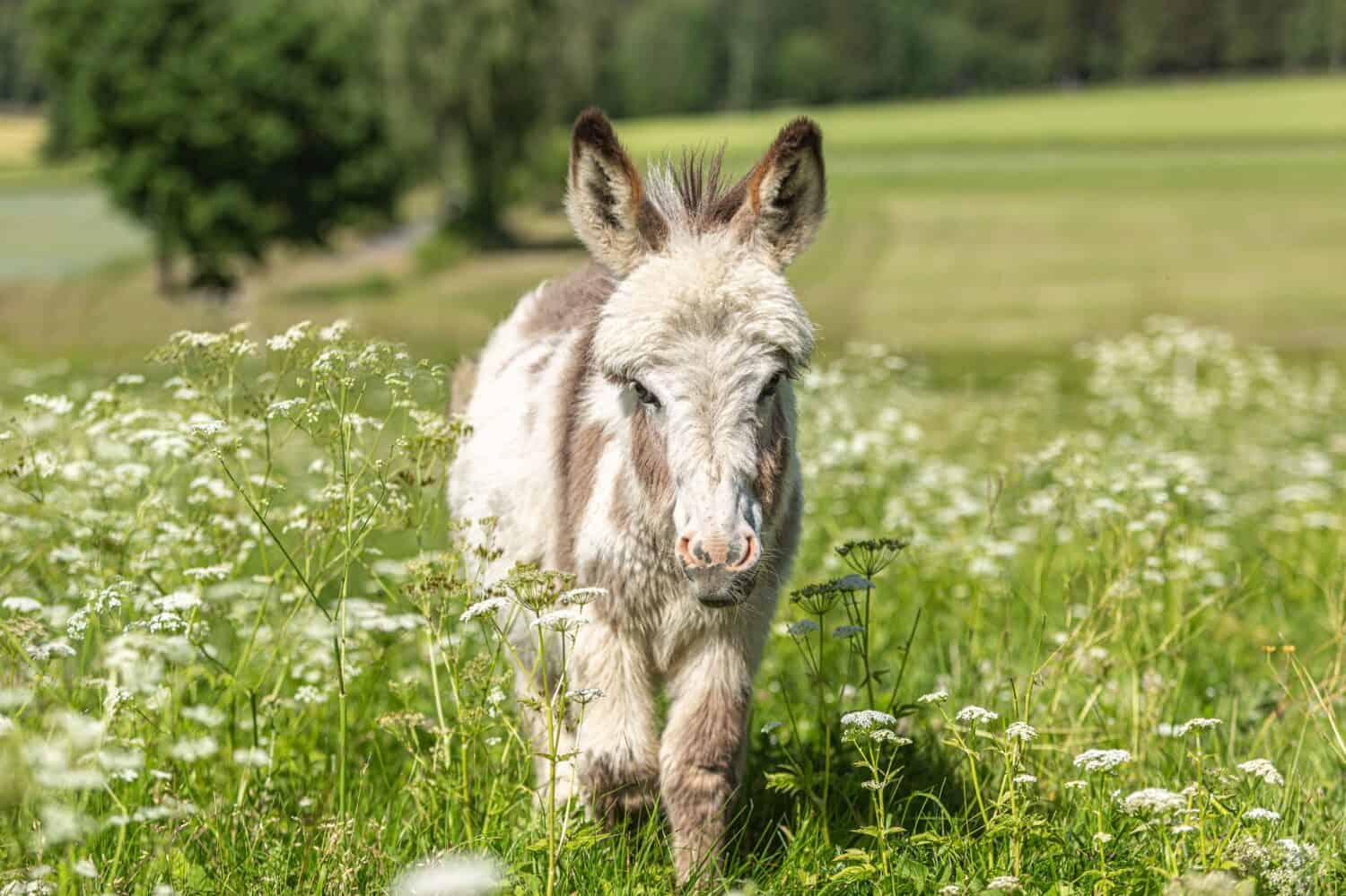
Dolly, the miniature donkey, almost froze after getting her head stuck in a fence.
©Jaebugs/Shutterstock.com
On a cold December morning, an experienced small-animal veterinarian named Courtney Pierce received an alarming message from her husband while dropping their kids off at school. She quickly called him back, only to learn that Dolly, their 7-month-old miniature donkey, was seriously hurt. Her husband thought Dolly might be dying. Pierce rushed home.
Somehow, Dolly had gotten her head stuck in a fence. On a spring morning, such a situation might be harmless. In the middle of winter, when the temperature barely reached 20 degrees, it was deadly. Courtney’s husband, Whit, had found Dolly earlier that morning. Despite lacking veterinary experience, Whit was more connected to the family’s animals than anyone else. Courtney arrived to find Whit lying on top of the donkey in the barn in a desperate attempt to keep her warm.
Upon surveying the frightening scene, Courtney Pierce’s twenty-plus years of experience took over. Realizing Dolly was likely hypoglycemic and dangerously cold, she folded the seats down in her Honda Pilot, turned the heat to maximum, and laid out some blankets. Her husband picked Dolly up and put her into the back of the car. Pierce then applied honey to the donkey’s gums for some much-needed sugar.
As Pierce told Andrew Mann, a reporter for Virginia Tech’s news team, her training kicked in. She said, “In my head, I was an emergency clinician. I said, ‘What does she need? She needs warmth, and she needs glucose.'”
High-Stakes Phone Calls
Dolly’s regular vet was too far away. A local vet, however, quickly drove over to give Dolly some medicine, but she had some bad news. As Pierce suspected, Dolly needed serious care in a proper facility before it was too late.
Pierce called a friend, a Virginia Tech alum who also owns donkeys. She told Pierce to get Dolly to the school’s facilities as soon as possible. The husband-and-wife team took off on the forty-five-minute drive, constantly monitoring Dolly’s progress as she lay in the back seat.
They arrived to find the large animal emergency team waiting, led by Katherine Wilson, equine section chief and clinical associate professor of large animal internal medicine. They quickly placed a central line in Dolly and started warm fluids. Pierce was allowed to stay by Dolly as the team administered care. As she told Virginia Tech News, “It was really reassuring to be able to be at least near her. But still terrifying.”
Far From Over
Dolly arrived at the Virginia-Maryland College of Veterinary Medicine in critical condition; she was hypothermic, dehydrated, and suffering from elevated kidney values. The medical team stabilized her within several days, but a new crisis formed: Dolly’s red blood cell count plummeted to dangerously low levels for mysterious reasons.
Perplexed by the new, dangerous development, the team administered various tests—all of which came back negative. To complicate matters further, miniature donkeys have unique physiologies and lack the case reports necessary to make sense of them. Eventually, however, the care team discovered she had immune-mediated thrombocytopenia, a condition that causes the immune system to attack its own platelets. This meant that Dolly needed blood from a compatible donor.
The Power of Sisterhood
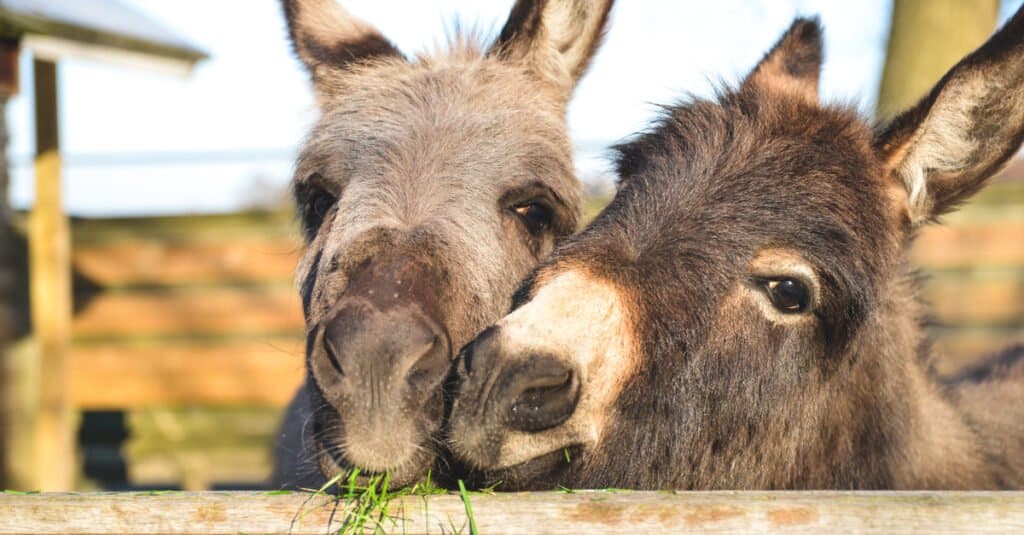
Dolly’s sister, June, made a transfusion and recovery possible thanks to compatible blood.
©babeaudufraing/Shutterstock.com
Donkeys are incredibly social, and after the family realized that Dolly would be there for more than a few days, they brought her sister, June, for support. This proved to be the answer to Dolly’s platelet issue, as June had compatible blood. The transfusion was successful, but Dolly wasn’t out of the woods yet. She continued suffering from intermittent fevers, bouts of stomach problems, and more.
Despite feeling out of control, Pierce was grateful for the medical team’s willingness to include her in the process. As she explained to Virginia Tech News, “It was a partnership more than a directive. She involved me in the decision-making process, and I got the sense that it would have been the case if I were a veterinarian or a layperson pet owner.”
True Recovery
As for her husband, Whit Pierce, he channeled his anxiety into a project for Dolly: he rebuilt her stall in the barn, complete with cameras capturing every angle. Two weeks later, Dolly came home with a local equine veterinarian on call and a trailer on standby just in case. Now, months later, Dolly has made a full recovery.
Now, Pierce and her husband have reignited their tradition of bringing their morning coffee down to a plastic seat they keep by the barn, where the donkeys come to say hello. As Pierce explained to Virginia Tech News, Dolly’s recovery is everything to her family. She said, “I hope she knows how much joy and peace she brings to our lives. The world is stressful right now, and being able to sit in the field with her is just such a gift.”