
Quick Take
- A 2,000-pound reptile launching itself out of the water sounds physically impossible, yet the anatomy that makes it work traces back to something far older than the croc itself. See how crocs launch →
- Not all crocodilians jump equally, and the gap between the best and worst leapers is wider than you might expect. Compare crocodilian leapers →
- Catching prey isn't the only reason crocs hurl themselves skyward. In fact, one of the other triggers has nothing to do with hunger at all. Discover other jump triggers →
- Even apex predators have something to flee from, and the threat lurking in the same water as juvenile crocs is the last thing you would ever guess. Find out who hunts them →
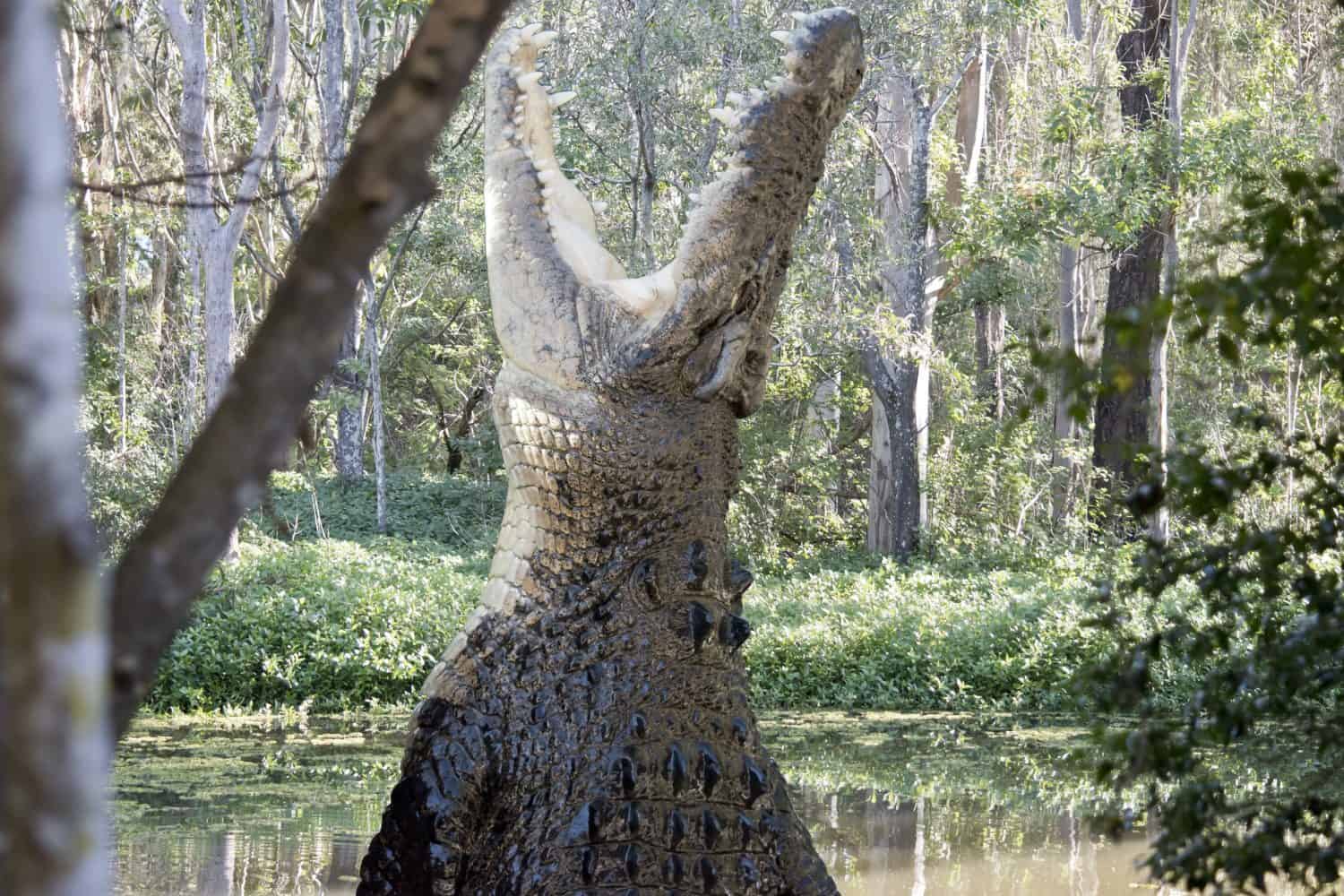
Crocodiles are more than just stealthy predators. They are also phenomenal athletes, hurling themselves vertically out of the water to snatch at prey above them. You can see one in action for yourself in this spectacular YouTube clip. Want to know more about this behavior? Read on!
Croc Jumping Mechanism
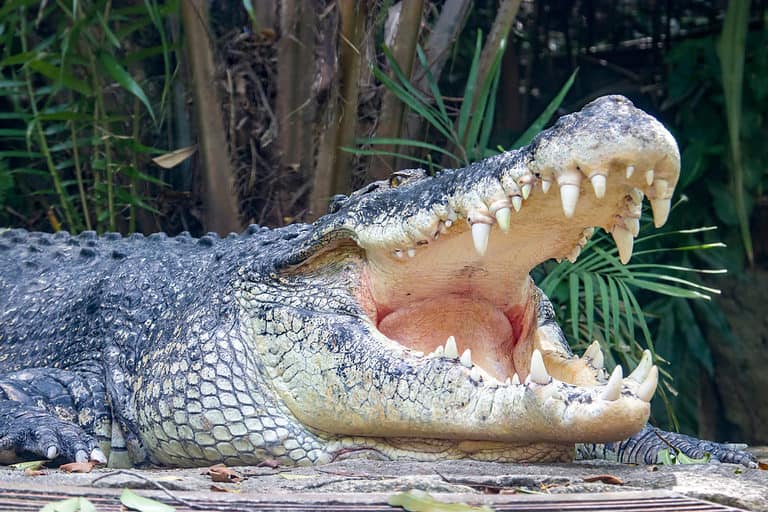
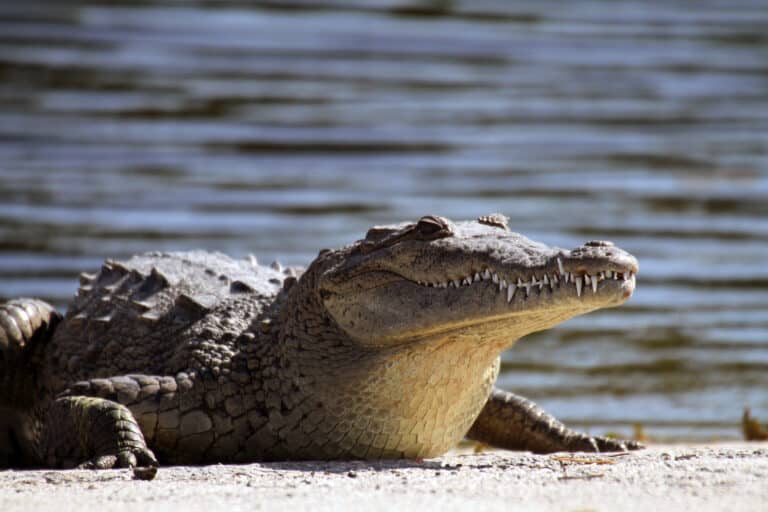
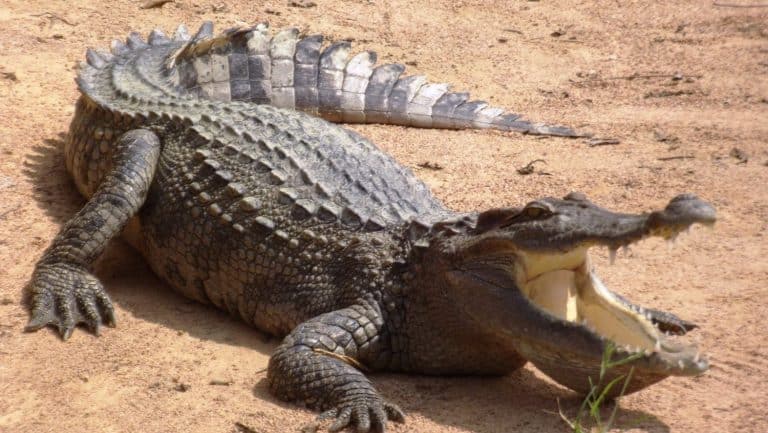
Propelling a 2000-pound reptile vertically out of the water takes a lot of power! If you take a good look at the saltwater crocodile (Crocodylus porosus), however, you’ll see that it has retained many of the features of its dinosaur ancestors. One of these is a long and muscular tail. Early crocodiles faced intense competition and evolved new ways to secure a meal. Jumping out of the water was one of them, and they developed a strong tail to help them do it.
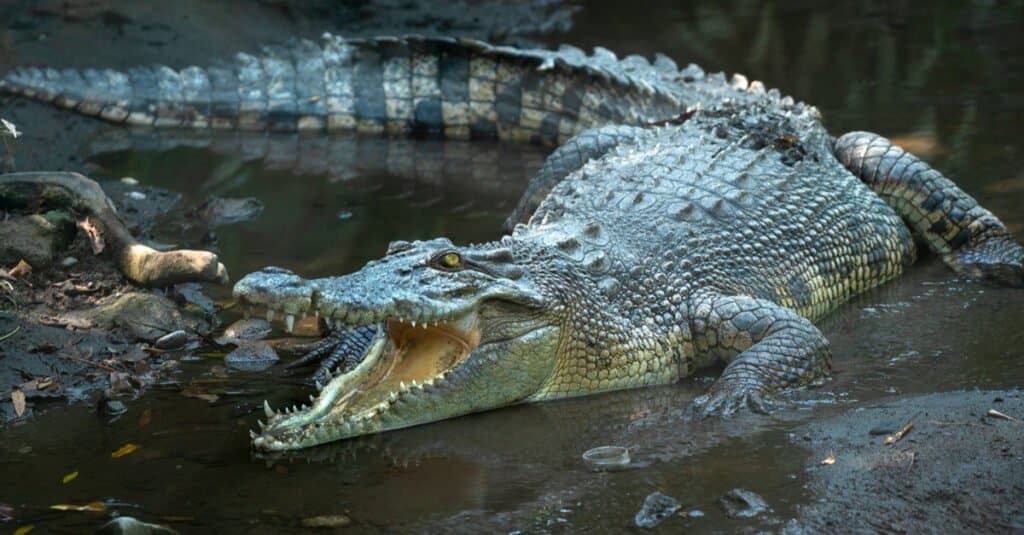
Saltwater crocodile’s tails are solid muscle.
©Pius Rino Pungkiawan/Shutterstock.com
The crocodile gives a big sweep of its tail and arches its back, generating enough thrust to lift it out of the water. Some of them can reach heights of 6.5 feet. All crocodilian species can jump, but some are better than others. Saltwater crocodiles are widely regarded as the best jumpers among crocodilian species, while alligators are generally less adept at vertical leaps. In captivity, especially in wildlife parks along the Adelaide River and Mary River, crocodile jumping has become a tourist attraction. This is what you can see in this clip.
Jumping to Survive
Jumping is not something that crocs do merely to amuse tourists. There are sound biological reasons for the development of this skill, such as allowing them to ambush prey that would ordinarily be out of reach. Birds and small mammals resting in branches overhanging the water are obvious targets.
Crocs will also jump as part of a territorial display. This happens most often during the mating season when male crocs display dominance and territorial behaviors to ward off rivals and attract the ladies! A female croc will choose the mate she thinks is fittest to be the father of her offspring.
Leaping can also be a way to flee danger. Juvenile crocs, in particular, will leap out of the water to escape larger predators, including other crocodiles!