
Quick Take
- These beetles produce a secret chemical weapon to fight off the microbes racing to claim the same corpse, and this weapon comes from a surprisingly unlikely source. Discover the chemical weapon →
- A beetle can smell death from two miles away, yet it remains picky about which corpse it bothers with. See how they find corpses →
- Winning the carcass is just the beginning. What the beetles do next is equal parts engineering and parenting. Explore the burial process →
- Despite fierce battles over every corpse, there's one condition that makes these solitary competitors willing to share. See when rivals cooperate →
Meet the common sexton beetle: a clever arthropod that uses dead bodies to raise its young. This is a complicated procedure that requires keen senses, chemical synthesis, and brute strength! Let’s enter the fascinating world of the common sexton beetle.
Common Sexton Beetles – the Basics
The common sexton beetle, also called the ‘burying beetle’ (Nicrophorus vespilloides) has a Holarctic distribution. This means that its range spans northern Eurasia and North America broadly. Other burying beetles are found in the northeastern United States.
They live in many different habitats, including grassland, heathland, moorland, and woodlands. They can also be found near humans on farmland and in gardens and towns.
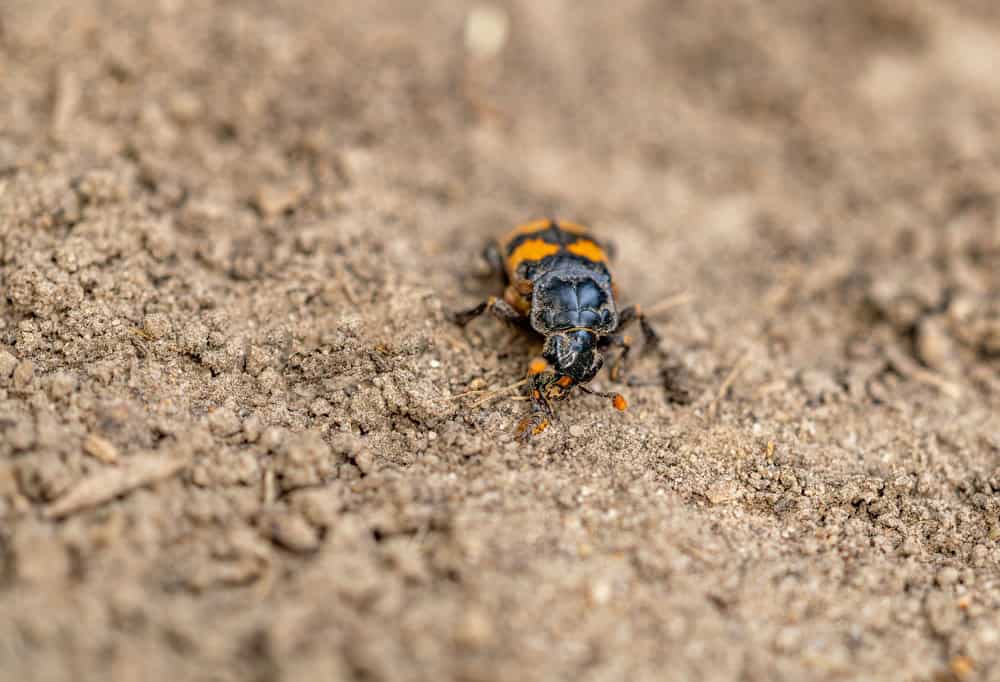
Sexton beetles are quite chunky!
©Oksana Kulpina/Shutterstock.com
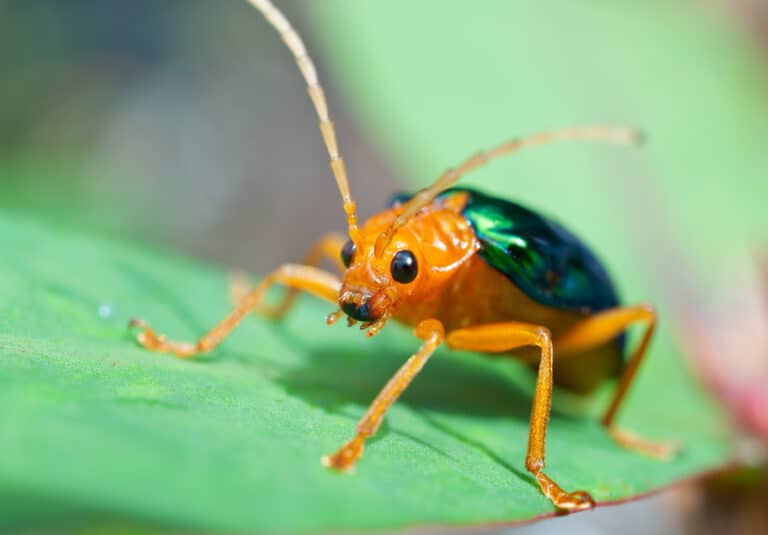
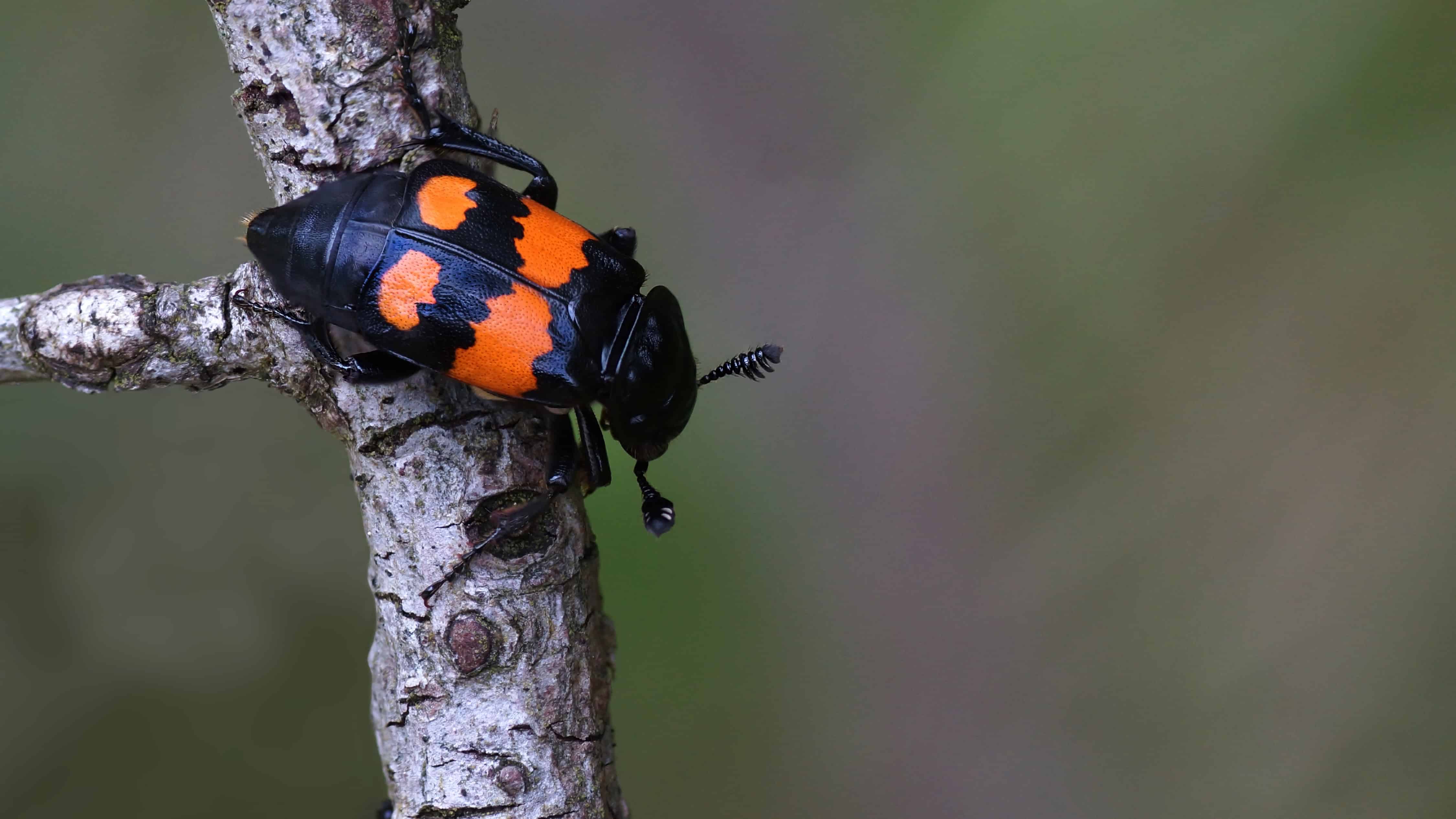
Sexton beetles are a chunky insect species with a flattened, squarish body. They usually grow to around ¾ inch in length (but some are over an inch long) and have a distinctive, bright black-and-orange pattern on their wing cases. Several species of beetle in the Nicrophorus genus look remarkably similar. It’s unlikely that you’ll see one of these beetles because they spend much of their lives underground. When they do emerge, it is usually at dusk.
They get their name from the sexton of the church, which is the person charged with looking after the graveyard. These guys are often called the undertaker beetle because of their fascinating love of corpses!
Carrion as a Resource
A dead mouse or a rotting bird carcass may seem gross to humans, but in nature it is a valuable resource. Carrion is the scientific term for the flesh of dead or decaying animal matter, and it is packed with nutrients. What’s more, those nutrients are readily available since a dead animal won’t put up a fight.
A lot of animals use carrion as a food source. Vultures and hyenas are perhaps the most famous. In many ecosystems, more energy passes between organisms through carrion than through predation.
However, the animals that want to access the carrion need to be quick because they are in a race with microorganisms. These tiny creatures rapidly colonize and decompose dead animals, making the nutrients unavailable to other creatures. Some of these microbes are pathogenic to scavengers, and others emit unpleasant metabolites that put scavengers off. Insects that want to use carcasses as a resource need a way to overcome this problem, and that is exactly what the common sexton beetle has!
How Do Common Sexton Beetles Locate Carrion?
These beetles can detect decomposing corpses from up to two miles away if the wind is in the right direction. They do this using their highly sensitive antennae. These guys are fussy and are not attracted to just any old corpse. They can discern the exact profile of volatile compounds given off by a fresh corpse, and that is what they are looking for.
If lots of beetles arrive at the carcass at the same time, a fight breaks out! The confrontation is a male-on-male and female-on-female affair. Eventually, just one pair will be victorious, and the carcass is theirs. Now the hard work begins.
Preparing an Edible Nest
The beetles essentially turn the corpse into an edible nest for their offspring. They are very strong for their size and can drag the body to soft ground. Here, they tear off any fur or feathers, before spraying the remains with an antimicrobial fluid that they produce from their mouth and anus. They roll the whole thing into a ball and bury it under the ground.
Sexton beetles can drag and bury small carcasses.
©Volodymyr Nikitenko/Shutterstock.com
While they are preparing the nest, they also repeatedly mate. The female then lays her eggs in the soft soil surrounding the carcass-nest. As well as feeding on the flesh, the parents feed the hatching larvae regurgitated meat. Eventually, the larvae are strong enough to wriggle away to a quiet place where they pupate for around three weeks. After this, they emerge as adults and the whole process can start again.
The Scientific Significance of Sexton Beetles
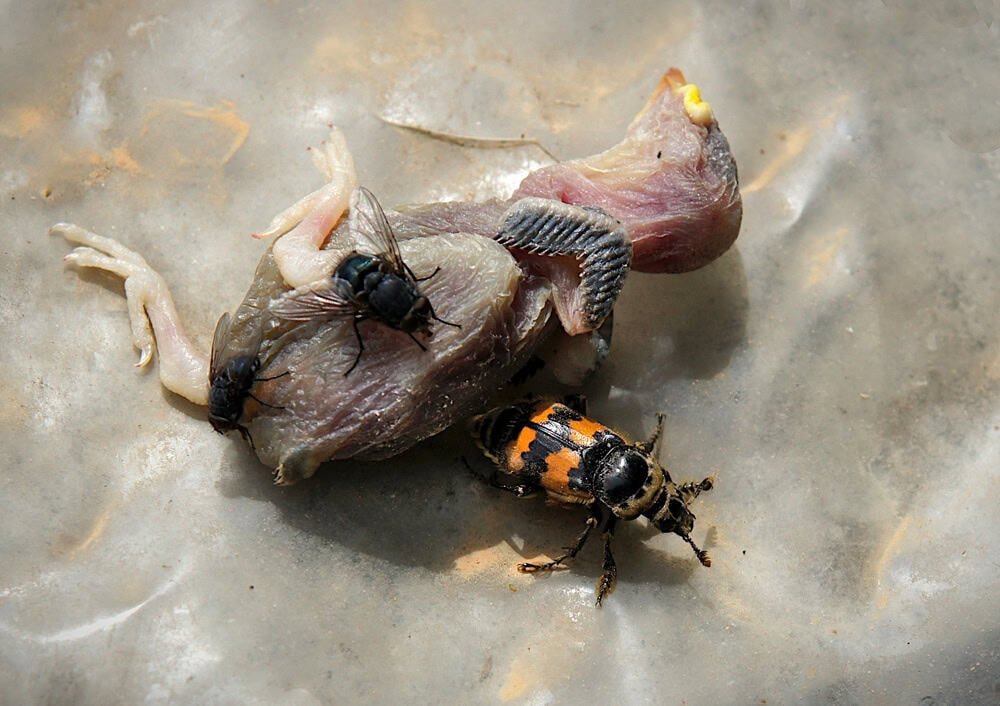
There are a few fascinating aspects regarding how these beetles use carrion. Firstly, because there is a lot of competition for fresh carcasses, the beetles have to compete with other carrion specialists such as blow flies, Silphine beetles, and microbes. Sexton beetles tend to focus on small carrion, burying it and using antimicrobial measures. Studies have shown that beetles who try to use old, decomposing carcasses with high bacterial loads have smaller broods or may even experience brood failure.
However, that does not mean that the carcass is sterile. On the contrary, the beetles carefully cultivate populations of bacteria and fungi which are beneficial for the developing larvae. They also stand guard to fend off other unwelcome arthropod intrusions.
A final fascinating feature of Nicrophorus vespilloides parental care is how variable it can be. This has made it a focus for behavioral ecology and evolutionary biology research. For example, if the parents die, the larvae can often continue feeding on the nest and may still survive. Some pairs mate away from carrion, and the female can store the sperm. When she finds a suitable carcass, she prepares it by herself and uses the stored sperm to fertilize her eggs before laying them. Finally, despite the high competition for carrion, you may occasionally see multiple pairs sharing and breeding on a single, larger carcass.