Quick Take
- African lungfish enter a state of estivation to survive the hot and dry months.
- While this state may only last a few months, it can last for up to 3 or 4 years in extreme conditions.
- Once reintroduced to water, they resume normal activity.
Have you ever wondered how fish survive throughout different seasons? Unlike mammals, which store food and have plenty of fur to keep them warm in winter, fish have their own methods of coping during diverse weather events. One extreme example is the African lungfish, which can survive for months at a time outside of water. This Instagram post by @scienceexplored features a clip from a documentary; the video shows a lungfish being removed from its dried mud home. Read here to learn more.
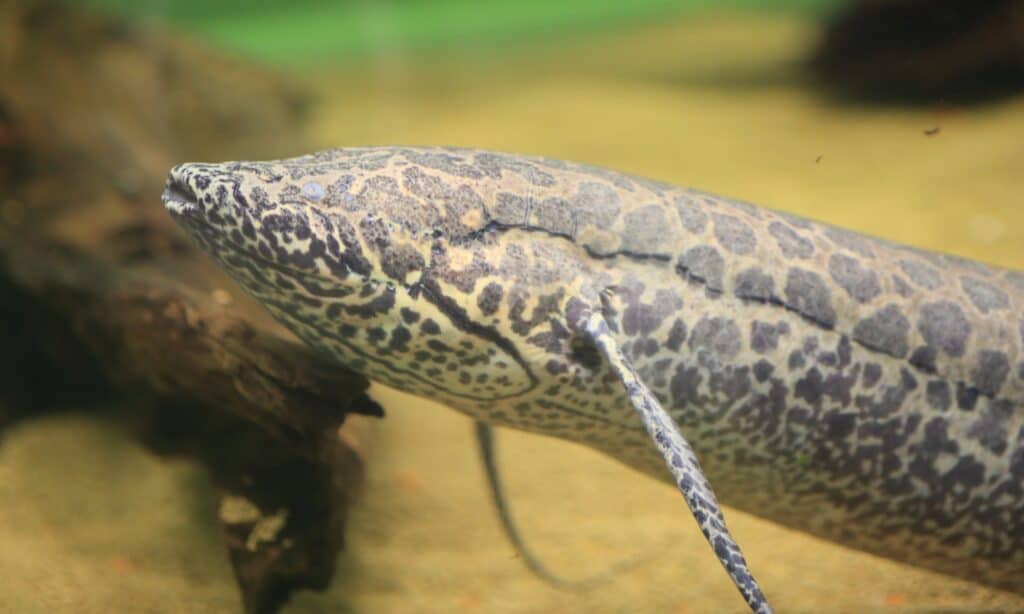
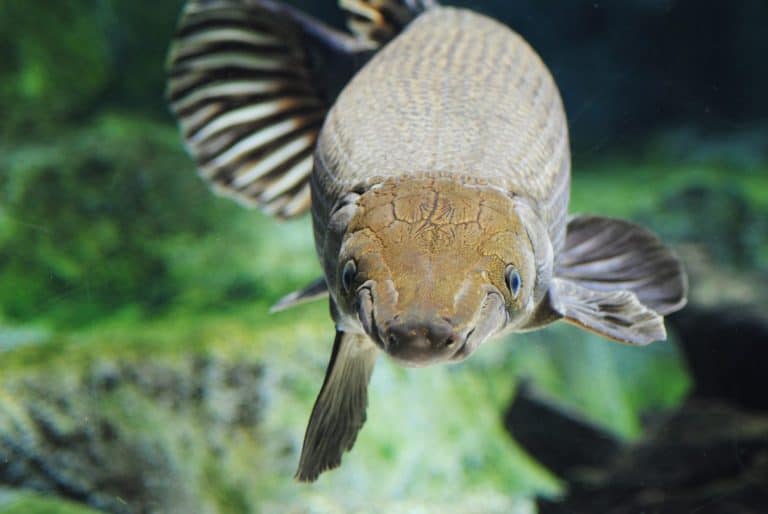
African Lungfish (Protopterus aethiopicus) from an African lake. Lungfish were present in the Jurassic period and are still around today.
©iStock.com/feathercollector
African Lungfish
African lungfish are a group of freshwater fish found in Africa. Often referred to as “living fossils,” these species have changed very little over millions of years. They inhabit swamps and floodplains throughout sub-Saharan Africa. In these environments, it is common for the water to dry up during the dry season, which is why they have evolved to adapt to harsh conditions. African lungfish are eel-like in appearance and are smooth and slimy. What makes them incredible is their remarkable adaptability outside of water, which helps them “hibernate.”
Do They Even Hibernate
During the dry season, African lungfish rely on their unique physiology to prepare for the harsh months. Rather than try to escape to other bodies of water, they wait out the dry period. As the water begins to disappear, they dig themselves into the soft mud to create a chamber of sorts. When they are encased in mud, they secrete a mucus around their bodies that hardens into a shell and prevents the lungfish from drying out. Unlike most fish, which use gills, lungfish have both gills and lungs to breathe, hence the name. These functional lungs allow them to breathe through a small tube that connects to the surface. Once they are in this comfortable state, they enter estivation.
Estivation is similar to hibernation, but on the opposite end of the thermometer. It is a state of dormancy during hot and dry conditions. Lungfish survive by dropping their metabolism, fasting, and living off their stored energy. While the length of time a fish stays in estivation depends on the species, African lungfish can estivate from a few months up to 3 or 4 years at a time. While “hibernating” lungfish may look dead at first glance, when they are introduced back to water, they appear to come back to life. As the fish rehydrate, their metabolism speeds up and they resume normal life.