
Quick Take
- 40,000-year-old RNA from permafrost-preserved tissue was recovered from a mammoth specimen known as Yuka.
- Molecular evidence from Yuka revealed a correction to the original assumption about Yuka’s sex, revealing the specimen was male rather than female as previously thought based on appearance.
- Traditional biological models incorrectly assumed RNA was too unstable to persist beyond modern lab environments, which is what made the discovery so meaningful.
- Analyzing microRNAs became necessary to determine actual tissue regulation methods for future trait modeling efforts, should mammoths ever be cloned.
Ancient DNA has been pulled from a permafrost-preserved woolly mammoth found in Siberia, and scientists are thrilled. They recovered and sequenced RNA, a fragile molecule that many biologists assumed would never survive such conditions or such a long period of time.
Using mammoth tissue dating back roughly 39,000–40,000 years from a specimen affectionately named Yuka, researchers recovered what appears to be the oldest RNA ever sequenced. How significant is this discovery, and what might it mean for the future of ancient DNA research and for the mammoth species in general?
This team’s results offer a rare look at which genes were active in mammoth muscle tissue near the end of its life, an insight that goes beyond what DNA can tell us. Here’s what the recovered RNA revealed about mammoths, and what RNA may be able to tell us about other species, both extinct and living.
What RNA Tells Us Compared to DNA
DNA differs from RNA in many ways; DNA is the foundation of our genes and remains unchanged over time, while RNA reflects which genes are actively being used by cells at any given moment. Because RNA shows which genes were active, it can provide significant insights into the biology of ancient species.

RNA differs from DNA in many key ways, which is why this discovery was so scientifically valuable.
©Natali _ Mis/Shutterstock.com
The research team notes that DNA sequencing alone can’t directly reveal gene expression dynamics, which are encoded in RNA. That’s why this discovery made such an important splash in the scientific world. A helpful way to understand the difference between the two is:
- DNA can tell you what traits were possible while the animal was living.
- RNA can help identify what a tissue was actively running, such as metabolism, muscle activity, stress pathways, and more, at a particular time.
Why Recovering Ancient RNA Was Considered Nearly Impossible
The reason scientists avoided studying RNA in ancient species is that it breaks down quickly in most conditions. Even in modern lab work, it’s famously easy to degrade if you mishandle an RNA sample. That’s why this discovery is such a big deal: it shows RNA can persist far longer than expected if preservation conditions are unusually stable, such as Ice Age conditions.
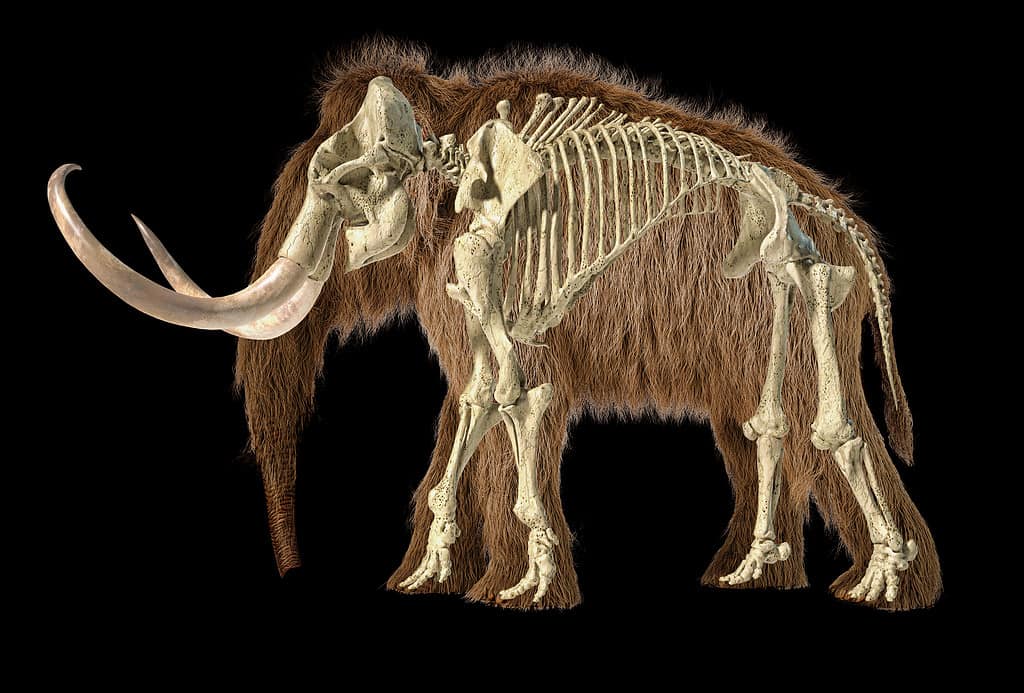
RNA was preserved by the permafrost conditions of this Ice Age-era creature.
©leonello/iStock via Getty Images
The permafrost essentially acted like a long-term freezer, creating the rare conditions necessary for RNA to survive for this length of time. The result challenged the long-standing assumption that RNA is simply too unstable to recover from species long passed. In addition, the team evaluated multiple mammoth specimens in their attempt to recover RNA. Only a subset of the samples yielded usable RNA, highlighting how exceptional the preservation conditions must be.
What Does the RNA Reveal About Mammoth Biology?
One of the most intriguing findings from Yuka’s RNA involves microRNAs, which are small noncoding RNA molecules that help regulate gene expression. According to researchers involved in the study, these microRNAs were among the most exciting results, as they offered direct clues about a mammoth’s regulation methods and ways of living, not just raw genetic content.

Upon researching the uncovered RNA, the mammoth known as Yuka was actually determined to be a male mammoth rather than a female.
Another detail that caught attention was the molecular evidence indicating that Yuka was actually male, contradicting earlier assumptions based on the mammoth’s appearance alone. It’s an easy enough mistake to make, as both male and female mammoths have tusks. However, the fact that RNA can reveal this information is highly significant for scientists studying these and other ancient animals. It’s fascinating that molecular methods can correct visual misinterpretations of preserved remains, leading researchers to question what else may have been mislabeled.
What This Teaches Us About Ice Age Ecosystems
RNA won’t reconstruct a whole ecosystem on its own, but it can help us identify how animals interacted in their ecosystems. This is especially valuable considering the size and importance of mammoths in their ecosystems during the time period they lived. Mammoths helped shape and influence the environments they inhabited, much like elephants do in savannas and other ecosystems today.
Additionally, understanding mammoth physiology and cold adaptation helps scientists better understand how Ice Age grassland ecosystems functioned and how megafauna influenced them. Because this time period is so ancient, it is difficult to study, but this RNA discovery suggests that much more can be uncovered.
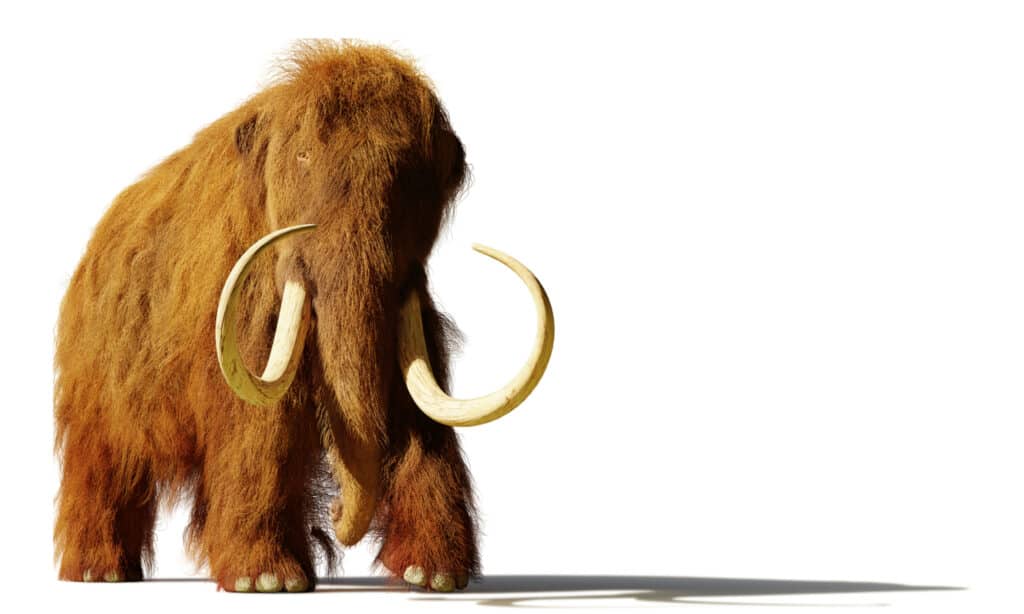
Given this discovery, researchers are eager to explore other Ice Age specimens, as their RNA may also be preserved and full of additional clues about the ecosystem.
©Dotted Yeti/Shutterstock.com
This work also opens up a new frontier; if ancient RNA can survive under permafrost conditions, researchers may be able to recover gene expression data from other extinct animals in similar environments, expanding research beyond DNA to include gene regulation and cellular function.
What Does This Mean in Terms of De-Extinction?
There are companies and other researchers currently attempting to bring back the woolly mammoth. Does this new RNA discovery help with that endeavor? Perhaps, but ultimately, this research is better understood as a new layer of biological context and won’t necessarily help in mammoth de-extinction efforts. However, here’s how it might prove useful.
If de-extinction efforts aim to recreate mammoth traits, RNA can help identify not just which genes matter, but how those genes were regulated in specific tissues. Trait modeling could be accomplished much more easily, but it does not address the core challenges of gestation, development, welfare, and ecological fit if a mammoth were actually brought back into our modern era.

Scientists and research companies are attempting to bring back the woolly mammoth, but it’s important to question the effects this might have on our modern ecosystems.
©iStock.com/leonello
Plus, conservation science may not agree with these efforts at all. The IUCN Species Survival Commission’s guiding principles on creating proxies of extinct species argue that de-extinction may actually create proxies or ecological replacements, potentially causing more harm than good in our existing ecosystems. This is why proposals should be evaluated based on their conservation benefits rather than the spectacle of seeing a mammoth walk the earth again.
Mammoth RNA May Lead to More Valuable Research
Ultimately, this ancient RNA discovery allows scientists to study extinct animals in a way that is much more focused on physiology rather than just genealogy. With Yuka, researchers recovered signals related to tissue function and gene regulation, demonstrating that, under the right conditions, biological information can be preserved for tens of thousands of years.

This discovery is just the first step in many more scientific breakthroughs to come using RNA rather than just DNA.
©Billion Photos/Shutterstock.com
This is just one of the many breakthroughs that keep mammoths in the public imagination. While a comeback of this remarkable species is not guaranteed, there is still much to learn from specimens once thought incapable of providing valuable scientific data.