
Quick Take
- An octopus has no lungs, no legs, and no bones, and yet it hunts on dry land. The reason it doesn't die in the process is stranger than you'd expect. See it cross land →
- A crab hiding in a separate tide pool isn't as safe from this predator as it thinks. See how it hunts →
- Scientists tested how octopuses cope outside water, and the 2024 findings complicated what we thought we knew about which species can pull it off. Explore the 2024 findings →
- Despite its name, the algae octopus has nothing to do with algae. Its real trick is far more useful for a predator. Discover its real trick →
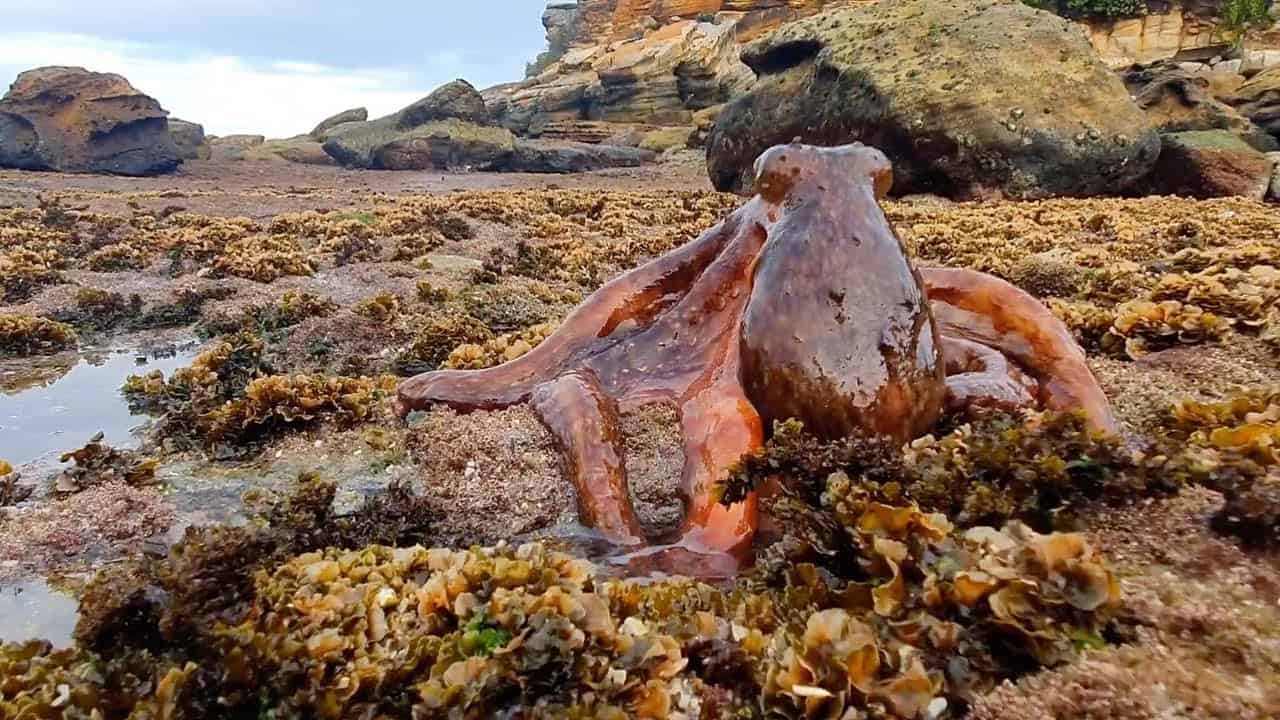
Octopuses are supposed to live underwater, but apparently nobody told the algae octopus. When the tide goes out along parts of Australia’s northern coastline, this remarkable little predator does something most people wouldn’t expect. It crawls right out of the water, using its eight arms to move across exposed rocks in search of its next meal.
Known scientifically as Abdopus aculeatus, the algae octopus has an unusual advantage when hunting in shallow coastal waters. Instead of waiting for the tide to return, it can make short trips between isolated pools, searching for crabs and other prey. And as the video above shows, watching an octopus move across land is quite a sight. But how does an animal that breathes underwater manage to pull this off?
Watch an Octopus Crawl Across Land in Search of Food
The video shows just how unusual the algae octopus’s hunting behavior can be. As the tide retreats, pools of seawater become separated by stretches of exposed rock. For many marine animals, that means waiting until the water returns before moving somewhere else. But this octopus has another option.
Using the hundreds of suckers lining its arms, the octopus pulls itself across the rocky surface, moving from one pool to another. It’s a remarkable display of coordination for an animal without bones or legs. The octopus is searching for food, particularly crabs hiding among the rocks and shallow pools. If one spot doesn’t offer anything promising, it can move on to another.
Of course, this doesn’t mean the algae octopus can spend its entire life on land. These are temporary excursions, and the animal still depends on the water for survival. What makes the behavior interesting is how it takes advantage of an environment where the shoreline changes dramatically with every tide.
Where Does the Algae Octopus Live?

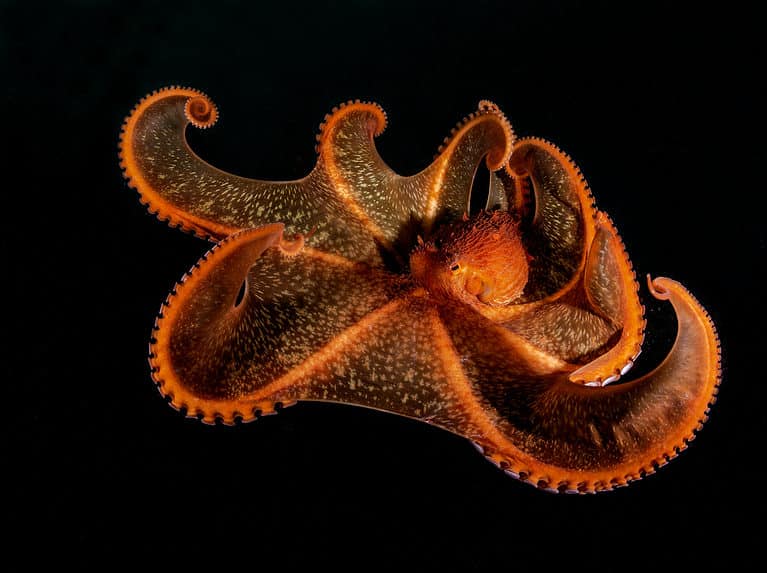
Octopuses normally breathe underwater, although some species can briefly move across exposed shoreline between tide pools.
©Damsea/Shutterstock.com
The algae octopus is found in tropical parts of the western Pacific, including northern Australia, Indonesia, and the Philippines. It typically inhabits shallow coastal environments such as reef flats, seagrass beds, sandy bottoms, and tide pools. These areas can look completely different depending on the tide, with stretches of shoreline that are submerged at high tide becoming exposed when the water retreats.
That’s an environment where being able to move between pools can come in handy. The algae octopus spends much of its time in shallow water, often sheltering in small dens among rocks, sand, and reef structures. Individuals may also arrange pebbles, shells, or other loose material around their hiding places.
Another advantage is its remarkable camouflage. Despite its name, the algae octopus isn’t covered in algae. Instead, its mottled coloration and ability to change its appearance help it blend into seagrass, rocks, and the surrounding seafloor. For a predator that relies on getting close to unsuspecting prey, staying hidden is a pretty useful skill.
How Does the Algae Octopus Hunt for Food?
The algae octopus is an active hunter that feeds primarily on crustaceans, including crabs. Unlike predators that simply wait for something edible to swim past, this species actively explores its surroundings. It uses its sensitive arms and suckers to investigate rocks, crevices, and patches of seagrass where prey might be hiding.
When it discovers a potential meal, the octopus can spread its arms, pounce, and use its suckers to secure the animal before it escapes. It can also swim after moving prey. Like other octopuses, the algae octopus has a hard beak for biting and specialized mouthparts that help it feed on animals protected by shells or tough exoskeletons.
Underwater, octopuses can also move using jet propulsion, forcing water through a muscular tube called the siphon. However, jetting is not the algae octopus’s primary method of catching crabs. Research on this species describes a combination of crawling, probing, pouncing, and swimming, with jet propulsion often used to retreat quickly from potential threats.
Being able to cross exposed rocks gives the algae octopus another way to search for food when the tide is low. A crab tucked away in a neighboring pool might not be as safely separated from its predator as it appears.
Can an Octopus Really Survive Outside Water?
Here’s where things get especially interesting. Although the algae octopus can crawl onto land, it isn’t a land animal. Like other octopuses, it normally extracts dissolved oxygen from water using gills. It doesn’t have lungs, and spending too long outside water can be dangerous, particularly as its body and gills begin to dry out.
Scientists have documented short trips onto exposed shorelines in multiple octopus species. A 2024 study published in Marine Biology examined how common octopuses respond to brief periods outside water. The researchers found that these animals could tolerate short exposure under experimental conditions, potentially aided by physiological responses that help them cope with limited oxygen availability. However, those findings don’t necessarily mean every octopus species handles time outside water the same way.
For the algae octopus, the ability to make short journeys between tide pools is an advantage in a constantly changing habitat. It can explore new hunting grounds without waiting for the ocean to cover the rocks again. But it still needs to return to the water.
That’s what makes the footage so fascinating. This isn’t an octopus evolving into a land animal or learning how to breathe like a mammal. It’s an intelligent marine predator taking advantage of its surroundings in a way that seems almost impossible until you see it happen.