
Quick Take
- A group of stingrays has a name you'd never guess, and that name perfectly captures why thousands of them in one place feels so unsettling. Discover their eerie group name →
- These rays travel thousands of miles every year, but they're not actually heading anywhere specific. Their real goal is stranger than it sounds. Explore their migration motives →
- That intimidating tail-spine isn't the threat most swimmers assume it is. The actual danger depends entirely on what you do next. Understand the real sting risk →
- There's only one vantage point where the true scale of this migration becomes visible, and most people watching from shore will never see it. See the migration's true scale →
Whether in the ocean or in an aquarium, seeing stingrays in person is always an amazing experience. But have you ever seen an incredibly large group of them? This Instagram post from @abc7chicago shows a massive group of stingrays travelling off the coast of New York as part of their annual migration.
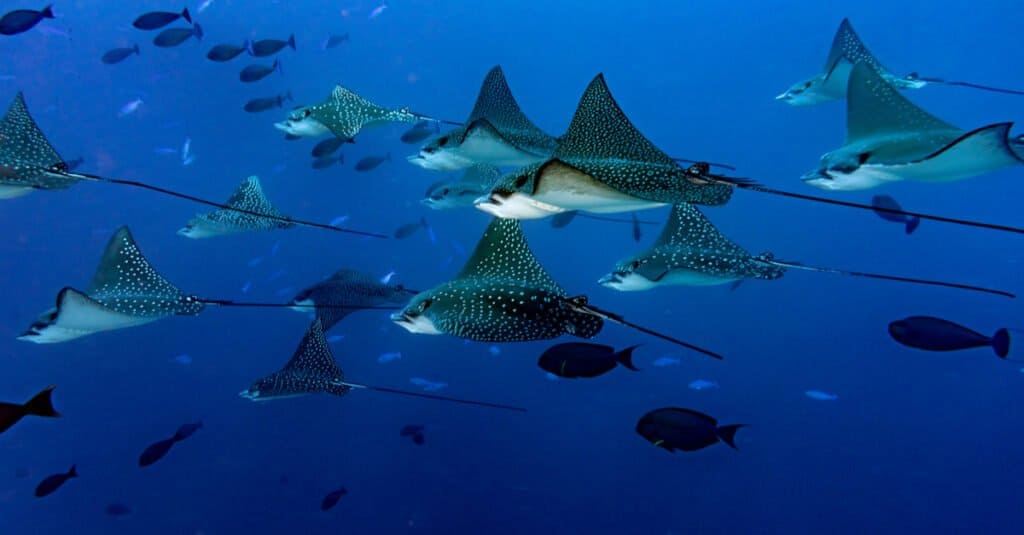
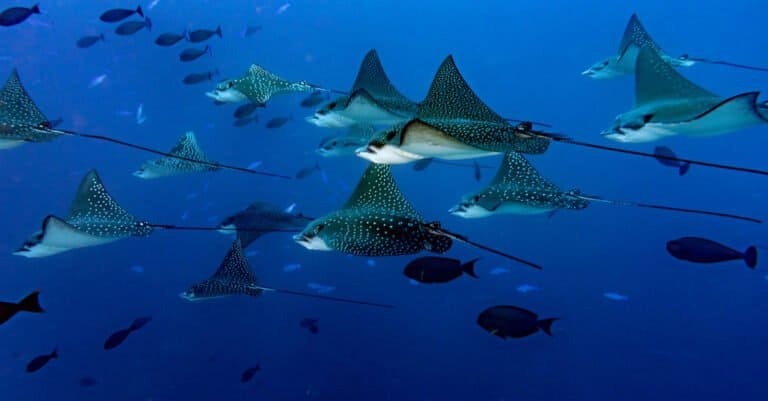
Most species of stingrays migrate every year, travelling hundreds or thousands of miles in schools called “fevers.”
©Andrea Izzotti/Shutterstock.com
Stingray Migration
The video above offers a striking look at the sheer size of a stingray migration. The footage shows the cownose ray travelling along the coast of Southampton, Long Island, near the surface of the ocean. Their journey is part of their seasonal migration, which is truly impressive. In the winter, they inhabit warmer waters in the Gulf of Mexico and the South Atlantic and begin moving north in the Spring. By the summer, they reach Long Island and begin the journey back south in the fall. Cownose rays have been observed traveling between Long Island and Florida.
Cownose rays are extremely social, especially during migration. Larger groups of rays are called “fevers,” and the video above is a striking look at the sheer size of one particular fever. These groups can contain hundreds to thousands of individuals, and drone videos really capture the sheer size of these fevers. Though intimidating, these animals almost never attack humans. They have a scary-looking tail-spine that can leave a painful sting; however, they only defend themselves against swimmers who bother them.