
Proving that nature will let nothing get in its way, a group of tiny catfish has been caught scaling a high waterfall in Brazil. The local Environmental Military Police first reported this exceptional sight, but scientists soon turned up to investigate the phenomenon thoroughly. They published their findings in a scientific paper in 2025, and you can see an example of the action for yourself in this YouTube clip. Let’s look at their findings in terms of what these little fish are, why they are going to such extraordinary lengths to get upstream, and the implications for river conservation efforts.
Thousands of Catfish Species
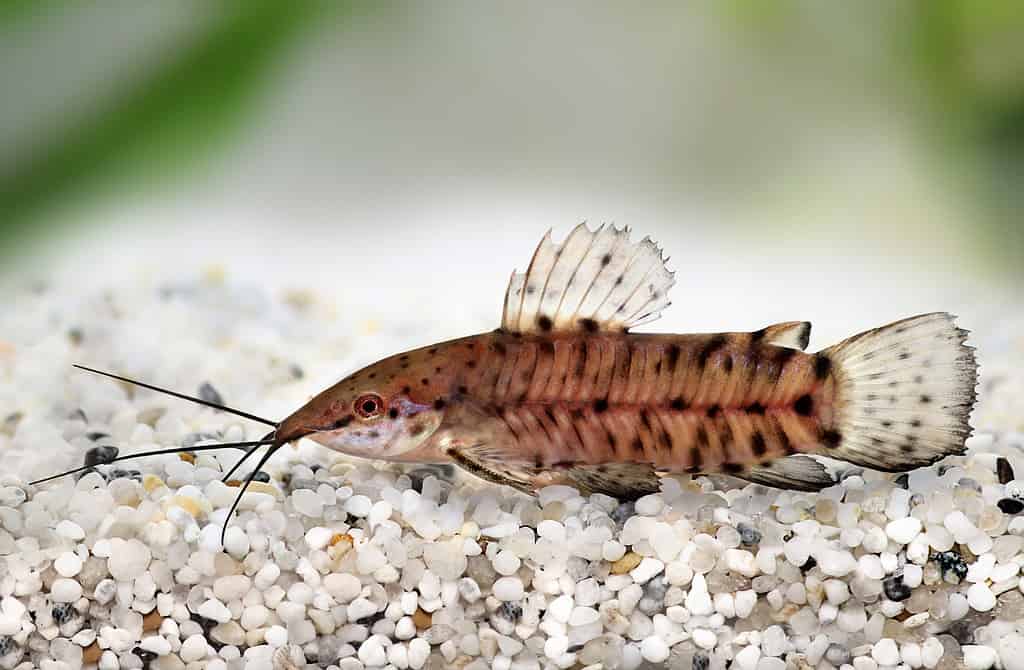
There are thousands of species of catfish.
©Mirko_Rosenau/ via Getty Images
Catfish are among the most abundant and adaptable freshwater fish on Earth. So, perhaps it is not surprising that they have been observed climbing up a waterfall. This is a diverse group of creatures, but they are characterized by their wide, fleshy lips and sausage-shaped bodies. They belong to between 34 and 44 families, and there are thousands of different species.
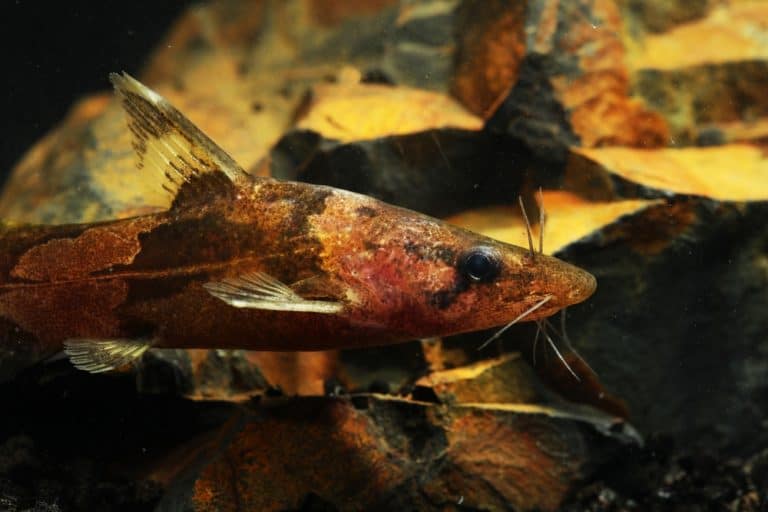
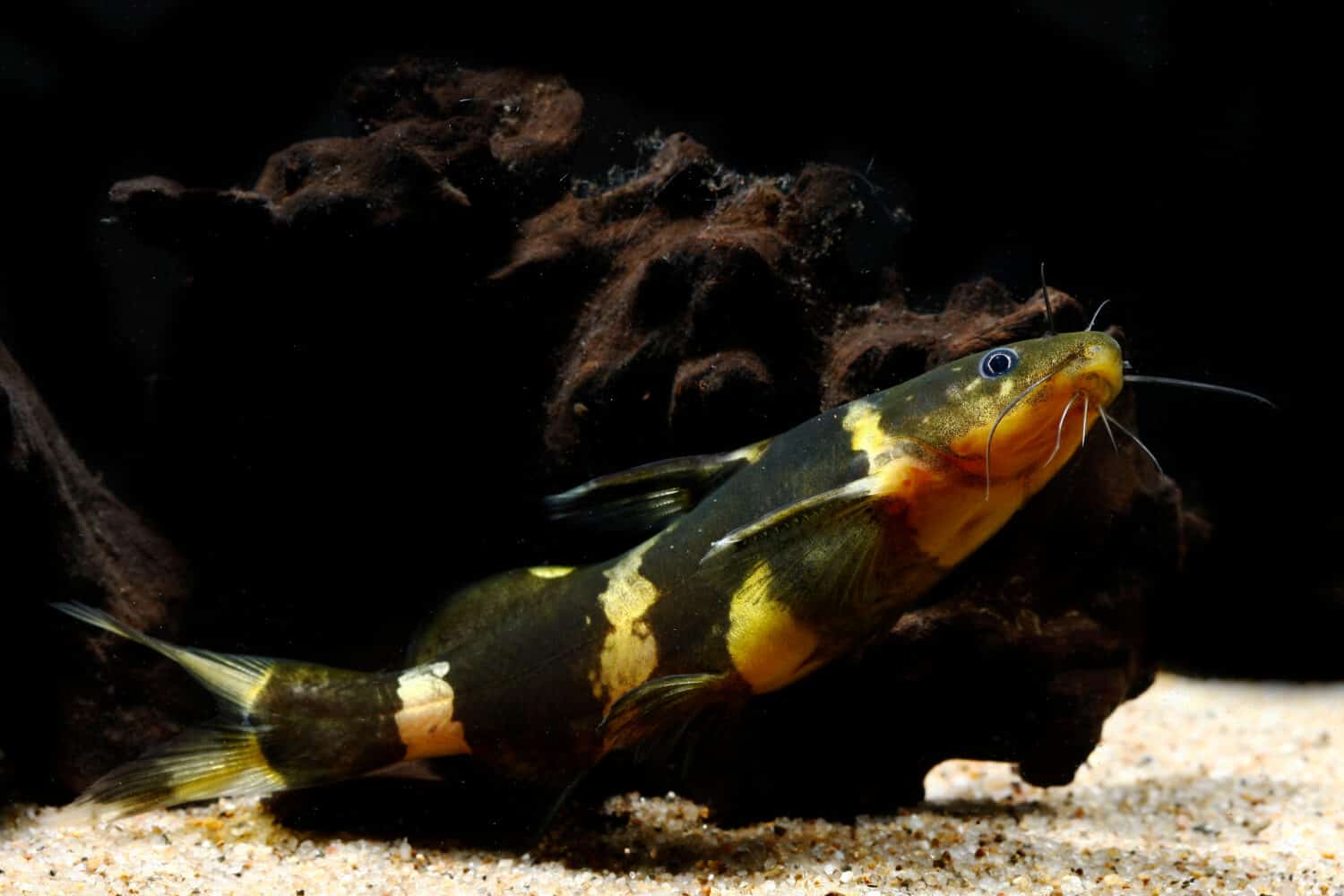
The creatures in this observational study belonged to the genus Rhyacoglanis, which includes the Pseudopimelodidae family, commonly known as bumblebee catfish or dwarf marble catfish. Their name comes from their coloration pattern, which features dark blotches against the light background of their body and fins. They are found in parts of the basins of the Amazon, Orinoco, and La Plata Rivers. The particular species spotted in this sighting was Rhyacoglanis paranensis.
Climbing Bumblebee Catfish
Currently, there is a lot about the biology of the bumblebee catfish that remains a mystery. However, we do know that they are relatively rare and that they are found in fast-flowing parts of rivers and streams with rocky floors. In terms of size, they reach a maximum of around 3.5 inches in length.
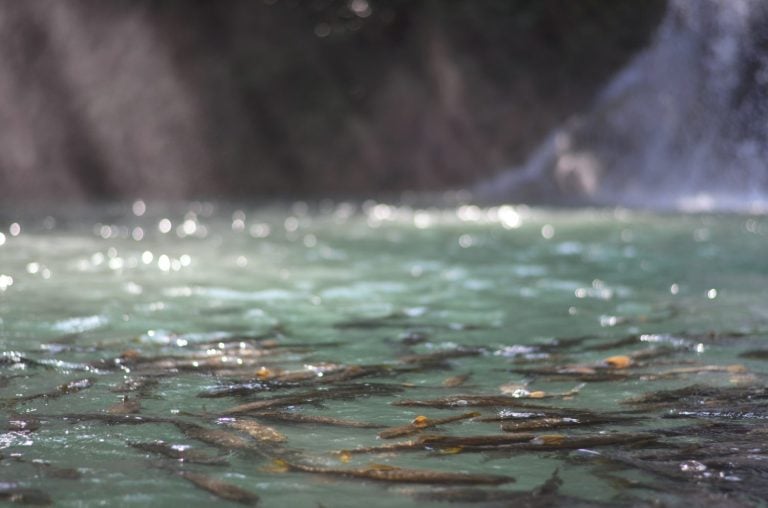
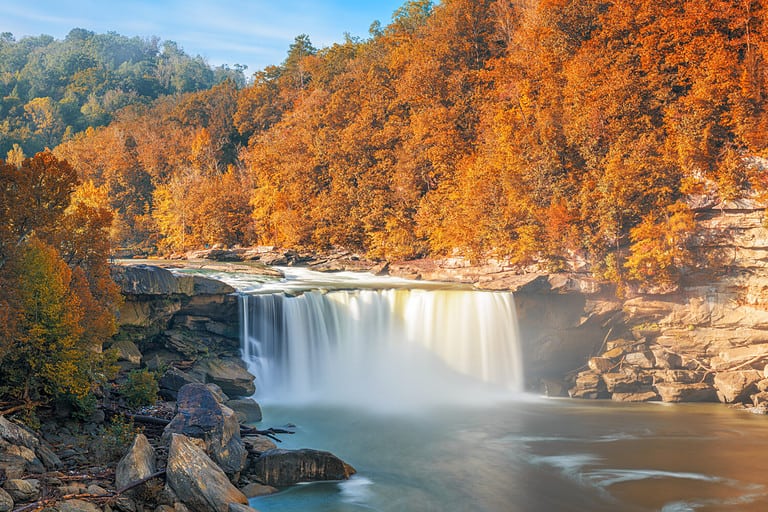
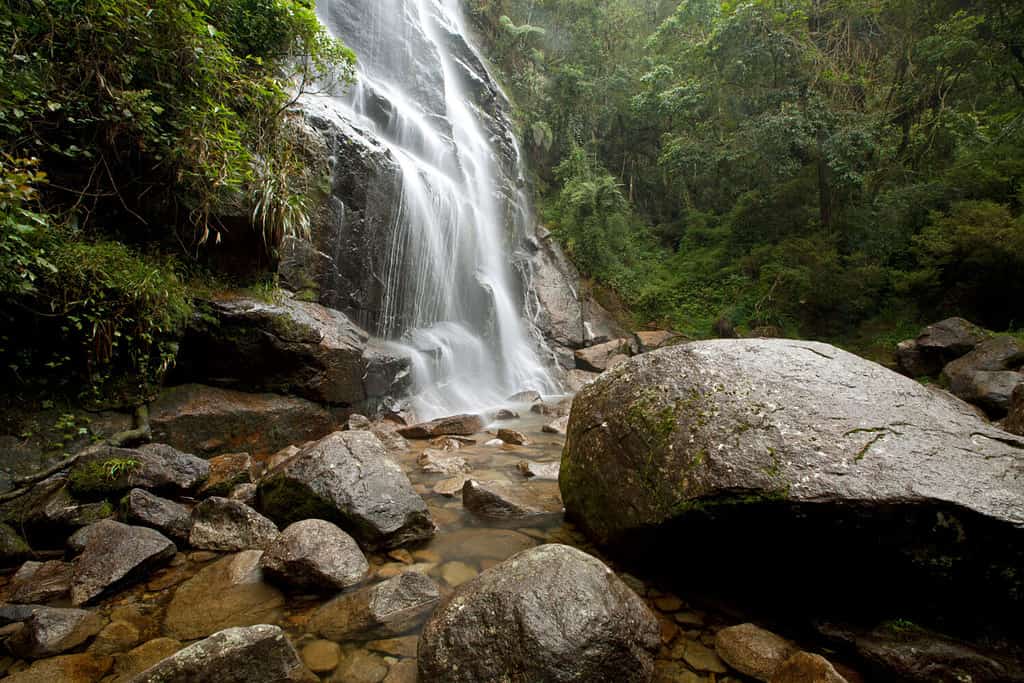
This particular sighting was made in a tributary of the Paraguay River basin in Brazil. The Mato Grosso do Sul State Environmental Police spotted an aggregation of these creatures climbing a waterfall! These creatures that are barely over three inches long were scaling rocks of between 3.2 and 13 feet in height! Using these remarkable climbing skills, thousands of them were gradually making their way upstream.
Study Observations
The observations in the research paper were made on two stretches of the river at the beginning of the rainy season after one of the driest periods ever recorded. The catfish were spotted in the margins of the Sossego waterfall and in the Diamantes waterfall.
During daylight, very few bumblebee catfish could be spotted at all. Those that were visible were lurking at the margins, below rocks, in shaded stretches of water. At around 6 pm, however, it all began to change! Thousands of little catfish emerged and could be seen in small pools, climbing vertical slopes in areas where there was just a trickle of water. Where the rocks were more horizontal, the aggregations were even larger. So large, in fact, that some catfish were clambering over each other.
Catfish Climbing Skills
Catfish have to scale waterfalls in Brazil to breed.
©Caio Pederneiras/Shutterstock.com
So, how can a creature that has only fins with no claws and no arms manage to climb up a sheer and wet rockface? Most of them climbed alone and did not rely on assistance from other catfish to reach their destination. Some were even able to cross the ‘ceilings’ of rock crevices, while others climbed manmade objects such as the researchers’ plastic buckets.
This species of catfish has their fins positioned on their undersurface, facing the ground. When they are climbing, both fins are kept wide open. They use lateral (side-to-side) movements and tail wriggling to drive their body forward on rocks. There also seems to be a small cavity created between their belly and the rock surface, formed by their fins. This may create negative pressure (suction) that helps them adhere to flat surfaces. This mechanism has been observed in other animals, including the pencil catfish. However, this is the first time it has been recorded in a bumblebee catfish.
Why Are the Catfish Climbing?
When specimens of the climbing catfish were examined, they were found to be mature males and females, with some immature males present. The presence of mature catfish together with the timing of the aggregation suggests that it was related to their breeding cycle. This is similar to the way in which salmon travel upstream for spawning. Additionally, their stomachs were empty, suggesting that they were conserving energy during the migration for reproduction.
What Does This Discovery Mean?
The migratory behavior of smaller fish species in Brazilian rivers is poorly understood. Because these events occur briefly and only under specific environmental conditions, they are rarely observed by scientists. This sighting highlights the role played by these small creatures in river ecosystems. It also underscores how delicate such migrations are and how easily they can be disrupted by human activities, such as river damming.