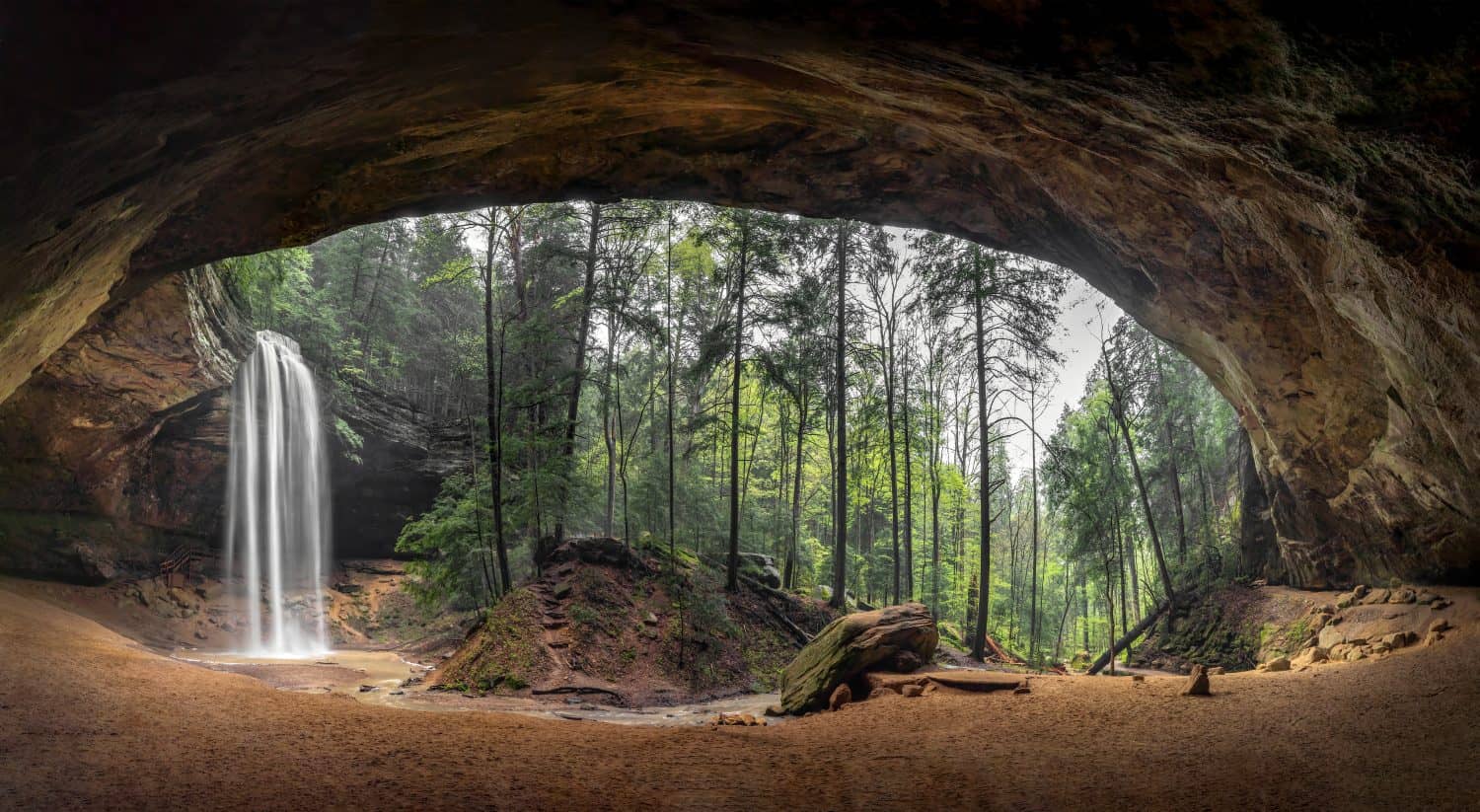

Hocking Hills State Park is a popular place to visit in every season. Located in southeast Ohio, U.S. News and World Report ranked Hocking Hills number one in their list of best places to visit in Ohio. The park is home to stunning rock formations, waterfalls, caves, hiking areas, campsites, and lakes. Visitors can enjoy hiking, birdwatching, swimming, kayaking, rock climbing, hunting, and fishing. A large number of animals live in the diverse habitats of the park, from the caves to the cliffs to the lake. Although we can’t cover them all, here is a list of some of the many animals you may encounter at Hocking Hills State Park.
Black Bears
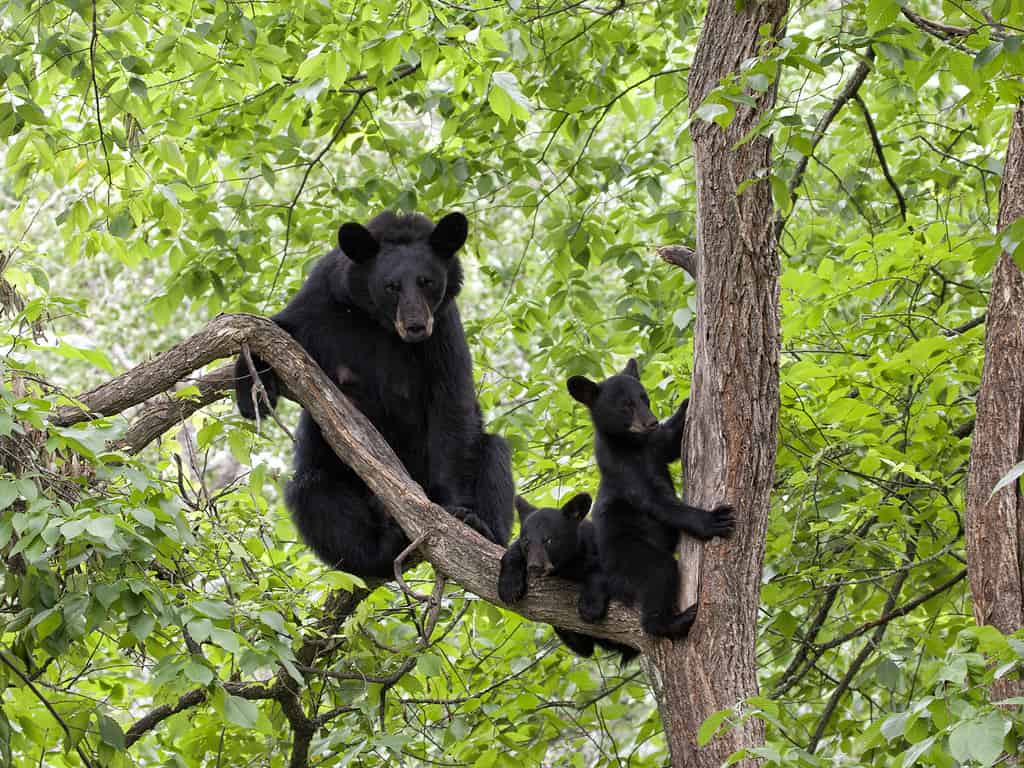
Black bear sightings are on the rise in Ohio.
©dssimages/iStock via Getty Images
Although rarely seen, it is possible to encounter a black bear (Ursus americanus) while in Hocking Hills State Park. Some sightings do occur along the trails. Black bears were once common in Ohio, but their numbers dwindled in the mid-1800s due to loss of habitat and hunting.
Bats
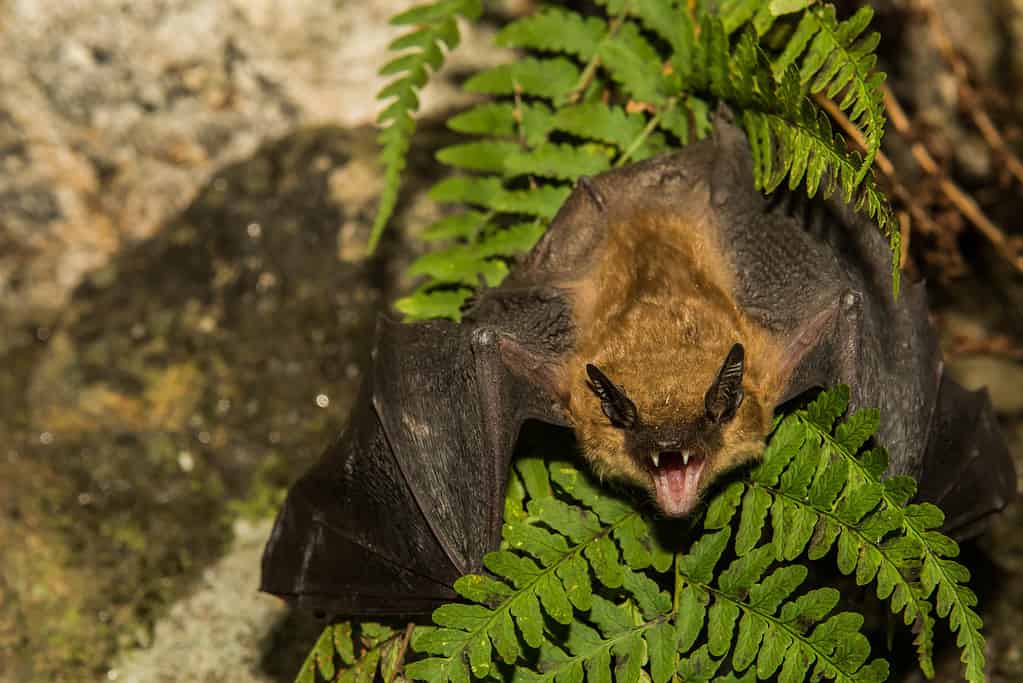
Bats, like the big brown bat, help to keep the insect population in check in Ohio.
©JasonOndreicka/iStock via Getty Images
According to Visit Ohio Today, there are 14 species of bats living in Ohio. Hocking Hills State Park is a haven for bats with its cave, cliff walls, and rock shelters. Most of the bats you will encounter in the park are small and brown, regardless of species. All bats in Ohio feed on insects and are nocturnal. Two of the most common species you may see in the park include the little brown bat (Myotis lucifugus) and the big brown bat (Eptesicus fuscus).
Bobcats
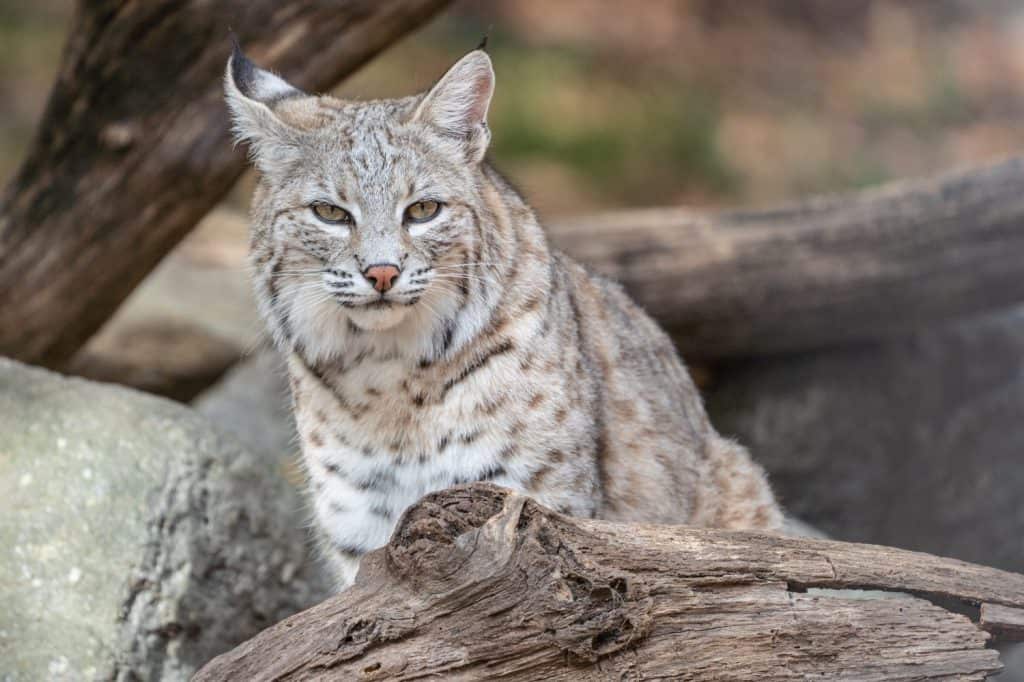
Bobcats were once eradicated from Ohio, but have moved back into the area in the past few decades.
©Amy Lutz/Shutterstock.com
Although it’s rare to see, the bobcat (Lynx rufus) is making a comeback in Ohio. Bobcats are the only wild cat species found in Ohio. They are a little bigger than a housecat, weighing anywhere from 9 to 40 pounds. Keep your eyes peeled for this elusive cat. They are shy and tend to dart away and hide in the trees when they spot people. They are also more active at night, making daytime sightings infrequent.
White-Tailed Deer
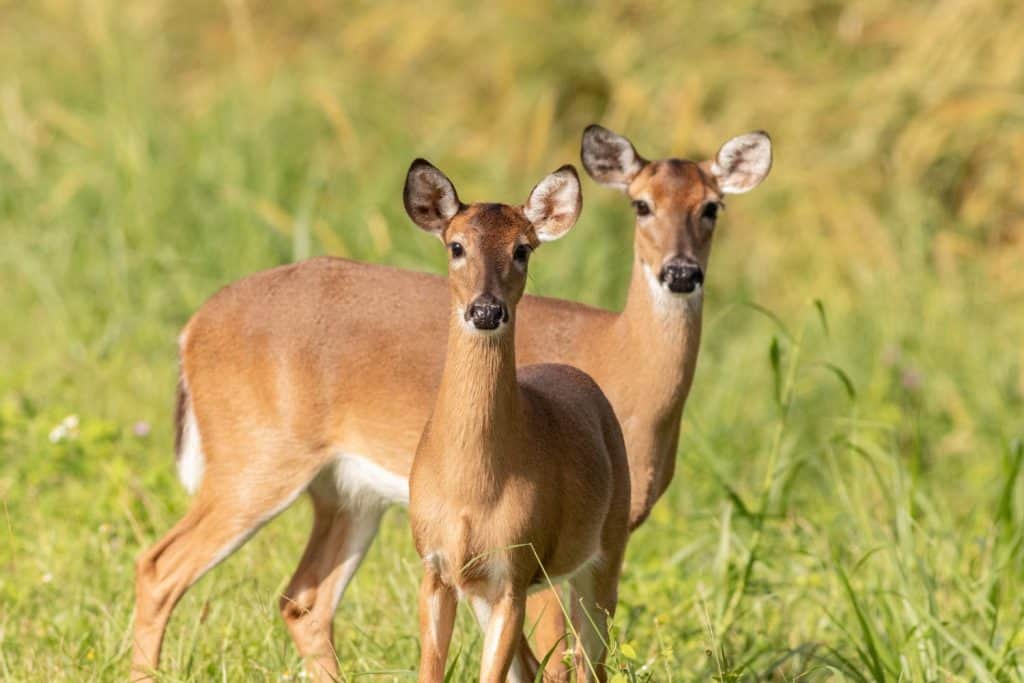
White-tailed deer grow a grayish winter coat, which helps them camouflage. In the summer, their coats are reddish brown.
©Omar F Martinez/Shutterstock.com
One of the most common animals you will see at Hocking Hills State Park is the white-tailed deer (Odocoileus virginianus). Hunting is allowed in season in designated areas of the park and in the Hocking State Forest. According to the Ohio Department of Natural Resources, you are most likely to see deer during dawn and dusk when they are the most active.
Foxes
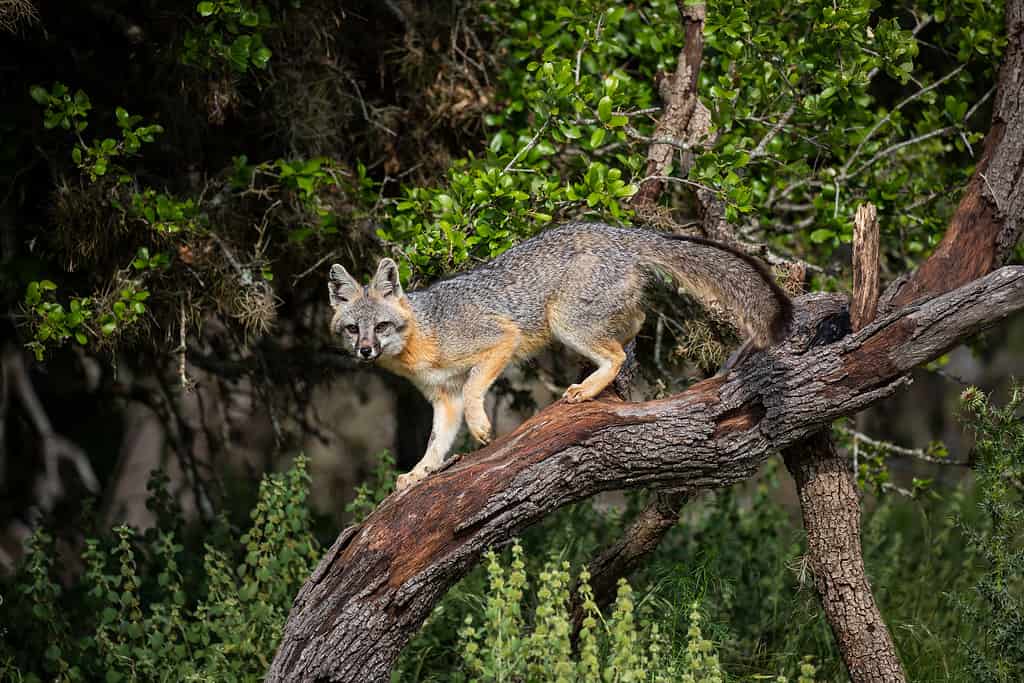
Gray foxes can be identified by the black stripe that runs down their tail.
©Danita Delimont/Shutterstock.com
Two species of foxes live in the forests and meadows of Hocking State Park: the gray fox (Urocyon cinereoargenteus) and the red fox (Vulpes vulpes). Visitors are much more likely to encounter a red fox than the shyer gray fox. However, both species are nocturnal and are more likely to be seen at night. One easy way to tell them apart is by their tails. Red foxes have a white tip on their tail, while gray fox tails have a dark or black stripe running down them.
Beavers
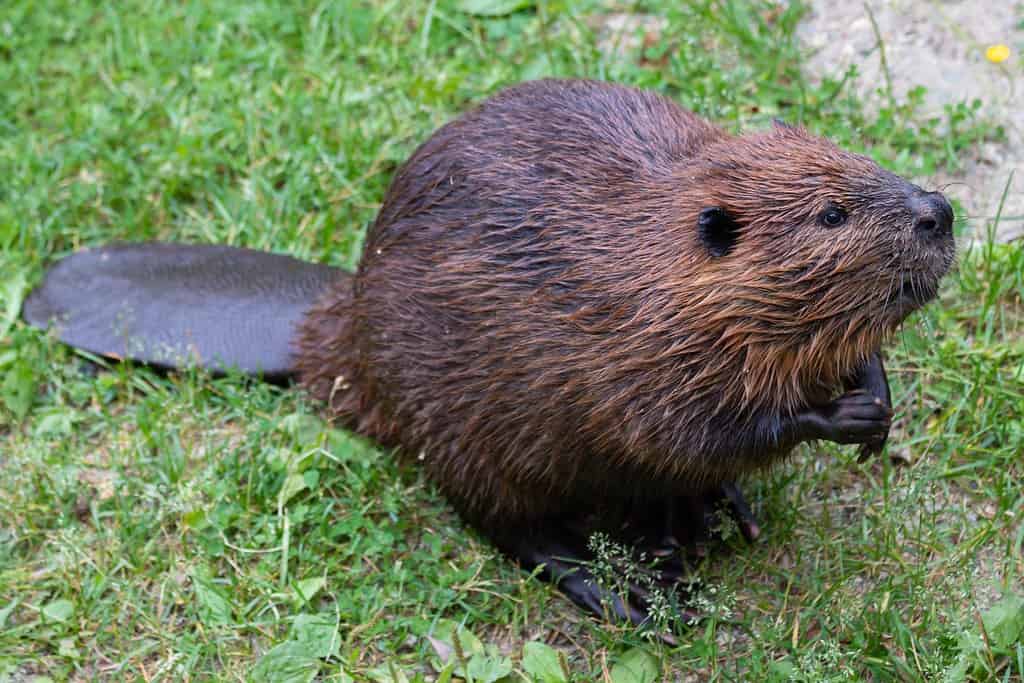
The American beaver is the largest rodent in North America and the second largest rodent in the world, behind capybaras.
©Ilkka Koivula/Shutterstock.com
Be sure to check the inlets around Rose Lake for signs of beaver activity, such as chewed trees, dams, and burrows. American beavers (Castor canadensis) are the largest rodents living in North America. They were once widespread across Ohio, but the fur trade decimated their populations in the state by the 1830s. However, beavers returned to Ohio waterways in the 1930s, and their population has been increasing ever since.
Wild Turkeys
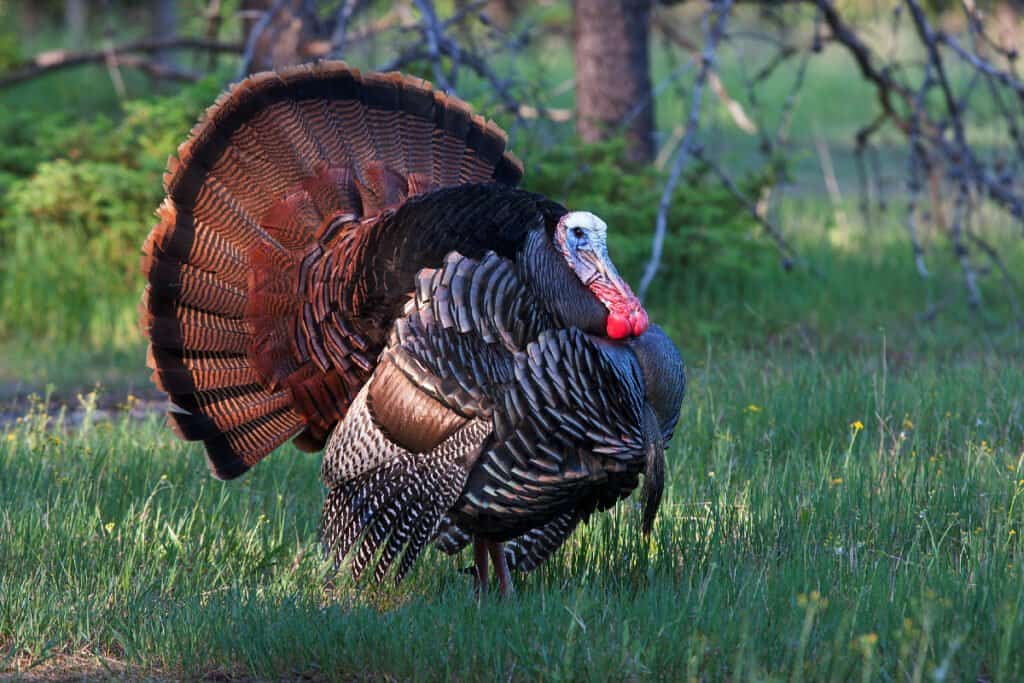
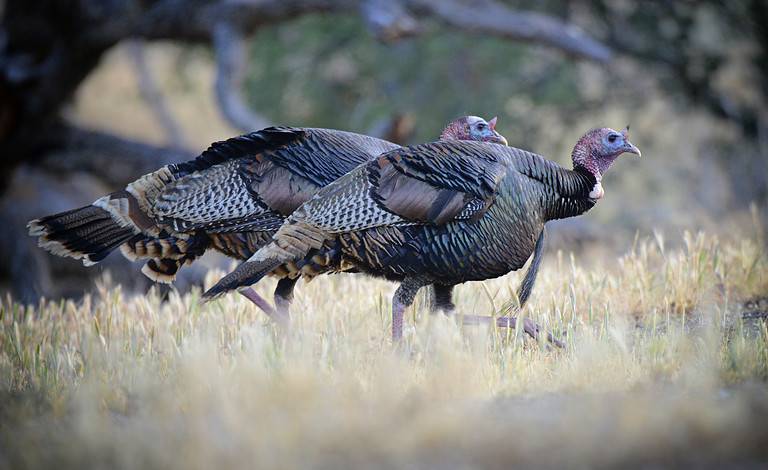
Wild turkeys are omnivores and eat a diet of insects, fruit, grasses, and other plants.
©Jim Cumming/Shutterstock.com
The best time to see wild turkeys (Meleagris gallopavo) in Hocking Hills State Park is on a spring morning when they are more active during their breeding season. Wild turkeys spend most of the day on the ground, but head to the trees to roost at night to stay safe from predators. Although they don’t look it, turkeys are fast. They can run 25 miles per hour and even fly in short bursts at speeds of up to 55 miles per hour.
Gray Ratsnakes
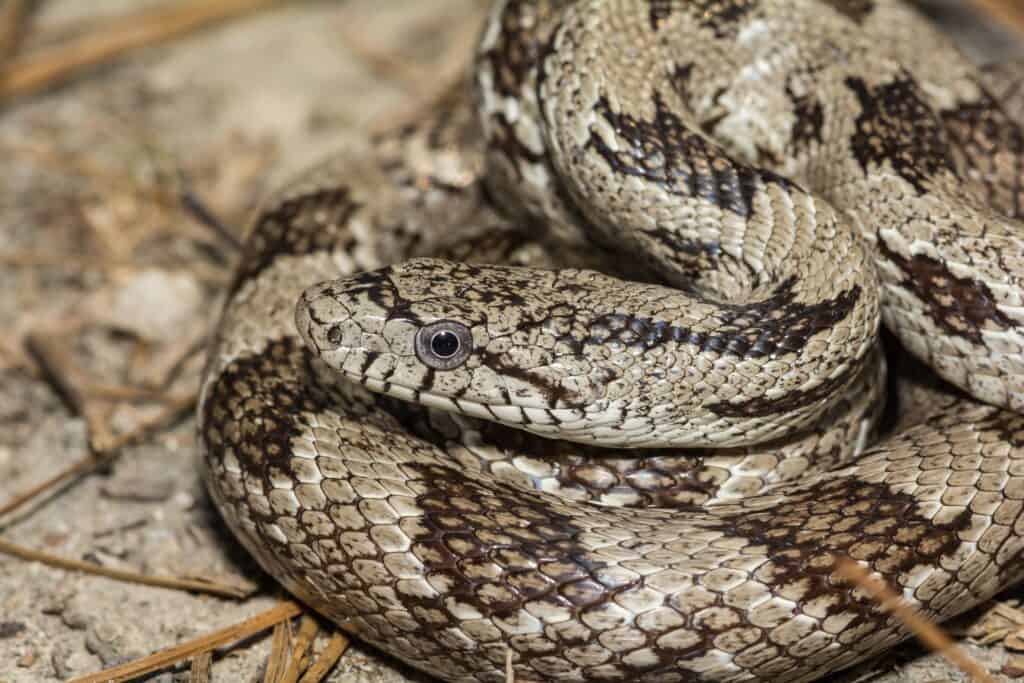
Gray ratsnakes are the largest species of snake in Ohio.
©Jay Ondreicka/Shutterstock.com
There are over 25 species of snakes living in Ohio, but the largest one you could encounter in Hocking Hills State Park is the gray ratsnake (Pantherophis spiloides). These nonvenomous snakes can grow 3.5 to 6 feet long, with some reaching up to 8 feet in length. Gray ratsnakes are excellent climbers and prefer to live in forested areas. They may be hard to spot because they tend to avoid people, often hiding in the crevices and cavities of trees.
Timber Rattlesnakes
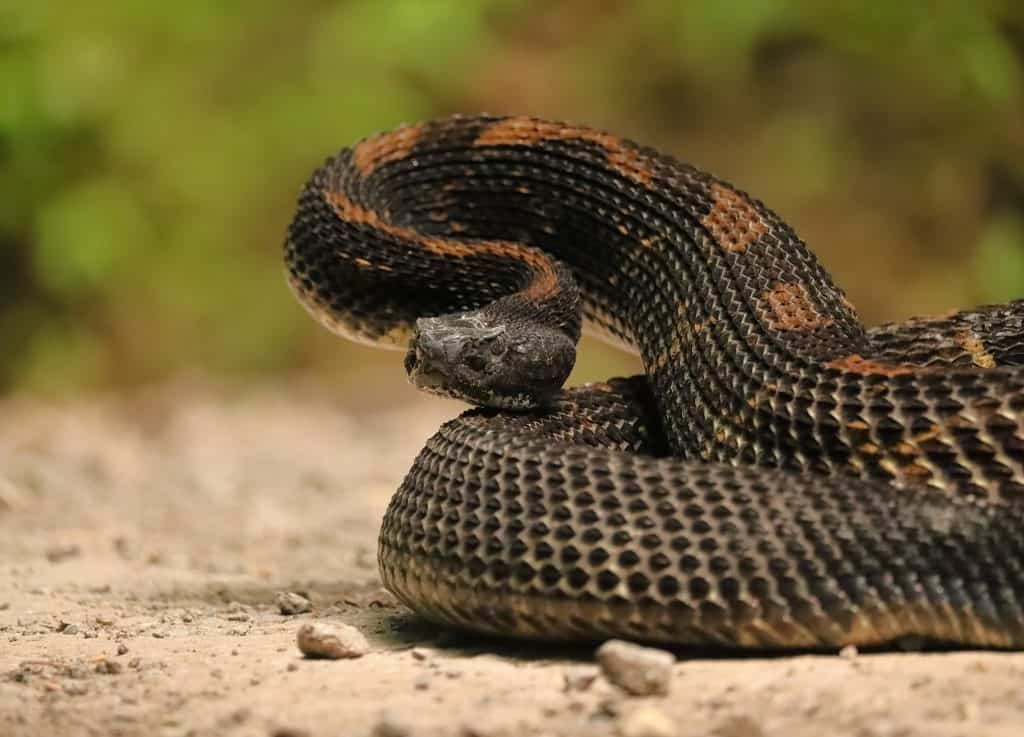
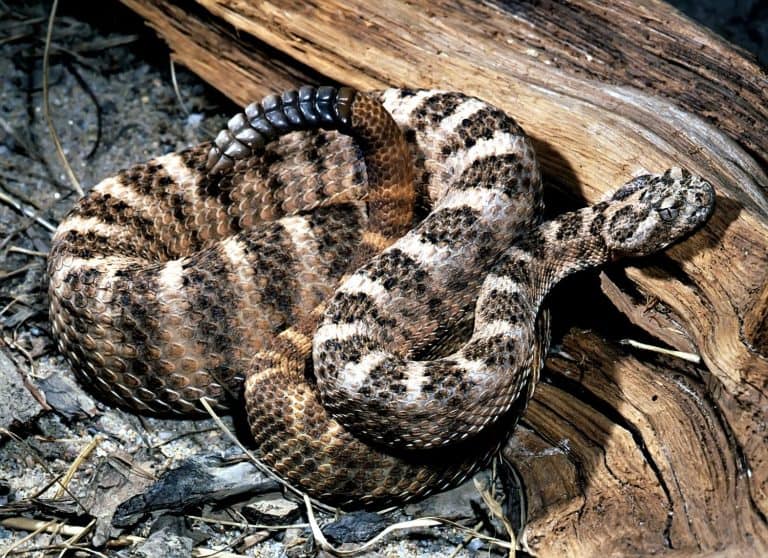
Timber rattlesnakes live in southeastern Ohio and can be found in Hocking Hills State Park.
©onewildlifer/Shutterstock.com
The timber rattlesnake (Crotalus horridus) is one of three venomous snakes living in Ohio. Timber rattlesnakes were once widespread across Ohio, but due to habitat loss and hunting, their numbers have dwindled. Today, the timber rattlesnake is considered endangered in the state. Despite conservation efforts, their numbers are slow to bounce back. This is probably due to their slow reproductive rate. Although they are venomous, timber rattlesnakes typically flee from humans and will only bite if threatened.
Eastern Box Turtles
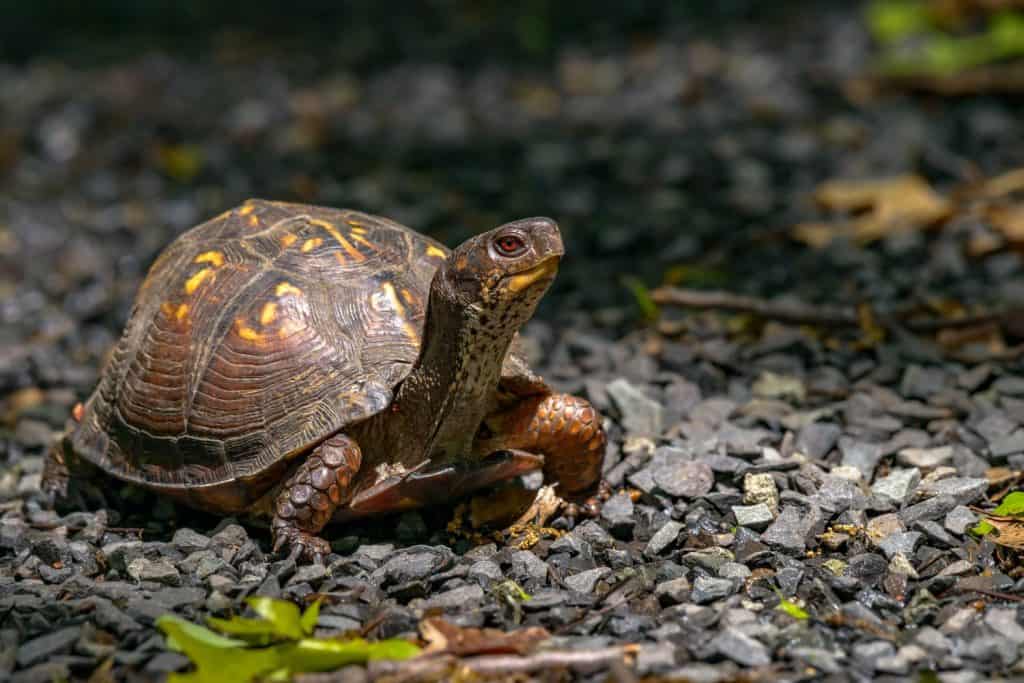
Box turtles have a high-domed, hard shell with yellow markings.
©jgorzynik/Shutterstock.com
Eastern box turtles (Terrapene carolina) can be found lumbering across meadows, fields, forests, and near ponds in Hocking Hills State Park. They eat insects and plants, and hide under bushes and tall grasses to keep cool on hot days. You are most likely to spot this terrestrial turtle on rainy days after a dry spell.
Five-Lined Skinks
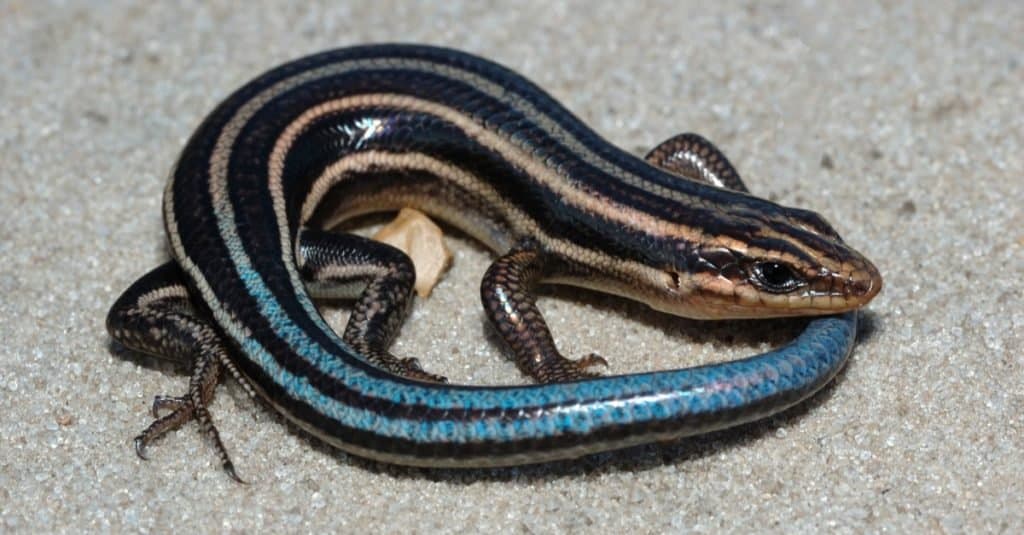
Five-lined skink lizards have blue tails as juveniles.
©James DeBoer/Shutterstock.com
Hocking Hills State Park is a perfect habitat for the five-lined skink (Plestiodon fasciatus). You may spot them scampering underneath logs or darting under a rock pile. They like to live in forested areas where there are plenty of water sources. These fast-moving lizards can reach around 5 to 8.5 inches in length. The juveniles can be identified by their bright blue tails, which fade to gray as they age.
Eastern Hellbenders
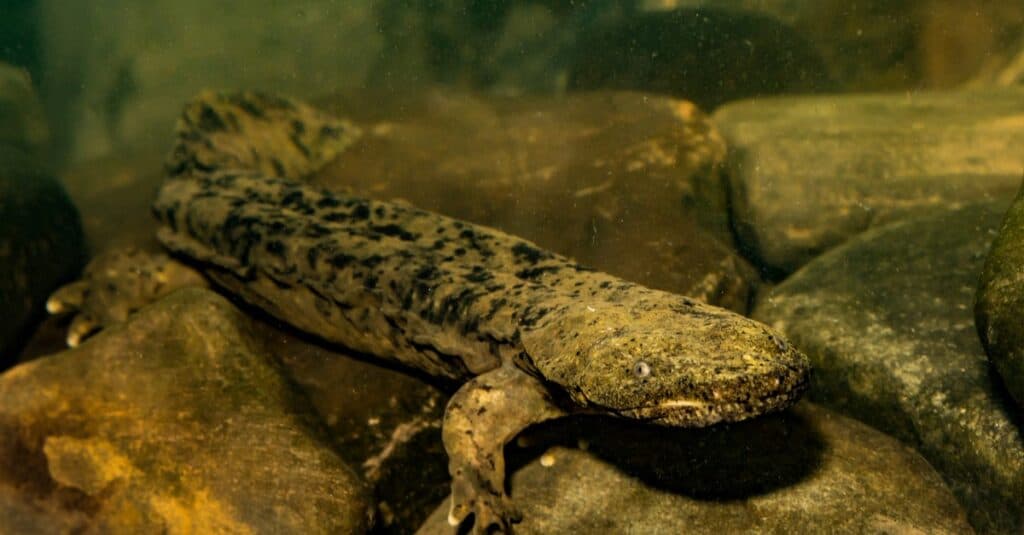
Eastern hellbenders are large salamanders that live in swift, running rivers.
©Jay Ondreicka/Shutterstock.com
There are 24 species of salamanders living in Ohio. One notable salamander you might meet in Hocking Hills is the Eastern hellbender (Cryptobranchus alleganiensis). The hellbender is the largest amphibian in North America and can grow from 12 to 29 inches long. You may see them in the Hocking River, where they prey on crayfish. However, they are nocturnal and spend most of the day hiding under rocks.
Birds
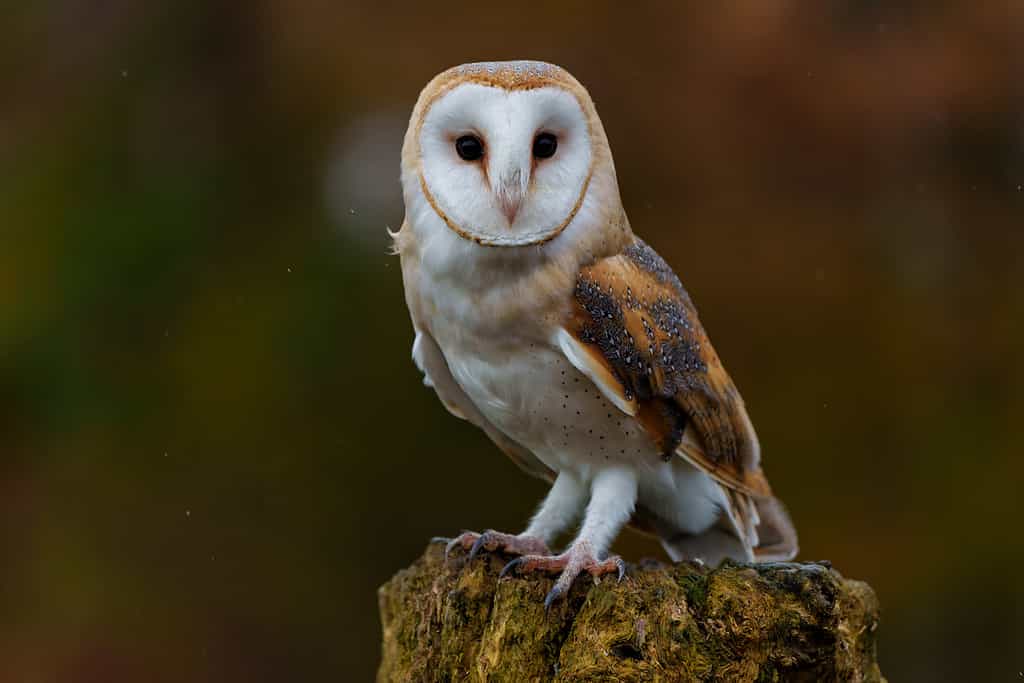
Barn owls are one of the many bird species living in the forests of Hocking Hills State Park.
© Henk Bogaard/ via Getty Images
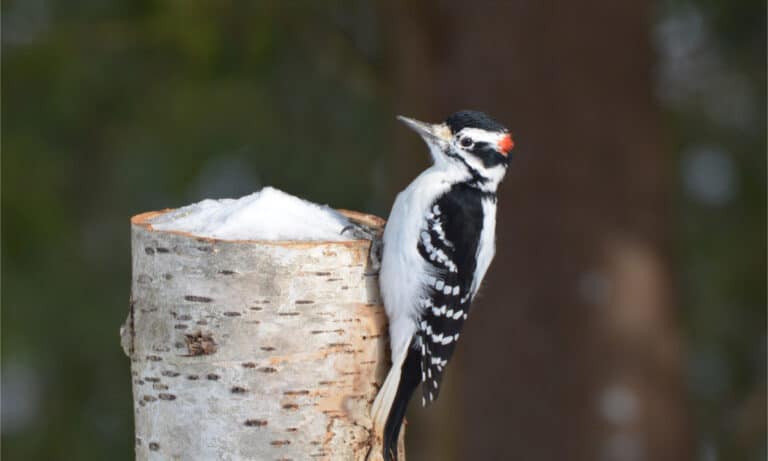
Hocking Hills State Park is home to many different bird species. Some include rock pigeons (Columba livia), barn owls (Tyto alba), woodpeckers (family Picidae), turkey vultures (Cathartes aura), and many more. A prime spot to view raptors, like the red-tailed hawk (Buteo jamaicensis), is Cantwell Cliffs. Head over to Old Man’s Cave, where you may see eastern bluebirds (Sialia sialis), warblers, and Black-capped chickadees (Poecile atricapillus) living in the nearby pine trees.
Fish
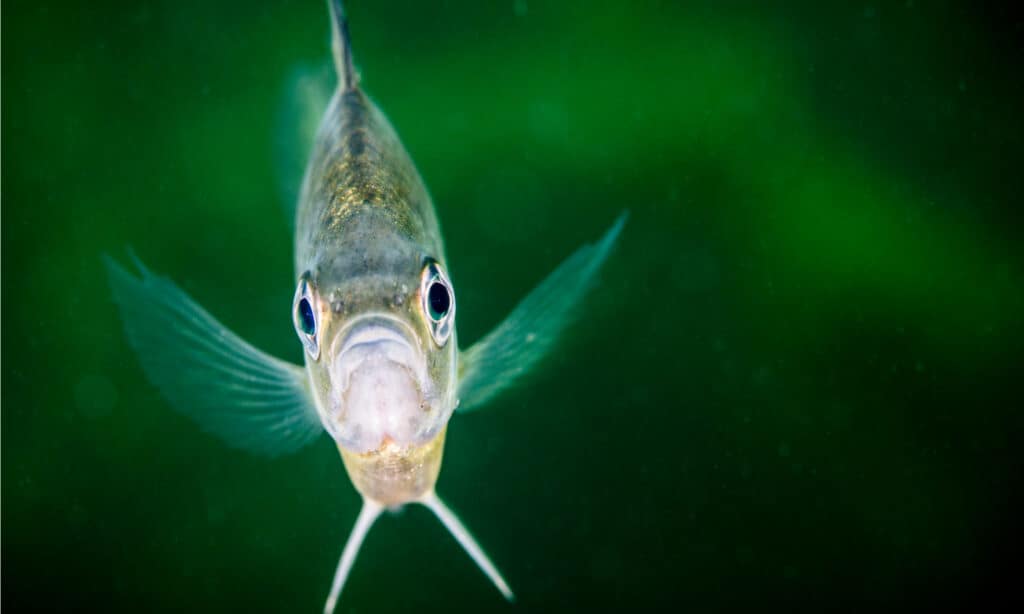
Bluegill is a popular fish to catch in Ohio waterways.
©RLS Photo/Shutterstock.com
Fishing is a popular pastime at Hocking Hills State Park. The Hocking River, Lake Logan, and Rose Lake are home to many freshwater fish, including smallmouth bass (Micropterus dolomieu), channel catfish (Ictalurus punctatus), northern pike (Esox lucius), and bluegill sunfish (Lepomis macrochirus).