
Quick Take
- Grizzlies are famously solitary animals, so what actually makes nearly two dozen of them willing to share a meal without throwing a single punch? Why solitary bears share →
- There's a specific word for a group of bears, and that word says something odd about how rarely this kind of gathering happens. See how rare this is →
- A carcass surrounded by grizzlies is one of the most dangerous situations a hiker can stumble into, and the reason has nothing to do with hunger. Why carcasses are dangerous →
- The same thing that kept 19 grizzlies from fighting each other is also what kept the watching tourists safe, and it's not what most people would guess. How distance kept everyone safe →
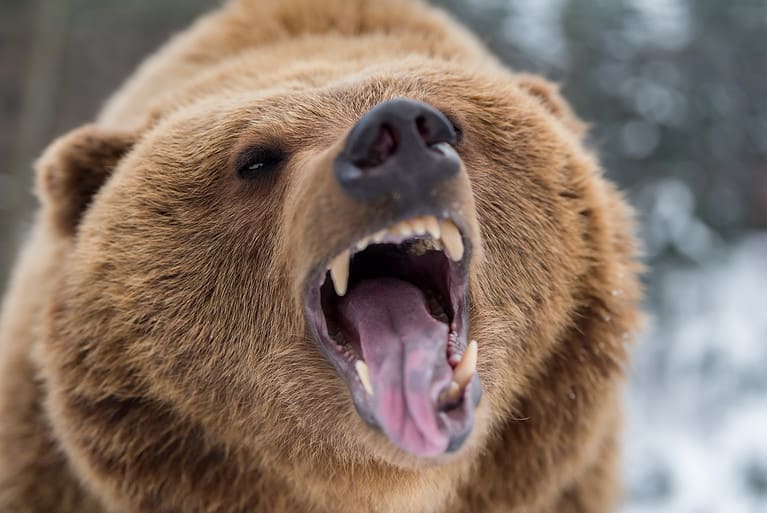
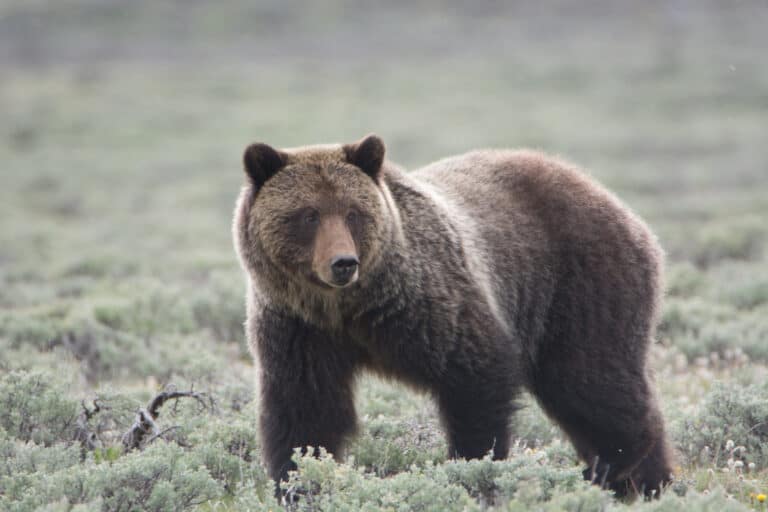
Janet Zaloga was worried her trip to Yellowstone country wouldn’t turn up many bears. Late on a Sunday, that worry disappeared entirely. She and her husband came across a single big-game carcass with grizzlies feeding on it, and they kept counting. The number kept climbing.
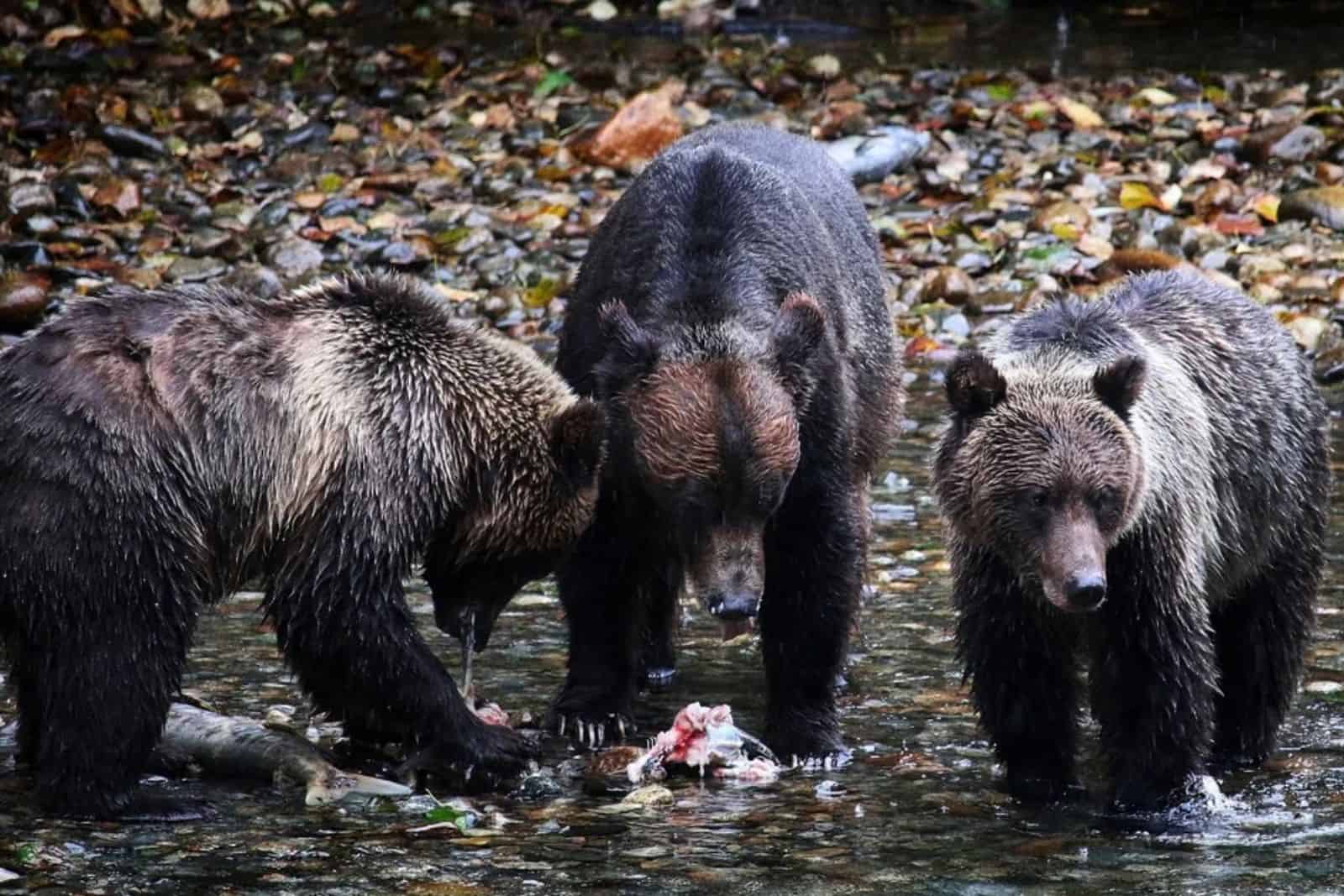
“At one point, I counted 19 grizzlies on or around the carcass,” she said. No fights broke out. The bears simply took turns.
A Rare Gathering
For most of the species’ range, grizzly bears live and hunt largely alone. “Much of the time, all you could see were grizzly heads and humps” as the bears fed, Zaloga said, describing a scene that looked more like a crowded buffet line than a predator’s usual solitary meal. The group couldn’t tell what the carcass had been.
Cecily Costello, a Montana Fish, Wildlife and Parks grizzly research biologist, told Cowboy State Daily that given the location and the sheer number of animals, it was most likely a bison or elk carcass. Multiple bears gathering on a single kill isn’t unheard of, she said, but 19 at once is “maybe a little bit on the high side.”
Why Grizzlies Tolerate Each Other Sometimes
The key, according to Costello, is familiarity. Bears that live in the same general area tend to recognize one another from past encounters, and that history buys a measure of mutual tolerance that strangers wouldn’t get. A concentrated, high-value food source, like one large carcass that can feed many animals for days, is exactly the circumstance that can turn a famously solitary species briefly social.
There’s even a word for it: a group of bears is properly called a sloth, or in an older variation, a sleuth. One Montana rancher who found seven grizzlies showing up on his property at once half-jokingly called it a “herd.” Whatever the term, wildlife officials say these mass gatherings remain the exception, not something that happens every time bears find food. Most carcass encounters in grizzly country still involve just one or two animals, with others keeping their distance until the first bear has had its fill.
Why the 100-Yard Rule Matters Here
Scenes like this one are part of why Yellowstone country enforces strict viewing distances. Park regulations require staying at least 100 yards, roughly the length of a football field, away from bears and wolves at all times, compared to 25 yards for most other large animals like bison and elk.
Carcasses raise the stakes further. A bear defending food, especially in a crowd of other bears already testing each other’s patience, has less tolerance for a surprised human wandering too close. The same distance that keeps people safe also keeps the bears from feeling cornered or threatened enough to react, which is part of why this particular gathering stayed peaceful: the animals had room, each other’s trust, and enough food to go around. Visitors who gave that same kind of space got a rare wildlife show instead of an incident report.