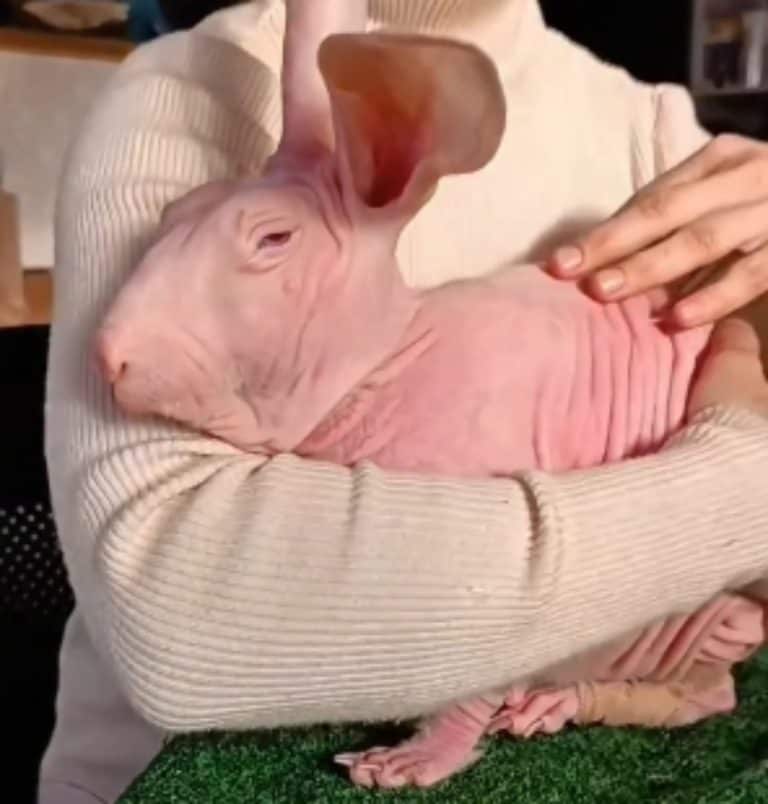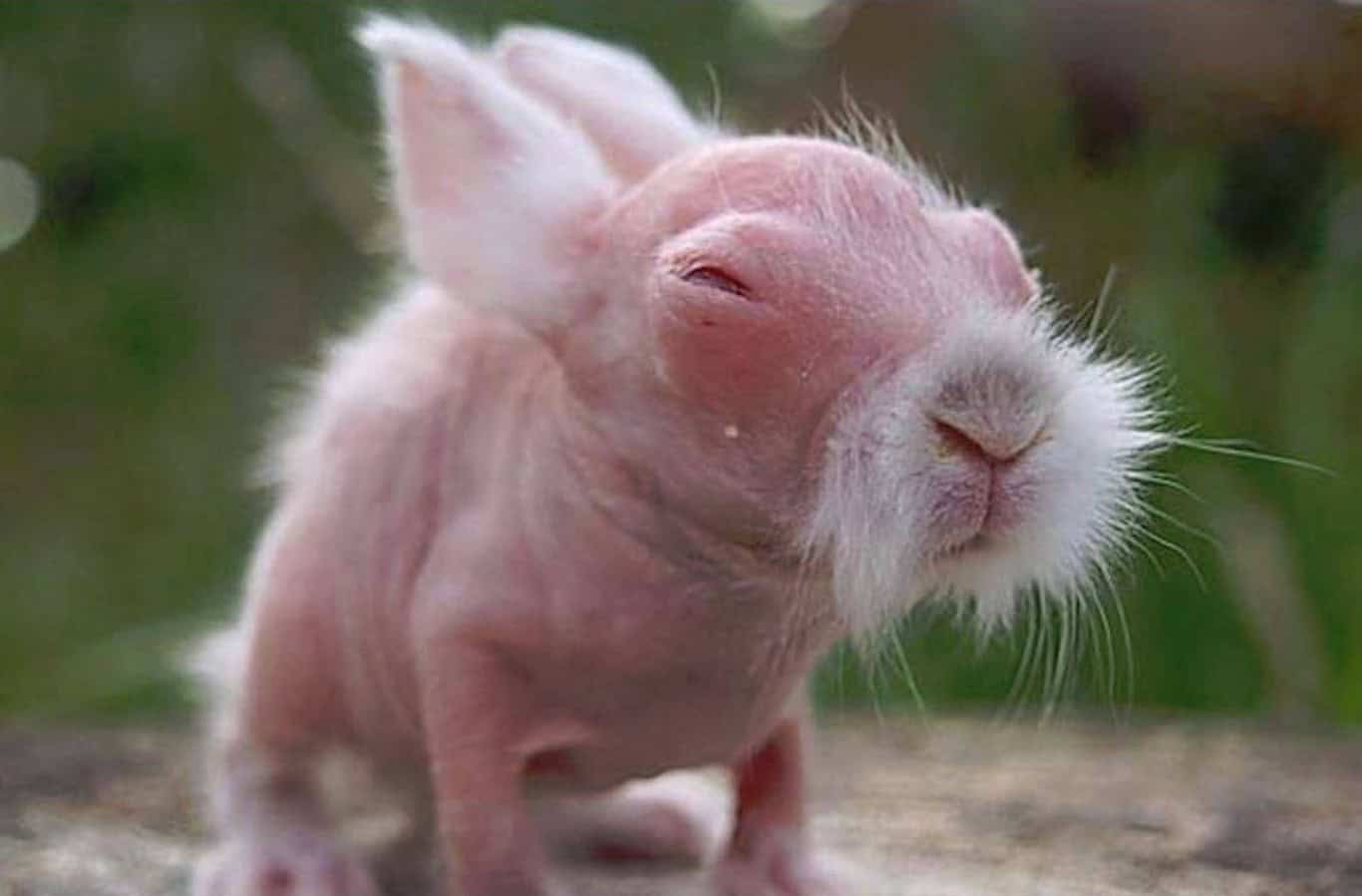

The baby rabbit in this Instagram post looks like a kung fu master, with his distinctive facial hair and fuzzy tufts. Dubbed “Master Shifu 2.0” by many online viewers — a nod to the Kung Fu Panda series — this young bunny definitely stands out. But what kind of rabbit is he, and what is the cause of his incredible hairless look?
A Baby Rabbit’s Genetic Anomaly
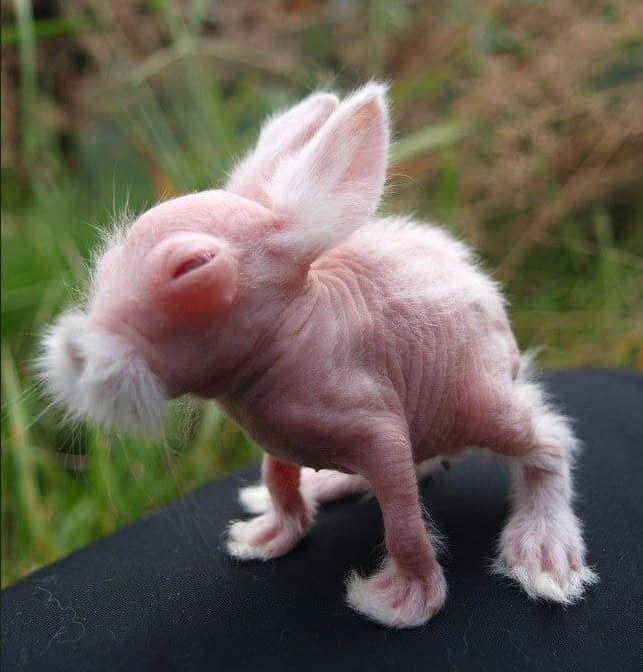
Newborn rabbits only weigh a few ounces.
©Instagram / @insidehistory – Original
Baby rabbits, known as kits, are born completely hairless, blind, and deaf, relying solely on their mothers for the first few weeks. They begin to grow hair around five days old, open their eyes and ears after 10 days, and develop a fine, fuzzy coat between two and four weeks. By four weeks, they are fluffy and ready to explore.
Like any normal rabbit kit, Teddy Bear’s Biran — the unique bunny in this Instagram post — was born completely hairless. However, although both of his chinchilla rabbit parents have luxuriantly long fur, Teddy carries a recessive gene for hairlessness. This is why he sports such a distinctive appearance, with only patches of fur scattered across an otherwise naked body.
Understanding the Hairlessness Gene in Rabbits
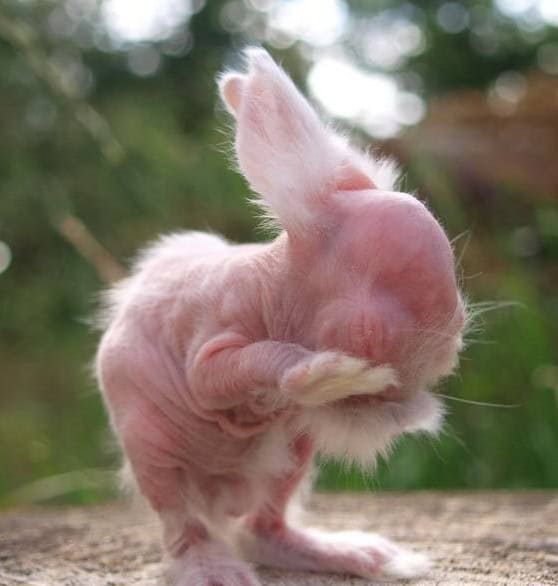
Rabbits can have litters ranging from one to 15 kits.
©Instagram / @insidehistory – Original
The hairless gene in rabbits can occur in any breed, although it is often seen in rex-coated breeds. A rabbit with just one copy of the gene might have a full coat, although some young kits develop a temporary bald patch (usually on the forehead) that eventually fills in. These rabbits may be slightly weaker initially, but they usually go on to live healthy lives after about four weeks.
However, if a kit inherits two copies of the gene (one from each parent), it will be mostly bald. Sadly, these rabbits are often weaker, and many do not survive to adulthood. They are more vulnerable to bacterial diseases, skin disorders, and a lung infection called pneumocystosis. The gene also causes the skin to thicken (a process called keratinization), which blocks new hair growth and causes follicle infections.
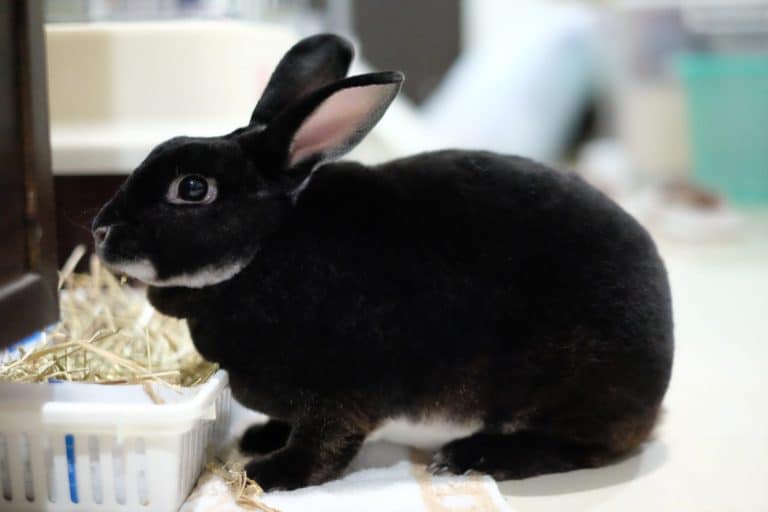
It’s worth noting that different mutations can cause hair loss in rabbits. For example, the “naked/hairless” mutation leaves the rabbit nearly bald, sometimes with just a few guard hairs. Another is the “Wirehair” (Wh) gene, which usually results in less dense fur and a noticeable lack of undercoat. A rarer type is “juvenile hairlessness,” where a rabbit’s fur disappears a few weeks after birth and sometimes never returns.
Fortunately for Teddy Bear, his fur grew in fully after about three months, which means that he clearly inherited only one copy of the gene.