
Quick Take
- Ospreys are built to shed water instantly, so it raises the question of why this one was completely unable to escape the lake on its own. See why it got waterlogged →
- The likely culprit behind this osprey's near-drowning was not the water but the fish. How the fish caused it →
- Jumping in to grab the bird was actually the wrong move. Here's what wildlife experts say you should do instead. Get expert rescue advice →
- A boating family and a split-second decision stood between this juvenile osprey and certain drowning. Read the rescue story →
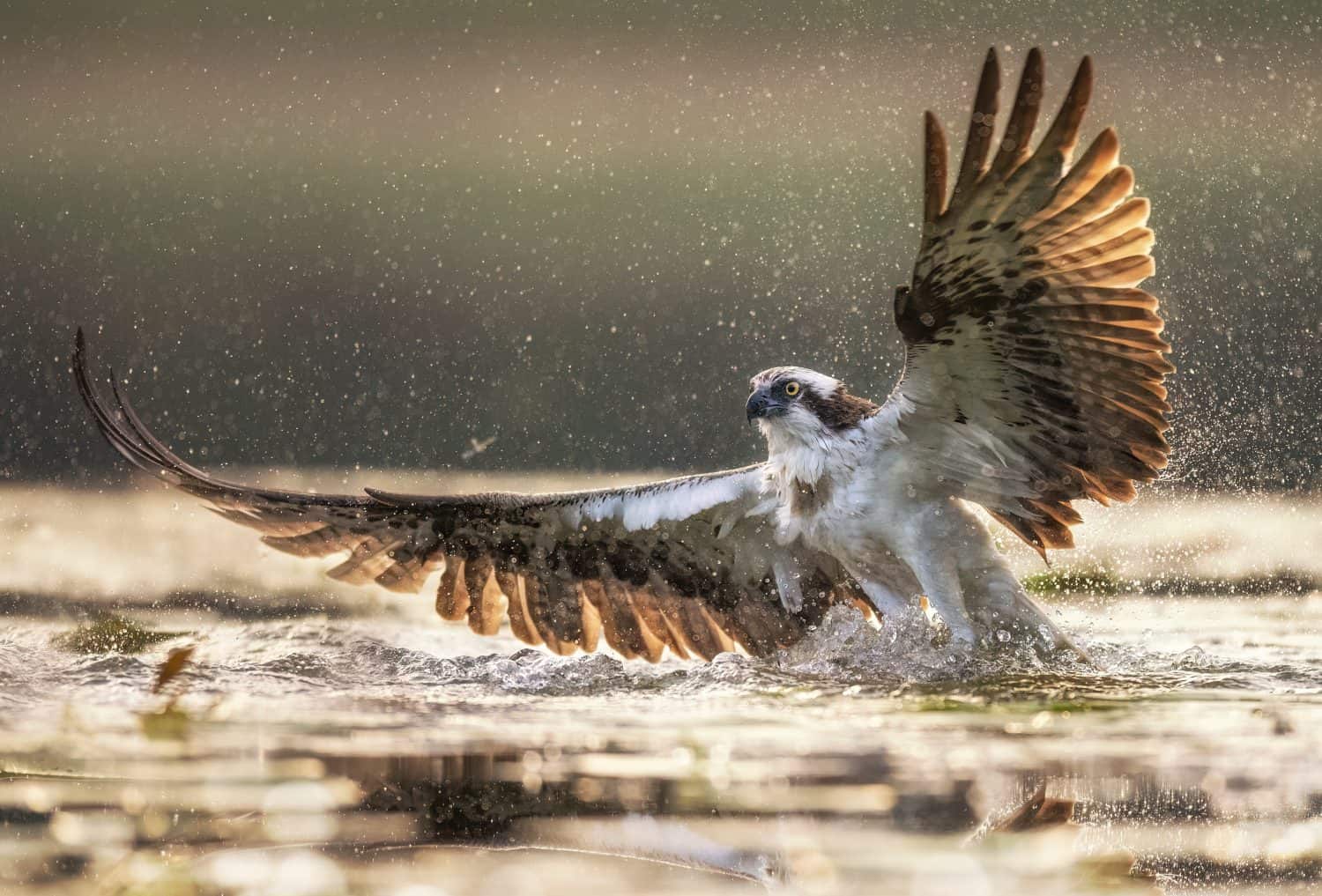
Ospreys often submerge their talons and lower bodies in water while hunting, but they are not true water birds. So, imagine a family’s surprise when they saw an osprey floating in a lake. Thanks to their quick action, the osprey was saved from certain drowning.
A Lone Osprey Would Have Drowned but for the Help Of Strangers
A juvenile osprey is lucky to be alive after recently becoming severely waterlogged.
On July 8, 2026, a now-viral Instagram reel was posted showing a family enjoying a day on the lake in their boat. As they cruise along, an osprey floats by. A flotation device was thrown toward the osprey to give it something to grab onto so it could be towed to shore. However, it quickly became clear that the bird was too exhausted to save itself.
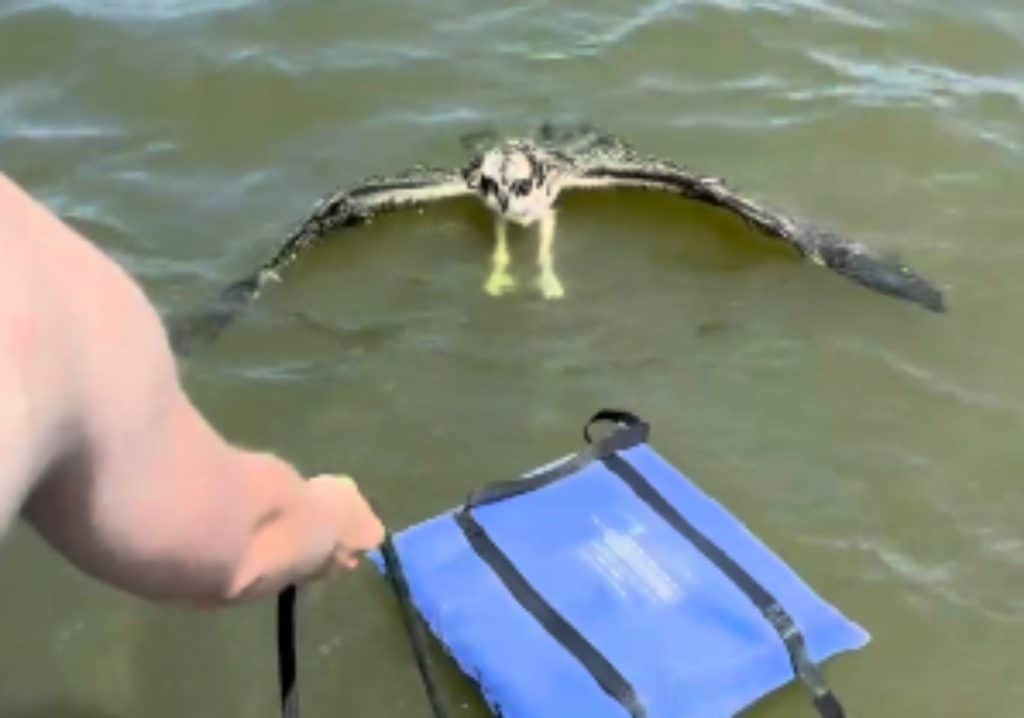
The osprey was rescued recently after becoming waterlogged.
©@audubonsociety and @audubon_nc / Instagram – Original
Without hesitation, a man named Gavin jumped into the water to assist the osprey. He held the flotation device steady to help the osprey maintain its balance.
As the boat approached the shore, Brittany Salmons of Audubon North Carolina, who was also on board, helped with the rescue by swimming the osprey to a dry location. It was a fortunate day for the osprey. Without the help of Salmons and her family, the osprey likely would have drowned.
Why the Osprey Was Unable to Fly Out Of the Water
The video explained that the osprey was both waterlogged and exhausted. These two factors prevented the raptor from getting out of the water on its own.
Ospreys have oily, dense feathers that are designed to wick water off. This is necessary so that as soon as the raptors have their talons in a fish, they can take off from the surface of the water. Although it was not explicitly stated that the osprey’s fishing skills were to blame for its predicament, a common reason ospreys become waterlogged is their inability to ascend from the water quickly enough after catching a fish.
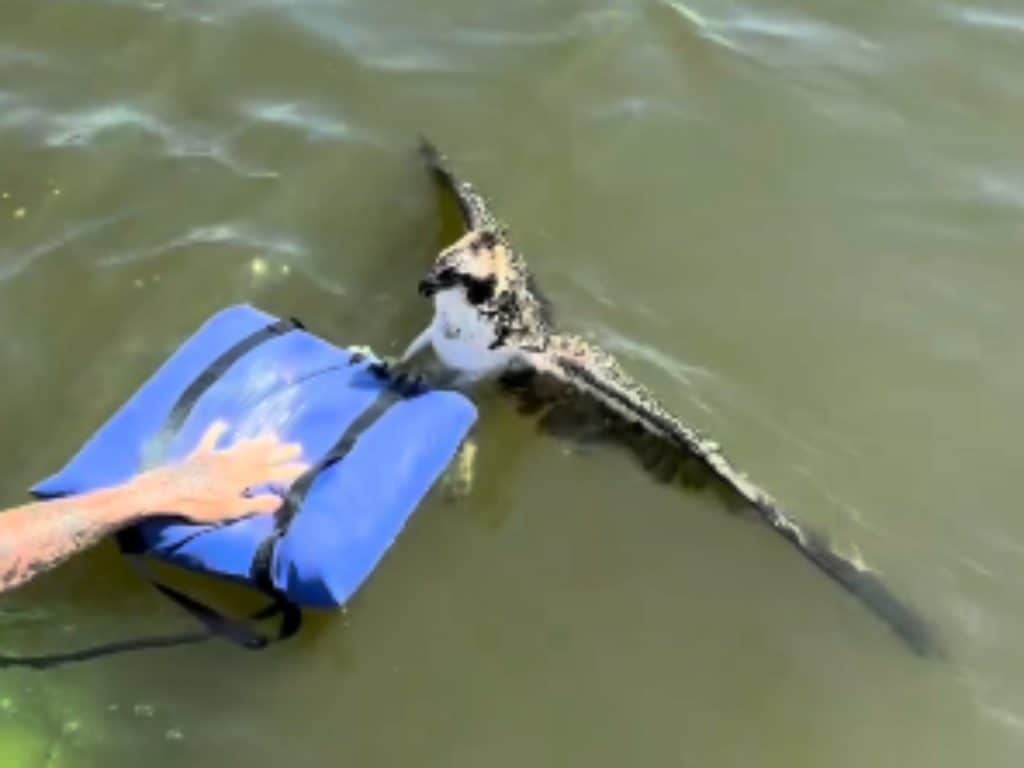
The osprey was exhausted, and its feathers were too soaked and heavy to fly.
©@audubonsociety and @audubon_nc / Instagram – Original
Once an osprey is in the water and its feathers become soaked, it becomes heavy. These raptors may attempt to fly, which exhausts them further. A lack of energy and the complete inability to fly would keep the osprey from being able to exit the water.
Additionally, the osprey could have been injured. Considering all these factors, it was very fortunate that help arrived when it did.
How Did the Osprey End Up in the Water?
How long the osprey was in the water is unknown. According to the video, though, the osprey was in the water due to a hunting mishap.
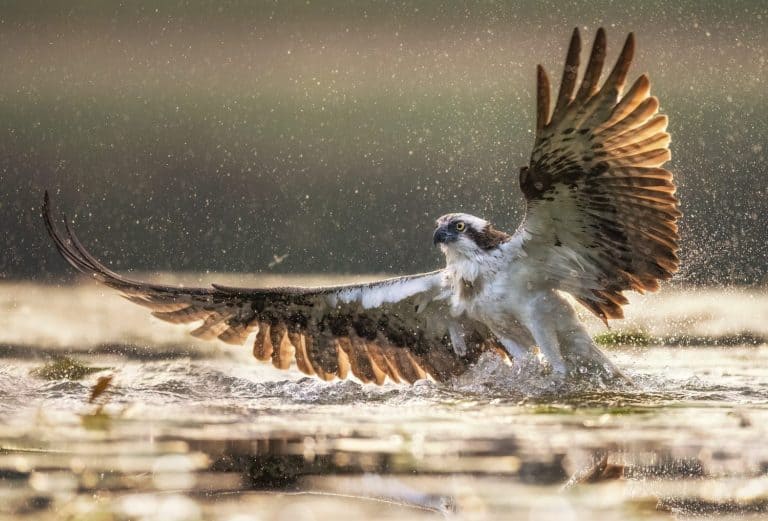
Ospreys are plunge divers. This means that when they see a fish from above a body of water, they strike the water with their talons first to grab it. As long as the fish is not too heavy, the raptors can fly away with prey in their talons.
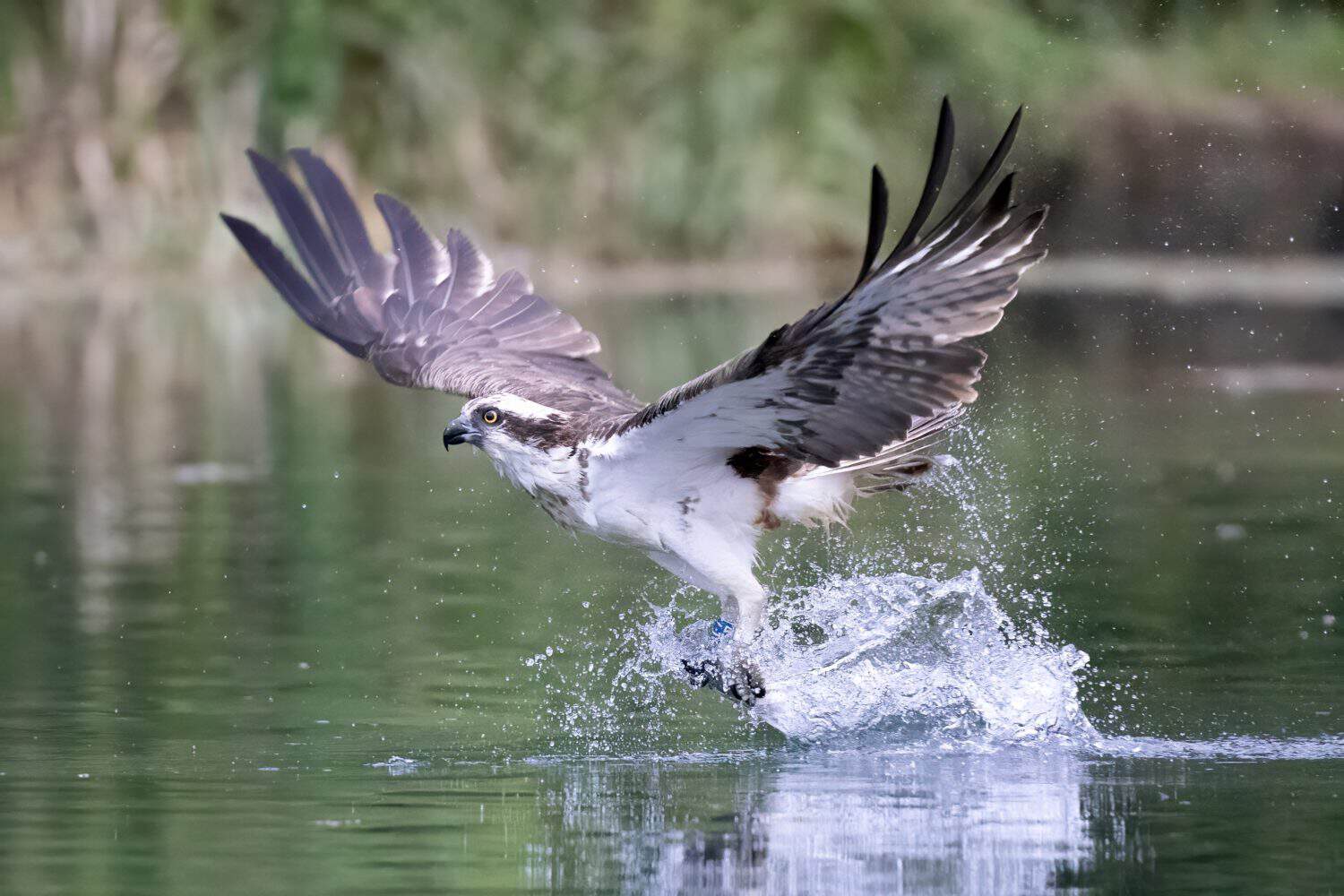
Osprey plunge-dive for fish, temporarily placing the lower portion of their bodies in the water.
©Julie Yates/Shutterstock.com
Sometimes, the fish is too large to lift. The fish can even drag the osprey into the water, soaking it before the bird can let go. When this occurs, the bird becomes waterlogged. The osprey’s wings become too heavy to take off, and the bird is stuck in the water.
What to Do If a Bird of Prey Is Found Waterlogged
In this situation, the osprey was fortunate to have experienced wildlife personnel from Audubon North Carolina on the boat. This will not always be the case. However, there are ways to help waterlogged osprey when professionals are not around.
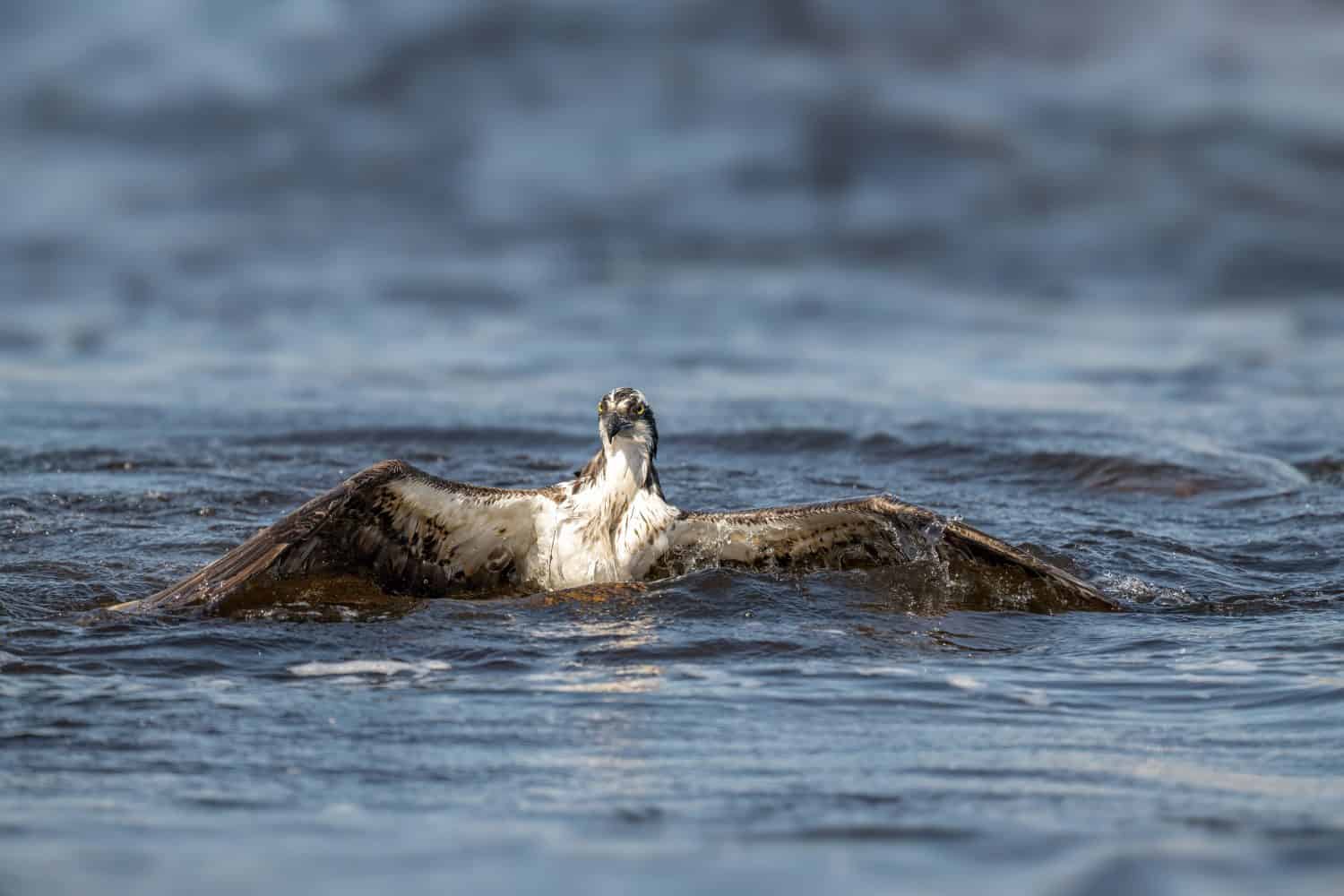
If an osprey is in danger of drowning, there are steps you can take to help before professionals arrive.
©jgorzynik/Shutterstock.com
The best way to help a waterlogged osprey or raptor out of the water includes:
- Do not touch the bird unless absolutely necessary, and only use proper protection and tools, as a sick or injured bird can still injure rescuers with its talons or beak.
- Call a wildlife rescue or local government organization immediately
- If the bird is struggling to the point where it will drown without immediate assistance, use a towel, net, flotation device, or blanket to prevent it from going under or floating further out in the water.
- Under no circumstances should the beak or talons be grabbed
- If you are successful in bringing the osprey to shore, and if the bird is docile enough to move, keep it comfortable by placing it in a box with air holes and towels.
Do not provide rescued ospreys with any food or water. Simply wait for wildlife personnel to arrive, or take the bird to a designated wildlife rescue as instructed. Professionals can then assess the health of the osprey and determine the best course of rehabilitative action that allows the bird to return to the wild as soon as possible.