
Amphibians are cold-blooded animals that can live both in the water and on land. When we think of amphibians, frogs and toads instantly jump to mind. Usually, we think of frogs as being quite small. We certainly wouldn’t expect a frog that is nearly the size of a puppy or one with a mouth so wide it can swallow other frogs whole. In fact, there are a lot of giants in the frog world, with one species that can weigh more than 7 pounds. Here are the largest frogs in the world ranked by length and weight.
This post was updated on September 1, 2025 to clarify Blyth River frog weight, Lake Junin frog diet, African bullfrog habitat, and Goliath frog color.
#10. Giant River Frog
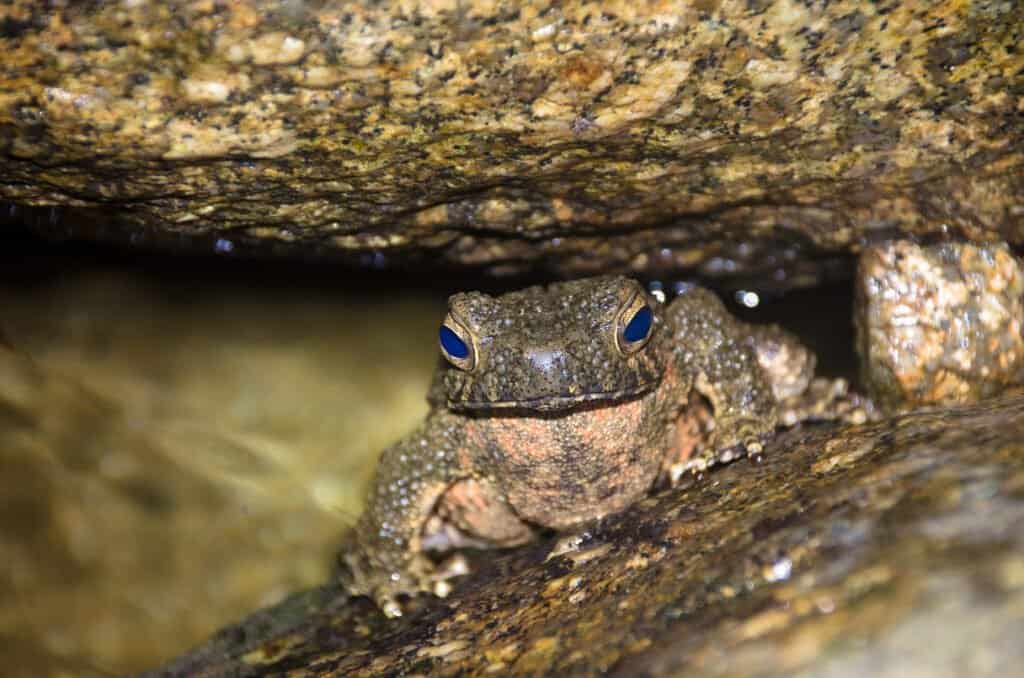
The giant river frog has powerful jaws for capturing large prey.
©konjaunt/Shutterstock.com
Found in Indonesia and Malaysia, the giant river frog (Limnonectes leporinus) can grow to a snout-to-vent length of up to 6.8 inches. They reach weights of around 4.4 ounces, with some individuals being heavier. Males are generally larger than females. These frogs are found along the forest floor on the banks of rainforest streams. With their mottled, greenish-brown skin, they easily blend in with their surroundings.
The giant river frog has powerful jaws with tooth-like projections, allowing it to capture large prey such as other frogs. These frogs are often hunted for food and their habitat has been affected by deforestation. However, there is still a healthy population of giant river frogs. Their conservation status is currently classified as Data Deficient by the IUCN Red List.
#9. Smoky Jungle Frog
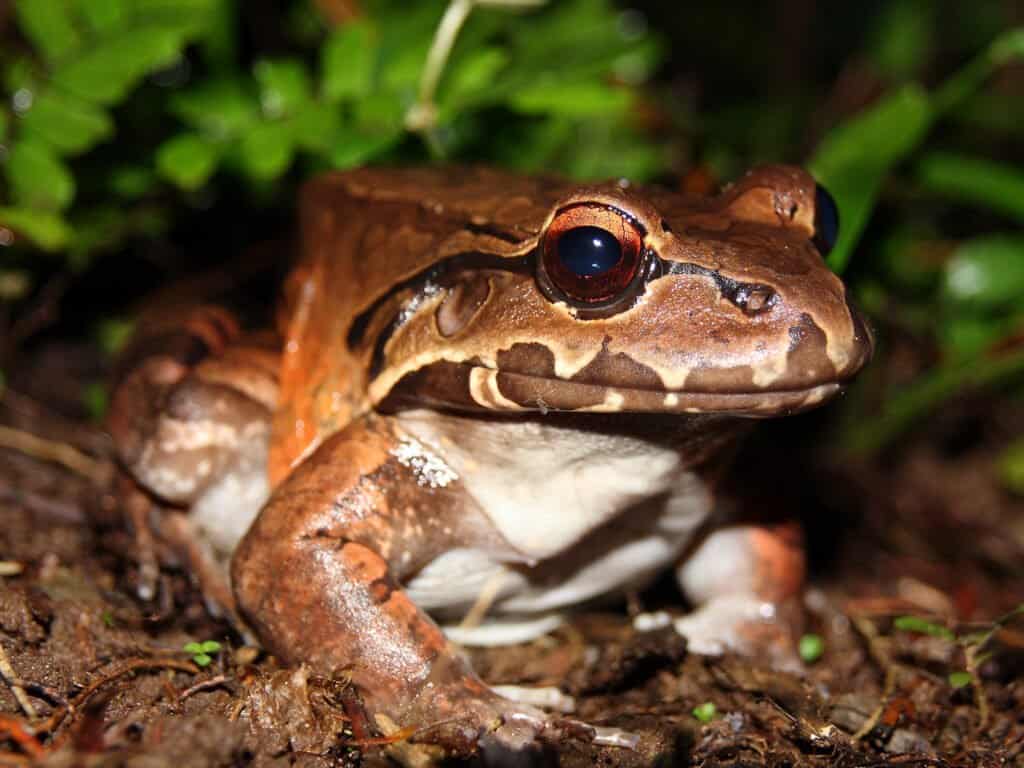
Smoky jungle frogs emit a high-pitched scream when caught.
©Ryan M. Bolton/Shutterstock.com
Female smoky jungle frogs (Leptodactylus pentadactylus) grow to around 7.5 inches and weights between 9-12 ounces, with males being slightly smaller. They have large heads with rounded snouts and a tan body with red-brown markings. These frogs are widespread throughout the tropical and subtropical forests of Central and northern South America, including the Amazon River basin. They eat a wide range of prey, including spiders, lizards, snakes, bats, birds, and even other frogs.
Smoky jungle frogs evade capture with their clever defense mechanisms. They can jump great distances very quickly, and if they are caught, they let out a high-pitched scream that usually makes the predator release them. Skin secretions contain irritating peptides that cause sneezing, runny nose, and eye swelling. Due to this defense mechanism, it should come as no surprise that their conservation status is Least Concern.
#8. Surinam Horned Frog
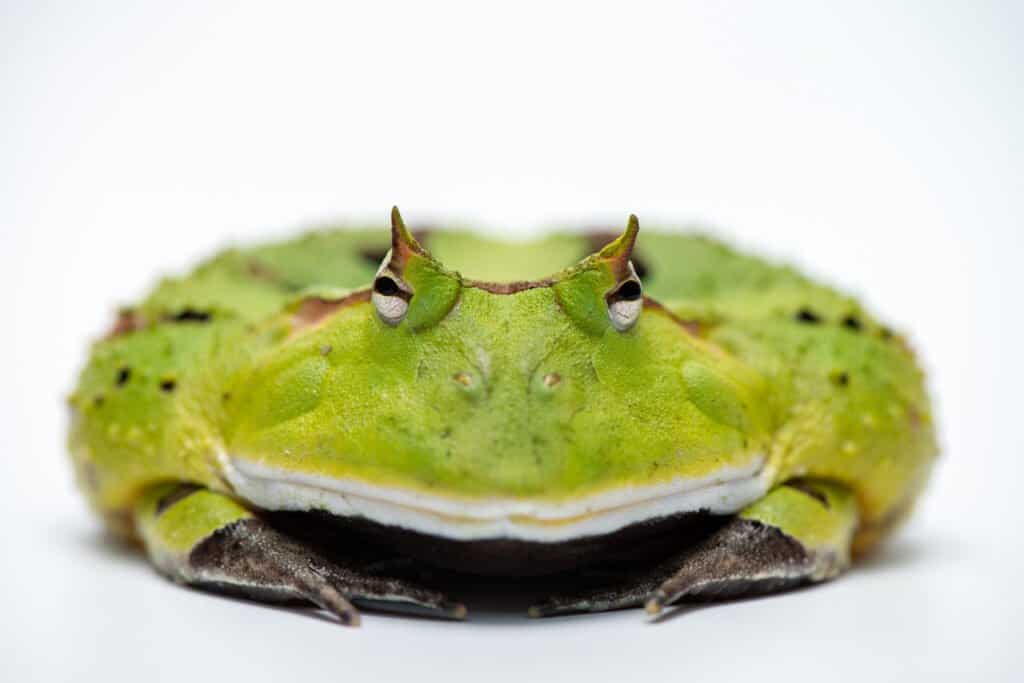
The Surinam horned frog is easily recognized by its wide mouth and the horns above its eyes.
©Peterpancake/Shutterstock.com
The Surinam horned frog (Ceratophrys cornuta) is also known as the Amazonian horned frog. It can grow to a length of around 7.9 inches and weigh up to 1 pound. They are usually tan, green, or mottled. The frog is easily identified by its extremely wide mouth and the horns above its eyes. The Surinam horned frog can be found in freshwater marshes throughout the Amazon River basin.
These frogs often spend hours sitting and waiting for the chance to ambush their prey. Considering the size of their mouths, it’s unsurprising that they eat pretty much anything, including lizards, birds, small mammals, and other frogs — often just swallowing their prey whole. Populations are currently stable and they are classified as being a species of Least Concern.
#7. American Bullfrog
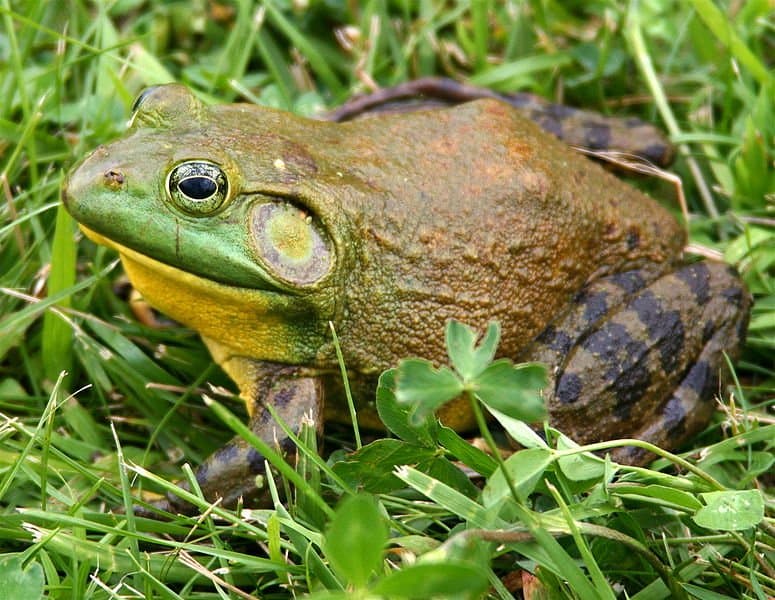
Male North American bullfrogs can be distinguished by their yellow throats.
©Carl D. Howe / Creative Commons – Original
North American bullfrogs (Lithobates catesbeianus) are widely distributed across the U.S. and Canada. They have also been introduced into many other countries in Europe and Asia. They can grow to over 8 inches in length and weigh upwards of 2 pounds, with females being slightly bigger. Bullfrogs have relatively smooth green to brown skin that is often mottled or spotted. Males can be distinguished by their yellow throats.
The bullfrog is considered an invasive species in many countries, as they can inhabit a wide range of habitats and are known to be voracious eaters. Bullfrogs eat fish, snakes, small turtles, birds, and other small mammals and may be threatening the survival of some of the species that they eat. They prefer to live in stagnant or slow water with aquatic vegetation such as swamps, ponds, and marshes. Their populations are increasing, so their conservation status is Least Concern.
#6. Mountain Chicken Frog
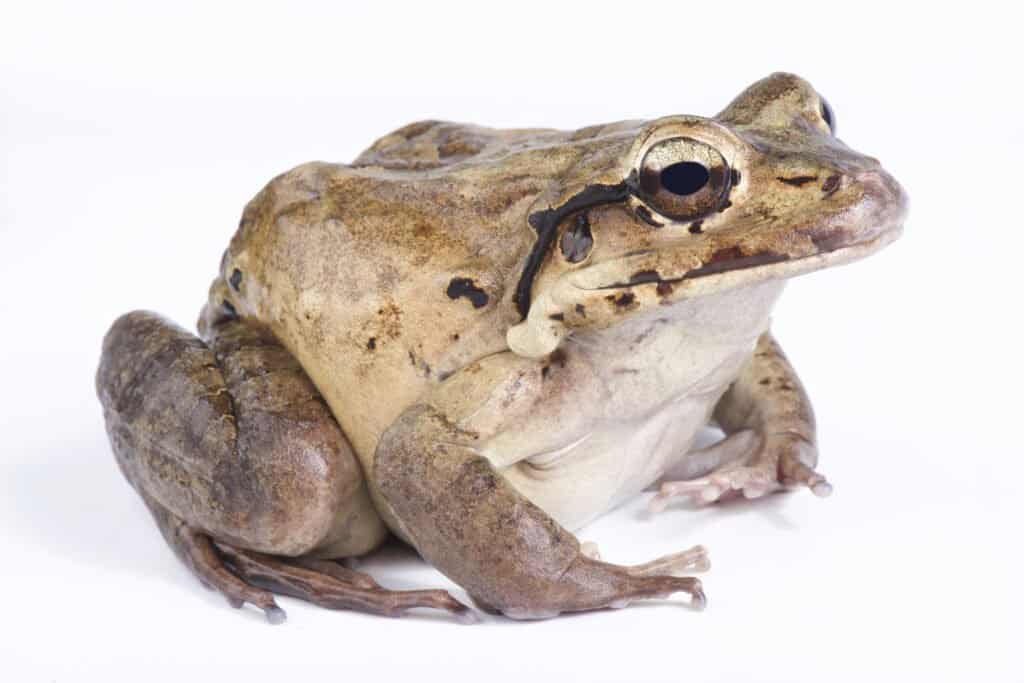
The mountain chicken frog is the largest frog endemic to Caribbean.
©reptiles4all/Shutterstock.com
A relative of the smoky jungle frog, the mountain chicken frog (Leptodactylus fallax) is found in Dominica and Montserrat and is the largest frog endemic to the Caribbean. They grow to around 8 inches long and can weigh up to 2.2 pounds. They have reddish-brown skin with dark markings and lighter bellies, which allows them to camouflage themselves on the banks of the streams where they are often found.
The mountain chicken frog has often been hunted for food, as it is said to taste like chicken. Combined with a fungal disease that has swept through the population, these frogs have been officially classified as Critically Endangered. It is estimated that fewer than 200 remain in the wild.
#5. Blyth’s River Frog
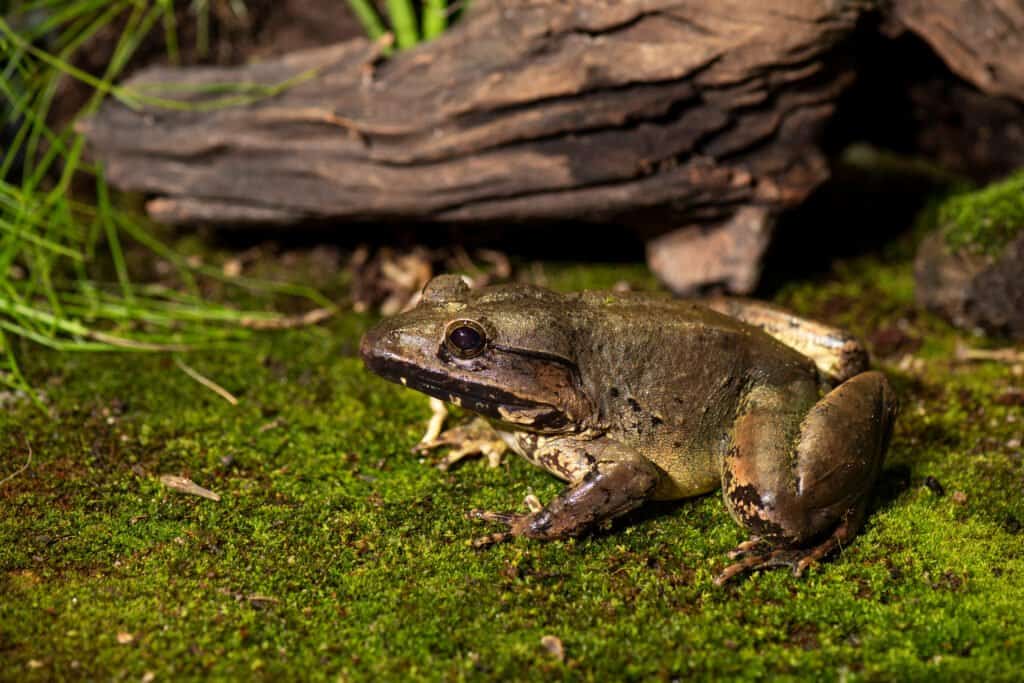
Blyth’s river frog is the largest frog in Asia.
©Chattraphas Pongcharoen/Shutterstock.com
With females reaching lengths of around 10 inches and weighing between 1-1.5 pounds, the Blyth’s river frog (Limnonectes blythii), also known as the giant Asian river frog, is the biggest frog in Asia. These large frogs are usually brown, yellow, or grey. They can be found around rocky streams in the forest regions of Indonesia, Malaysia, Myanmar, Thailand, and Singapore.
Blyth’s river frogs are opportunistic feeders, consuming anything that can fit in their mouths. Their diet primarily includes insects, invertebrates, small reptiles, and other frogs. Overhunting and the effects of logging and deforestation on their habitat are just a few of the threats they face. Consequently, Blyth’s river frog is now classified as Near Threatened.
#4. African Bullfrog
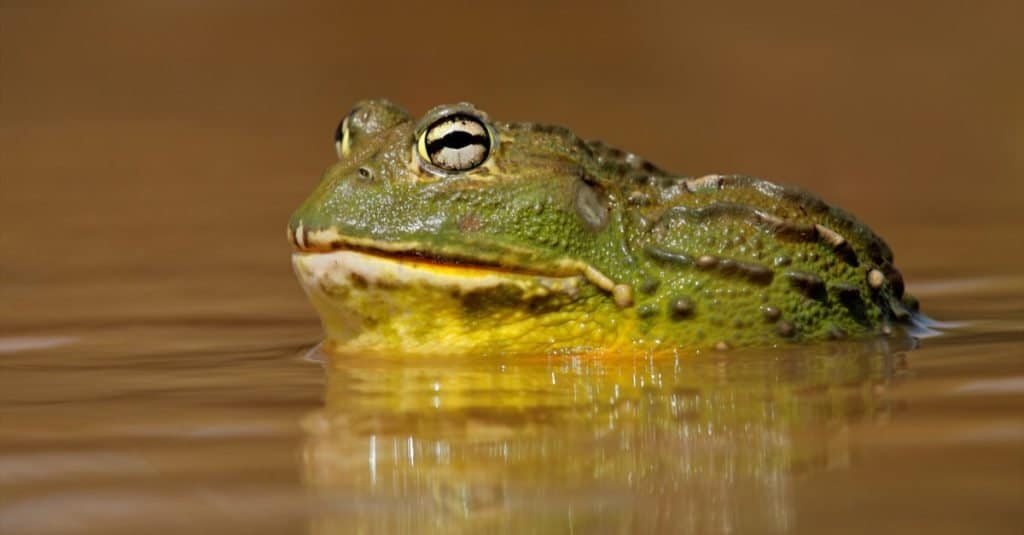
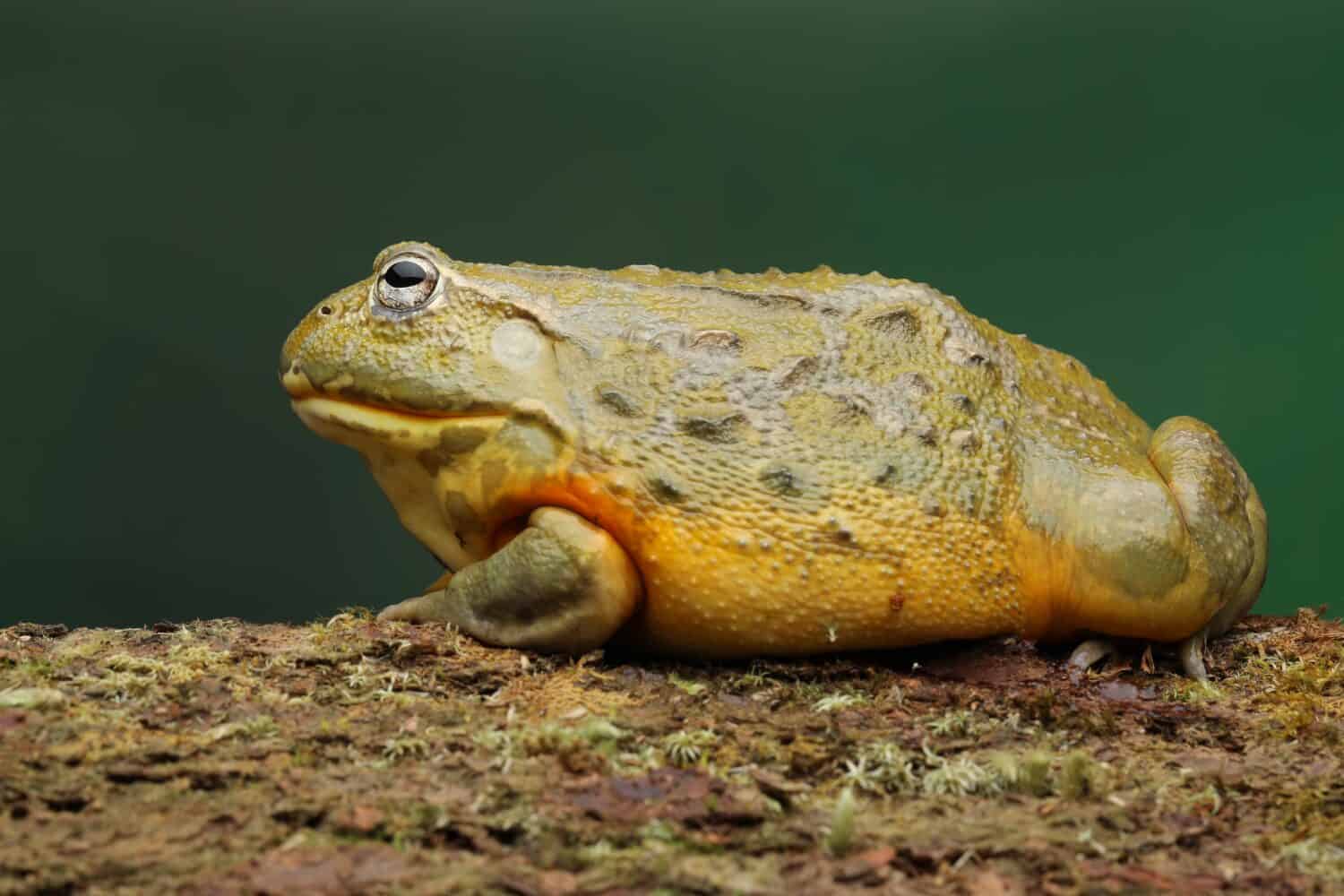
African bullfrogs can dig holes in the ground for shelter if there is no water source available.
©EcoPrint/Shutterstock.com
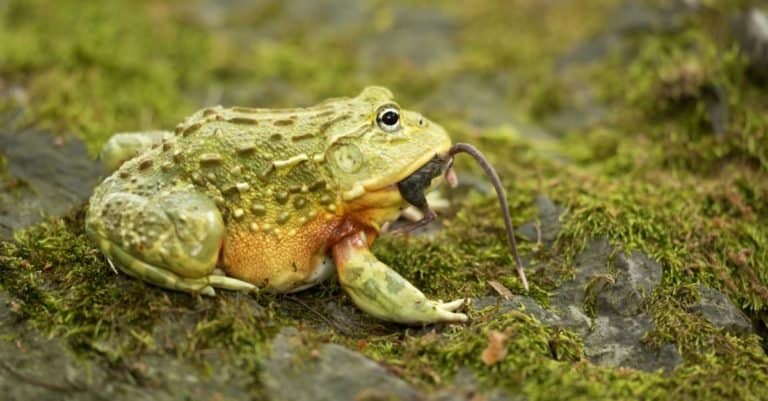
The African bullfrog (Pyxicephalus adspersus) is also known as the South Africa burrowing frog. These frogs can grow to 10 inches in length and weigh up to around 4 pounds, with females being smaller. They are olive green with a yellow or orange throat. They are usually found in savannas, grasslands, and seasonal pools of sub-Saharan Africa.
Despite a preference for water, African bullfrogs can easily survive in places that are completely dry. They simply dig a hole in the ground when it becomes too hot and dry for them on the surface. These frogs are excellent hunters and typically lie in wait for their prey, which can include insects, reptiles, small mammals, small birds, and even other frogs. They typically pounce and swallow their prey whole. Although populations are decreasing, their conservation status is currently Least Concern.
#3. Lake Junin Frog
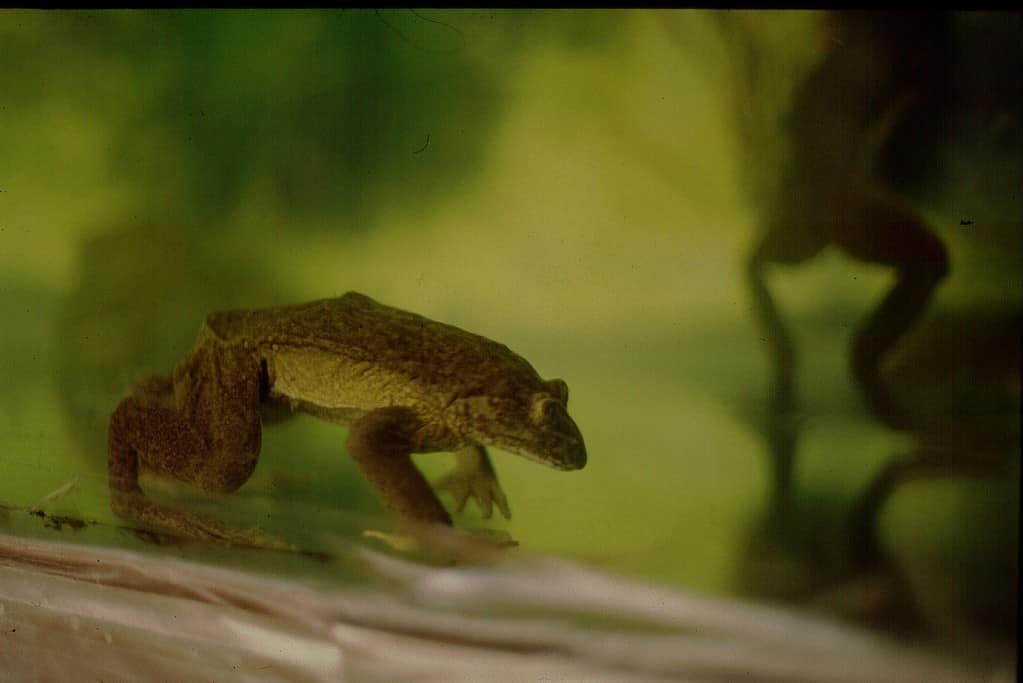
The Lake Junin frog is one of the few frogs that is considered completely aquatic.
Lake Junin frogs (Telmatobius macrostomus) can grow up to 11.8 inches in length and weigh an impressive 4.5 pounds, with the females generally being larger. As the name suggests, they are frequently found in Lake Junin in Peru. However, they can also be found in other slow-moving lakes in the Junin National Reserve.
Lake Junin frogs are considered to be completely aquatic. Their diet consists of small fish, tadpoles, insects, aquatic snails, and small crustaceans called amphipods. These frogs are dark brown and have completely smooth skin, which is why they are also known as the Andes smooth frog. Unfortunately, these aquatic frogs are under serious threat from hunting and water pollution. Their conservation status is now officially Endangered.
#2. Chilean Giant Frog
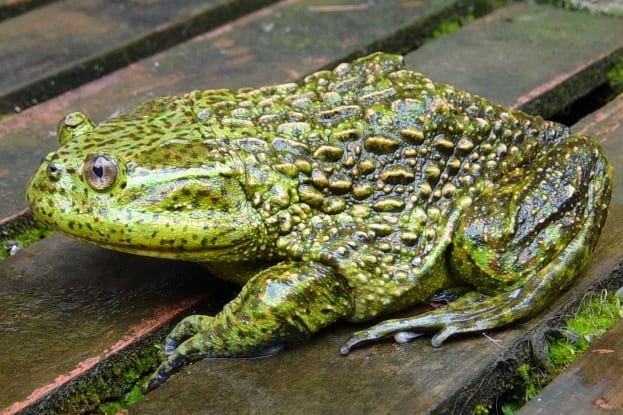
The Chilean giant frog, also called the Chilean helmeted water toad, can weigh up to 6.6 pounds.
©José Grau de Puerto Montt / CC BY-SA 3.0 – Original / License
Although they are also known as the helmeted water toad, the Chilean giant frog (Calyptocephalella gayi) is actually a frog. Very large individuals can weigh up to 6.6 pounds, but most weigh around 2.9 pounds. Females are much larger than males and can grow to a snout-to-vent length of 12.6 inches. In comparison, the males only grow to around 5.9 inches, but even tadpoles can be around 3.9 inches in length. They are mainly found in the lowlands of Chile in deep water rivers and ponds.
Their color can vary between yellow, green, and brown and they have large, round heads. Due to their large size, Chilean giant frogs have been hunted for food or farmed specifically for their meat. Although there are now legal protections in place restricting their hunting, Chilean giant frogs are still traded on the black market. Their numbers have declined so much that their conservation status is now Vulnerable.
#1. Goliath Frog
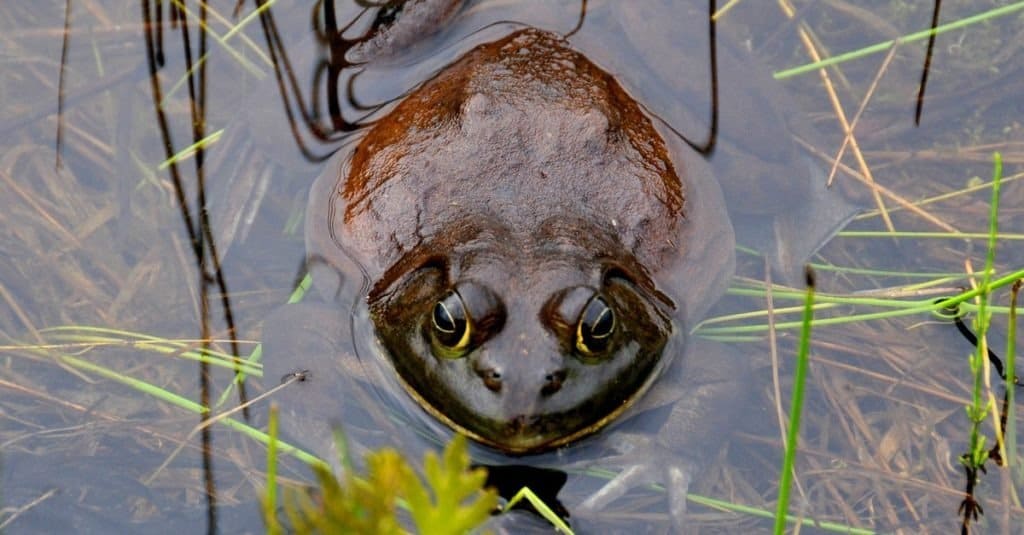
The Goliath frog is the world’s largest frog, with a snout-to-vent length of 12.6 inches.
©meunierd/Shutterstock.com
At the number one spot with a snout-to-vent length of 12.6 inches and weighing an impressive 7.2 pounds is the Goliath frog (Conraua goliath). The species is found in fast-moving streams and waterfalls in the rainforests of Cameroon and Equatorial Guinea. These frogs are so big that the males can easily move rocks to create huge nests up to three feet wide for the females to lay their eggs in.
The Goliath frog is usually either greenish-brown or olive-colored with lighter undersides. They eat a variety of fish, snakes, birds, small mammals, and other amphibians such as newts and salamanders. However, the tadpoles only eat one plant: podostemaceae. These giants have long been hunted for food and the pet trade, and their habitat is also under great threat from deforestation. Due to human activities, they are unfortunately now an endangered species.