
Quick Take
- Before becoming a mother, this whale took a detour no one had ever recorded. Where did she go?
- Every whale carries a built-in fingerprint. Scientists read it to name her in days.
- A mother and calf resting quietly are in more danger than they look. Why does their survival strategy backfire?
- One birth can matter far more than a single calf usually would. The numbers behind that are sobering.
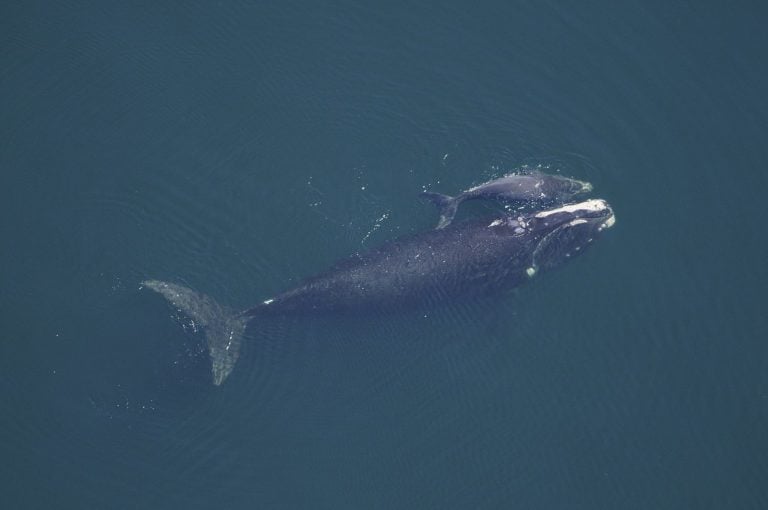
Boaters about 11 nautical miles (roughly 12.7 miles) off St. Augustine Inlet, Florida, spotted a North Atlantic right whale with a newborn on Nov. 10 and reported the pair to NOAA, Cape Cod Times reported. Researchers with the Florida Fish and Wildlife Conservation Commission’s research institute confirmed on Nov. 12 that the mother was Curlew, #4190 in the North Atlantic Right Whale Catalog.
“Right Whales Have Arrived!” the institute wrote on Facebook, with a photo of the mother and calf at the surface. The two are the first documented mother-calf pair of the season.
Where had Curlew been before this?
In April 2025, Curlew and another female named Koala appeared off Bimini in the Bahamas, the first North Atlantic right whales ever documented in Bahamian waters, according to Cape Cod Times. Most right whales had already started north toward feeding grounds in Cape Cod Bay and elsewhere off New England and Canada. The pair traveled through the Gulf of Mexico and along the Florida coast before surfacing in the islands.
“They’re certainly doing an exploration,” New England Aquarium senior scientist Philip Hamilton said at the time, the paper reported. Hamilton noted that long-term associations between adult females are relatively uncommon.
How do scientists know it’s her?
Right whales carry knobby patches of rough skin on their heads called callosities. The patches look white because whale lice cover the otherwise black skin. Each whale has a unique callosity pattern, and scientists use it to identify individuals.
Is a Nov. 10 calf early?
Right whales regularly give birth in the southeastern United States, and the calving season typically runs from mid-November through mid-April off Florida and Georgia. The research institute’s post said “she is early!”, The Florida Times-Union reported.
“This seems a little earlier than usual,” Lindsey Jones, who manages the right whale catalog at the New England Aquarium, told Cape Cod Times. “We’ve had a few calves in early November, and the surveys cover them really well,” she added.
Females reach sexual maturity at about age 10 and carry a single calf for more than a year. Curlew, a teenager, is a first-time mother, according to Jones. A typical newborn is about 14 feet long, and adults can reach 52 feet and 140,000 pounds.
Why were they resting at the surface?
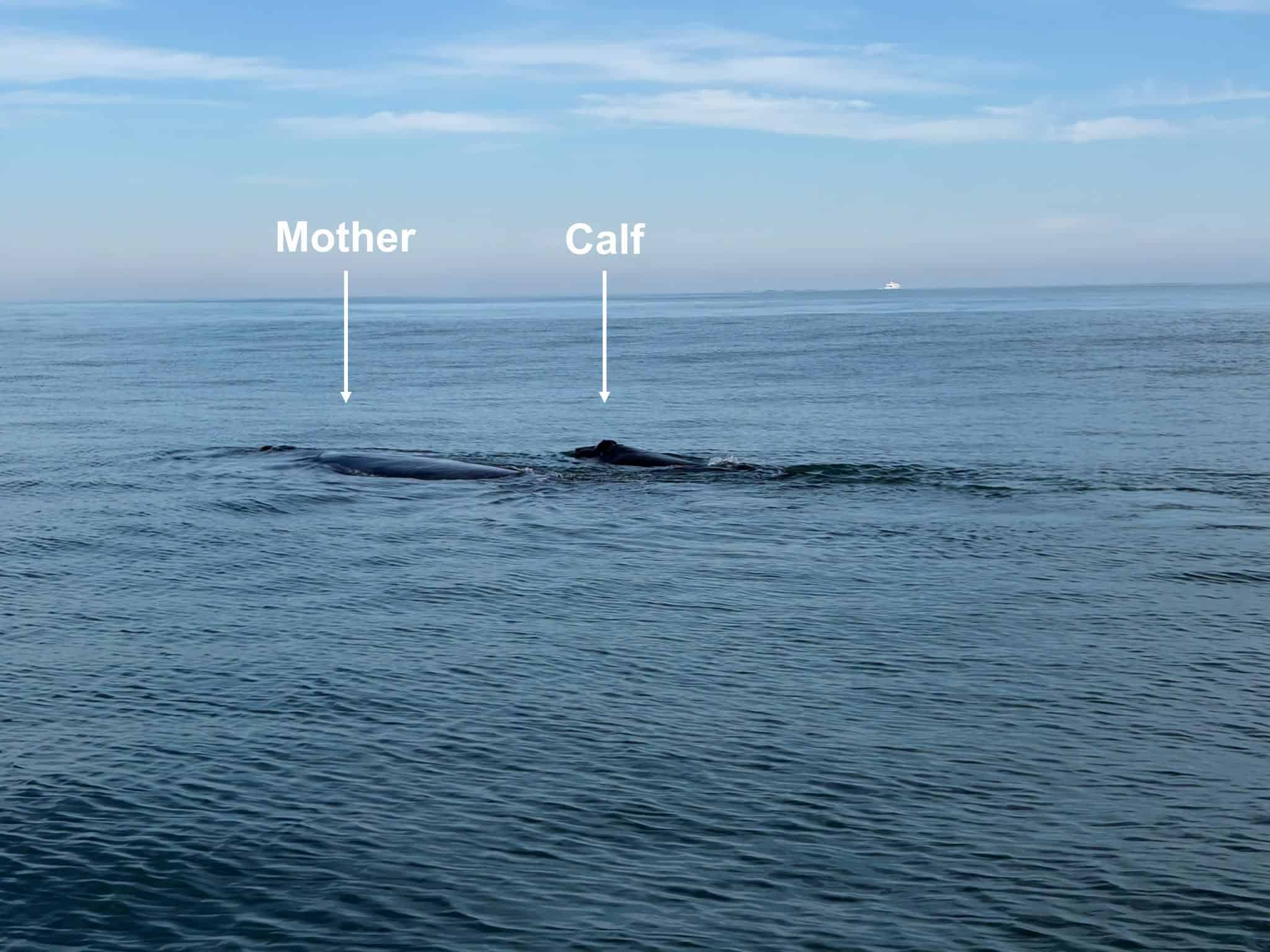
Curlew and her calf were photographed resting near the surface, where mothers and calves spend much of the first months, Cape Cod Times reported. New mothers put most of their energy into nursing, so they conserve the rest with behaviors like resting and shallow breathing, according to NOAA Fisheries. They swim and rest at or just below the surface with very little of the body showing.
That habit puts them in the path of boats. Oceana marine scientist Nora Ives said the whales’ dark coloration and low profile make them difficult to see, according to Cape Cod Times. Oceana noted a recreational fishing vessel in the background of the first photo of the pair.
Collisions with boats as small as 30 feet can kill a right whale, especially a calf. In Seasonal Management Areas, most vessels 65 feet or longer must slow to 10 knots (about 11.5 mph) or less, and federal rules bar anyone from coming within 500 yards (1,500 feet) of a right whale. The seasonal speed limits in the Southeast were scheduled to take effect Nov. 15, five days after the sighting, Cape Cod Times reported.
“Boaters should slow down and stay vigilant to protect themselves and the whales from a catastrophic crash,” Ives said, according to Cape Cod Times.
Why does one calf count for so much?
NOAA Fisheries estimates about 380 North Atlantic right whales remain, with only about 70 reproductively active females. A healthy female gives birth every three years, but females now average one calf every 7 to 10 years.
“With only around 380 individuals remaining, each new birth is a fragile building block toward recovery,” Ives said, according to Cape Cod Times.
Researchers counted 24 calves last season, the most since 2009, according to Cape Cod Times. Another adult female, nicknamed Calvin, has also been spotted heading south toward the calving grounds, the Times-Union reported, citing the institute’s post.