Quick Take
- One scientist's hunch about live bats looked like a mistake in the data. The numbers said otherwise.
- Being the biggest bat in the sky used to be an advantage. Now it's a liability.
- Hunting isn't the only suspect in this shrinking mystery.
- Protecting these bats is harder than it sounds, and the stakes go beyond their size.
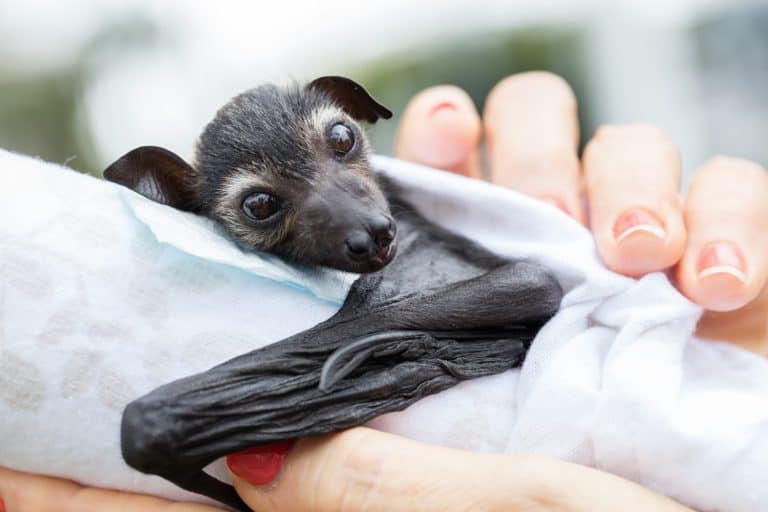
Madagascar’s flying foxes are among the largest bats in the world. However, this title may not hold for much longer, as commercial hunting is causing the flying foxes to shrink.
Madagascar’s Flying Fox Is Shrinking Due to Commercial Hunting
The Madagascar flying fox is the largest bat in Madagascar. However, today’s bats look significantly smaller than they did just a few decades ago. But could these bats really be shrinking?
According to a new study published in the Journal of Mammalogy, researchers at the Field Museum of Natural History in Chicago have concrete evidence that flying foxes are smaller today than they were 40 years ago. This comes as one of the researchers, biologist Steve Goodman, noted that the live flying foxes he studied were smaller than the museum specimens he referenced.
“Many of these animals were of monster size compared to animals we handle today,” Goodman stated in a press release. This realization spurred the study.
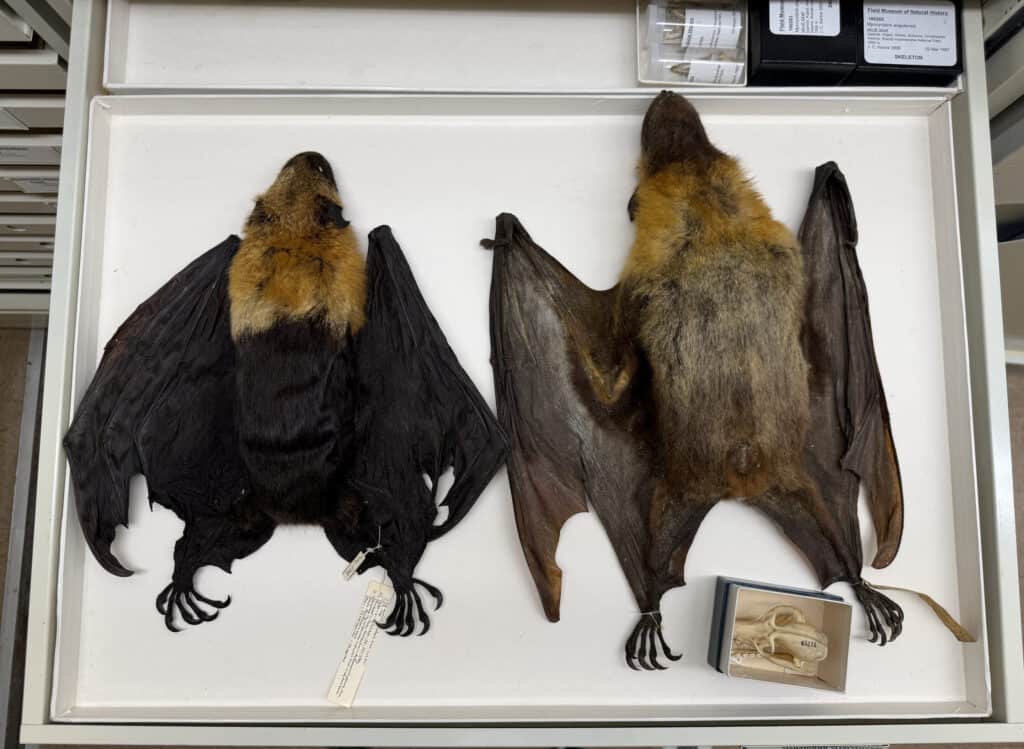
Size differential between a flying fox from 1995 (L) and one from 1948 (R).
©Field Museum / phys.org – Original
Today’s flying foxes are up to 10.6 inches long and have a wingspan of approximately four feet. While impressive, these bats would seem downright dainty compared to their ancestors.
Before 1980, Madagascar flying foxes had a wingspan of five feet. A larger wingspan was necessary to carry a heftier body mass through the air. This was confirmed via measurements of museum specimens of flying foxes, with images from the study showing that a flying fox from 1948 was larger, based on visual observations alone, than one from 1995.
4
ft
feet of wingspan, Madagascar flying fox
- Before 1980
- 5
- Today (approximately)
- 4
- Change
- down 20%
The size difference was easily seen in the skulls and skins of the museum specimens. But neither Goodman nor his colleague, postdoctoral researcher Emily Cornelius Ruhs, anticipated the size differential they found.
Has the Flying Fox Size Changed Dramatically?
To determine whether Madagascar flying foxes were actually shrinking over time or whether some individuals were simply smaller than others, researchers examined 121 museum specimens of Madagascar flying foxes from the past 150 years. The examination was not based on observations alone. They measured the skulls and teeth and looked for trends in size decline in the data. What researchers found was startling.
According to Ruhs, it was painfully obvious that the flying foxes became smaller beginning in 1980. But the change in size was so significant that, at first, the data were believed to be compromised.
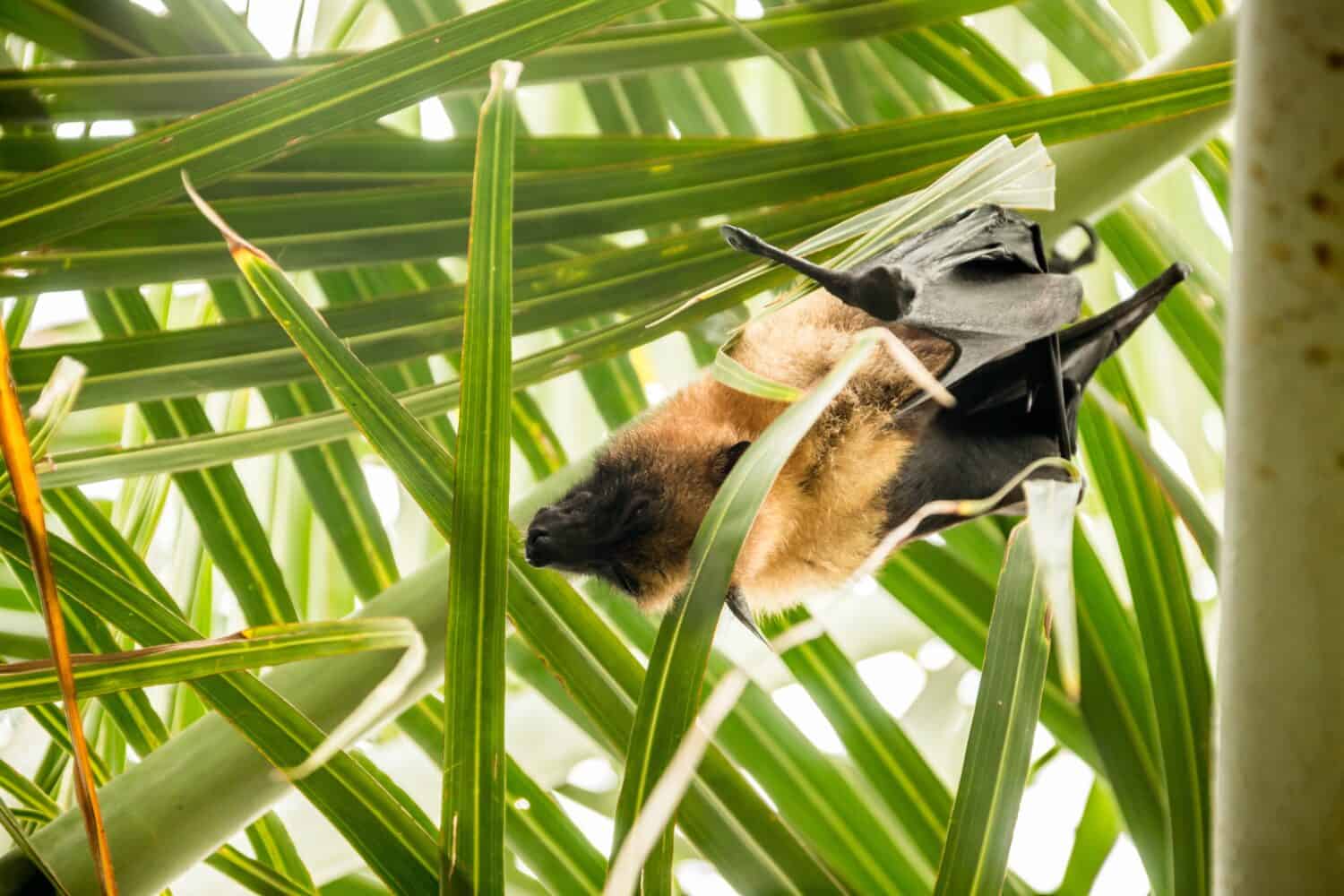
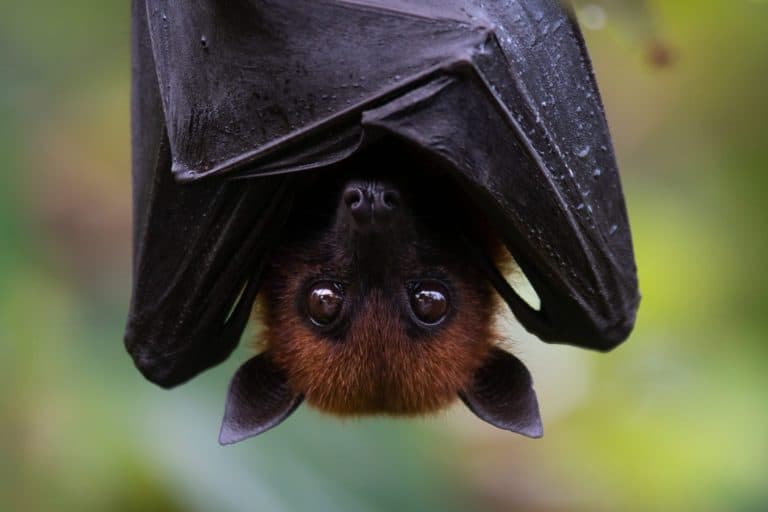
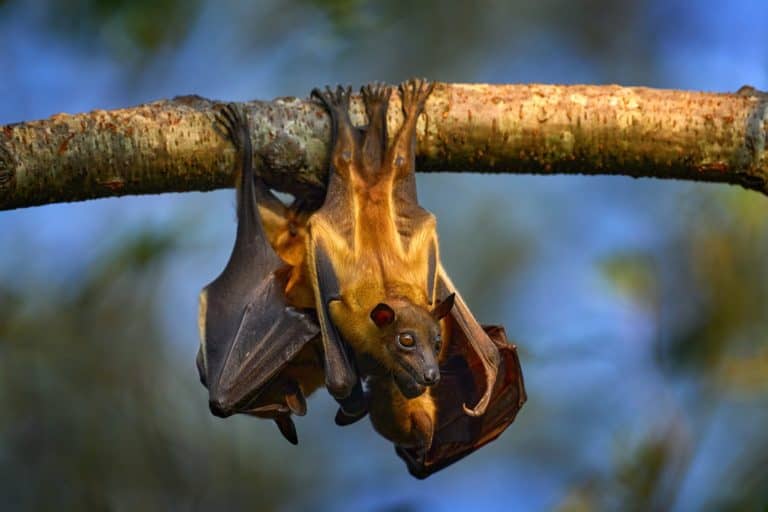
Madagascar flying foxes today have a 6% smaller skull than those of decades ago.
©Lima_84/Shutterstock.com
“I thought that there must be something wrong with the analysis,” Ruhs explained in a press release. “There was no way that the rough estimate we had was correct, but it was.”
Overall, the study found that flying fox skulls before 1980 were about 3.6 millimeters longer than those after 1980. This represents an approximately 6% decrease in skull size. Additionally, dental measurements reflected the same size change. Interestingly, tooth size did not change.
Why Being Smaller is Beneficial for Flying Foxes
Larger animals are easier targets for hunters, increasing their chances of being captured. Consequently, researchers believe their smaller size may help them avoid becoming conspicuous targets while in flight.
“If you’re the biggest bat in the sky, you might be the easiest target,” Ruhs said in a press release. “You’re also going to provide a hunter with the most meat.”
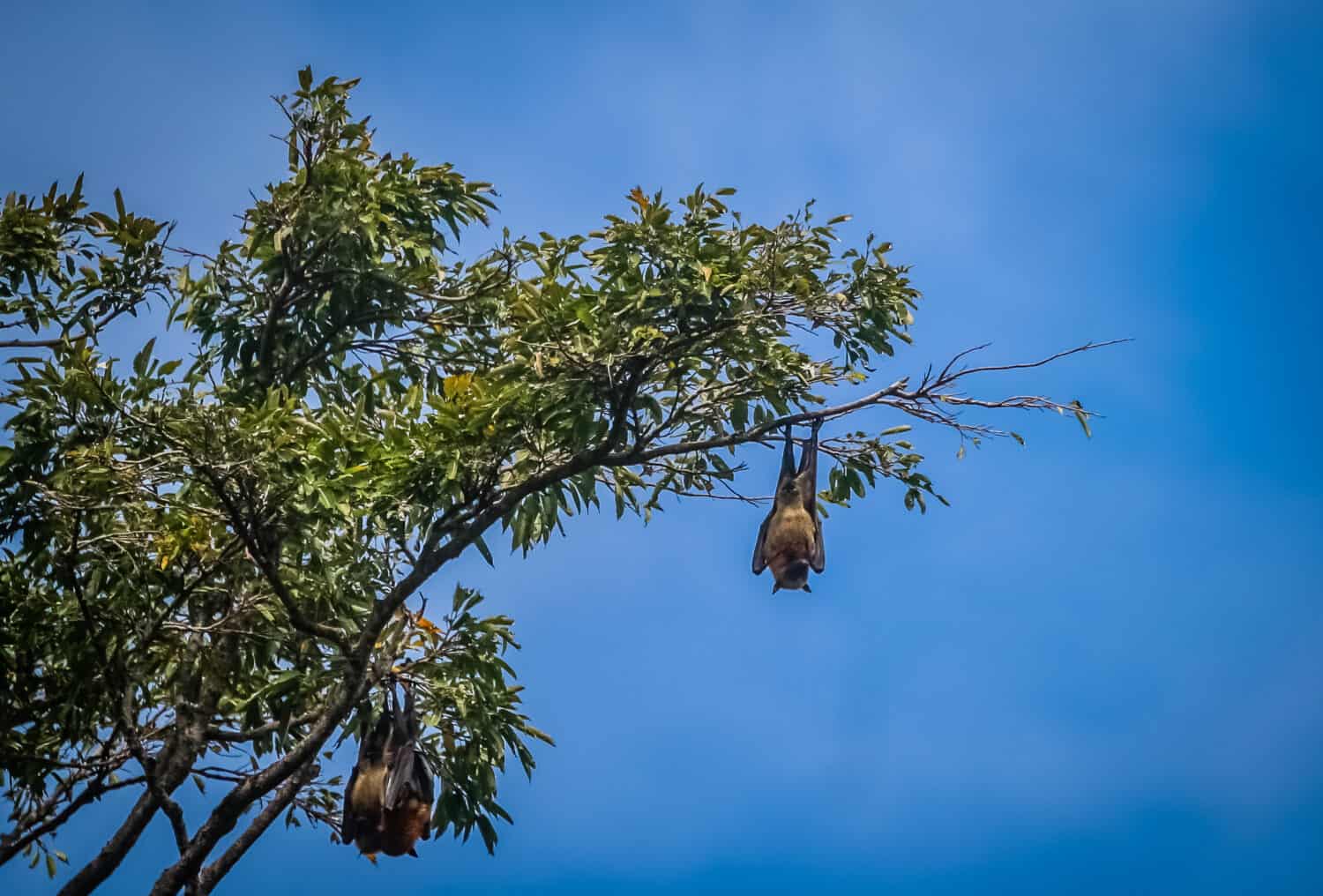
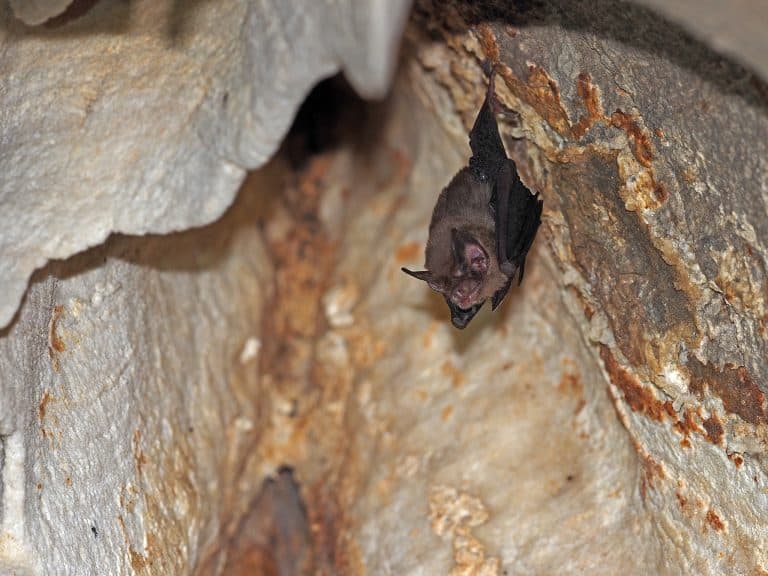
Madagascar flying foxes have shrunk in size, researchers say, to avoid being hunted.
©Pav-Pro Photography Ltd/Shutterstock.com
Therefore, when hunting flying foxes increased dramatically in the 1980s, the bats began to shrink.
Today, larger bats are still the most desirable to hunters. The biggest flying foxes tend to be fully mature and of reproductive age. As a result, individuals that would otherwise contribute to future generations are more likely to be killed, which has accelerated population declines.
Hunting May Not Be the Only Thing Causing Flying Foxes to Shrink
The biggest correlation researchers have found that is driving flying foxes to shrink is hunting. However, this is not the only human pressure contributing to their smaller stature. Most likely, according to Ruhs, a combination of factors has led flying foxes to evolve into tinier versions of themselves.
“Things like deforestation, climate change, inadequate or shifting timing of the fruit season could all be playing a role in making flying foxes smaller than they were 40, 50 years ago,” Ruhs explained in a press release. “I don’t think there’s any one cause that explains it all.”
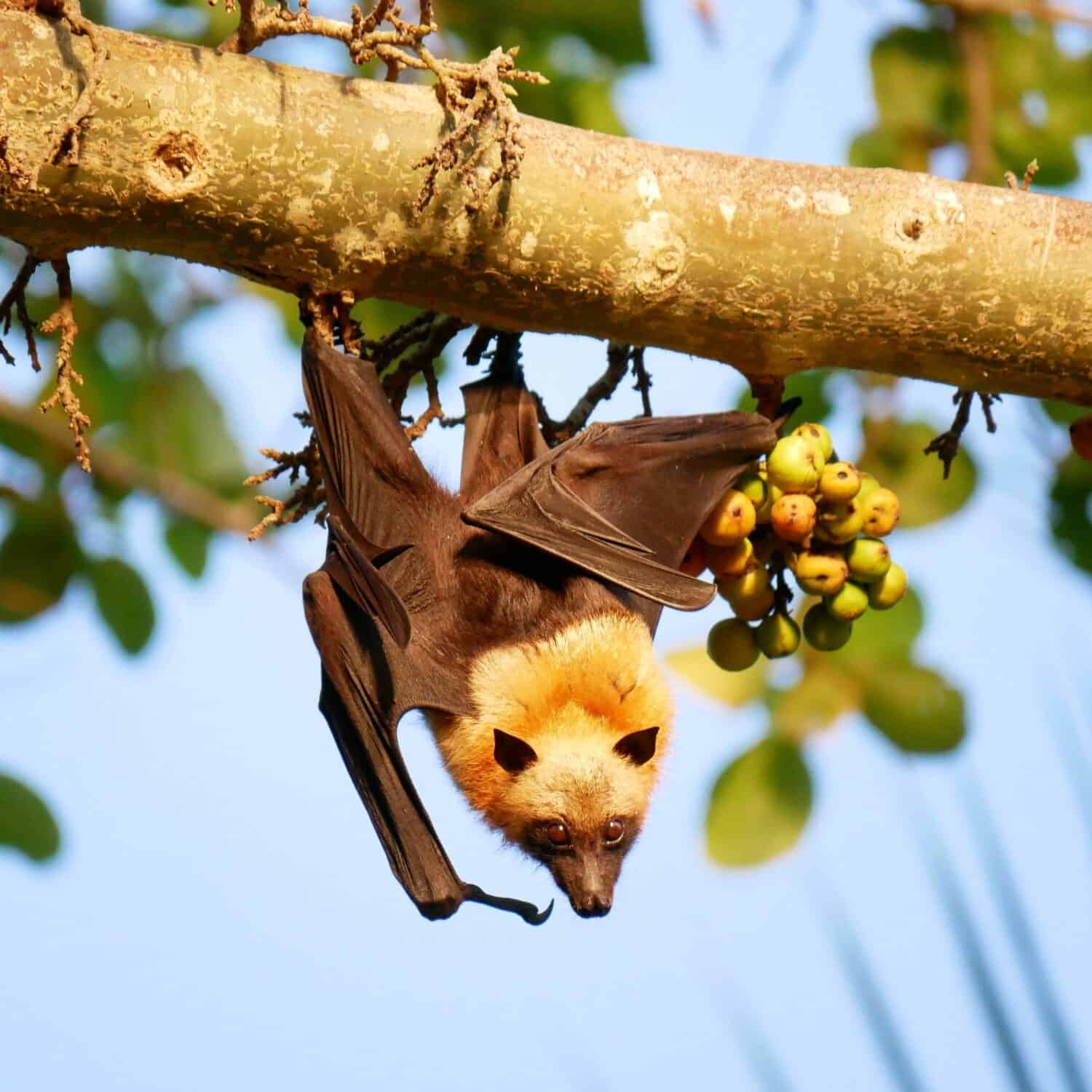
Madagascar flying foxes need more protection to prevent their populations from collapsing.
©UnderVision Pro/Shutterstock.com
That said, researchers are calling for the conservation of flying foxes, specifically by protecting them at breeding sites. To do this, government officials will need to pass new laws to ensure the bats’ safety. This may be difficult, given that flying foxes are a dietary staple for some communities on the island of Madagascar.
If the flying foxes are not protected, Ruhs believes populations will collapse. If this happens, the size of the flying fox will no longer be a concern, as the bats will face certain extinction.