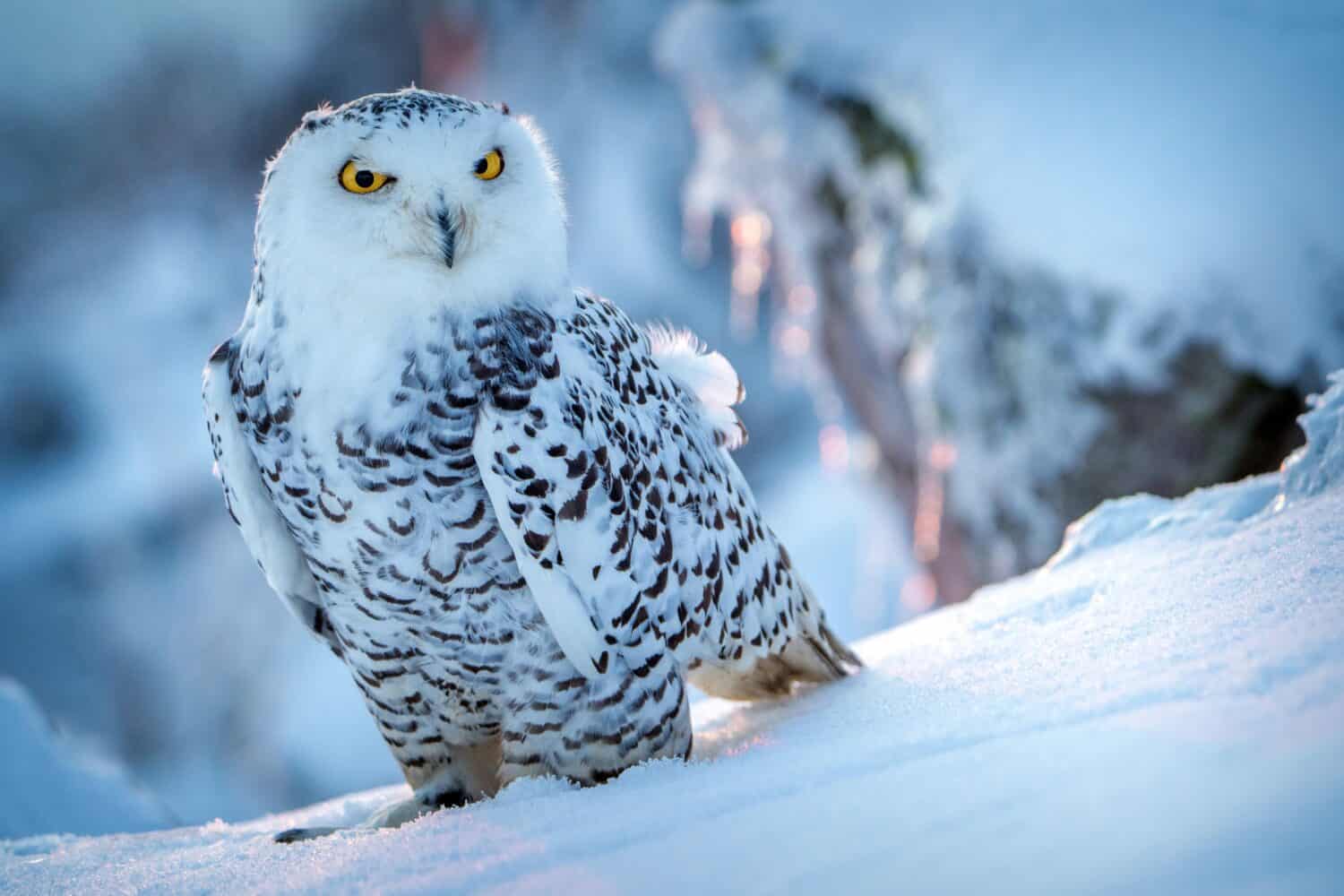

If you are a birder, a fan of Harry Potter, or simply love seeing cool natural phenomena in unexpected places, then you’re going to want to pay attention. Snowy owls are flocking to the northern U.S. during the winter of 2025-2026 in rare irruptions (or migration surges), creating excellent viewing opportunities for wildlife enthusiasts you won’t want to miss! Discover where to spot these magnificent white owls below.
What Are Snowy Owls?
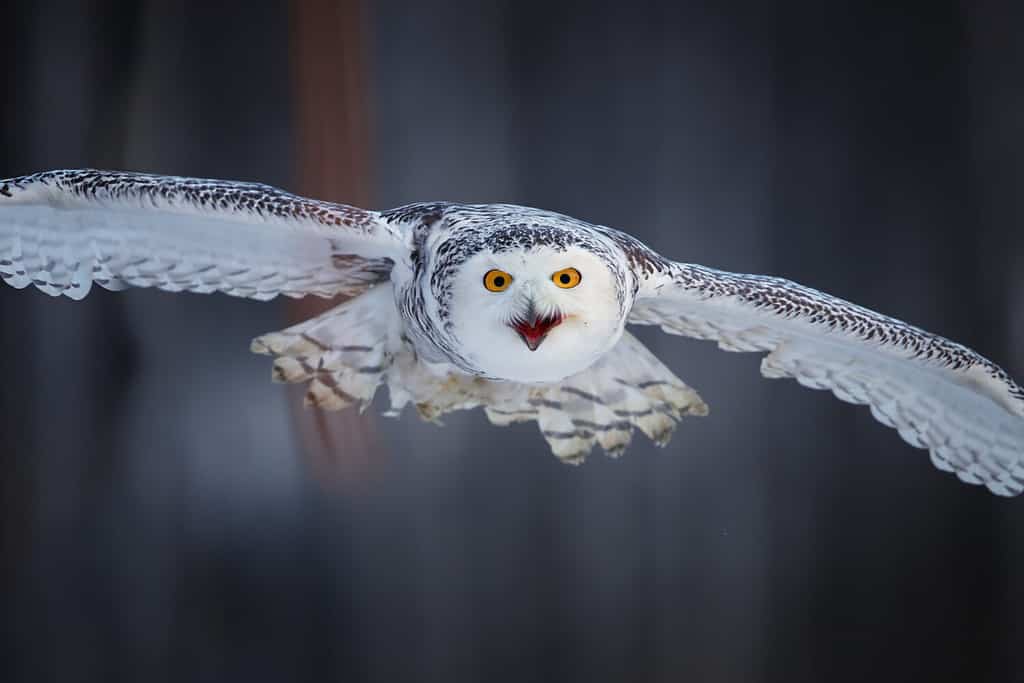
These beautiful owls typically spend their summers in the Arctic.
©Martin Mecnarowski/Shutterstock.com
Snowy owls (Bubo scandiacus) are also known as Arctic owls or white owls. They typically stay north of the Arctic Circle in the warmer months and can usually only be seen when they travel south for the winter, according to Birds of the World. However, they don’t always travel south for the winter, and when they do, it is sporadic and unpredictable where they will go and for how long.
Male snowy owls have white feathers, resembling Harry Potter’s owl, Hedwig. Female snowy owls have brown barring and are larger than males. Both males and females have striking yellow eyes.
Unique Sightings
In November 2025, a pair of snowy owls was spotted along a Lake Michigan beach in Chicago, according to The Associated Press.
“Their nomadic nature makes them hard to study or even figure out patterns,” Edward Warden, the president of the Chicago Ornithological Society, told the AP. “Where they’re going is anybody’s guess.”
Snowy owls have also been popping up in Canada. The Owl Foundation, an owl rehabilitation center, shared that they have admitted two young snowy owls so far, predicting that this year will be a snowy owl irruption year, according to CBC Radio Canada.
Why Are Snowy Owls Coming to the U.S.?
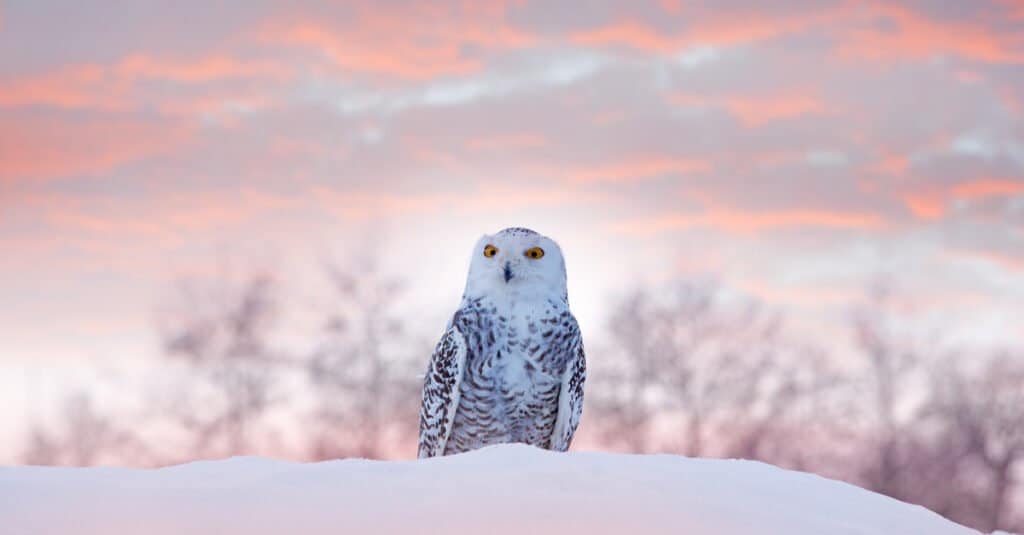
You might get to see snowy owls this winter due to a possible irruption.
©Ondrej Prosicky/Shutterstock.com
Unlike typical bird migration, which is usually predictable and routine, an irruption is a large, sporadic movement of birds. The U.S. Fish & Wildlife Service described it like this: “Irruptions are exceptionally large migrations where birds show up outside their typical winter range.”
The organization said that the snowy owl irruptions were once thought to be caused by hungry birds searching for more food. However, research has shown that the cause is more nuanced. “We now know that it is better explained as an abundance of food during the previous summer, causing a baby boom and therefore more owls moving south,” the U.S. Fish & Wildlife Service’s website stated.
There is no set pattern for snowy owls during the winter months. They are considered nomadic and irruptive migrants, which means they can make surprising and unpredictable appearances in southern Canada, the northern U.S., and occasionally the southern U.S. According to Birds of the World, snowy owls may travel far and wide due to factors such as large broods and declining food supplies, which require the owls to hunt in unusual places to provide for their families.
What to Do If You See a Snowy Owl
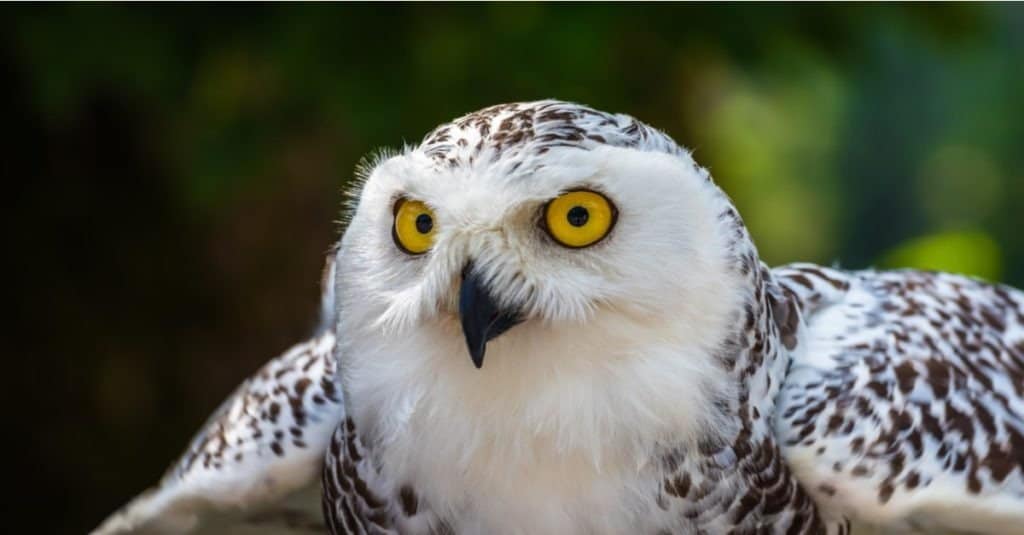
Snowy owls have striking yellow eyes.
©Kayo/Shutterstock.com
Snowy owls are considered a vulnerable species, according to the International Union for Conservation of Nature. This is just one reason you should take care to protect them when you spot one in the wild.
According to the U.S. Fish & Wildlife Service, if you see a snowy owl, it’s important not to disturb them in any way, as they are federally protected birds. As a rule of thumb, if the owl reacts to your presence, you’re too close. Also, be sure not to feed a wild owl, never use a drone near an owl, watch them from inside your car if possible, move slowly and use a quiet voice if you see one in person, and always observe without disturbing them.
Where Can You See Snowy Owls?
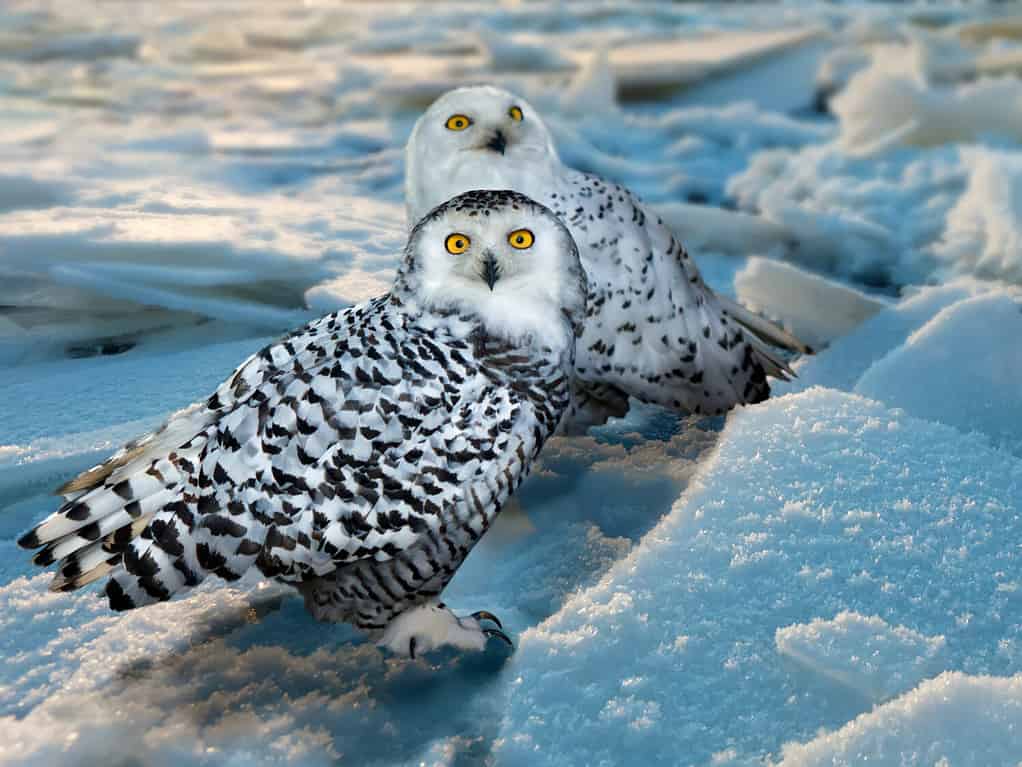
Be sure to never disturb snowy owls if you spot one in the wild.
©BearFotos/Shutterstock.com
Find a map of all snowy owl sightings on All About Birds’ website. Look for them in open areas, including prairies, farmland, coastal marshes, beaches, and large airports, according to the National Audubon Society. According to the Wisconsin Department of Natural Resources, snowy owls are active during the day, but you can also see them around dawn and dusk.
If you are lucky enough to see one of these magnificent creatures, you won’t forget the experience — it’s a true bucket list moment. Elliot Nelson, birder and extension educator at Michigan Sea Grant, told MyNorth.com recently, “When you see a snowy owl, they’re just so starkly colored. And their eyes are so piercing that you feel like it’s an intimate experience—like you’re seeing this owl, and this owl’s seeing you. It’s a real connection to nature.”