
Quick Take
- TNR reduces feral and stray cat populations by sterilizing individual cats, preventing reproduction and lowering nuisance behaviors.
- Evidence from multiple studies shows TNR reduces roaming cat populations, including a 36% decline in sterilized North Carolina colonies and 95% sterilization in Cordoba, Spain.
- Opponents claim returning cats is cruel and ineffective. They argue funds should support adoptions or euthanasia.
No matter where you are in the world, cats are likely roaming around outside. Whether it is city streets, rural farmland, or woodland forests, domesticated cats are a familiar sight, exploring freely.
Some of these cats are family pets allowed to live an indoor/outdoor lifestyle. For the majority of these outdoor explorers, though, life in the wild is the only reality they know. Some are feral. Some are friendly. Some were dumped by uncaring humans, others were born outdoors thanks to an unsterilized cat population.
It is these stray and feral cats that Trap-Neuter-Return (TNR) programs aim to protect. Read on to learn more about TNR, what these programs hope to achieve, and why there is controversy about these efforts.
Trap-Neuter-Return (TNR) Explained
Feral and stray cats are one of the top ten overpopulated species found in urban areas. The goal of any TNR program is to reduce these feral and stray cat populations by sterilizing these cats.
Sterilization does two things. First, it eliminates the ability of these cats to reproduce, thus reducing the cat populations over time. Second, it helps reduce nuisance and territorial behaviors like fighting, loud yowling, and spraying.
One group spearheading TNR efforts is Best Friends Animal Society, a Utah-based animal welfare society dedicated to a no-kill philosophy for homeless and shelter animals across the country. The organization places a strong emphasis on TNR as an effective means to achieve their no-kill goals.
Peter Wolf, Senior Strategist, Shelter and Community Outreach, explains why TNR programs are so important and why they are a better alternative to the alternative—euthanizing free-roaming cats.
“Best Friends wants to see the numbers of free-roaming cats reduced just as much as wildlife conservationists do. However, Best Friends does not believe that killing community cats is ever the solution — and decades of practice show that removal and killing do not achieve the intended goal,” he notes. “If killing or removal were an effective population-control strategy, we would have seen sustained declines in community cat populations by now. Instead, these approaches create a vacuum effect: when cats are removed, new cats move in or remaining cats reproduce, quickly returning populations to their previous levels.”
How a TNR program works in practice is to humanely capture a feral or stray cat using a live trap, then transport it to a veterinarian clinic where it is sterilized. The cat will get one ear tip snipped off, too. The tipped ear helps identify stray cats that have already been sterilized.

A sterilized cat with its ear tipped.
©Krishna777/Shutterstock.com
Once the procedure is complete, the cat is returned and released in the same the spot where it were trapped. The cat then goes on to live out its natural life in familiar surroundings.
After that, community volunteers step in. Wolf notes, “Often, a caregiver (or multiple caregivers) in the community provides food and shelter in a safe location and routinely observes the health of community cats. If new cats join the area, they are also trapped, sterilized, vaccinated and returned.”
For cats living outdoors, the most effective, proven lifesaving tool is to establish a Community Cat Program, or TNVR program, where the cats are trapped, spayed or neutered, vaccinated, and returned to their home in the community.
Peter Wolf, Senior Strategist, Shelter and Community Outreach
Does TNR Work?
“Community Cat Programs are a proven, humane way to manage the population of cats that already exists in most communities, whereas rounding up community cats, bringing them to the shelter, and killing them has been proven not only inhumane but also ineffective,” says Wolf.
“The scope of that round-up would have to be so large, widespread, and quick to make any measurable impact on the free-roaming cat population that it cannot reasonably be done in any community in America. Establishing community cat programs is an essential component of a shelter embracing a no-kill philosophy.”
He cites a detailed study that included a TNVR program in rural North Carolina as proof. The study revealed a 36 percent average reduction in six sterilized colonies over the first two years. Meanwhile, the population of three unsterilized colonies increased by 47 percent. Additional reductions among the sterilized colonies were documented during four and seven-year follow-up censuses.
Other studies also support TNR success. One study from Spain that tracked 225 cat colonies in the city of Cordoba noted a 95 percent sterilization rate of the free-roaming cat populations from 2020 to 2024. Study findings concluded that within a few years, the impressive sterilization rate could directly reduce the overall roaming cat populations in the city.
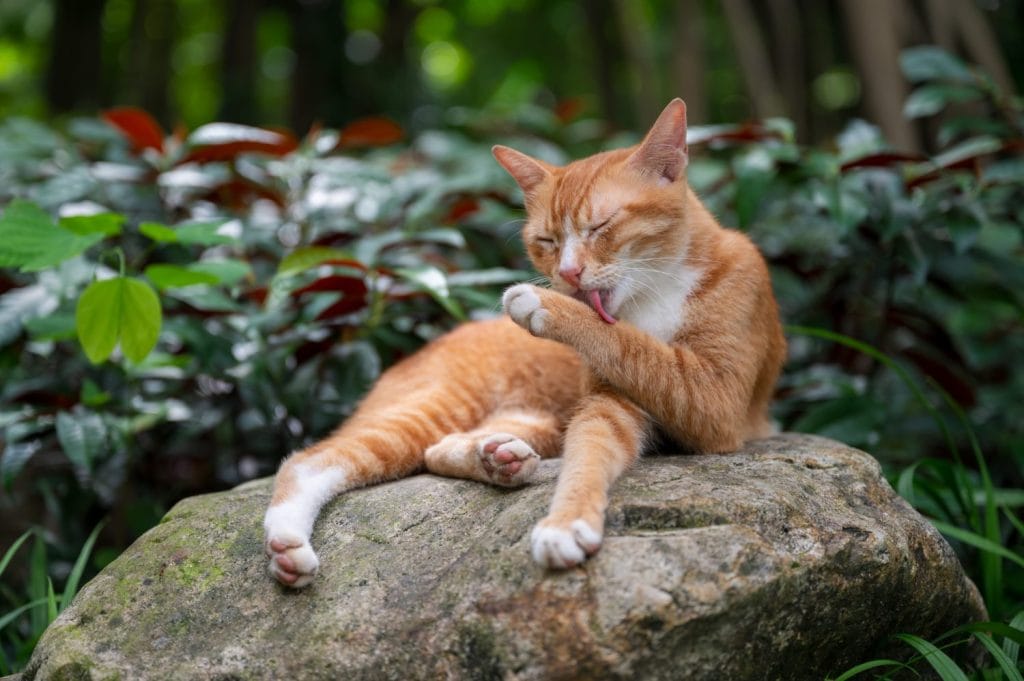
Studies show that TNR programs are effective at controlling stray cat populations.
©Chendongshan/Shutterstock.com
Another study comes from Florida. There, the Hillsborough County public animal shelter’s TNR efforts significantly contributed to a 51 percent decrease in cat intakes since 2007. It also helped increase the live-release rate to nearly 82 percent.
In the San Francisco Bay Area’s Foster City area, a large colony of 175 feral and stray cats was reduced to just one over the span of 16 years. The initiative, Project Bay Cat, began in 2004 as a unified effort among the Homeless Cat Network, Foster City, and local community members. Together they undertook a strategic TNR effort, relying on two local veterinary hospitals to spay and neuter the cats while also providing vaccinations.
Alley Cat Allies, a cat advocacy group, also believes TNR programs are effective and essential. The organization offers a variety of resources for anyone who wants to start their own TNR project. The group also maintains a list of additional studies and projects that support the success of TNR projects throughout the United States and around the world.
What’s Controversial About TNR?
As Aurora Velazquez, Best Friends Director-Eastern Region, notes, “not everyone loves and appreciates community cats. Some jurisdictions have ordinances that may place restrictions or parameters on activities involving community cats.”
These biases mean that TNR programs are not always welcomed with open arms.
Yet, proponents of these programs say it is the most humane way to manage the feral cat overpopulation crisis. These programs, they argue, are the best strategy for reducing feral cat populations while simultaneously ensuring the health and well-being of cats living in the wild.
Best Friend’s Wolf notes, “For cats living outdoors, the most effective, proven lifesaving tool is to establish a Community Cat Program, or TNVR program, where the cats are trapped, spayed or neutered, vaccinated, and returned to their home in the community. These programs help control the population of cats and keep them healthy and safe from illness in the community.”

TNR programs are not without controversy.
©EAKKARATH THAMJAROEN/Shutterstock.com
Opponents of the practice disagree.
One argument is that homeless cats deserve better than being returned to the wild after veterinary attention. Their arguments put the responsibility squarely on humans to offer a better quality of life to homeless cats. The New York State Humane Association, one opponent of the practice, points out that the feral cat population originated due to “human indifference and ignorance.” They say returning domesticated animals to unprotected and dangerous environments is cruel and causes unnecessary suffering.
Opponents also claim the practice is ineffective at curbing the feral cat population and doesn’t diminish the risk of ecological harm. They argue that stray cats kill a large volume of wildlife and deplete wildlife food supplies. National Park Service data states that free-ranging cats (whether pets allowed outdoors or feral cats) are responsible for killing billions of small mammals, birds, and reptiles each year.
Some opponents also believe that the money spent on TNR programs could be better used to support adoption programs or euthanasia for the most feral cats.
So, how do TNR proponents best position their efforts for success, particularly when faced with instant backlash from TNR opponents?
Velazquez offers a few tips. Be a good neighbor. Don’t establish community cat shelters on private property without permission. Ensure shelters are well maintained.
Her biggest piece of advice though is to communicate. She notes, “Often just talking to fellow community members so they understand why shelters may be in their area and have assurances that they will be cared for and maintained can be incredibly helpful to avoid any conflicts.”