
Quick Take
- Alligator lungs work nothing like a mammal's, and the animal they actually resemble will catch you off guard. Explore alligator lung anatomy →
- A sneeze is not just a simple reflex. It recruits multiple brain regions and a cascade of chemicals most people never suspect. See the sneeze mechanics →
- That visible shudder rippling through an alligator's body right before it sneezes? It's doing something specific, and the reason matters. Discover why the shudder matters →
Sneezes can be hilarious, embarrassing, or shocking, but it’s almost impossible to stop them! It’s not just humans that sneeze; this Instagram post shows an alligator feeling a sneeze coming on, and then there is a surprisingly polite ‘achoo’ for such a fearsome animal. Let us explain the science behind sneezing.
Alligator Respiratory Systems
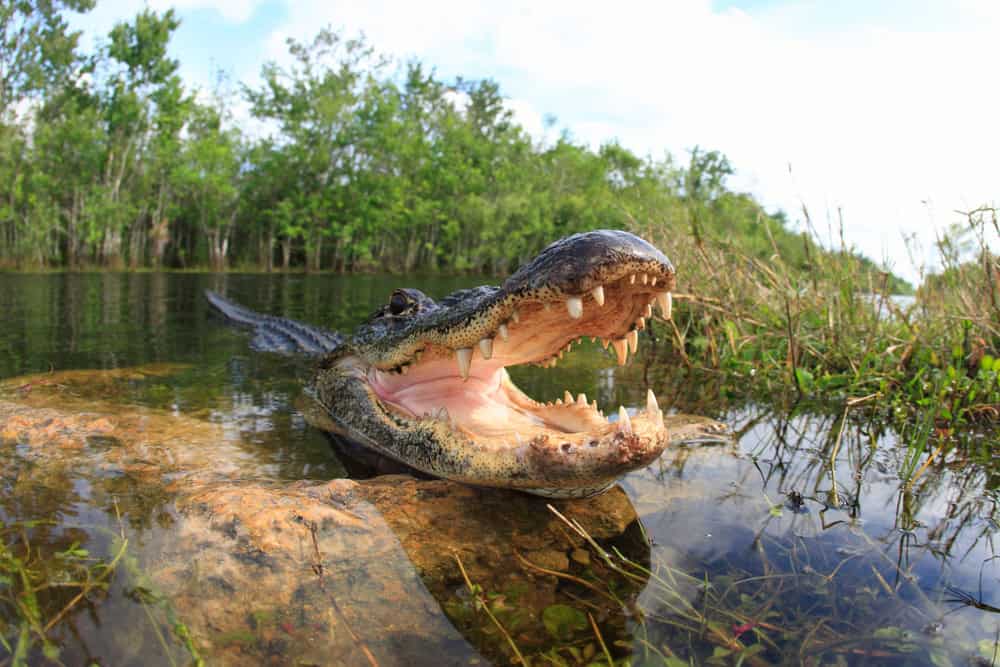
American alligators (Alligator mississippiensis) are large crocodilians with armored bodies and a muscular, flat tail. The males are larger than the females and grow to around 11 feet in length. They have a long, rounded snout with upward-facing nostrils at the end so that they can breathe when the rest of their body is underwater. When basking on land, crocodilians can breathe through their mouths.
Research published in 2010 revealed that their lungs are structured surprisingly like those of birds. Scientists tracked airflow patterns in alligators by using MRI scans on living animals. They also pushed fluids containing tracking agents through the lungs of dissected alligators. The experiments showed that alligators use a one-directional airflow, which is the same as that of birds. This differs from mammals, where the air moves through the alveoli (tiny air sacs within the lungs) in a bidirectional flow.
In alligators, the air enters the windpipe and moves through the lungs toward the tail, then back out of the nostrils through the windpipe. Their respiratory system can get irritated by tiny specks of dust, just like ours can.
What Is a Sneeze?
Sneezes are a reflex that helps the body expel irritants from the respiratory tract. We take sneezes for granted as a normal part of life, but they actually involve a network of intricate neural pathways with the release of neurotransmitters (chemicals that transmit nervous impulses) and several brain regions.

Alligators need to sneeze just like humans.
©Pixel-Shot/Shutterstock.com
A sneeze starts when an irritant stimulates nerve endings in the nose. They send messages to the ‘sneeze center’ in the brain, located in the medulla, which is part of the brainstem. This prompts the brain to initiate the ‘sneeze build-up,’ which involves the chest muscles, diaphragm, and throat.
First, the lungs fill with air, and this is what you see when the sides of the alligator’s body appear to vibrate. Then, the diaphragm contracts as the chest muscles tighten and air is forced at great speed out through the nose and mouth. Hopefully, this removes whatever was irritating and looks every bit as satisfying as a human sneeze.