Quick Take
- Kipekee, a spotless two-year-old giraffe at Brights Zoo, died on Nov 26, 2025, with a necropsy underway to determine the cause.
- Spotless giraffes are extremely rare; only two known individuals exist, including Kipekee and a 2023 Namibian observation.
- GCF says the solid coat mutation does not indicate broader health problems.
Kipekee, a two-year-old “spotless” giraffe housed at Brights Zoo in Tennessee, died suddenly on November 26, 2025, shocking both the zoo staff and the public. According to the zoo’s announcement, a full necropsy (animal autopsy) is being conducted in collaboration with giraffe veterinarians and consultants, as well as experts at the University of Tennessee, to determine the cause of death.
This is especially tragic because giraffes typically live much longer—often more than 30 years in the wild, and commonly into their 20s or beyond in captivity. The unexpected early death of Kipekee has therefore raised many questions: Was there something unusual or dangerous about being spotless? Did being in human care contribute to her demise? At the moment, zoo staff say the lack of spots likely did not contribute to her death, but the investigation remains open pending the necropsy results. As of now, no publicly available credible report has shared the findings of the necropsy.
So What’s the Deal with Spotless Giraffes?
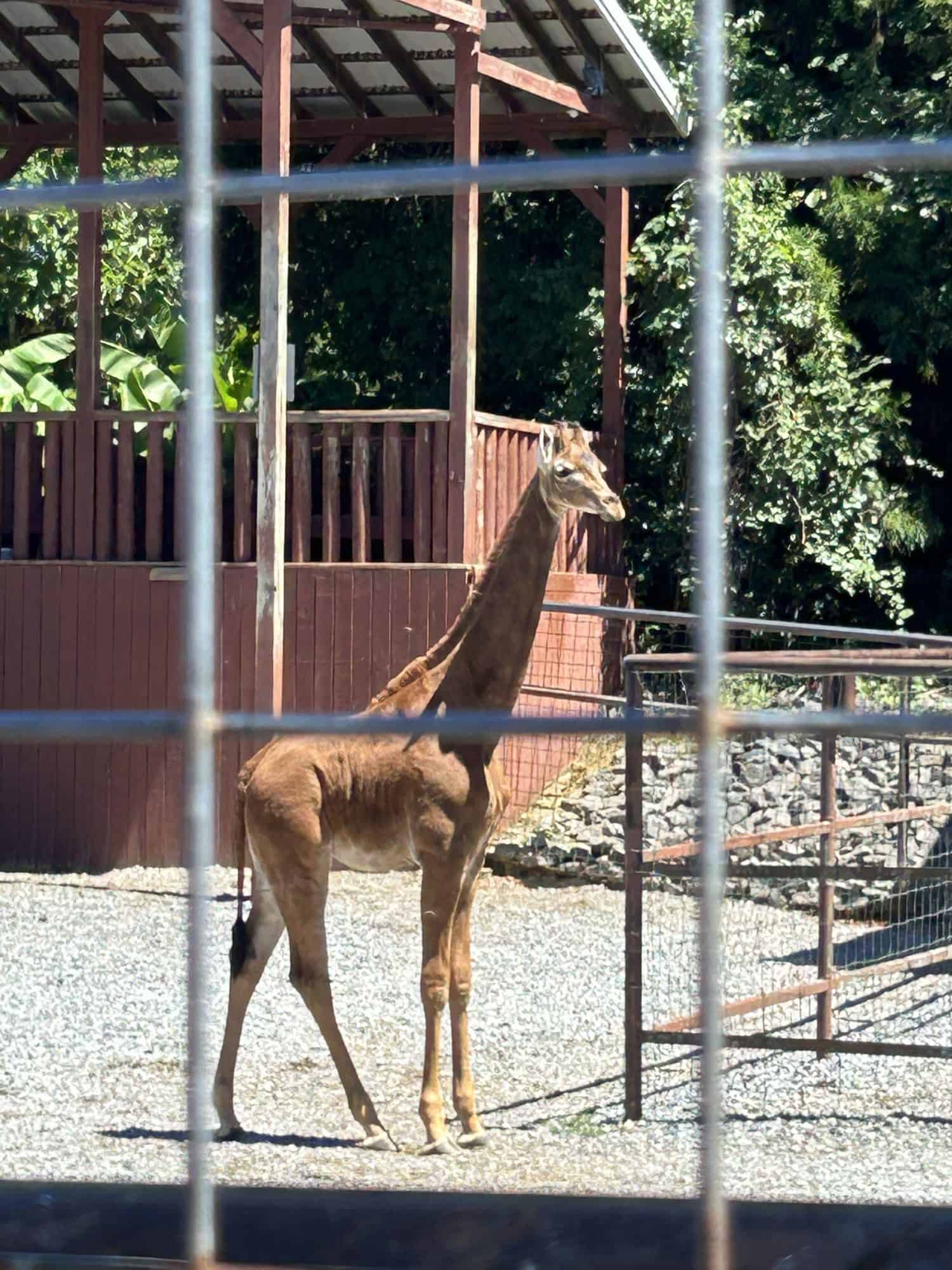
Including Kipekee, there are currently only two known spotless giraffes in the world.
©brinabarnesphotos/Shutterstock.com
To understand why Kipekee’s story captured so much attention, it helps to know how unusual spotlessness is in giraffes. When you conjure an image of a giraffe in your mind, you likely first envision the long neck, followed by the distinctive patches of irregular brown blotches separated by lighter fur. That’s the characteristic giraffe look, unique to each individual, like fingerprints. A spotless giraffe lacks that spotted pattern entirely. Instead, she has a uniform coat color, usually a shade of brown. No blotches. No lighter lines. Just solid coloring across its body.
Such giraffes are extremely rare. Before Kipekee was born in 2023 at Brights Zoo, the last documented spotless giraffe was born in 1972 at a zoo in Tokyo. And while a second spotless giraffe was later observed in the wild (in Namibia, in 2023), that makes only two known spotless giraffes worldwide. At the time of her birth, Kipekee was very likely the only spotless giraffe living in human care.
Scientists believe the absence of spots is most likely due to a genetic mutation (or perhaps multiple mutations) that interfere with the normal development of a giraffe’s coat pattern. In mammals, coat patterns form very early in development, guided by the same kinds of biological cues that create stripes on zebras or spots on leopards. According to experts from the Giraffe Conservation Foundation (GCF), there is no sign that the mutation itself indicates any broader genetic problem or inherent health risk.
Some other unusual giraffe color variations, such as all-white giraffes, are caused by a condition called leucism, which leads to much lighter skin and hair because the body doesn’t produce normal coloring. But these leucistic giraffes are different from the evenly brown ‘spotless’ giraffes like Kipekee. Spotless giraffes are not albino or pale; they simply lack the patterned spots. Otherwise, based on what experts have seen so far, spotless giraffes seem completely normal.
Why Do Giraffes Have Spots?

Every giraffe’s spot pattern is unique, like human fingerprints.
©Siyanafathimaa/Shutterstock.com
Giraffes’ spots certainly look cool, but they’re more than mere decoration; they serve practical purposes in the wild.
Camouflage. The irregular patches help giraffes blend into the dappled light of savanna woodlands. This makes it harder for predators like lions or leopards to spot them, especially the calves.
Thermoregulation. Under each patch lies a dense network of blood vessels. These “thermal windows” help giraffes regulate their body heat by letting blood close to the skin dissipate warmth.
Individual and social identification. Because each giraffe’s spot pattern is unique, it helps individuals recognize one another. This can aid in mother–calf bonding, social grouping, and even mate selection.
When a giraffe is spotless, it essentially loses these benefits. In the wild, this could make survival more difficult. Calves might be easier for predators to spot, body-heat regulation could be compromised, and social signals might be weaker.
However—and this is important in the case of Kipekee—these disadvantages are far less relevant in a zoo environment, where there are no predators, temperature and shelter are regulated, and food and medical care are consistently provided.
So What Happened to Poor Kipekee?
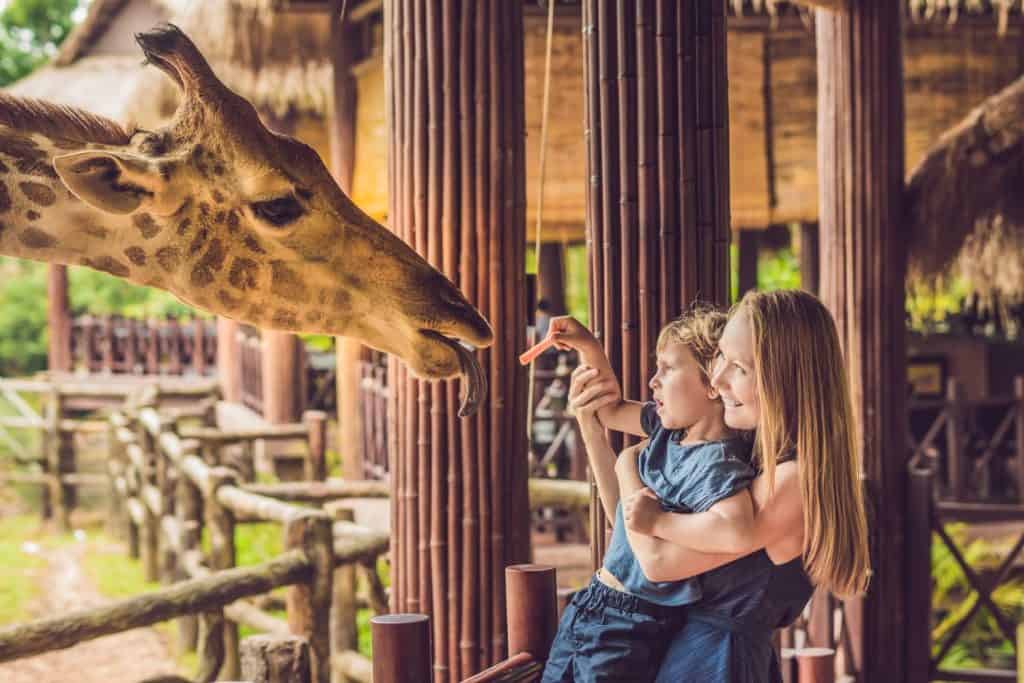
Giraffes often live long, healthy lives in captivity.
©Elizaveta Galitckaia/Shutterstock.com
Was Being Spotless a Factor?
At this point, the short answer is: there is no evidence that it did. The initial public statement from Brights Zoo indicates that the absence of spots was not believed to be medically significant in a zoo setting and is unlikely to have contributed to Kipekee’s death. Experts from the GCF also noted when Kipekee was born that the genetic mutation causing her solid coat did not appear to be linked to any health problems—she was deemed “healthy and normal,” apart from her unusual appearance.
That said, because spotless giraffes are so rare, there is very little scientific data on long-term health or viability of such individuals. The mutation that disrupts the formation of a normal spot pattern may have additional effects we don’t yet understand, or it may affect only the pattern and nothing else. We just don’t have enough cases to draw strong conclusions. So, until the necropsy results are out, we simply can’t give a definitive answer.
It’s also worth remembering that young giraffes—whether in zoos or in the wild—can die from a wide range of causes unrelated to coat genetics. These include congenital heart defects, gastrointestinal blockages, infections, accidental injuries, or sudden neurological or respiratory events. Without necropsy results, any of these remain plausible explanations.
Could Being in Captivity Have Played a Role?
It’s worth considering whether being in a zoo might have influenced Kipekee’s lifespan, for better or worse. In many cases, captive giraffes live longer than their wild counterparts because they receive regular food, shelter, veterinary care, and are protected from predators.
Still, captivity has its own health risks for giraffes. One common problem is hoof health: in the wild, giraffes walk long distances over varied terrain, which naturally wears down their hooves. In zoos, however, a lack of varied terrain and limited movement can cause hooves to overgrow or soften, potentially leading to mobility problems or injuries.
Other challenges giraffes in captivity may face are stress, social disruption, or diet differences compared to wild giraffes. And while zoos strive to mimic natural conditions, they cannot perfectly reproduce the complexity of a savanna ecosystem. That said, nothing currently published suggests that being in human care directly explains Kipekee’s early death, especially since many giraffes in captivity live well into their 20s or even 30s.
For now, the zoo’s request for privacy as the necropsy proceeds suggests we may have to wait some time before a definitive answer emerges.
A Sad Reminder of Nature’s Unpredictability
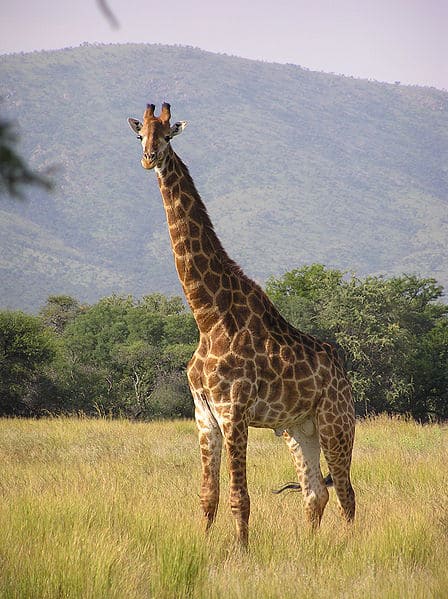
Giraffes are typically spotted creatures.
©Miroslav Duchacek (from Czech Republic) / CC BY-SA 3.0 – Original / License
The story of Kipekee illustrates a bittersweet truth: even when humans go to great lengths to care for wild animals, nature retains its unpredictability. A rare genetic mutation gave her a coat unlike any giraffe seen in more than half a century, but that novelty did not guarantee a long life. Until the necropsy results come in, the cause of her death remains a mystery. What we can say with some confidence is that there is no current evidence linking her early death to her spotlessness. Rather, it seems more likely that her passing was due to a more common cause—such as disease, a congenital issue, or an accident—albeit one that tragically struck at a young age. Kipekee’s life was short, but she has already served as a powerful reminder of the complexity and fragility of wildlife, even when under human care. Her story is a sad reminder of not only life’s wild variety but also its fragility.