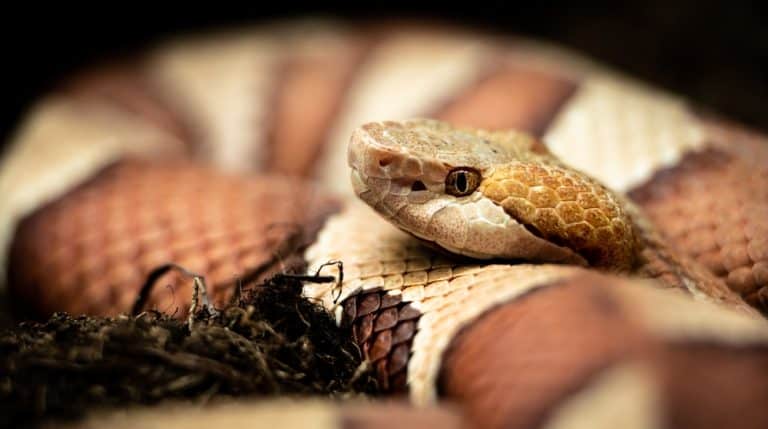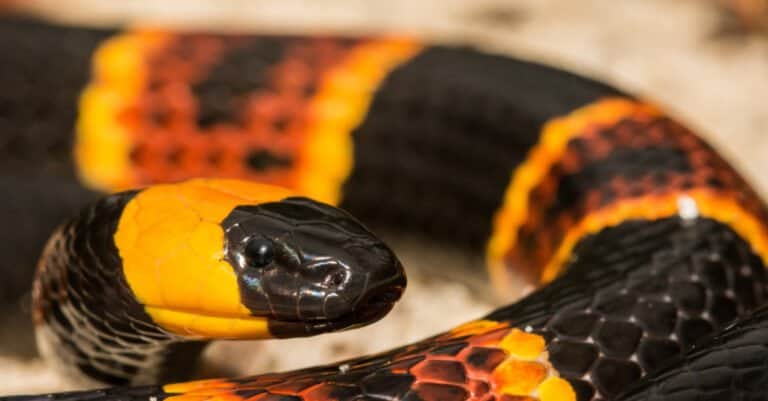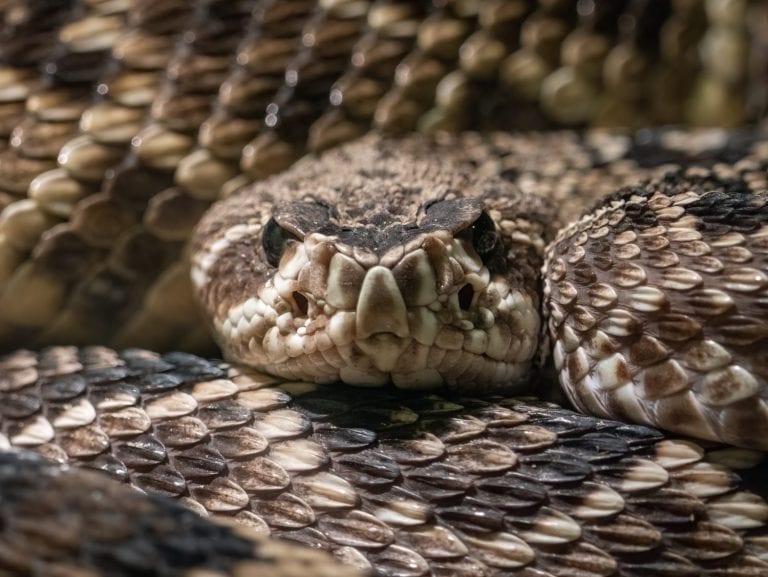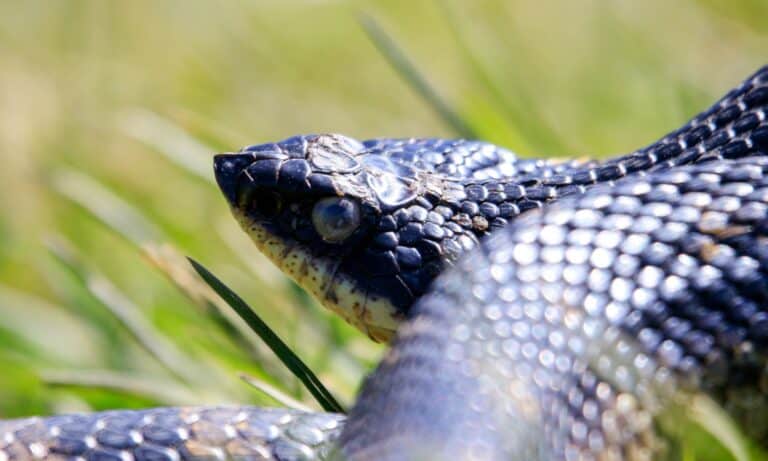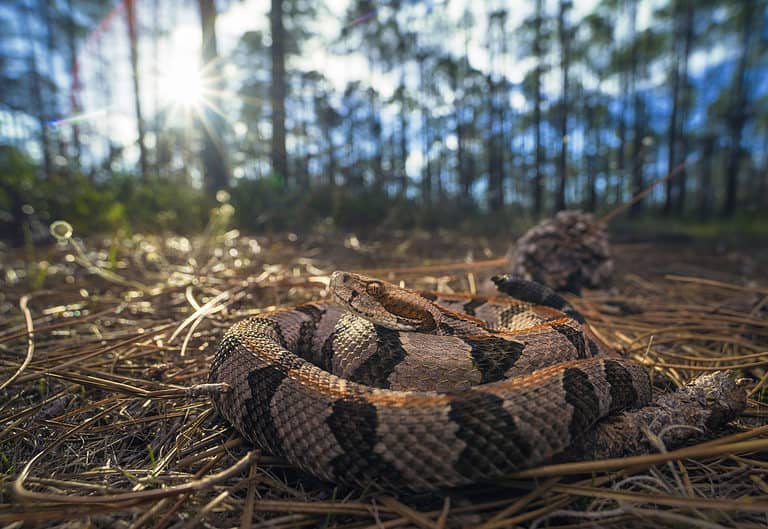

Montana may seem like a state that would be a snake’s playground, but in reality, there are only 10 snake species that call Montana home. Of those species, the majority do not pose any harm to people, with only one snake being venomous. But just because these snakes are essentially harmless to people, it does not mean they cannot be intimidating in size. Montana has big and dangerous snakes. To stay safe when encountering these snakes, always give them an escape route if you come across one unexpectedly, and leave them alone if you see them from a distance in the wild.
Prairie Rattlesnake
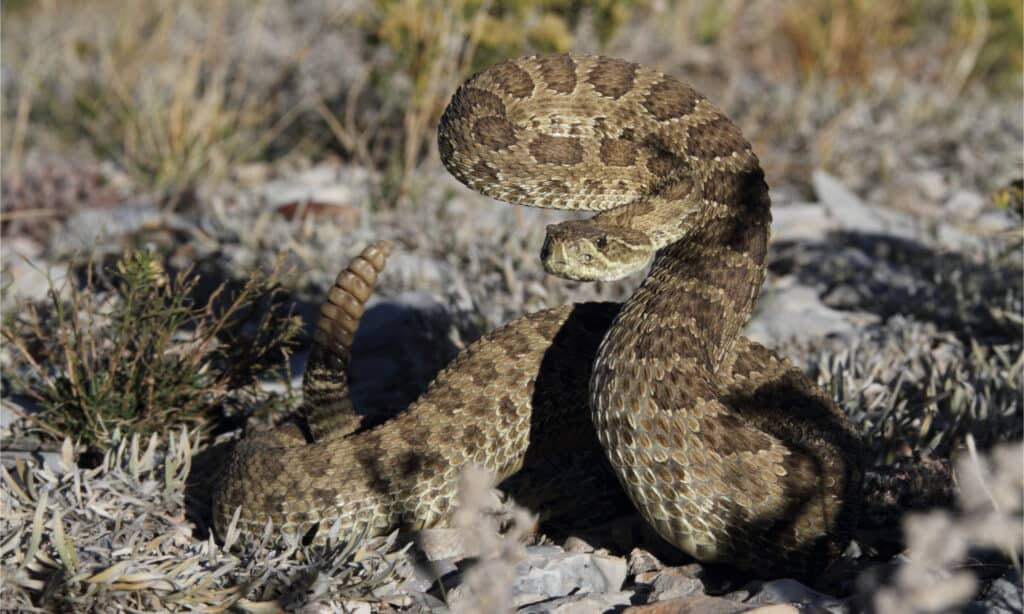
The prairie rattlesnake is the only venomous snake that lives in Montana. It grows to be five feet long.
©Harris Motion Photo/Shutterstock.com
The prairie rattlesnake is the only venomous snake in Montana. It can grow up to five feet long and is quite robust. Unlike other venomous snakes, the prairie rattlesnake is not thin, with a thicker body perfect for consuming smaller mammals and birds.
Hopefully, a prairie rattlesnake will shake its rattle to warn people they are getting too close. However, if they choose not to, prairie rattlesnakes can be identified by their body colors, which can range from yellowish to light brown, green-gray, or even Army green. Additionally, given that they are a pit viper, the snakes have a triangular-shaped head with vertical pupils.
Prairie rattlesnakes live in a variety of habitats, including prairielands, grasslands, semi-desert environments, and forests. If bitten by a prairie rattlesnake, the venom can prove to be life-threatening to some. But, as long as medical treatment is sought immediately, where it can be determined if an antivenom is needed, the fatality rate for untreated individuals is low, at one in 100.
North American Racer
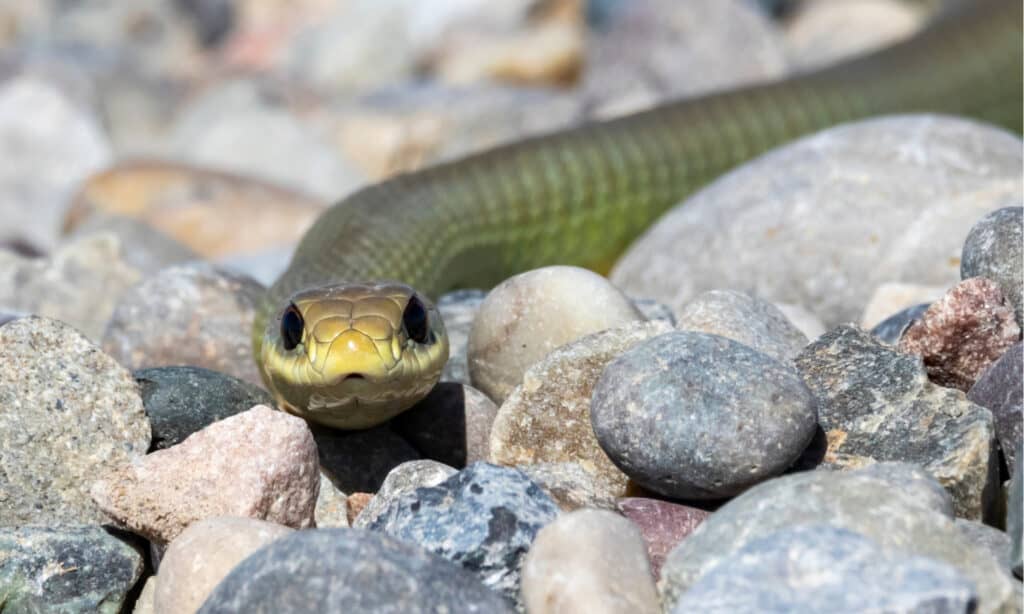
North American racer snakes can grow to be over five feet long and can reach speeds of 3.5 miles per hour or faster.
©Michael Chatt/Shutterstock.com
The North American racer is a snake that is capable of reaching high speeds, as its name suggests. While the average speed is 3.5 miles per hour, some in the species have been known to move faster. These snakes are not venomous, nor are they constrictors. Therefore, they have to use their speed to catch their prey.
North American racers can grow to be over five feet long. They are slender snakes, which helps them with their speed. At times, the coloration of the North American racer may confuse it with more dangerous snakes. This is because the snakes come in a variety of colors, from blue to black, or even a green hue. However, when in Montana, if people remember there is only one venomous snake, and the North American racer is not it, panic should not set in. There are a variety of habitats that the North American racer lives in. They include forests, prairielands, grasslands, and scrublands. Many times, the snakes will see people before they see them, and the North American racer will be long gone, using its speed to get away from perceived danger.
Plains Hog-Nosed Snake

Plains hog-nosed snakes can grow to be 3.5 feet long, and while intimidating looking, they are no threat to people.
©Chelsea Murphy/Shutterstock.com
The plains hog-nosed snake gets its name from its snout, which is turned up. This look is not done by accident. The position of the snout helps the snake dig through its preferred habitat of prairielands, sand prairies, or even sand dunes. These particular habitats have caused some plains hog-nosed snakes to go nearly extinct in some states due to habitat loss.
Despite their somewhat scary look, the 3.5-foot-long snakes pose no harm to people. However, because it is not a pit viper, the plains hog-nosed snake strikes with its mouth closed, making it harmless to people. This is because the plains hog-nosed snake will actually strike when it feels threatened. But, because it is not a pit viper, the snake does so with its mouth closed.
If striking does not get a predator to leave it alone, the plains hog-nosed snake will play dead. It will go completely limp and may even bleed from the mouth to convincingly play dead. Once the danger is gone, the snake will then right itself and slither off to live another day. Plains hog-nosed snakes are light brown or tan with darker, circular splotches that run the length of their bodies. The snake is not a constrictor. Therefore, it has to stalk its prey or wait for prey to run across its path to eat.
Western Terrestrial Garter Snake
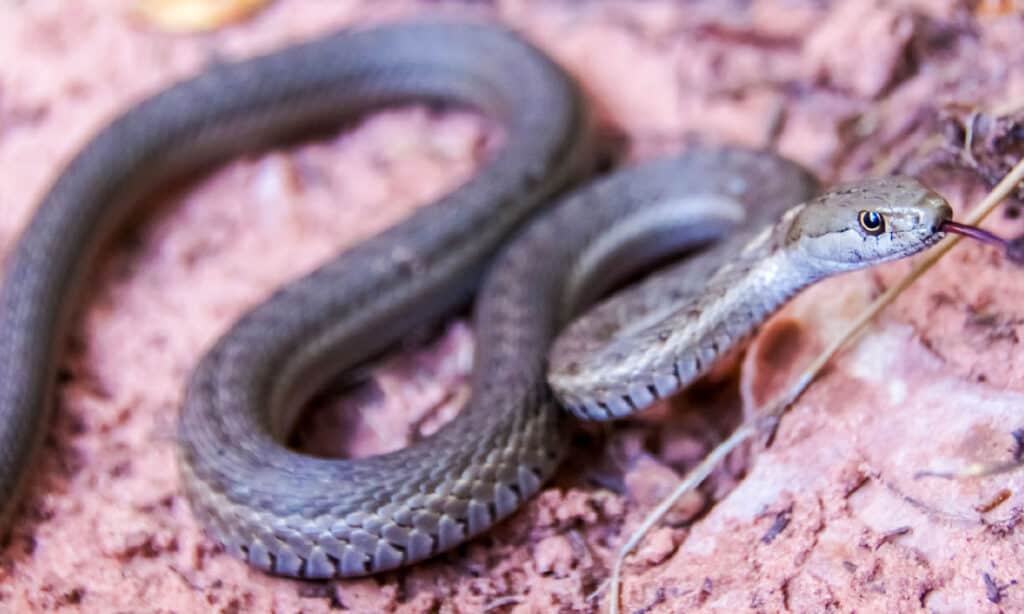
Western terrestrial garter snakes can grow to be close to 3.5 feet long. The snakes are at times confused for venomous water snakes, given their strong swimming abilities.
©iStock.com/yhelfman
The western terrestrial garter snake is one of the many garter snakes that can be found in Montana. The snake, while slender, can grow to be nearly 3.5 feet long. They are non-venomous and not constrictors, meaning that the western terrestrial garter snakes need to use their quick reflexes to hunt fish and reptiles.
Unlike other snakes in Montana that need specific habitats to thrive, the western terrestrial garter snake is pretty adaptable to any environment. The snakes can be found in grasslands, forests, and woodlands. They can be misidentified as a venomous water snake given their ability to swim. However, western terrestrial garter snakes do not have fangs or venom to harm people.
Where other snakes are easy to identify by their coloration, this proves to be a bit more difficult for western terrestrial garter snakes. The snakes can come in a variety of colors. While many have a yellow, white, or light orange stripe that runs down their back, accompanied by two stripes of the same color on either side, others have spots. But there is nothing to fear. The western terrestrial garter snake poses no danger to people.
Plains Garter Snake
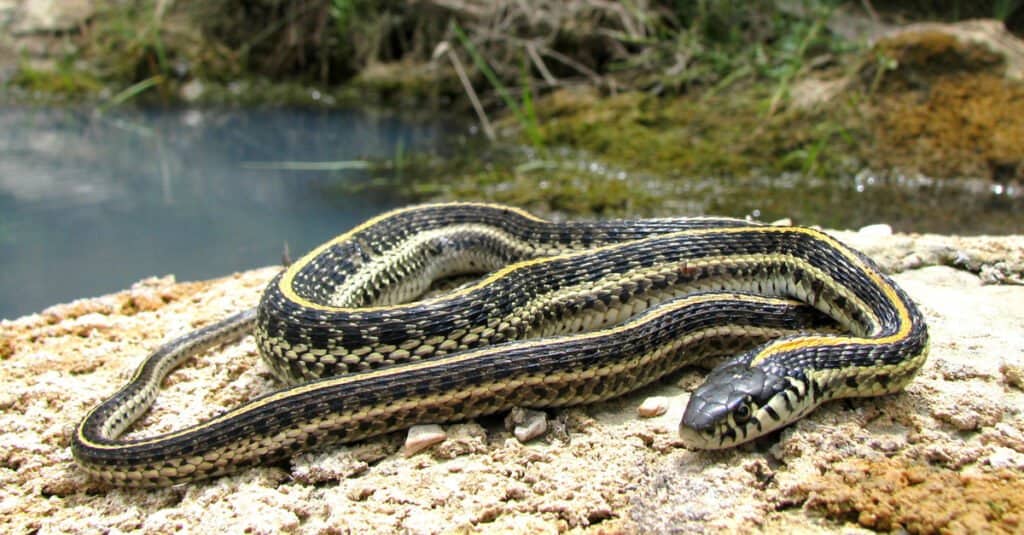
The plains garter snake can grow to be three feet long and poses no danger to people.
©Joe Farah/Shutterstock.com
Another common garter snake found in Montana is the plains garter snake. These snakes can grow to be three feet long. They prefer to live in habitats that are near water sources for hunting, like plains and meadowlands. If there are streams, marshes, or similar water sources, it is likely that the plains garter snake is nearby.
The plains garter snake is non-venomous and not a constrictor. It relies on speed to hunt. These snakes are afraid of people and will quickly slither away if approached. To identify the plains garter snake, look for a gray-green snake that has orange or yellow stripes that run from its head down the length of its body. Some even have a light yellow spot on the top of their heads.
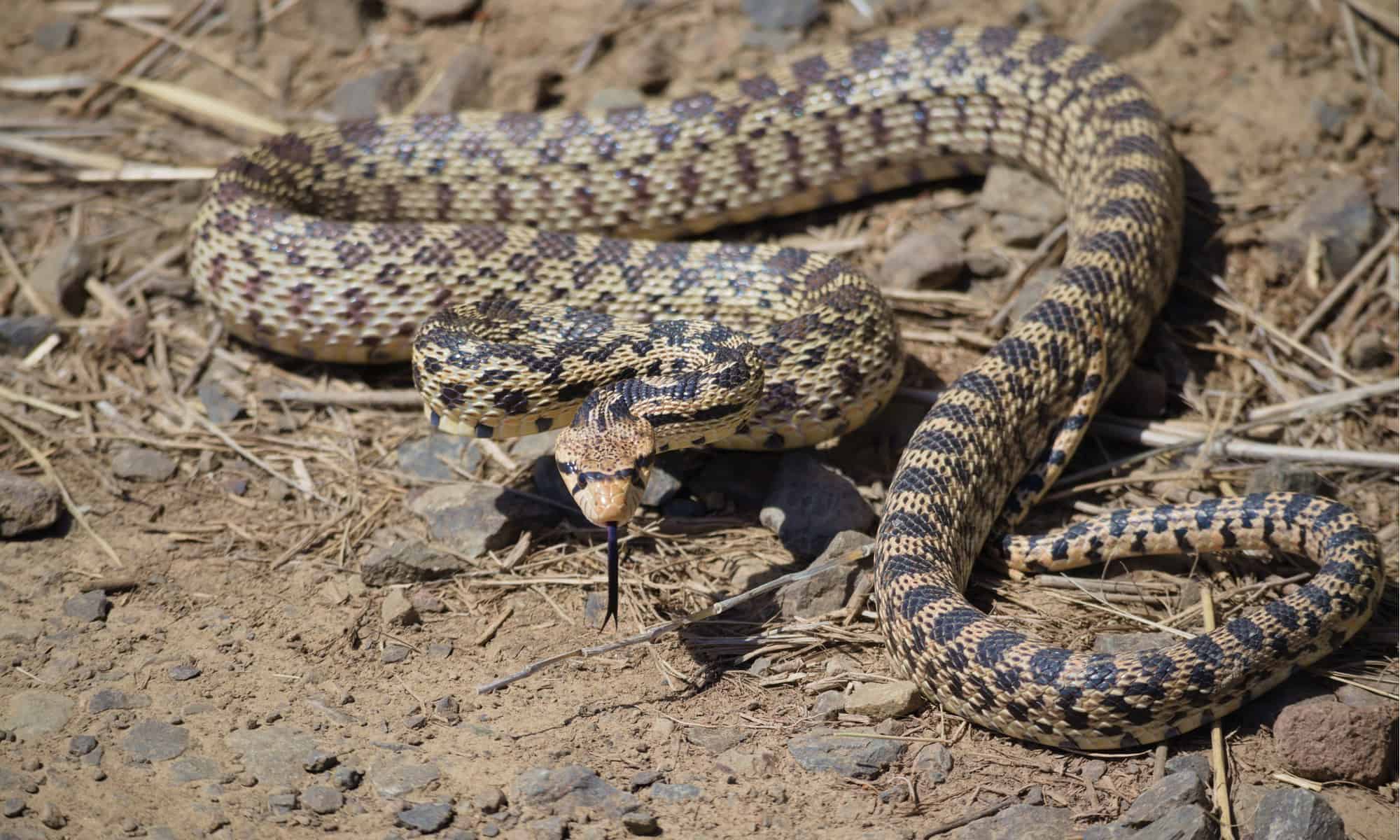
Bullsnake
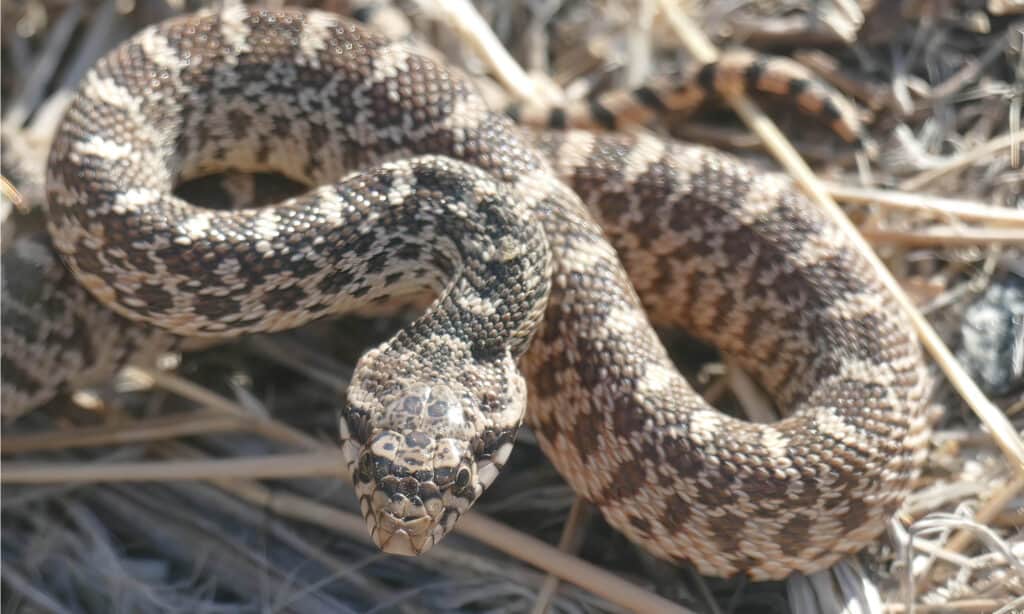
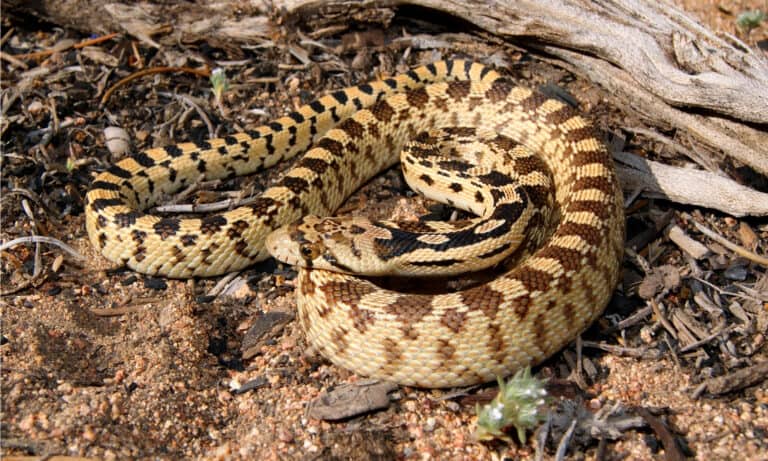
The bullsnake, sometimes confused with the prairie rattlesnake in Montana, can grow to be eight feet long.
©steve estvanik/Shutterstock.com
Bullsnakes are one of the biggest snakes in Montana. Most of the snakes can grow to be four to six feet long, with some reaching eight feet in length. Bullsnakes are formidable-looking snakes as well. They have some bulk to their bodies, which comes with being a strong constrictor snake.
Because their coloration can be beige, yellow, or brown with darker blotches running the length of their bodies, bullsnakes are sometimes mistaken for prairie rattlesnakes. But, unlike the prairie rattlesnake, the bullsnake is non-venomous. Bullsnakes are not strong enough to constrict a person. However, they do have a painful bite and are not afraid to strike at people who get too close.
Bullsnakes live in a variety of habitats from grasslands to prairielands, forests, and more arid regions. Therefore, if hiking through any of these regions in Montana during the day, keep an eye out for bullsnakes. Remember, they are not snakes that will cause life-threatening injuries, but it is best to walk away and leave them alone.