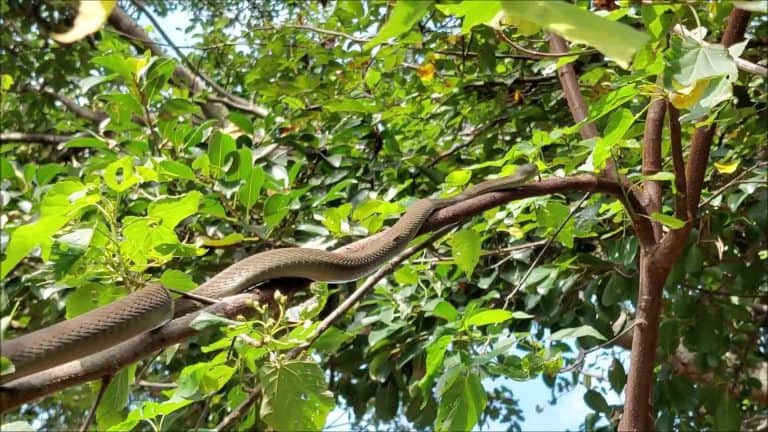
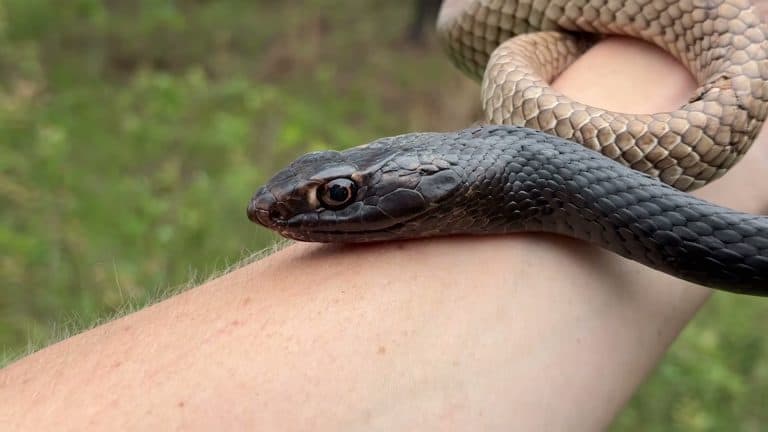
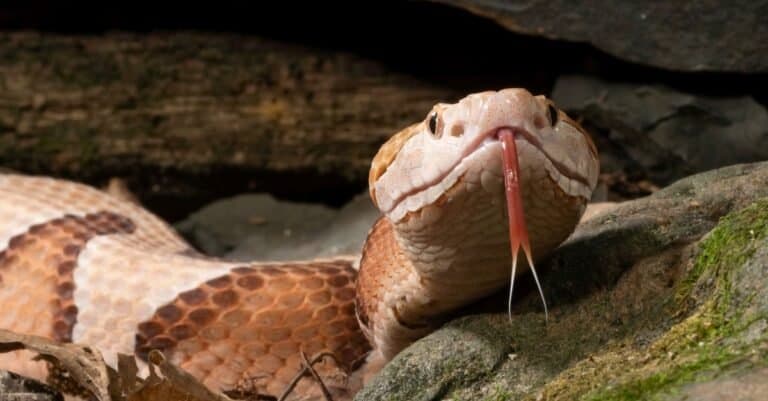
There are 48 different snake species in Oklahoma. This means the chances of running into one of the slithering reptiles are relatively high, both in and out of the water. Of those snakes, the majority are harmless to people. However, there are several that are not only the largest snakes in Oklahoma but are also among the deadliest.
Thanks to the diverse habitats in Oklahoma, snakes thrive in the Sooner State. Therefore, it does not matter if hiking through woodlands, marshes, prairieland, rocky areas, or forests, there is likely a species of snake or more lurking. The key is to know which ones mean no harm and which ones to give a wide berth to.
Northern Cottonmouth

Northern cottonmouth snakes grow to four feet and are highly venomous.
©Danny Ye/Shutterstock.com
The northern cottonmouth is one of the longest snakes in Oklahoma. With the largest of the species measuring in at four feet long, and being a hefty snake in weight as well, it is easy to be intimidated by size alone with these snakes.
In addition to being large, the northern cottonmouths are also highly venomous. They can kill their prey within a matter of moments after biting and injecting venom. If a northern cottonmouth bites a person, the cytotoxin injected begins to destroy cells and blood vessels. This leads to bleeding both externally and internally.
Those who are bitten should seek medical attention immediately so that an antivenom can be administered and damage can be mitigated as as possible. Northern cottonmouths are most readily identified by their black, triangular head, dark brown to black coloration with deeper shades of brown or black for cross markings, according to the Oklahoma Department of Wildlife Conservation. Because they are pit vipers, northern cottonmouths also have vertical pupils.
Fortunately, while large and venomous, northern cottonmouths would prefer to leave people alone; therefore, if one is encountered, giving it space as well as a direction to escape will likely decrease the odds of being bitten. The areas where northern cottonmouths are generally found in Oklahoma, according to the Oklahoma Department of Wildlife Conservation, include streams, woodlands, and rocky hillsides in the northern and eastern portions of the state. This does not mean to not enjoy and explore these areas, but do so with caution, especially from early spring to late fall when the snakes are most active.
Eastern Copperhead
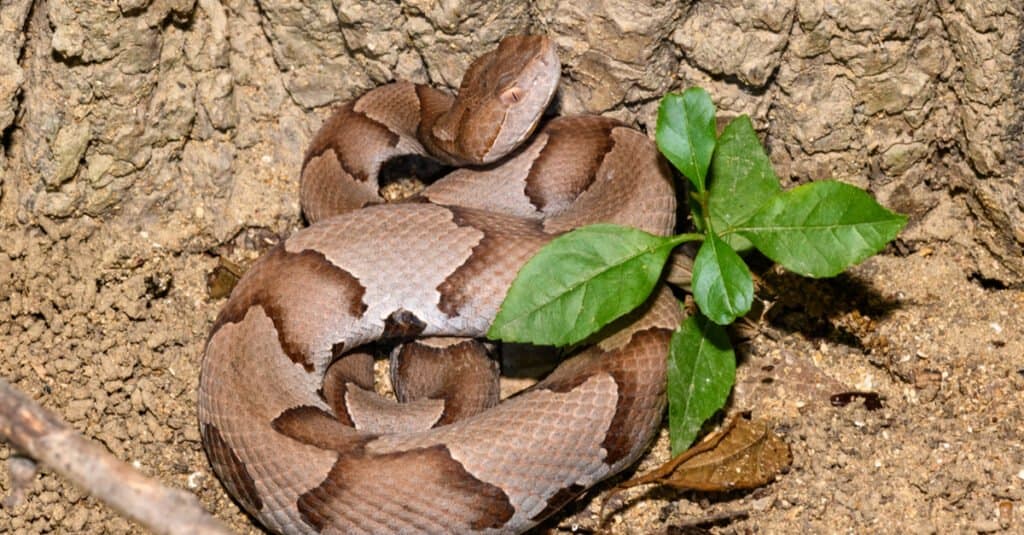
Eastern copperhead snakes can grow to 4.5 feet long, and while venomous, they generally only strike when stepped on.
©Jeff W. Jarrett/Shutterstock.com
Eastern copperhead snakes are well-known for their exceptional ability to camouflage themselves. They are so good at this, in fact, that the snakes are notorious for being stepped on. It may seem odd that a snake that can reach nearly 4.5 feet long and is somewhat of a stout creature can conceal itself in woodlands, forests, and low-lying swampy regions. However, thanks to its light brown and darker brown crossbands, the eastern copperhead can easily blend into its environment.
If one of these snakes is stepped on, it packs a painful punch with their long fangs and powerful jaws. Fortunately, the eastern copperhead prefers to “dry bite” those it deems too large for prey. But those bitten should not assume they did not receive a dose of venom from these pit vipers and should seek medical assistance immediately.
Since it can be challenging to identify which snake bit a person at times, medical professionals recommend taking a picture of the offending snake if it is safe to do so. Eastern copperheads are characterized by their light and dark brown coloration, with hourglass-shaped crossbands and a triangular-shaped head. The pupils will be vertical versus circular, which is generally an indication of a venomous snake.
Western Diamondback Rattlesnake

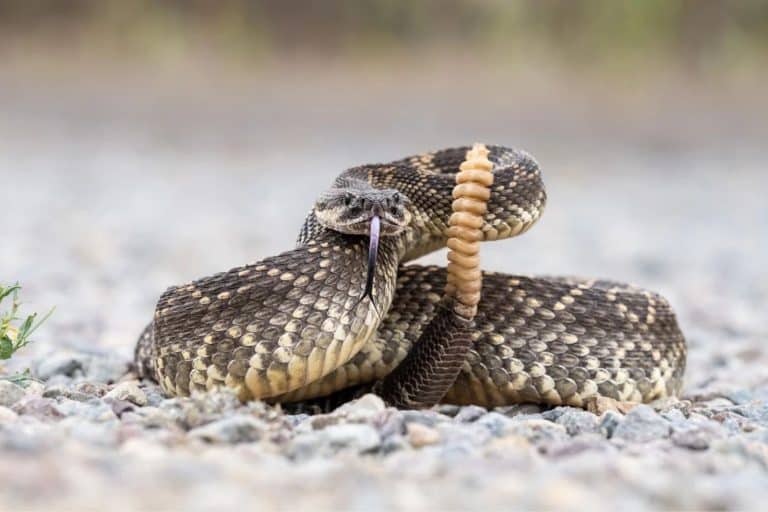
Western diamondback rattlesnakes can get as long as seven feet and are aggressive, venomous snakes.
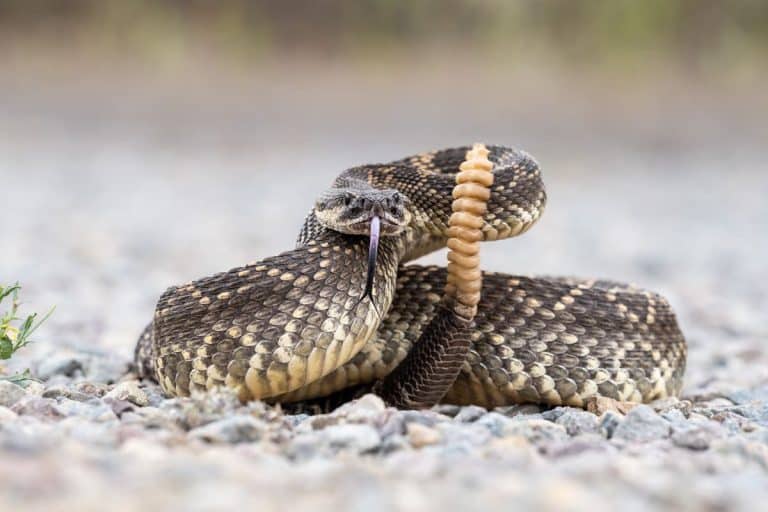
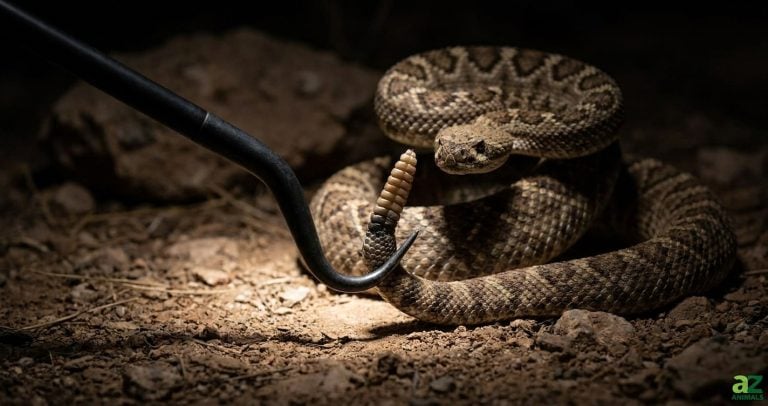
Another massive snake living in Oklahoma is the western diamondback rattlesnake. This snake can reach up to six feet in length, with the largest one ever recorded exceeding seven feet in length. Not only are they long, but the western diamondback is also hefty. The largest of these snakes can weigh almost 15 pounds, making them a formidable species indeed.
To make the western diamondback rattlesnake even more intimidating, the snakes are also very venomous and aggressive. Those bitten by the rattlesnake may receive a lethal amount of venom that requires immediate medical attention so that an antivenom can be administered. It is fairly easy to identify the western diamondback rattlesnake. The snakes can be found in river bottoms, desert regions, pine forests, and rocky hillsides. They are named for the diamond-shaped designs that go down their backs. The body color is a greyish brown, until right before the rattle at the end of the tail, as the coloration changes to black and white.
Broad-Banded Copperhead

Broad-banded copperhead snakes are three feet long and, while venomous, would prefer not to strike.
©Dennis W Donohue/Shutterstock.com
The broad-banded copperhead snake is similar to the eastern copperhead in that it is a snake that excels at camouflaging itself. The coloration is distinct from that of other copperhead snakes in that it is light brown with red-brown or copper bands that have a white border around them. It is this coloration that helps them blend in with their habitats of the woods or river bottoms.
The broad-banded copperhead can grow up to three feet long. It has a triangular-shaped head and vertical pupils. While the snake would prefer not to bite people if at all possible, it will do so if it feels threatened. Those who are on the receiving end of the painful bite will need to seek immediate medical attention. The venom from the broad-banded copperhead can cause symptoms that include nausea, swelling, throbbing pain, and numbness. Antivenom may not always be necessary. Those who receive an antivenom, however, generally recover quickly with no side effects from the bite.
Timber Rattlesnake

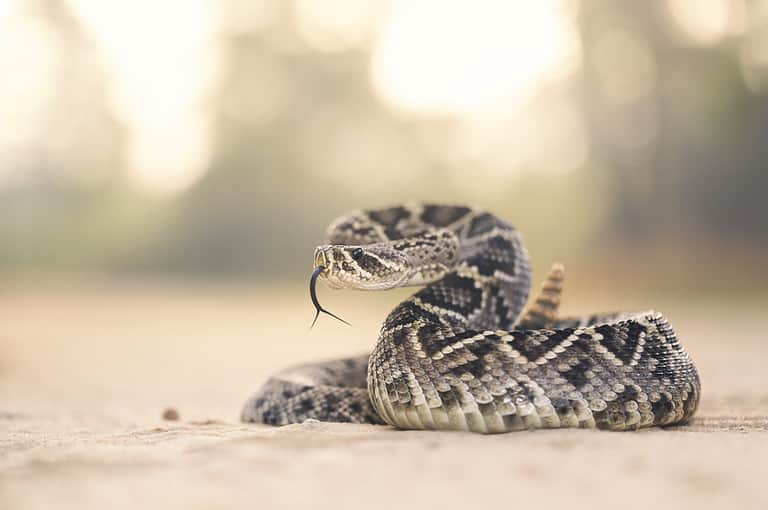
Timber rattlesnakes can be as long as seven feet and are highly venomous.
©Joe McDonald/Shutterstock.com
A favorite habitat for timber rattlesnakes is in the woods, specifically those with pretty rugged terrain. This could be because the environment helps the rattlesnakes to blend in without being seen. But that is not the only place the five-foot snakes, with some reaching seven feet long, live. Timber rattlesnakes can be found in swamps, mountains, riverbeds, and more.
In conjunction with being a massive snake that has some girth to it, a timber rattlesnake is a pit viper. The venom that the timber rattlesnake injects into people can be enough to kill them, according to the Smithsonian’s National Zoo & Conservation Biology Institute, if left untreated. This is why, along with all other pit vipers, it is always recommended to seek medical care if bitten in case an antivenom is needed. Fortunately, for those who seek medical care, timber rattlesnake bites are rarely fatal.
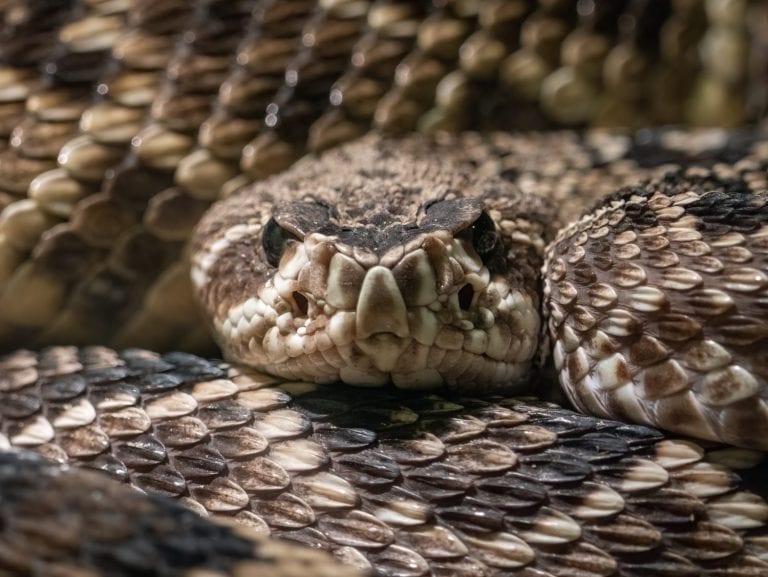
To distinguish whether a snake is a timber rattlesnake or not, there are specific characteristics to look for. Timber rattlesnakes are a grey-brown color with dark brown or black ring-like patterns down their body. Their heads are a large triangular shape with a terracotta color running down the back. There are rattles on the end of the tail, and the eyes are yellow with vertical pupils. Timber rattlesnakes are not aggressive snakes. They would prefer to be left alone. Therefore, if one is spotted, give it some distance, and it very likely will not strike.
Prairie Rattlesnake
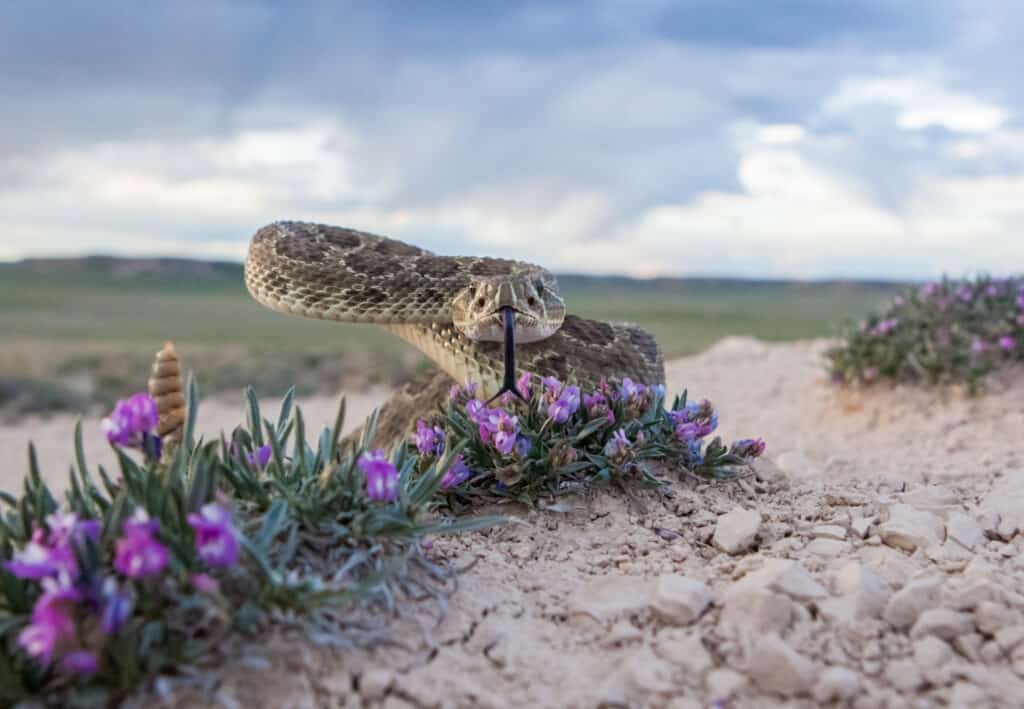
Prairie rattlesnakes are approximately five feet long and are venomous snakes.
©iStock.com/Matt Kaminski
Another large and dangerous snake in Oklahoma is the prairie rattlesnake. This rattlesnake is five feet long and has some heft to its body. The prairie rattlesnake is a pit viper that can be dangerous to people. Their venom is both a hemotoxin and a neurotoxin, meaning it attacks both muscle and neurological function. This is why those who are bitten or believe a prairie rattlesnake has bitten them should seek medical attention immediately. At that time, it can be determined if a round of antivenom is necessary.
As their name suggests, prairie rattlesnakes live in prairielands. However, they can also be found in forests, grasslands, and deserts. The prairie rattlesnakes have a signature look. The coloration is yellowish-brown, light brown, or gray-green with darker banding along the body. Like other pit vipers, prairie rattlesnakes have a triangular head and eyes with vertical pupils. The rattlesnakes also have rattles at the end of their tails that they shake to warn off would-be predators or people before striking.